

Winnipeg museum’s core mandate is to confront inconvenient truths

Advertisement
Read this article for free:
or
Already have an account? Log in here »
To continue reading, please subscribe:

Digital Subscription
One year of digital access for only $205*
- Enjoy unlimited reading on winnipegfreepress.com
- Read the E-Edition, our digital replica newspaper
- Access News Break, our award-winning app
- Play interactive puzzles
*First annual payment billed as $205.00 + GST for one year. This annual subscription will automatically renew at $233.00 + GST every 52 weeks (10% off the regular annual price of $259.35). Offer available to new and qualified returning subscribers only. Cancel any time.
To continue reading, please subscribe:
Add Free Press access to your Brandon Sun subscription for only an additional
$1 for the first 4 weeks*
- Enjoy unlimited reading on winnipegfreepress.com
- Read the E-Edition, our digital replica newspaper
- Access News Break, our award-winning app
- Play interactive puzzles
*Your next Brandon Sun subscription payment will increase by $1.00 and you will be charged $17.95 plus GST for four weeks. After four weeks, your payment will increase to $24.95 plus GST every four weeks.
Read unlimited articles for free today:
or
Already have an account? Log in here »
There is something deeply disquieting about the attempts by Canada’s Jewish community to stop the Canadian Museum for Human Rights in Winnipeg from hosting an exhibit about the 1948 Palestinian Nakba.
The 1948 Nakba — which in Arabic means “catastrophe” — involved the forced displacement of an estimated 750,000 Palestinians in the prelude to the Arab-Israeli war. The Nakba and the war erupted in the immediate aftermath of the partitioning of Palestine to create an independent Jewish state.
According to Shurat HaDin-Israel Law Center, a pro-Israel advocacy group based in Tel Aviv, the CMHR’s decision to host Palestine Uprooted: Nakba Past and Present could lead to “defamatory imputations concerning the State of Israel, Zionist organizations, and, by extension, Canadian Jewish institutions and leaders.”
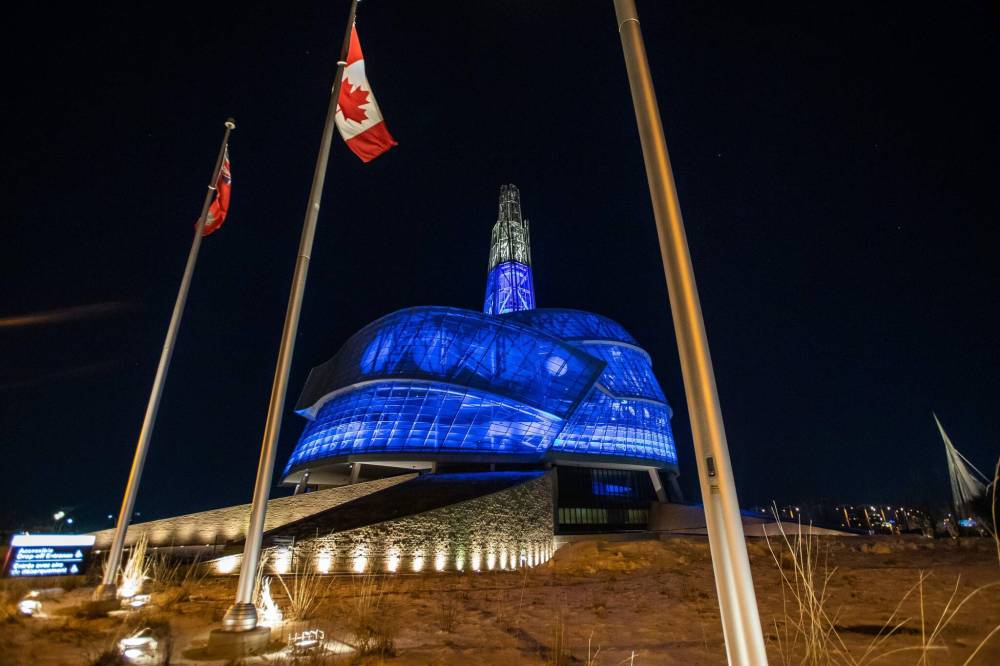
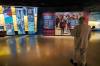
Daniel Crump / Free Press Files
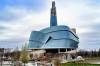
Officials at the Canadian Museum for Human Rights intend to open an exhibit about the 1948 Palestinian Nakba on June 27.
This story was further complicated when B’Nai Brith, a venerable organization that combats antisemitism and other forms of discrimination, alleged that “foreign interference” prompted CMHR to host the Nakba exhibit. This allegation was based on a news report of a meeting between museum officials and Mona Abuamara, Palestine’s ambassador to Canada, to discuss the exhibit.
Richard Robertson, B’nai Brith director of research and advocacy, said the meeting with a Palestinian official had compromised the museum’s core mandate of presenting information about human rights in “an unbiased” manner.
CMHR officials have rejected the allegations of foreign interference and intend to open the exhibit on June 27.
It is not hard to see why the two organizations are so concerned about the Nakba exhibit, which will open against the backdrop of the ongoing conflict between Israel and its Iranian-backed enemies Hamas and Hezbollah. Still, those conflicts and the horrendous Oct. 7, 2023 attacks by Hamas that precipitated them, do not absolve Shurat HaDin and B’Nai Brith from making several unfounded allegations against the CMHR.
The first is the misrepresentation of the CMHR’s mandate, which officially is to “explore the subject of human rights, with special but not exclusive reference to Canada, in order to enhance the public’s understanding of human rights, to promote respect for others and to encourage reflection and dialogue.”
With respect, Robertson’s assertion that the museum must be “unbiased” is unfair and naive.
It is impossible to examine human rights abuses without offending one side or the other in a conflict. As is often said, one person’s freedom fighter is another person’s terrorist. Still, the CMHR has done a good job at focusing on its core mission, which is to highlight instances where one group of people have dehumanized another group through discrimination, violence, oppression and — in some instances — genocide.
That is really the only unbiased thing you can say about human rights: the dehumanization of any group of people, for any reason, is a violation of their human rights.
Shurat HaDin and B’Nai Brith believe that highlighting the mistreatment of Palestinians in 1947 is an attack on Israel and, by extension, all Jewish people. That is inaccurate and unfair: there are many Jews and Jewish organizations that are willing to acknowledge that atrocities were committed in the Nakba.
The more egregious problem with the attack on the CMHR is that it deliberately ignores the origin story of the museum itself.
The CMHR was born out of a courageous effort to tell a story that many people in this country did not want told: Canada’s woeful decision to turn its back on Jews fleeing the Holocaust and Nazi persecution during the Second World War.
Israel Asper conceived the idea for the museum following a 1998 controversy over plans for a Holocaust exhibit in the Canadian War Museum in Ottawa. That exhibit, which was to feature details of how Canada ignored the plight of Jews attempting to flee Germany, was scuttled by veterans and their political allies who felt it was an attack on Canadian soldiers who died fighting in the Second World War.
Asper felt — and rightly so — that Canada needed to have a permanent and meaningful account of one of the darkest chapters of Canadian history. True to his vision, the CMHR’s permanent Holocaust exhibit that exists today details how, between 1933 and 1945, Canada accepted only 5,000 Jewish refugees, one of the worst records of any democratic nation.

The Asper family and its allies faced profound political opposition over that exhibit that, at times, came dangerously close to being antisemitic. Undeterred, the Aspers got the museum built, against the wishes of those who did not want Canadians to discover inconvenient truth of Canada’s role in the Holocaust.
Shurat HaDin, B’Nai Brith and other Jewish Canadians who may object to the Nakba exhibit should acknowledge that the CMHR’s core mandate is to confront inconvenient truths. In this instance, that truth is that there is no way of recognizing the Nakba without acknowledging Israel’s role in it.
That is a point of debate Shurat HaDin and B’Nai Brith simply refuse to acknowledge. Instead, both organizations are portraying the CMHR’s exhibit as evidence of growing antisemitism. They are correct that antisemitism is on the rise; they are very wrong to include this exhibit in that trend.
No country, culture or religion on this planet is blameless when it comes to human rights abuses. The moment we acknowledge that, we are one step closer to stopping these abuses from being repeated.
dan.lett@freepress.mb.ca
Dan Lett is a columnist for the Free Press, providing opinion and commentary on politics in Winnipeg and beyond. Born and raised in Toronto, Dan joined the Free Press in 1986. Read more about Dan.
Dan’s columns are built on facts and reactions, but offer his personal views through arguments and analysis. The Free Press’ editing team reviews Dan’s columns before they are posted online or published in print — part of the our tradition, since 1872, of producing reliable independent journalism. Read more about Free Press’s history and mandate, and learn how our newsroom operates.
Our newsroom depends on a growing audience of readers to power our journalism. If you are not a paid reader, please consider becoming a subscriber.
Our newsroom depends on its audience of readers to power our journalism. Thank you for your support.
Dan Lett is a columnist for the Free Press, providing opinion and commentary on politics in Winnipeg and beyond. Born and raised in Toronto, Dan joined the Free Press in 1986. Read more about Dan.
Dan’s columns are built on facts and reactions, but offer his personal views through arguments and analysis. The Free Press’ editing team reviews Dan’s columns before they are posted online or published in print — part of the our tradition, since 1872, of producing reliable independent journalism. Read more about Free Press’s history and mandate, and learn how our newsroom operates.
Our newsroom depends on a growing audience of readers to power our journalism. If you are not a paid reader, please consider becoming a subscriber.
Our newsroom depends on its audience of readers to power our journalism. Thank you for your support.
Related Articles
CMHR rejects Jewish organization’s allegations of foreign interference in exhibit about Palestinians


Advertisement Advertise With Us
Advertisement Advertise With Us