CMHR exhibition leads to more questions than answers
Advertisement
Read this article for free:
or
Already have an account? Log in here »
To continue reading, please subscribe:
Digital Subscription
One year of digital access for only $1.44 a week*
- Enjoy unlimited reading on winnipegfreepress.com
- Read the E-Edition, our digital replica newspaper
- Access News Break, our award-winning app
- Play interactive puzzles
*Billed as $5.77 plus GST every four weeks. After 52 weeks, price increases to the regular rate of $19.95 plus GST every four weeks. Offer available to new and qualified returning subscribers only. Cancel any time.
To continue reading, please subscribe:
Add Free Press access to your Brandon Sun subscription for only an additional
$1 for the first 4 weeks*
- Enjoy unlimited reading on winnipegfreepress.com
- Read the E-Edition, our digital replica newspaper
- Access News Break, our award-winning app
- Play interactive puzzles
*Your next Brandon Sun subscription payment will increase by $1.00 and you will be charged $17.95 plus GST for four weeks. After four weeks, your payment will increase to $24.95 plus GST every four weeks.
Read unlimited articles for free today:
or
Already have an account? Log in here »
I am thinking about the word “opinion,” the ones I interrogate and revise, as well as ones I have abandoned over time.
Such a reflective process provides a continuing opportunity in my third act. It depends on the kind of curiosity, courage and commitment I bring to opportunities for rethinking and reassessing.
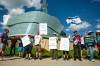
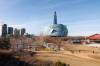
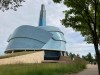
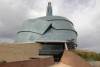
Within this context, I reflect on the variety of opinion pieces I have read, most recently those that reference the exhibition at the Canadian Museum for Human Rights, Palestine Uprooted: Nakba Past and Present.
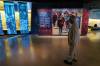
I attended the exhibition the morning after it opened. I could not come to any conclusion before I saw it. I wanted to be informed. I wanted to be as transparent as I could be, as aware of my history and experience, in relation to the complex ongoing history integral to the Palestinian experience.
I entered the exhibition with my story, just as others will carry their own. Mine includes the trauma that comes as a Jew and member of an oppressed minority that has repeatedly faced the possibility of annihilation. I cannot enter Palestine Uprooted without that history, but I can also enter with a desire to know how stories by others who have been displaced and oppressed are being represented.
This is the sensibility that museum CEO Isha Khan references: “We want people to come and see it and we hope that what they take from this exhibit is that it engenders empathy, understanding, reflection and dialogue.”
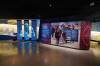
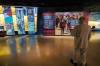
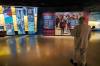
While I knew the dimensions of the exhibition beforehand, even then I did not expect that it would be so small. How could it not be more expansive, I wondered. Given the space constraints, how could it effectively contextualize Palestinian stories told about disruption, displacement and loss?
I read the framing informational panels and wondered anew: Where is the critical information that is necessary to grasp the turmoil defining the foundational events of 1947 and 1948? Where are the key details about the partition offers that were accepted and rejected? When offers were designed and brokered, who decided who belonged in this region and who did not? What political and historical forces defined these formulations? How do they persist?
I knew the museum began developing this exhibition in 2021. I wondered further: How is it possible that it did not respond to reasonable questions posed about transparency and contexts but merely restated the right to curatorial independence?
Given the events that occurred during the course of the exhibition’s development, how could the museum not reveal the catastrophic ignorance of so many who controlled the region before 1948 and bargained in bad faith? How could the museum’s informational panels omit vital historical and geopolitical contexts that would thus deepen my grasp of the Palestinian experience “then and now”? How could it squander this opportunity? To what extent did it enfeeble its mandate by doing so?
A story of displacement demands a multidimensional approach. Compassion and understanding are actualized by contexts that comprehend the difficult and the disputed. Imagine — given the misinformation, intolerance and race-hatred flourishing in this country, the charged political and psychological atmosphere that attended the exhibition’s planning process — if the museum had established detailed frames of reference and analysis for the Palestinian experience in a region tormented by war, grief, violation and grievance.
Surely the curator of this exhibition, and the advisory committee whose names were withheld by the museum, pursued those frames and that analysis with a profound investment in a truth-seeking that comprehends bias, grief and grievance, that comprehends the torment of competing, contested claims, broken promises, broken-heartedness and seemingly irreconcilable differences.
Could this not have brought us closer to the very reflection and understanding Khan hopes for? How could the museum’s framing be so underdeveloped? How could its planning and execution not include explicit programming that would facilitate the difficult conversations that support listening, learning and reciprocal relation? Why has the exhibition given such scant attention to these vital possibilities?
I took a copy of the poem by Mahmoud Darwish, Think of Others, available to visitors when I left the exhibition. It is a poem that suggests interdependence as crucial. The poem’s penultimate line reminds us: “As you think of others, the distant ones, think of yourself. /(‘say: ‘If only I were a candle in the darkness’.)”
I descended in the elevator wondering: How could the museum compromise its presentation of the Palestinian experience by so under-representing the profound and complex contexts informing that experience? How could it not think of the contexts that we need so that our understanding can be further illuminated?
arts@freepress.mb.ca
Deborah Schnitzer
Winnipeg writer Deborah Schnitzer explores life lessons from women in their Third Act.
Our newsroom depends on a growing audience of readers to power our journalism. If you are not a paid reader, please consider becoming a subscriber.
Our newsroom depends on its audience of readers to power our journalism. Thank you for your support.
Lived lives
Winnipeg writer Deborah Schnitzer explores life lessons from women in their Third Act.
Deborah Schnitzer
Winnipeg writer Deborah Schnitzer explores life lessons from women in their Third Act.
Our newsroom depends on a growing audience of readers to power our journalism. If you are not a paid reader, please consider becoming a subscriber.
Our newsroom depends on its audience of readers to power our journalism. Thank you for your support.
Related Articles
Avi Lewis chides Miller for saying rights museum should change Palestinian wording
Advertisement Advertise With Us
Advertisement Advertise With Us