Palestinian Canadians share keepsakes, memories in CMHR’s Nakba exhibition
Read this article for free:
or
Already have an account? Log in here »
To continue reading, please subscribe:

Digital Subscription
One year of digital access for only $205*
- Enjoy unlimited reading on winnipegfreepress.com
- Read the E-Edition, our digital replica newspaper
- Access News Break, our award-winning app
- Play interactive puzzles
*First annual payment billed as $205.00 + GST for one year. This annual subscription will automatically renew at $233.00 + GST every 52 weeks (10% off the regular annual price of $259.35). Offer available to new and qualified returning subscribers only. Cancel any time.
To continue reading, please subscribe:
Add Free Press access to your Brandon Sun subscription for only an additional
$1 for the first 4 weeks*
- Enjoy unlimited reading on winnipegfreepress.com
- Read the E-Edition, our digital replica newspaper
- Access News Break, our award-winning app
- Play interactive puzzles
*Your next Brandon Sun subscription payment will increase by $1.00 and you will be charged $17.95 plus GST for four weeks. After four weeks, your payment will increase to $24.95 plus GST every four weeks.
Read unlimited articles for free today:
or
Already have an account? Log in here »
Fouad Sahyoun was four years old when his family fled their home in Haifa amid bombardment from encroaching Israeli paramilitary forces in 1948.
“We took a few suitcases and (some) money and we went to Alexandria. We were never allowed to go back,” said Sahyoun, a Palestinian Canadian living in Montreal. “When the money ran out, we became real refugees.”
The 82-year-old is one of an estimated 750,000 Palestinians forcibly displaced in 1948 following the partitioning of Palestine and during the creation of the State of Israel. This event is known as the Nakba, which means “catastrophe” in Arabic.
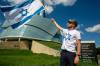
MIKE DEAL / FREE PRESS Fouad Sahyoun’s family fled Haifa in 1948.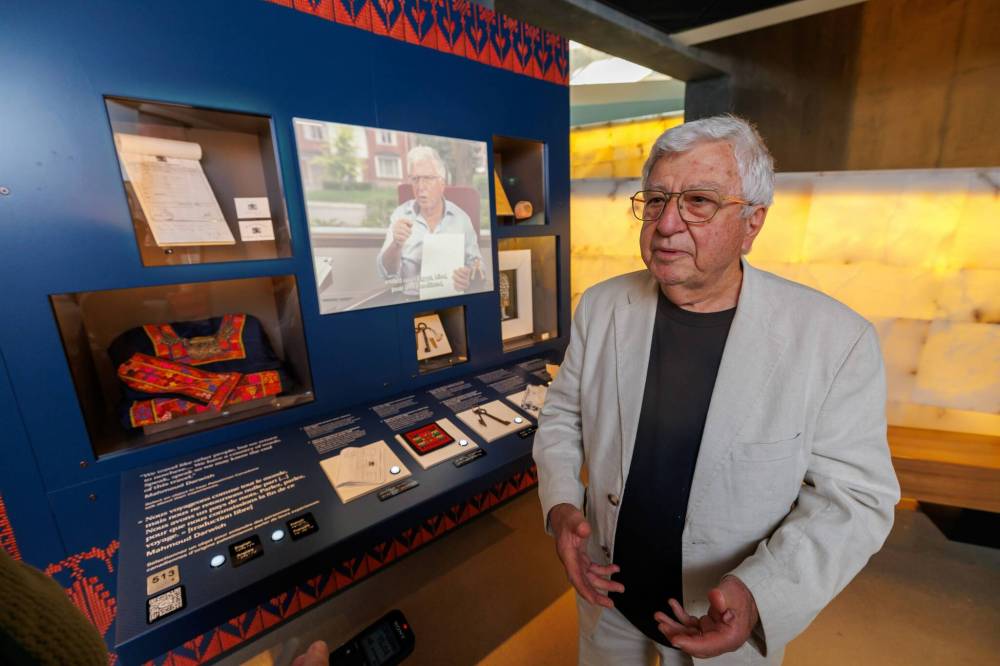
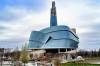
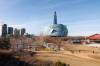
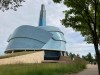
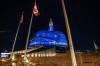
Sahyoun’s story and the deeds to his family’s seized property in Haifa are included in Palestine Uprooted: Nakba Past and Present, a new exhibition open to the public Saturday at the Canadian Museum for Human Rights.
The temporary exhibition has been the subject of widespread opposition from Jewish community members and organizations ahead of its public opening.
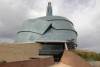
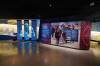
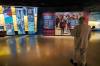
Palestine Uprooted is situated in the museum’s Rights Today gallery, a fifth-floor hall dedicated to exploring contemporary international human rights issues. The small display occupies a single wall, roughly 12 metres long, within the museum’s 4,366 square metres of overall exhibition space.
The multimedia exhibit focuses on the human-rights violations related to the historic Nakba, as well as the continued displacement of Palestinians amid the Israel-Hamas war. It contains images, art, poetry, video interviews and objects on loan from Palestinian Canadians affected by displacement.
Viewers are greeted by a large photo of families fleeing southern Gaza in 2024 and projections of archival images from 1948, alongside descriptions of the past and present occupations.
“We created a visual conversation between the present and the past throughout the exhibition,” curator Isabelle Masson said. “(The Nakba) is also considered a process of displacement and dispossession that is ongoing.”
MIKE DEAL / FREE PRESS Curator Isabelle Masson in front of the newly installed exhibition Palestine Uprooted: Nakba Past and Present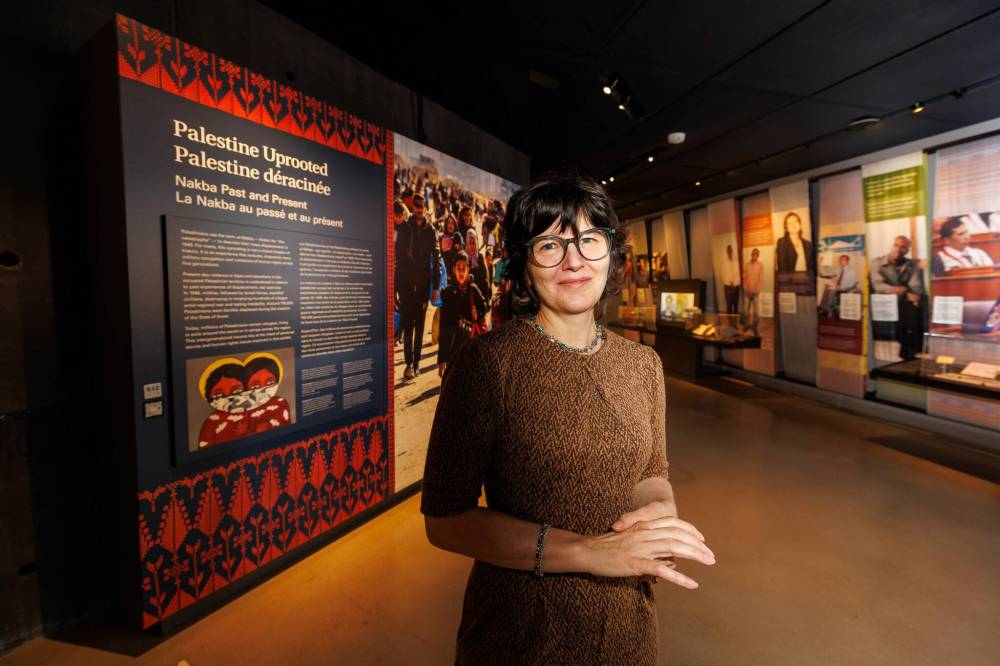
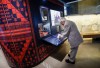
Palestine Uprooted closes with an interactive display featuring personal objects connected to the 1948 Nakba: Sahyoun’s family property deeds; a traditional tatreez embroidered garment and a set of house keys from the family home of Rana Abdulla, a local Palestinian community leader; fruit wrappers preserved from a family’s citrus orchard; and an artwork by Palestinian-American artist Raja Cook.
The display is paired with video testimonials and re-creations of the objects, which visitors can touch.
“This exhibition is really about centring Palestinian voices,” Masson said. “The point was about not only foregrounding stories of loss … but also an exhibit that holds beauty, culture and resilience.”
Exhibition Preview
Palestine Uprooted: Nakba Past and Present
Canadian Museum for Human Rights
85 Israel Asper Way
Opens June 27, runs to November 2028
For Sahyoun, the exhibition has been a long time coming.
“It took 78 years for us to be able to tell our story at such a high level and we’re very grateful to the museum for giving us the opportunity,” said Sahyoun, who one day hopes to be able to return to Haifa and retire in his hometown.
The CMHR has received national criticism and legal threats connected to the exhibition’s opening.
Palestine Uprooted has been in development since 2022. As with other exhibitions in the CMHR, Masson says the curatorial process focused on personal storytelling via trauma-informed interviews, and included input from an advisory group made up of scholars and community leaders.
B’Nai Brith Canada, the Centre for Israel and Jewish Affairs and other Jewish advocacy groups have called for more transparency and community consultation regarding the exhibition’s development. Longtime museum board trustee Mark Berlin resigned last week over concerns about missing historical context and the exhibition’s potential to fuel growing antisemitism.
MIKE DEAL / FREE PRESS Preserved by the El-Taji twin sisters, these fruit wrappers were kept by their mother as last vestiges of the family’s citrus orchards in the depopulated village of Wadi Hunayn.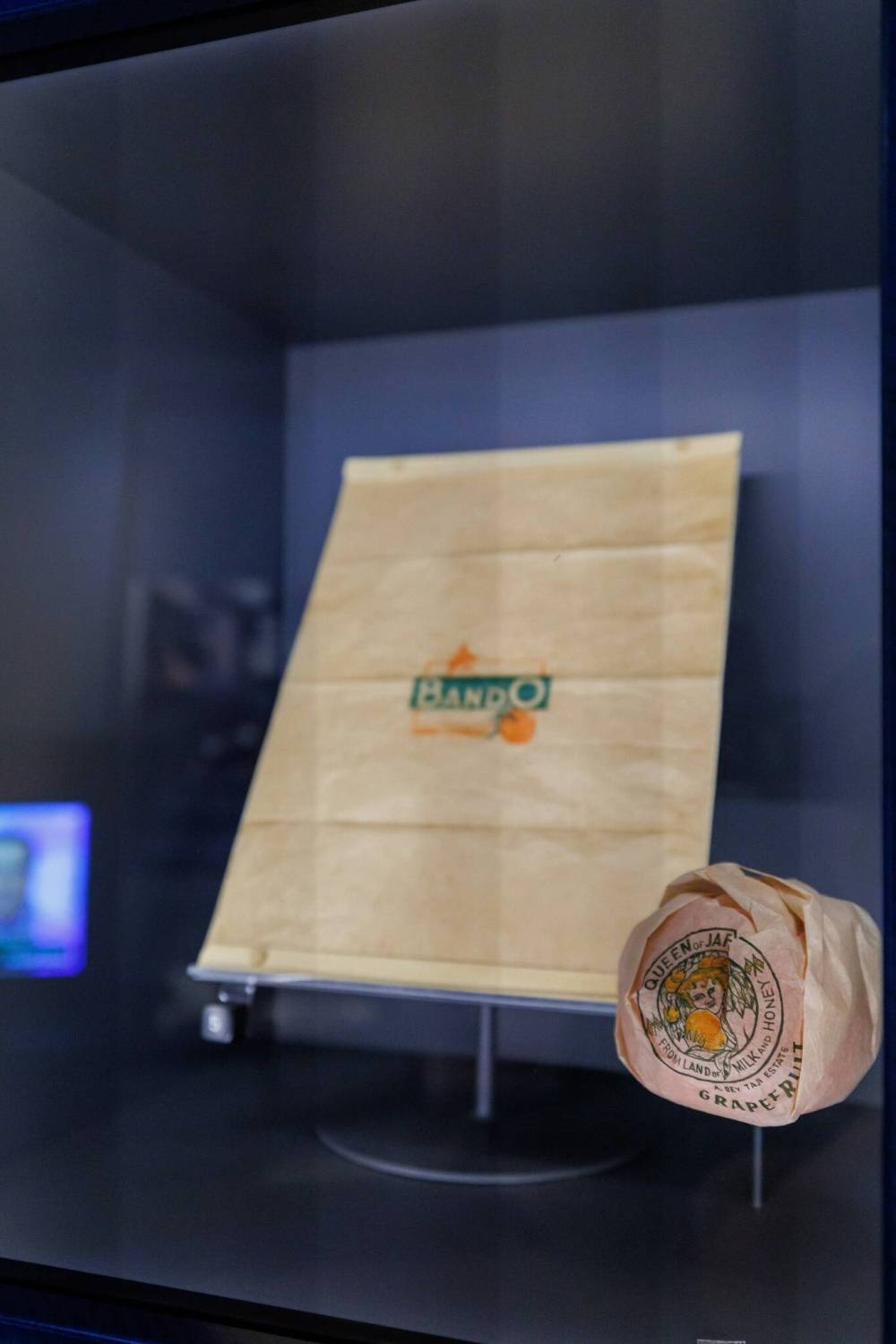
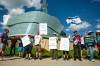
A rally was set to take place outside the CMHR Friday night during a sold-out preview of the exhibition.
“So much of the criticism that’s been relayed to us around the exhibit is from people who’ve never seen the exhibit,” museum CEO Isha Khan said.
“We want people to come and see it and we hope that what they take away from this exhibit is that it engenders empathy, understanding, reflection and dialogue.”
A central concern of opponents is the absence of content related to the estimated 850,000 Jewish people who were displaced from Arab countries following the Arab-Israeli war. While the events of the conflict are not included in Palestine Uprooted, they are documented in the museum’s opening gallery on the second floor.
“Every story in this museum connects to the other. Telling the story of Palestinian Canadians in no way negates or diminishes the stories of Jewish people who were displaced or in any way impacts or reduces our work that we do to combat antisemitism,” Khan said.
Palestine Uprooted is scheduled to be on display for at least two years.
MIKE DEAL / FREE PRESS Keys to Rana Abdulla’s family home in Umm Khalid, Palestine (now Netanya, Israel), late 1800s-early 1900s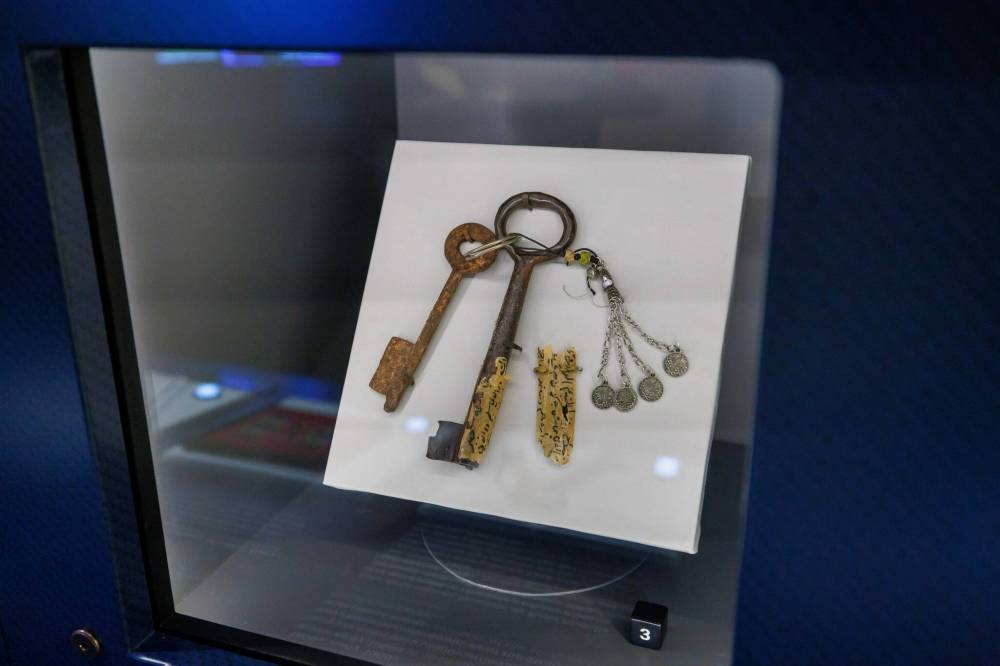
winnipegfreepress.com/evawasney

Eva Wasney covers environmental issues in Manitoba for The Narwhal in partnership with the Winnipeg Free Press. Read more about Eva.
Every piece of reporting Eva produces is reviewed by an editing team before it is posted online or published in print — part of the Free Press‘s tradition, since 1872, of producing reliable independent journalism. Read more about Free Press’s history and mandate, and learn how our newsroom operates.
Our newsroom depends on a growing audience of readers to power our journalism. If you are not a paid reader, please consider becoming a subscriber.
Our newsroom depends on its audience of readers to power our journalism. Thank you for your support.
Related Articles
Heritage minister calls for CMHR to change wording in Palestinian displacement exhibit