

Kinew’s political brand appears unstoppable

Advertisement
Read this article for free:
or
Already have an account? Log in here »
To continue reading, please subscribe:
Digital Subscription
One year of digital access for only $1.44 a week*
- Enjoy unlimited reading on winnipegfreepress.com
- Read the E-Edition, our digital replica newspaper
- Access News Break, our award-winning app
- Play interactive puzzles
*Billed as $5.77 plus GST every four weeks. After 52 weeks, price increases to the regular rate of $19.95 plus GST every four weeks. Offer available to new and qualified returning subscribers only. Cancel any time.
To continue reading, please subscribe:
Add Free Press access to your Brandon Sun subscription for only an additional
$1 for the first 4 weeks*
- Enjoy unlimited reading on winnipegfreepress.com
- Read the E-Edition, our digital replica newspaper
- Access News Break, our award-winning app
- Play interactive puzzles
*Your next Brandon Sun subscription payment will increase by $1.00 and you will be charged $17.95 plus GST for four weeks. After four weeks, your payment will increase to $24.95 plus GST every four weeks.
Read unlimited articles for free today:
or
Already have an account? Log in here »
If Manitoba’s Progressive Conservatives were hoping Premier Wab Kinew’s popularity would fade midway through his first term, the latest polling numbers offer little encouragement.
In fact, there are growing signs the Manitoba NDP may be positioning itself for a lengthy stay in government, one that could resemble the long stretches of governing enjoyed by former NDP premiers Gary Doer and Greg Selinger from 1999 to 2016, or former Progressive Conservative premier Gary Filmon from 1988 to 1999.
That may seem like a bold prediction less than three years into the NDP’s first term in office. Politics can change quickly. Governments make mistakes. Economic conditions shift. Scandals can emerge. Voters get restless.
MIKAELA MACKENZIE / FREE PRESS FILES
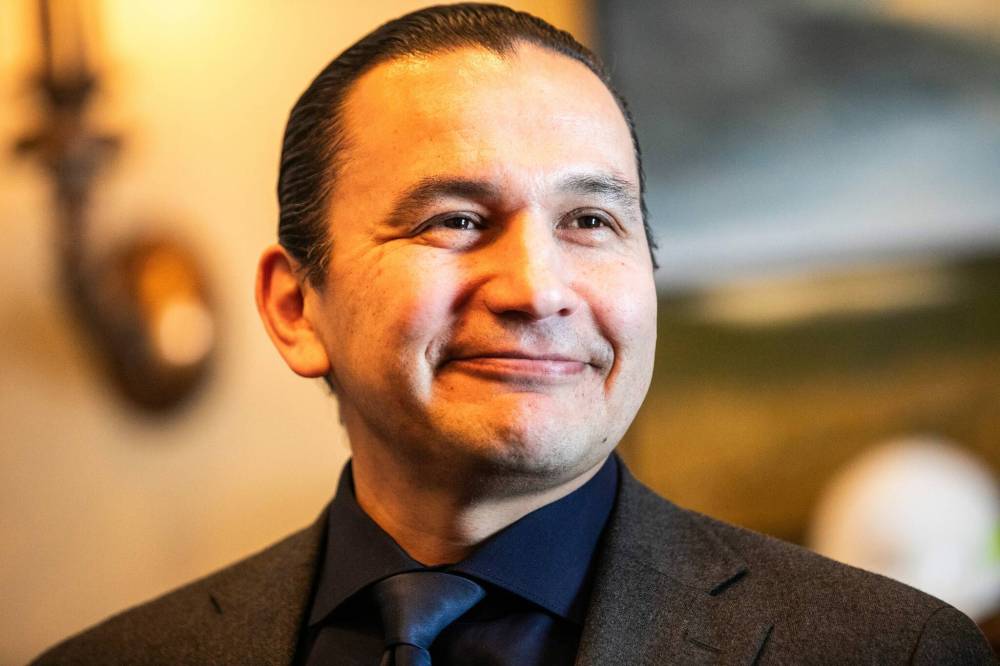
Premier Wab Kinew continues to have the highest approval rate of any premier in Canada.
However, at some point, it becomes difficult to ignore what the numbers tell us.
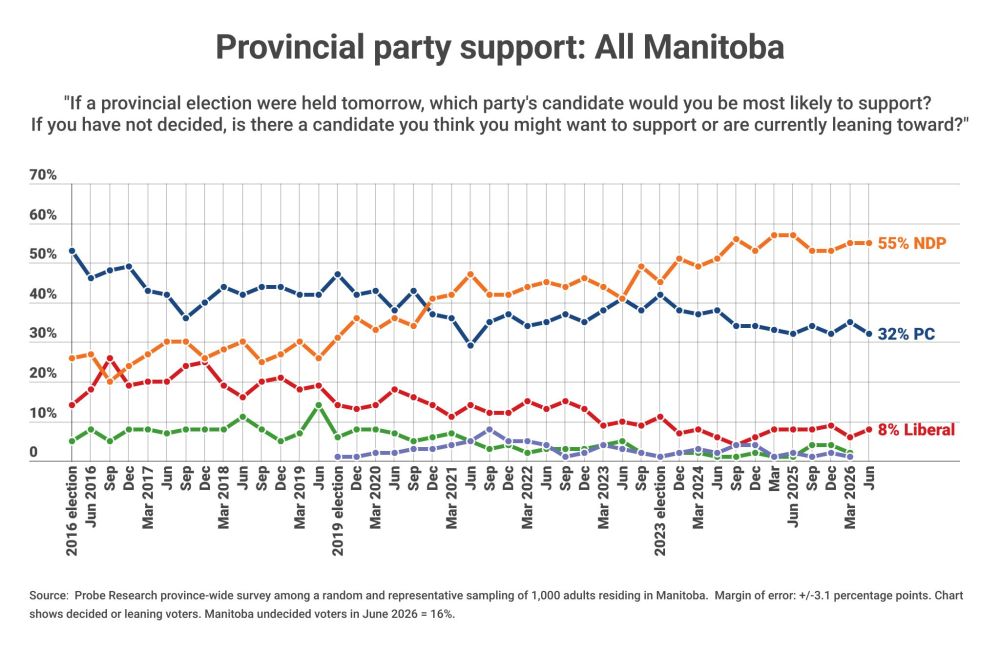
Probe Research’s latest poll shows the NDP at 55 per cent support provincewide, compared with 32 per cent for the PC party — a massive gap.
Even more remarkable is that the NDP is more popular today than when it won government in October 2023.
Normally, governments experience a honeymoon period after an election victory and begin losing support as the difficult realities of governing set in. Tough decisions disappoint voters. Promises prove harder to fulfil than campaign slogans suggest. Opposition parties eventually gain traction.
Not only has that pattern not materialized for the NDP, the opposite has happened.
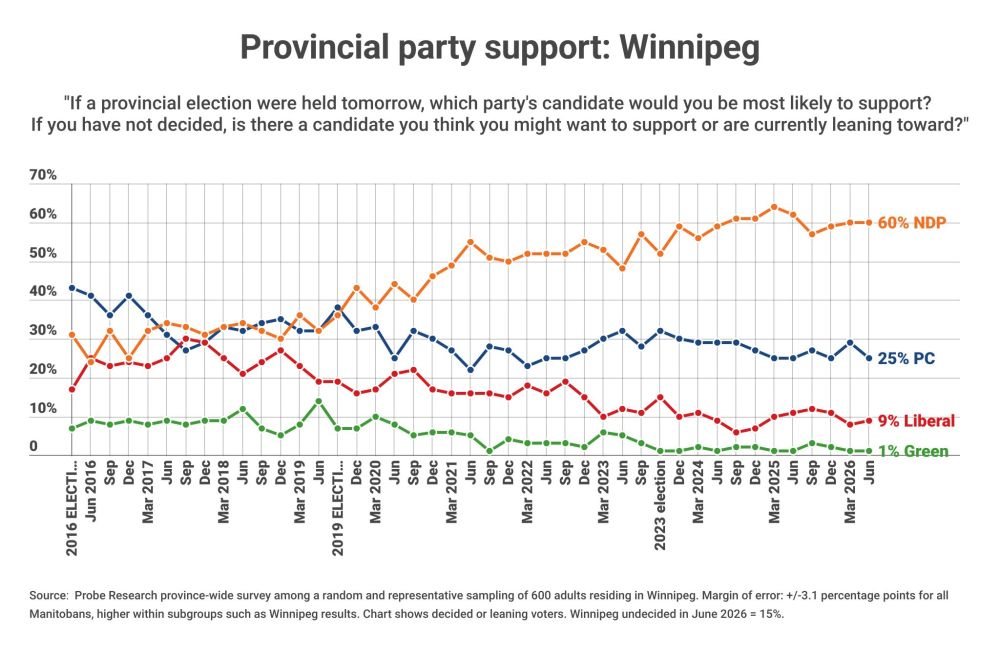
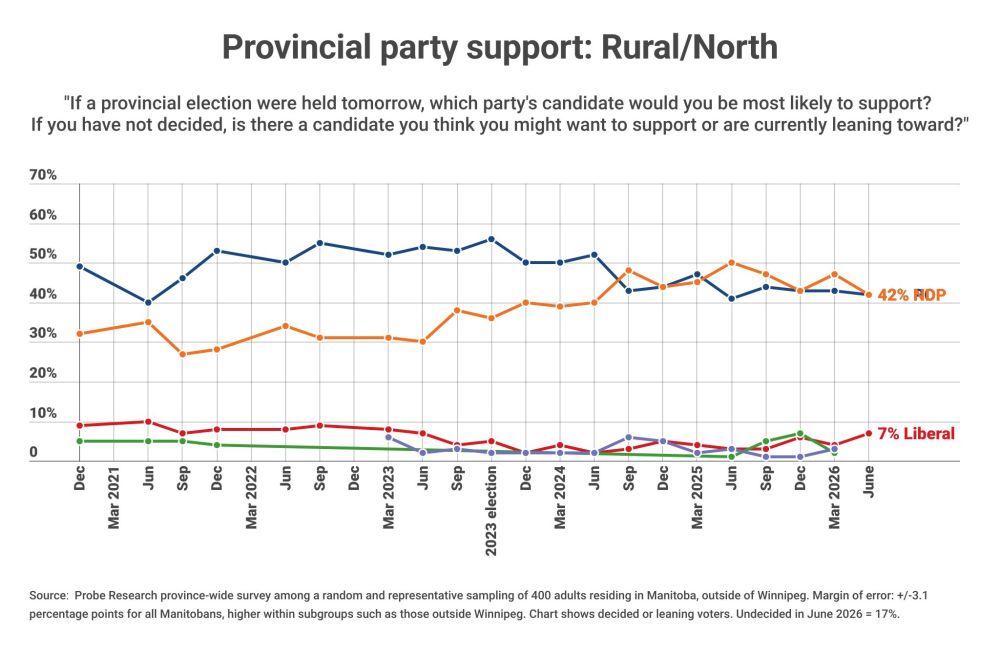
The poll also highlights what should be particularly alarming for the Conservatives. The NDP has not only maintained its overwhelming dominance in Winnipeg, where provincial elections are usually decided, but it has also made significant inroads into parts of rural Manitoba that have traditionally been reliable Tory territory.
When a centre-left party is competitive both in Winnipeg and outside it, that creates an electoral map that becomes very difficult for Conservatives to overcome.
What’s particularly fascinating about the NDP’s enduring popularity is that it has occurred despite the fact government has fallen short on many of its biggest promises.
Health-care wait times remain a serious problem, emergency-room congestion has worsened and homelessness remains highly visible in Winnipeg and other communities. Poverty rates have not dramatically improved. The province is still running deficits and balancing the books remains a distant goal.
These were major issues during the 2023 election campaign. They remain major issues today.
Yet voters appear largely unfazed.
That tells us something important about what may be driving the NDP’s success.
The government’s popularity appears to be less about policy outcomes and more about the personal appeal of Wab Kinew himself.
Kinew has proven to be an exceptionally skilled political communicator. He connects with voters in a way few Manitoba politicians have managed in recent decades. He projects optimism, confidence and empathy.
Most importantly, many voters seem to genuinely like him.
Kinew has successfully built a political brand that extends beyond traditional NDP supporters. He appeals to younger voters (likely, in part, because he has a strong social media presence, including on TikTok), Indigenous voters, urban voters and, increasingly, voters outside Winnipeg.
Meanwhile, the Conservatives continue to search for a message that resonates.
Former Tory premier Brian Pallister’s time in office provides an interesting contrast.
After cruising to victory in 2016, Tory support began to wane almost immediately. It hit a low of 36 per cent in 2017 after the province announced a massive reorganization of Winnipeg hospitals, including the closure of three ERs.
The party recovered somewhat after that, but it never regained the 53 per cent support it enjoyed in the 2016 election.
Pallister managed to secure a second majority in 2019 after calling an early election, but with less support (47 per cent) than in 2016.
The situation deteriorated further the following year as Pallister’s austerity measures and his abrasive style of governing increasingly rubbed voters the wrong way.
His handling of the COVID-19 pandemic in 2020 and 2021 was particularly damaging to the party. By the end of 2020 — after only 4 ½ years in government — Pallister became the least popular premier in Canada, according to the Angus Reid Institute. He resigned in 2021.
Heather Stefanson, who took over as premier later that year, didn’t fare much better, paving the way for an NDP victory in 2023.
By contrast, nearly three years into its first term, the NDP has not only increased its popularity, Kinew continues to have the highest approval rate of any premier in Canada.

None of this guarantees the party will remain in power for a decade or more. Governments eventually wear out their welcome. But right now, Manitoba’s political landscape looks remarkably stable.
The NDP has a very popular leader, as it did with Doer. It has overwhelming support in Winnipeg, it’s making gains in rural Manitoba and the Tories remain divided and directionless. Meanwhile, the Liberals are almost non-existent, which tends to benefit the NDP.
The next election may still be more than a year away, but if current trends continue, Manitoba voters may be looking at the early stages of another NDP dynasty.
The biggest question may no longer be whether Kinew wins a second term, it may be how many terms follow after that.
tom.brodbeck@freepress.mb.ca
Tom Brodbeck is an award-winning author and columnist with over 30 years experience in print media. He joined the Free Press in 2019. Born and raised in Montreal, Tom graduated from the University of Manitoba in 1993 with a Bachelor of Arts degree in economics and commerce. Read more about Tom.
Tom provides commentary and analysis on political and related issues at the municipal, provincial and federal level. His columns are built on research and coverage of local events. The Free Press’s editing team reviews Tom’s columns before they are posted online or published in print – part of the Free Press’s tradition, since 1872, of producing reliable independent journalism. Read more about Free Press’s history and mandate, and learn how our newsroom operates.
Our newsroom depends on a growing audience of readers to power our journalism. If you are not a paid reader, please consider becoming a subscriber.
Our newsroom depends on its audience of readers to power our journalism. Thank you for your support.
Tom Brodbeck is an award-winning author and columnist with over 30 years experience in print media. He joined the Free Press in 2019. Born and raised in Montreal, Tom graduated from the University of Manitoba in 1993 with a Bachelor of Arts degree in economics and commerce. Read more about Tom.
Tom provides commentary and analysis on political and related issues at the municipal, provincial and federal level. His columns are built on research and coverage of local events. The Free Press’s editing team reviews Tom’s columns before they are posted online or published in print – part of the Free Press’s tradition, since 1872, of producing reliable independent journalism. Read more about Free Press’s history and mandate, and learn how our newsroom operates.
Our newsroom depends on a growing audience of readers to power our journalism. If you are not a paid reader, please consider becoming a subscriber.
Our newsroom depends on its audience of readers to power our journalism. Thank you for your support.
Related Articles
Poll finds NDP much more popular than when elected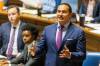


Advertisement Advertise With Us
Advertisement Advertise With Us