

A heartbreaking catalyst for change
More than four years after her body was pulled out of the Red River, Tina Fontaine a symbol of Canada's odious First Nations past, hope for better future

Advertisement
Read this article for free:
or
Already have an account? Log in here »
To continue reading, please subscribe:
Monthly Digital Subscription
$1 per week for 24 weeks*
- Enjoy unlimited reading on winnipegfreepress.com
- Read the E-Edition, our digital replica newspaper
- Access News Break, our award-winning app
- Play interactive puzzles
*Billed as $4.00 plus GST every four weeks. After 24 weeks, price increases to the regular rate of $19.95 plus GST every four weeks. Offer available to new and qualified returning subscribers only. Cancel any time.
Monthly Digital Subscription
$4.99/week*
- Enjoy unlimited reading on winnipegfreepress.com
- Read the E-Edition, our digital replica newspaper
- Access News Break, our award-winning app
- Play interactive puzzles
*Billed as $19.95 plus GST every four weeks. Cancel any time.
To continue reading, please subscribe:
Add Free Press access to your Brandon Sun subscription for only an additional
$1 for the first 4 weeks*
*Your next subscription payment will increase by $1.00 and you will be charged $16.99 plus GST for four weeks. After four weeks, your payment will increase to $23.99 plus GST every four weeks.
Read unlimited articles for free today:
or
Already have an account? Log in here »
Hey there, time traveller!
This article was published 27/12/2018 (2674 days ago), so information in it may no longer be current.
It’s been more than four years since Tina Fontaine died. Yet in the wake of a trial that gripped the province, and a verdict that shattered the hearts of many observers, Tina’s life — and the legacy she left behind — makes her the Winnipeg Free Press newsmaker of 2018.
By all accounts, the 15-year-old from Sagkeeng First Nation was a bright, happy young woman. Her aunt Thelma Favel said she was always respectful, and loved to bake with her family. She was separated from her mother but cared for by Favel, her ill father and other members of her family. She loved children and planned a future career working with them.
We never got to know this Tina, though.

Instead, most Manitobans first learned about Tina when her body was found in the Red River in late-August 2014. As has become the norm, the Indigenous community in Manitoba organized a march and vigil to mourn the loss of another young woman. Not so usual, however, was the reaction of thousands of Manitobans who joined them.
For one of the first times anyone could remember, an Indigenous young woman was everyone’s niece, sister, and daughter.
In the months following her death, Tina became the face of an endemic crisis in Manitoba and Canada surrounding murdered and missing Indigenous women and girls. Her story became a signpost of the mistreatment and violence Indigenous women and girls face. Her experience also represented how broken the child-welfare system, with a disproportionately large number of Indigenous children, had become.
Then, as the public learned about how Tina was failed by the health-care system, police and federal, provincial and municipal governments, the story of Tina’s life, and her death, became a condemnation of Canada.
By the end of 2015, when Raymond Cormier was charged with Tina’s murder, her name was well-known. Tina’s promising life, marred by oppression, neglect, and systemic racism, was a reminder of how astronomically far this country had to go when it comes to reconciliation.
So, in one way, Tina’s death appeared to be a watershed moment. The federal Liberals, winning a majority government in 2015, immediately promised to adopt the Truth and Reconciliation Commission’s 94 calls to action. The Canadian Human Rights Tribunal ruled in 2016 that the federal government discriminates against First Nations children in the child-welfare system and ordered changes.
The police officers who could have helped Tina just before she was killed were suspended before they resigned from the force, while the provincial government announced children in care would no longer be kept in Winnipeg hotels, as Tina once was.
Soon, Tina’s story was a primary driving force behind a public inquiry into murdered and missing Indigenous women and girls — which the federal government granted in 2016. And, while the inquiry hit some roadblocks, public awareness on the issue of MMIWG appeared to be increasing; it even became a frequently used hashtag.
This year, in February, Cormier was found not guilty. Coupled with the acquittal a few weeks earlier of Gerald Stanley (a farmer who shot a young Cree man named Colten Boushie in rural Saskatchewan), things seemed to be moving in the wrong direction.
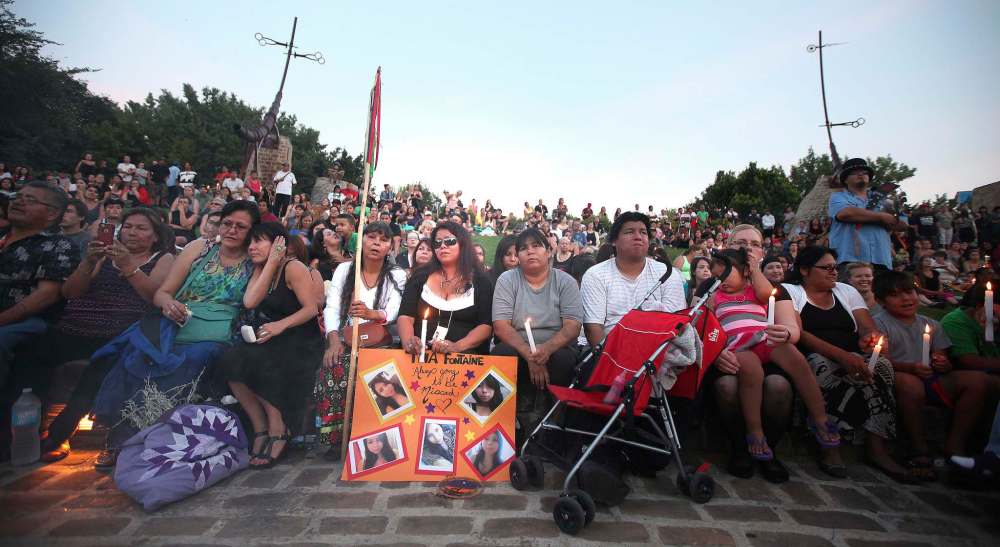
“It is unacceptable,” Arlen Dumas, grand chief of the Assembly of Manitoba Chiefs, said after the verdict. “Everything has failed. How can we talk about reconciliation when the very nets that we’re asked to participate in do not fulfil what they’re supposed to fulfil?”
The question of what happens now in a world where Indigenous children are killed without anyone being found guilty is a dark one. Manitoba remains a province with one of the highest incarceration rates of Indigenous youth (approximately 80 per cent). Indigenous children remain massively over-represented in the child-welfare system (approximately 90 per cent). And, while Indigenous youths remain the fastest-growing and youngest population in Manitoba, there remains virtually the same oppression, neglect and systemic racism that factored into Tina’s death in 2014.
It’s hard to see hope now — even in positive stories, such as the opening of Tina’s Safe Haven, a 24-hour centre for at-risk youth in downtown Winnipeg. Every single story involving Indigenous peoples – from pipelines to Kapyong to Prime Minister Justin Trudeau’s Indigenous-rights framework — seems impeded by the overwhelming violence experienced by First Nations peoples, especially women and girls.
What’s perhaps most hopeful is that Winnipeg Free Press readers demand more attention be paid to Tina’s story.
“Politics is nowhere near as important as the discovery of a young woman’s body and the failure of the justice system,” wrote Melissa, who didn’t offer her last name.
“(The story of Tina Fontaine) has serious implications for the structure of our society,” wrote Curt Pankratz.
“It is a story that will continue to impact our future,” wrote Sue Ralph.
What’s most remarkable is how many Free Press readers promise to never forget Tina.
“People will always remember Tina Fontaine,” wrote Daisy B.
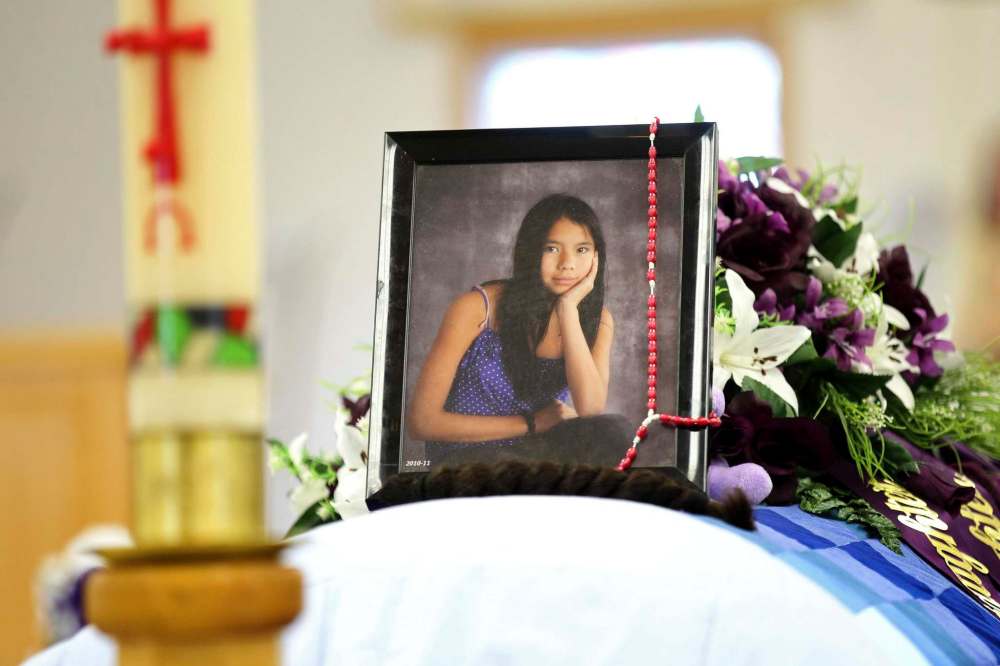
“True reconciliation starts with making sure that there is no other girl with the destiny of Tina,” wrote Lucie-Madeleine Delisle, “the way we deal with this (the way we implement the commission & recommendations) will determine the future of First Nations and the role they could play in Canadian history.”

If attention can produce reconciliation, it’s here where we can begin.
It will take much more then that, though. Reconciliation will take work, commitment and a whole lot of change at every level.
This is the legacy of Tina Fontaine — to demand us to be better.
Here’s to 2019.
niigaan.sinclair@freepress.mb.ca
Niigaan Sinclair is Anishinaabe and is a columnist at the Winnipeg Free Press.
Our newsroom depends on a growing audience of readers to power our journalism. If you are not a paid reader, please consider becoming a subscriber.
Our newsroom depends on its audience of readers to power our journalism. Thank you for your support.
Manitoba Newsmaker of the Year
Earlier this month we asked readers to select the Newsmaker of the Year, or nominate their own. Here are the options we provided:
Tina Fontaine: The discovery of her body in the Red River in 2014 captured a nation’s attention as she became a catalyst for action on the plight of murdered and missing Indigenous women and girls. But the trial of the man police say killed the Sagkeeng First Nation teen also served as a litmus test on whether there is justice for all in this country. When the not-guilty verdict came down just weeks after Colten Boushie’s accused killer was acquitted by what appeared to be an all-white jury in Saskatchewan, questions about racial injustice were again laid bare in this province.
Patrik Laine: He shoots. He scores! Over and over again. In a way few can fathom. And even fewer goalies can manage to block. As the fourth-youngest NHL player ever to score 100 goals, the Jets winger is a sniper almost without parallel who has helped make Winnipeg one of the strongest teams in the league and a favourite to again challenge for the Stanley Cup.
Brian Pallister: Premiers tend to make news, given the nature of the job. But in the case of Manitoba’s premier, the headlines he generates don’t always seem to be ones that help his Tory government. Regardless of the controversy he courts, Pallister’s Tories remain the clear favourite to win re-election in 2020.
Kaitlyn Lawes: Canada has won plenty of Olympic medals in curling, but Lawes made history by becoming the first to earn gold in the mixed-doubles event. That historic victory with John Morris was just the latest feather in the skilled Winnipegger’s curling cap.
Brian Bowman: While incumbent mayors in Winnipeg almost always get re-elected, Bowman’s convincing win in the fall’s municipal campaign was just part of the news he generated in 2018. Whether it was taking on the fire department, pointing fingers at the premier or backing away from his pledge to open Portage and Main to pedestrian traffic, Bowman had a knack for making headlines.
Niigaan Sinclair is Anishinaabe and is a columnist at the Winnipeg Free Press.
Our newsroom depends on a growing audience of readers to power our journalism. If you are not a paid reader, please consider becoming a subscriber.
Our newsroom depends on its audience of readers to power our journalism. Thank you for your support.
Advertisement Advertise With Us
Advertisement Advertise With Us
History
Updated on Friday, December 28, 2018 12:57 PM CST: Adds sidebar.