

Historic cemeteries stranded in farmers’ fields
Families asking for change to provincial act to allow access to unlicensed burial sites

Advertisement
Read this article for free:
or
Already have an account? Log in here »
To continue reading, please subscribe:
Digital Subscription
One year of digital access for only $1.44 a week*
- Enjoy unlimited reading on winnipegfreepress.com
- Read the E-Edition, our digital replica newspaper
- Access News Break, our award-winning app
- Play interactive puzzles
*Billed as $5.77 plus GST every four weeks. After 52 weeks, price increases to the regular rate of $19.95 plus GST every four weeks. Offer available to new and qualified returning subscribers only. Cancel any time.
To continue reading, please subscribe:
Add Free Press access to your Brandon Sun subscription for only an additional
$1 for the first 4 weeks*
- Enjoy unlimited reading on winnipegfreepress.com
- Read the E-Edition, our digital replica newspaper
- Access News Break, our award-winning app
- Play interactive puzzles
*Your next Brandon Sun subscription payment will increase by $1.00 and you will be charged $17.95 plus GST for four weeks. After four weeks, your payment will increase to $24.95 plus GST every four weeks.
Read unlimited articles for free today:
or
Already have an account? Log in here »
Hey there, time traveller!
This article was published 26/07/2021 (1911 days ago), so information in it may no longer be current.
The great-grandsons of a Manitoba pioneer buried in a family cemetery on what had been his farm were able to clear away 50 years of neglect, but they couldn’t clear a permanent path to visit the site.
That’s because — like many of the unknown number of unlicensed cemeteries in the province — the site can only be accessed before the farmer who currently owns the land seeds in the spring and after the crop is harvested in the fall. During that time period, these cemeteries, many of which saw their last burial decades ago, are landlocked within fields of wheat, canola or other crops with no access road or path.
“But that’s when cemetery care-giving is of greatest priority, during the active growing season of summer, for weed control and mowing,” said Henry Wiebe.
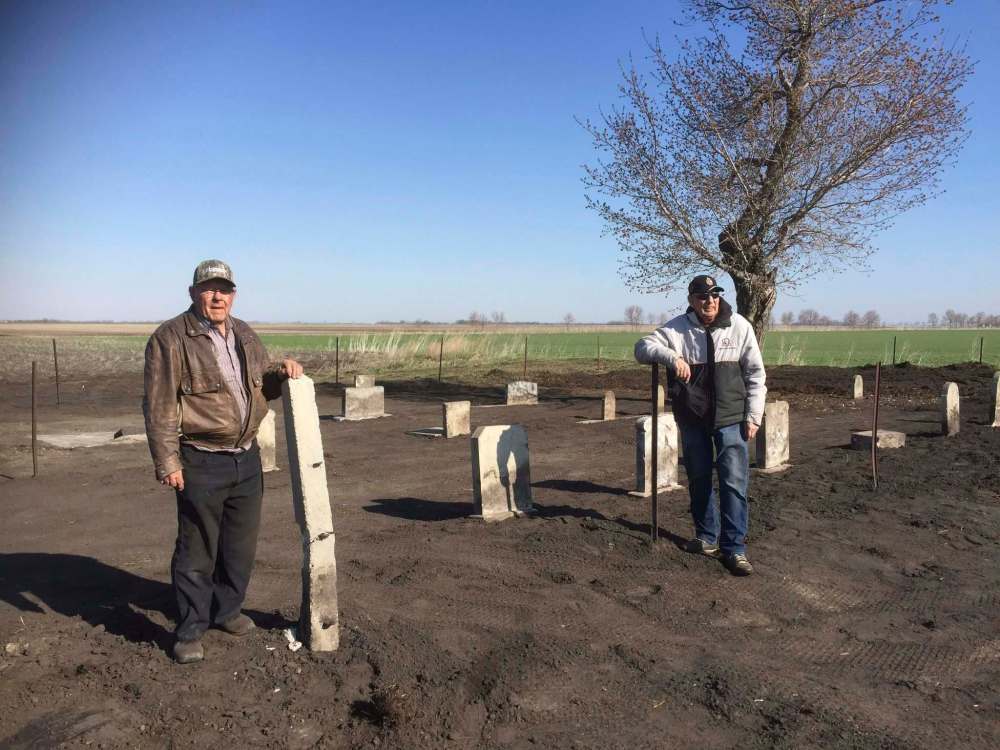
“Farmers say they don’t want to lose the crop, but a six-foot-wide access for less than half a kilometre would be less than half an acre. How much are they losing?
“And besides, it shouldn’t have been your right in the first place.”
Other families and concerned citizens have contacted to the Free Press in recent weeks saying much the same thing about loved ones buried in unlicensed cemeteries in agricultural fields and voicing concerns they have about access and making sure farmers don’t plow the sites under. The nearby RM of Rhineland estimates there are about 200 of them in their municipality alone.
In response, the provincial government says the issues will be brought up during the current review of the province’s Cemeteries Act.
Wiebe said he and his cousin, Ernie Doell, decided last year to restore the family plot in the RM of Stanley, about three kilometres east of Winkler. It’s known as either the Franz Enns Cemetery or the Neu-Reinland Mennonite Cemetery.
Enns was born in 1844 in Ukraine and came to Canada in 1875. He died and was buried in the cemetery in 1933.
Wiebe said there are about 20 marked graves there and at least another 10 or more that are unmarked. The first burial there was in 1876; the last was in 1964.
“Franz had eight sons and one daughter who lived, two others who died, and six of them are buried there,” said Wiebe. “The son who is my grandfather is buried in the Winkler cemetery.”
Wiebe said when the cemetery saw its first burial, it would have been very close to the original farmhouse on the site. Decades later, when the farm changed ownership out of the family, the new owners demolished the farmhouse, all the other buildings and the driveway, but left the cemetery.
That’s why the cemetery today is in the middle of a field.
Using shovels and a small backhoe in spring 2020, Wiebe and his cousin were able to dig down and take away almost a metre of soil that had drifted there, along with decayed vegetation and weeds.
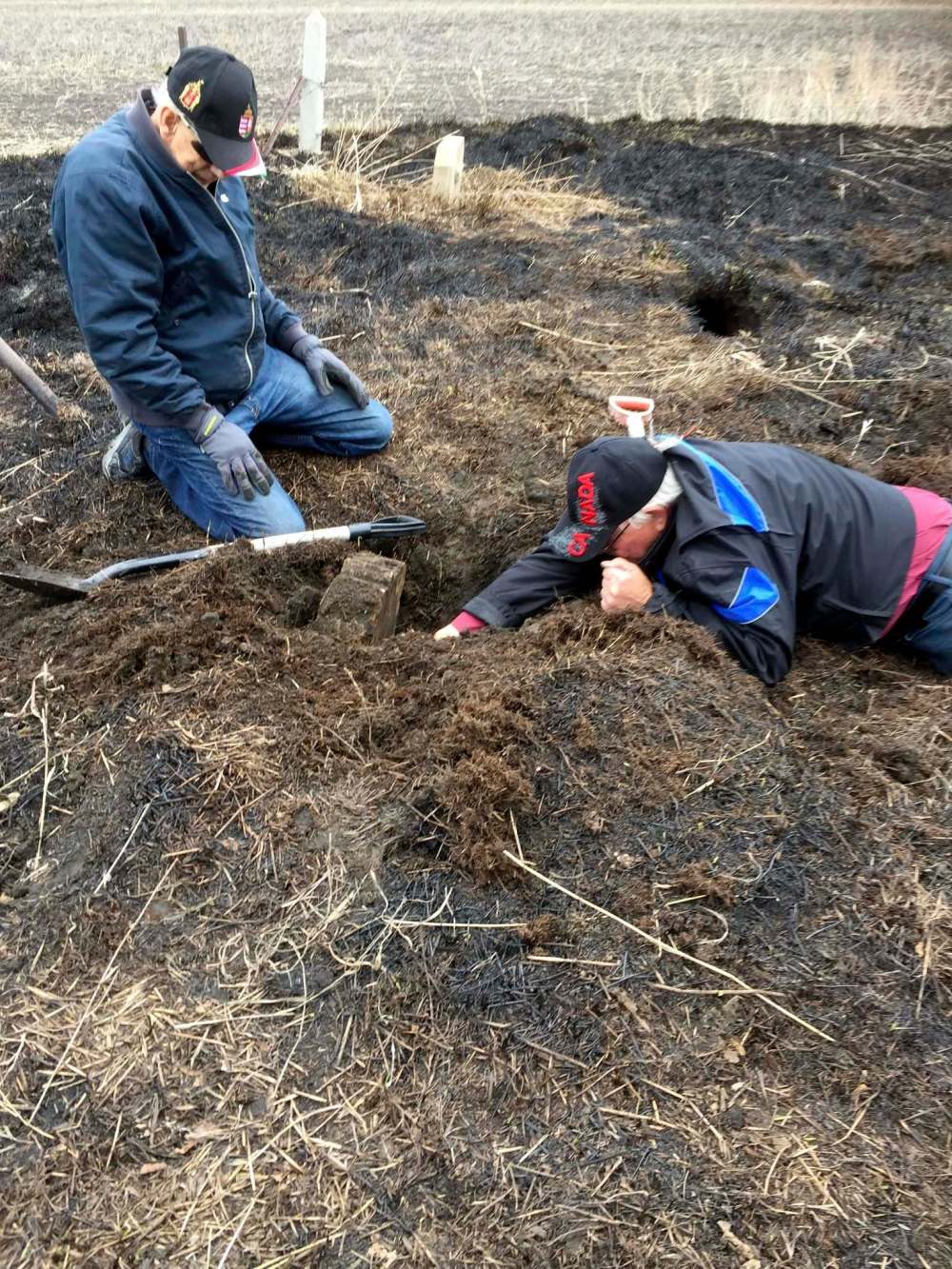
“Before that, just an occasional headstone was showing its peak,” he said.
But, Wiebe said, after the farmer’s crop was seeded, they couldn’t get back to the site until the fall.

“By then the cemetery was overgrown with weeds,” he said. “The ragweeds, which thrived in the newly tilled ground and fertile soil, had grown to a height of two or three metres and a chainsaw was used to cut them down.”
Wiebe said as part of the Cemeteries Act review, he is hoping the province considers adding permanent access to unlicensed cemeteries.
“There should be an easement for access,” he said.
“That area should never be part of a crop in the first place. It should never have been their land.”
kevin.rollason@freepress.mb.ca
Kevin Rollason
Reporter
Kevin Rollason was a general assignment reporter at the Free Press.
Our newsroom depends on a growing audience of readers to power our journalism. If you are not a paid reader, please consider becoming a subscriber.
Our newsroom depends on its audience of readers to power our journalism. Thank you for your support.
Kevin Rollason
Reporter
Kevin Rollason was a general assignment reporter at the Free Press.
Our newsroom depends on a growing audience of readers to power our journalism. If you are not a paid reader, please consider becoming a subscriber.
Our newsroom depends on its audience of readers to power our journalism. Thank you for your support.
Advertisement Advertise With Us
Advertisement Advertise With Us