RWB apologizes to students victimized by ex-instructor who took, sold intimate photos

Advertisement

Advertise with us

The Royal Winnipeg Ballet has apologized to students who were victims of a former dance instructor taking intimate photos of them.

Read this article for free:


or

Already have an account? Log in here »

To continue reading, please subscribe:

Subscribe and receive a limited-edition Free Press branded hat or tote.

Digital Subscription

One year of digital access for only $205*

  • Enjoy unlimited reading on winnipegfreepress.com
  • Read the E-Edition, our digital replica newspaper
  • Access News Break, our award-winning app
  • Play interactive puzzles

*First annual payment billed as $205.00 + GST for one year. This annual subscription will automatically renew at $233.00 + GST every 52 weeks (10% off the regular annual price of $259.35). Offer available to new and qualified returning subscribers only. Cancel any time.

To continue reading, please subscribe:

Add Free Press access to your Brandon Sun subscription for only an additional

$1 for the first 4 weeks*

  • Enjoy unlimited reading on winnipegfreepress.com
  • Read the E-Edition, our digital replica newspaper
  • Access News Break, our award-winning app
  • Play interactive puzzles
Start now

*Your next Brandon Sun subscription payment will increase by $1.00 and you will be charged $17.95 plus GST for four weeks. After four weeks, your payment will increase to $24.95 plus GST every four weeks.

Hey there, time traveller!
This article was published 11/02/2022 (1708 days ago), so information in it may no longer be current.

The Royal Winnipeg Ballet has apologized to students who were victims of a former dance instructor taking intimate photos of them.

The RWB, in a one-page apology released Friday, said it acknowledges the photo sessions “were traumatizing for many students.

The photographer, former faculty member Bruce Monk, posted and sold some of the images online.
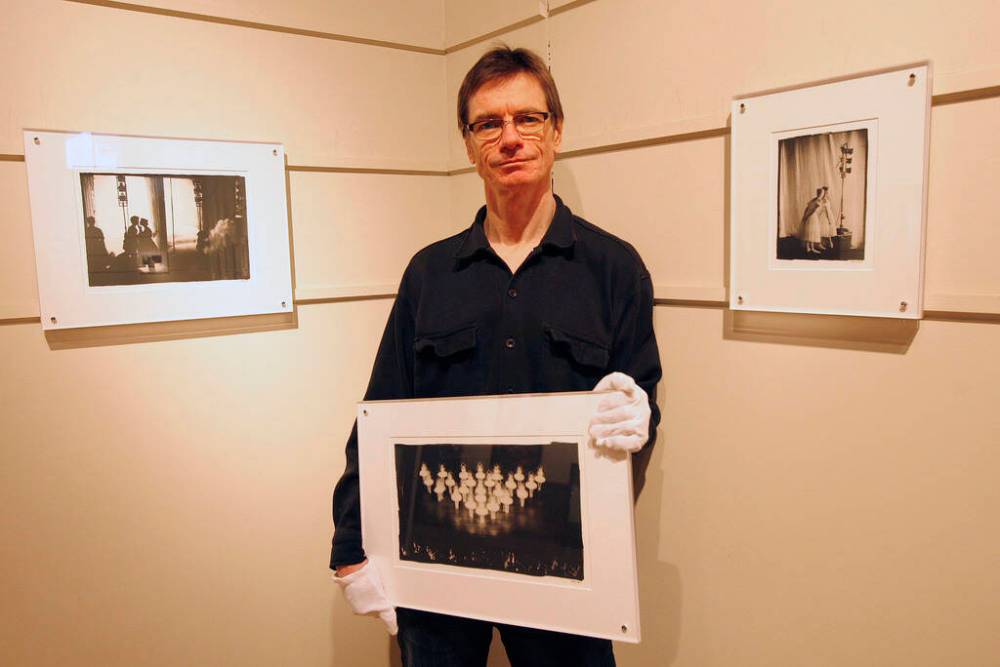
Former RWB instructor and photographer Bruce Monk (Ken Gigliotti / Winnipeg Free Press files)

“As an internationally recognized centre for dance education, we were and are responsible for providing a safe and supportive environment for the training, housing, nurturing, and mentoring of these former students,” the statement read.

“The Royal Winnipeg Ballet is deeply sorry and regrets that the class members, all of whom were talented and vulnerable young people, were not protected as they should have been.”

The apology was part of the $10 million settlement the RWB agreed to pay last month in return for the dismissal of all claims against the ballet and Monk, who was let go shortly after the allegations were revealed in 2015.

The bulk of the money will go to the former students who were photographed by Monk in a private setting between 1984 and 2015.

The settlement was approved Friday by the Ontario Superior Court of Justice.

“We offer a heartfelt apology to all of the victims and those that have been impacted,” RWB artistic director and CEO Andre Lewis said in the statement.

“I commend former students for their bravery and courage in coming forward and telling their story, and I want them to know that we are 100 per cent committed to fostering training, working, and living environments that are safe and positive, and where every person feels valued and supported.”

kevin.rollason@freepress.mb.ca

Kevin Rollason

Kevin Rollason
Reporter

Kevin Rollason was a general assignment reporter at the Free Press.

Our newsroom depends on a growing audience of readers to power our journalism. If you are not a paid reader, please consider becoming a subscriber.

Our newsroom depends on its audience of readers to power our journalism. Thank you for your support.

Report Error Submit a Tip

More Stories

Capital punishment as macabre theatre

Editorial 4 minute read Preview

Capital punishment as macabre theatre

Editorial 4 minute read 2:00 AM CDT

There was already enough to write about the question of capital punishment when the State of Tennessee attempted to execute Christa Pike.

Read
2:00 AM CDT

Kinew won’t budge on opposition to criminalizing residential school denialism

Chris Kitching 5 minute read Preview

Kinew won’t budge on opposition to criminalizing residential school denialism

Chris Kitching 5 minute read Wednesday, Oct. 14, 2026

Premier Wab Kinew stood by his opposition to the proposed criminalization of residential school denialism Wednesday, after some First Nations leaders criticized his earlier comments and asked him to reconsider.

Kinew said he doesn’t think Canada should make residential school denialism a crime, nor does he think it’s feasible to do, and he’d prefer to see it combated with education.

“When somebody has a question or wants to make a statement from a place of ignorance, the response isn’t to try to criminalize,” he told reporters.

“The response should be to try to heal whatever is going on with them that would cause them to say something hurtful, to try and educate whatever they lack in terms of knowledge about the true history of our country, and ultimately to find a way for us to all live together.”

Read
Wednesday, Oct. 14, 2026

Law will curb e-scooter enthusiasts

Editorial 4 minute read Preview

Law will curb e-scooter enthusiasts

Editorial 4 minute read Yesterday at 2:00 AM CDT

For people concerned about safety on Manitoba’s sidewalks and roadways, the province’s announcement that new rules will be introduced next year regarding the use of e-scooters and other personal electric vehicles (PEVs) was no doubt met with an enthusiastic “It’s about time.”

Read
Yesterday at 2:00 AM CDT

Get to know your Jet: Neal Pionk

Mike McIntyre 6 minute read Preview

Get to know your Jet: Neal Pionk

Mike McIntyre 6 minute read Yesterday at 5:41 PM CDT

“Give it 110 per cent.” “Get pucks in deep.” “One shift at a time.” “Play our game.” “Keep it simple.”

Hockey has a language all its own. Unfortunately, after hearing the same phrases repeated often enough, that language can start to sound a lot like white noise.

So we’re going to try something different.

The Free Press will occasionally sit down with a Winnipeg Jets player at his locker-room stall for a wide-ranging conversation about the stuff you don’t always hear in a media scrum.

Read
Yesterday at 5:41 PM CDT

Chief says minister offered money to remove highway checkstop

Kelly-Anne Riess 5 minute read Preview

Chief says minister offered money to remove highway checkstop

Kelly-Anne Riess 5 minute read Wednesday, Oct. 14, 2026

The chief of the Bloodvein River First Nation says a Manitoba cabinet minister offered up to $250,000 for economic development as he was trying to persuade her to remove a highway checkstop that has outraged hunters.

Read
Wednesday, Oct. 14, 2026

Reversing Manitoba’s moose decline

Hank Hristienko 4 minute read Preview

Reversing Manitoba’s moose decline

Hank Hristienko 4 minute read 2:00 AM CDT

As Manitoba’s retired provincial moose manager, I have watched our moose population plummet from historic highs to a state of systemic vulnerability. Reversing this decline, which has seen numbers drop from 45,000 during the 1960s to fewer than 20,000 today, will require balancing the conservation needs of moose, Section 35 constitutional treaty rights, licensed hunter expectations and economic development.

To avert further attrition, all stakeholders, including Manitoba Natural Resources, must accept responsibility for their part in this decline, with industrial and recreational development acting as the primary drivers.

This long-overdue discussion must not devolve into a debate over competing hunting rights; instead, it must focus entirely on building long-term population resilience. Wildlife management must evolve alongside the changing landscapes and dynamics that development brings. We can no longer practise the same methods and hope for a better result. Immediate action is required.

As long as moose are legally managed as a “natural resource,” they will inevitably be viewed through the lens of a commodity rather than a vulnerable species in need of protection. For any population to remain stable or grow, total mortality cannot exceed recruitment — the survival of calves to breeding age. If mortality outpaces recruitment, decline is inevitable.

Read
2:00 AM CDT