WEATHER ALERT

Debate and classroom discussion topics

Please review each article prior to use: grade-level applicability and curricular alignment might not be obvious from the headline alone.
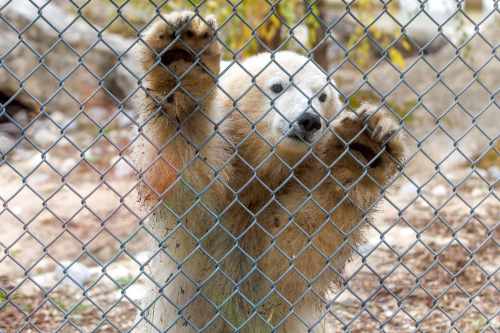
Nature is a big part of the Canadian economy — but how big? We crunched the numbers.

Julia-Simone Rutgers 8 minute read Preview

Nature is a big part of the Canadian economy — but how big? We crunched the numbers.

Julia-Simone Rutgers 8 minute read Friday, May. 8, 2026

Canada’s vast landscape, which boasts 20 per cent of the world’s freshwater, a quarter of global wetlands and 28 per cent of its boreal forests, is critical to its economy. Natural resource industries — forests, farms, fisheries, mining and oil and gas — together make up approximately seven per cent of Canada’s gross domestic product.

Tension exists between expanding these industrialized sectors and protecting the ecosystems on which they depend.

In Manitoba, some worry protecting the Seal River Watershed, which spans more than 50,000 square kilometres in the province’s north, will hinder opportunities in mineral resources and hydro; to the east, critical mineral mining ambitions in Ontario’s Ring of Fire clash with the protection of the Hudson and James Bay Lowlands, the second-largest carbon sink on earth; and in B.C., Coastal First Nations have protested that lifting the large tanker ban through their waters will endanger the protected Great Bear Rainforest.

These tensions make it easy to frame nature as the antithesis of economic activity, if it’s always put in opposition to projects that are described as growing Canada’s wealth, sovereignty and security.

Read
Friday, May. 8, 2026

Bear hunting and conservation questions

Jessica Scott-Reid 4 minute read Friday, May. 8, 2026

You don’t have to be an animal rights activist to oppose black bear hunting in Manitoba. You also don’t have to trade in your ethics in order to understand biology. Most animal and nature-loving Canadians can do it all: understand science and care about animal suffering. Well, unless your paycheque requires otherwise.

Such is the case for the author of a recent article for the Free Press (Why claims of sentience can’t guide black bear policy, Think Tank, April 16), Mark Hall, who conservation-washes the killing of black bears in our province. The B.C.-based hunting advocate also conveniently failed to mention his vested interest in the issue, including that the organization he works for is funded by companies in the trophy hunting business. He also failed to follow the actual science.

The fact is, framing Manitoba’s spring black bear hunt as a conservation measure grounded in biology just doesn’t hold up. Especially since it is also marketed by local companies as trophy hunting. “During your bear hunt you will be placed over an active bear bait site (and) with a little patience and some determination you will be able to harvest a trophy of a lifetime,” states one company’s website.

Lesley Fox, executive director of Canadian wildlife protection charity The Fur Bearers, says “heralding the spring bear hunt as conservation is a public relations tactic that supports special interests, not wildlife.”

Relocation of program for young moms earns poor marks

Maggie Macintosh 5 minute read Thursday, May. 7, 2026

The Winnipeg School Division is facing backlash over plans to relocate its holistic education program for pregnant teenagers and young moms.

Starting in September, the Adolescent Parent Centre — an off-campus program that’s been housed at 136 Cecil St. since 1989 — will operate inside a North End high school.

“One of the big reasons I wanted to go is because I knew I’d be in a school surrounded by a bunch of people who were in the exact same situation as me,” said Billie Pryor, a 2023 graduate who enrolled when she, then 14, was pregnant with the first of her three children.

Pryor, 20, said the student population, free on-site daycare rooms and distance from traditional high schools, where gossip is commonplace and physical fights break out, were part of its appeal.

Parents irked after school ditches Mother’s Day

Maggie Macintosh 4 minute read Preview

Parents irked after school ditches Mother’s Day

Maggie Macintosh 4 minute read Wednesday, May. 6, 2026

Winnipeg families are decrying an elementary school’s decision to rebrand an annual tradition — making macaroni necklaces and other crafts for Mother’s Day — in the name of inclusion.

Grade 1 and 2 teachers at Sage Creek School informed parents this week that their children will bring home “family gifts” later this spring.

Instead of making items specifically for Mother’s Day or Father’s Day, student-made creations will be distributed on May 15, the International Day of Families.

“Where is the line? What is next? At what point are you being more exclusive than inclusive?” said Ashley Dolphin, a mother of two, including a Grade 1 student at the kindergarten-to-Grade 8 school.

Read
Wednesday, May. 6, 2026

City missing opportunity to help the homeless, save significant amount of money

Dan Lett 5 minute read Preview

City missing opportunity to help the homeless, save significant amount of money

Dan Lett 5 minute read Wednesday, May. 6, 2026

By all accounts, Winnipeg could face a tsunami of homelessness this summer. And, by many of those same accounts, Winnipeg is woefully unprepared.

Last month, End Homelessness Winnipeg released a new audit of the number of people living on Winnipeg streets and found that it had risen exponentially over the last year. The best, current estimate is that more than 8,200 Winnipeggers were living without adequate housing, and over half that number meeting the definition of chronic homelessness.

Agencies that support the homeless population have warned the city and province that warmer weather usually expands the number of people living rough on the streets. They have pleaded for more immediate help to deal with this impending crisis.

Government is responding, albeit rather unevenly.

Read
Wednesday, May. 6, 2026

Teacher spots in demand after certification changes

Maggie Macintosh 4 minute read Preview

Teacher spots in demand after certification changes

Maggie Macintosh 4 minute read Monday, Apr. 27, 2026

Universities are being flooded with applications from aspiring teachers now that it’s easier to become certified in Manitoba.

Following years of struggle to fill available seats, faculties of education are scaling up after-degree programs this fall to meet newfound demand.

The University of Manitoba is adding 105 undergraduate seats in September, with a specific focus on graduating more kindergarten-to-Grade 8 teachers.

“We need to get more fully trained teachers out in the field to address the provincial needs. We can’t have classrooms without teachers,” education dean Jan Stewart said.

Read
Monday, Apr. 27, 2026

Young activists fight for kids’ voting rights in trustee elections

Maggie Macintosh 5 minute read Preview

Young activists fight for kids’ voting rights in trustee elections

Maggie Macintosh 5 minute read Monday, Apr. 27, 2026

It doesn’t sit right with a pair of St. Boniface students that they don’t get a say in who’s elected to the nine-seat governing board in the Louis Riel School Division.

A petition to lower the age of voter eligibility in trustee elections has been circulating during recess at École Henri-Bergeron in recent months.

Grade 5 students Libby and Helen are behind the campaign.

“It’s really, really unfair that adults get to make ginormous decisions about our learning and we don’t even get to vote for (them),” Libby, 10, told the Free Press.

Read
Monday, Apr. 27, 2026

Advocates praise move to ban social media use among youths

Nicole Buffie 5 minute read Preview

Advocates praise move to ban social media use among youths

Nicole Buffie 5 minute read Sunday, Apr. 26, 2026

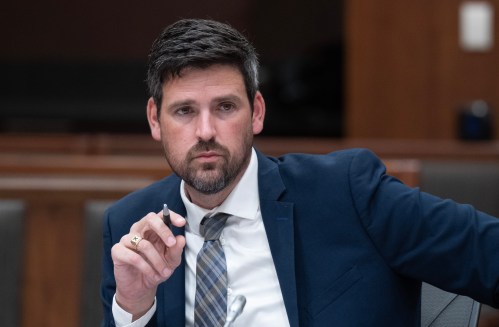
Child advocates are praising the Manitoba government for announcing its intention to ban the use of social media and artificial intelligence chatbots for youths.

Premier Wab Kinew told a crowd at a party event Saturday night the NDP government will move to restrict children from using social media accounts and artificial intelligence chatbots. The proposal is intended to protect kids from technology platforms that he says hurt their development.

Details on the plan are scant, like the age limit he is considering or how a ban would be enforced. He did not speak to reporters after his speech and was not available for comment Sunday.

Kinew’s director of communications, Amy Tuckett-McGimpsey, said the premier will likely speak more about the idea in the coming days.

Read
Sunday, Apr. 26, 2026
No Subscription Required

The pitfalls of increased use of AI in policing

Christopher J. Schneider 5 minute read Tuesday, Apr. 21, 2026

As a part of its body-worn camera program, the RCMP recently completed a pilot project using artificial intelligence to draft reports. The AI-generated reports are created from audio captured from officers’ body cameras. A report can be drafted in mere seconds. The pilot, which ran for about six months and concluded in January, occurred across eight detachments in British Columbia generating nearly 800 reports.

Harnessing AI to write police reports is replete with some serious and unresolved concerns and must be immediately discontinued.

It isn’t even entirely clear why police need to use AI in the first place.

The primary justification for the expanding use of AI to generate police reports across law enforcement is to free police from the administrative burden of having to write reports in the first place. The idea is that officers could do more relevant police work, presumably patrol work.

No Subscription Required

Former minister Catherine McKenna blasts the heads of Canadian oil companies

Stéphane Blais, The Canadian Press 5 minute read Preview
No Subscription Required

Former minister Catherine McKenna blasts the heads of Canadian oil companies

Stéphane Blais, The Canadian Press 5 minute read Monday, May. 11, 2026

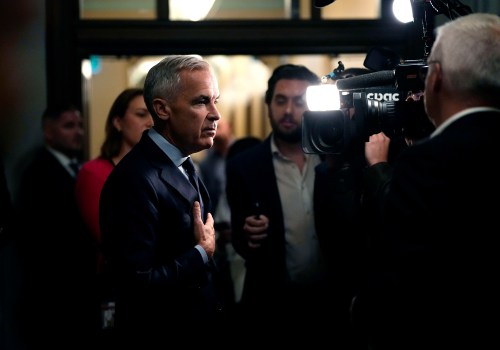
MONTRÉAL - Former environment minister Catherine McKenna says the leaders of Canada's oil industry are figures close to American President Donald Trump who are "taking us for fools" and putting both the economy and environment at risk.

Canada's official greenhouse gas inventory was published last week. It showed that in 2024, oil and gas production was the only sector in the country to have increased its greenhouse gas emissions.

"In Canada, we expect, Canadians expect everyone to step up and do their parts. But instead, we have oil and gas, which is largely foreign-owned, largely U.S.-owned, who aren't doing their part. All they're doing is increasing our emissions and demanding subsidies," McKenna said in an interview while at Montreal's climate summit last week.

She adds that oil companies are "demanding that Canadian taxpayers pay the bill for cleaning up the pollution they cause and building pipelines they won’t risk their own money on."

Read
Monday, May. 11, 2026