

Consideration for the poor
Throne speech an opportunity to address needs of impoverished
Advertisement
Read this article for free:
or
Already have an account? Log in here »
To continue reading, please subscribe:

Digital Subscription
One year of digital access for only $205*
- Enjoy unlimited reading on winnipegfreepress.com
- Read the E-Edition, our digital replica newspaper
- Access News Break, our award-winning app
- Play interactive puzzles
*First annual payment billed as $205.00 + GST for one year. This annual subscription will automatically renew at $233.00 + GST every 52 weeks (10% off the regular annual price of $259.35). Offer available to new and qualified returning subscribers only. Cancel any time.
To continue reading, please subscribe:
Add Free Press access to your Brandon Sun subscription for only an additional
$1 for the first 4 weeks*
- Enjoy unlimited reading on winnipegfreepress.com
- Read the E-Edition, our digital replica newspaper
- Access News Break, our award-winning app
- Play interactive puzzles
*Your next Brandon Sun subscription payment will increase by $1.00 and you will be charged $17.95 plus GST for four weeks. After four weeks, your payment will increase to $24.95 plus GST every four weeks.
Read unlimited articles for free today:
or
Already have an account? Log in here »
Hey there, time traveller!
This article was published 16/11/2015 (3965 days ago), so information in it may no longer be current.
Manitoba’s economy has outpaced the rest of the country since 2008. It now leads every province in employment. Prospects for future growth are high. Lt.-Gov. Janice Filmon will surely be directed by Manitoba’s NDP government to highlight these economic achievements in her throne speech today.
However, Filmon should also mention the distressingly high rates of poverty in this province. Manitoba’s rising prosperity continues to sideline those parts of its population living in poverty — disproportionately indigenous people, newcomers, single parents and individuals living alone. This throne speech should be an opportunity to address the needs of these Manitobans with commitments for significant investments in poverty reduction.
There is no universally accepted measure of poverty, but by any account its toll is high in Manitoba. Using one of the broadest indices of poverty, including First Nations living on reserve, some 228,000 Manitobans were below Statistics Canada’s low-income measure. By every measure, children are disproportionately affected, leaving a lasting legacy of stunted opportunities.
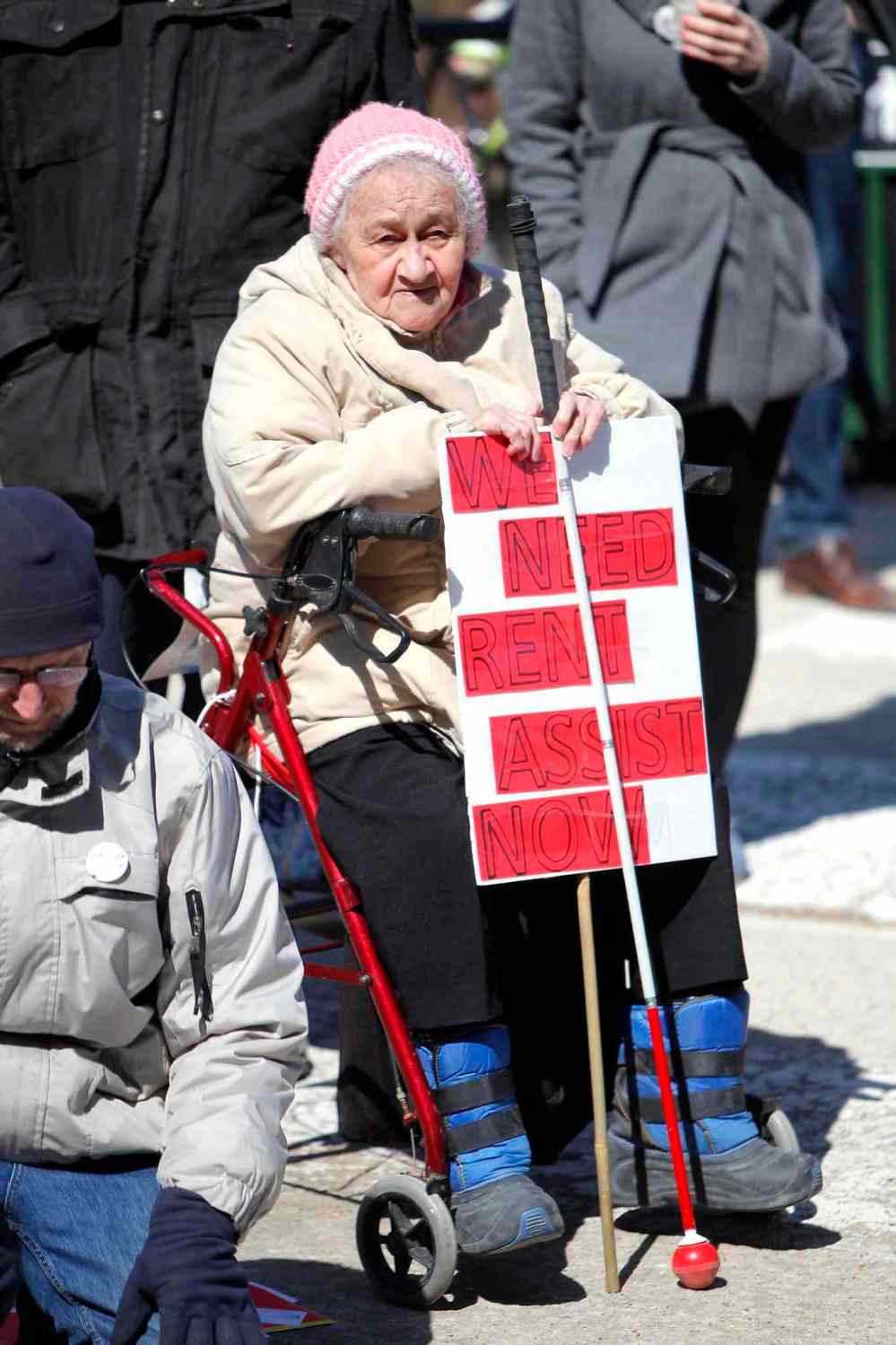
Poverty puts expensive burdens on the justice system, as the poor are both more likely to be incarcerated and to be victims of crime. In Manitoba, it costs more than $70,000 per year to keep an inmate in jail. Manitoba also spends a half-billion dollars a year keeping children in care, many of whom are from families struggling with poverty. Children who live in poverty have lower educational outcomes and lower-paying jobs, contributing less to tax revenues.
Poverty also weighs heavily on the health system. In research on the social determinants of health published by the Canadian Centre for Policy Alternatives earlier this year, poverty was found to have a greater association with reduced life expectancy than all forms of cancer combined. Men in low-income neighbourhoods in Manitoba can expect to live 10 years less than men in high-income areas; for women, the gap is eight years. Poor housing, inadequate diet and the ever-present stress of making ends that just won’t meet wear down the body, aging it before its time.
Poverty costs all of us. Fortunately, there are positive steps government can take. Over the past year, Make Poverty History Manitoba has been consulting with community organizations to develop a plan based on the top actions government should take to reduce poverty. Actions were rated in terms of how much they would reduce both the depth and breadth of poverty, with a focus on actions that can be implemented in the short term.
Among the top actions for reducing poverty is the raising of benefits for people on Employment and Income Assistance (EIA). An individual living on EIA receives only $195 per month to cover all basic needs aside from rent. This amount has not been increased in more than a decade. It leaves only about $4 per day for food costs — less than half the cost of a basic healthy diet in Winnipeg based on Canada’s Food Guide.
Manitoba should double the basic-needs budget to reflect the actual cost of food and other basic necessities. Longer term, a transparent process with community participation should be established to ensure EIA budgets continue to reflect the actual costs of basic necessities in Manitoba and that these budgets are updated annually.
Other priorities identified through consultations include increasing the minimum wage, investing in social housing, creating more affordable child-care spaces, and increasing funding for community-based mental-health services.

No one policy change can end poverty, but these steps would make a significant impact on poverty in Manitoba. We should also stress: we cannot afford to take steps backwards and we should maintain poverty-reduction measures that have already been implemented. A comprehensive approach is needed with clear targets and timelines for poverty reduction against which we can measure the government’s progress.
Traditionally, the throne speech concludes with the hope “Divine providence will guide your deliberations in the best interests of all our citizens.”
Let us add only “all our citizens” must especially include consideration for the poorest among us.
Josh Brandon is the chairman of Make Poverty History Manitoba.
Related Articles
Throne speech kicks off election strategy
Advertisement Advertise With Us
Advertisement Advertise With Us
History
Updated on Monday, November 16, 2015 7:43 AM CST: Adds photo