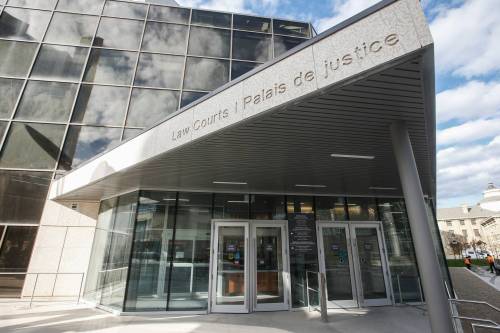
Board impairs civic decision-making
Read this article for free:
or
Already have an account? Log in here »
To continue reading, please subscribe:

Digital Subscription
One year of digital access for only $205*
- Enjoy unlimited reading on winnipegfreepress.com
- Read the E-Edition, our digital replica newspaper
- Access News Break, our award-winning app
- Play interactive puzzles
*First annual payment billed as $205.00 + GST for one year. This annual subscription will automatically renew at $233.00 + GST every 52 weeks (10% off the regular annual price of $259.35). Offer available to new and qualified returning subscribers only. Cancel any time.
To continue reading, please subscribe:
Add Free Press access to your Brandon Sun subscription for only an additional
$1 for the first 4 weeks*
- Enjoy unlimited reading on winnipegfreepress.com
- Read the E-Edition, our digital replica newspaper
- Access News Break, our award-winning app
- Play interactive puzzles
*Your next Brandon Sun subscription payment will increase by $1.00 and you will be charged $17.95 plus GST for four weeks. After four weeks, your payment will increase to $24.95 plus GST every four weeks.
Read unlimited articles for free today:
or
Already have an account? Log in here »
Hey there, time traveller!
This article was published 28/11/2022 (1397 days ago), so information in it may no longer be current.
When Manitoba’s provincial government passed Bill 37 last year, it was lost in the headlines of a global pandemic, but its potential impact on the city of Winnipeg was not lost on then-mayor Brian Bowman.
He made a rare appearance at the legislature to speak in opposition, calling the bill “an erosion of local democracy, moving decisions on land-use planning out of the hands of democratically elected representatives.”
Bill 37 gave the Manitoba Municipal Board, a provincially appointed tribunal, jurisdiction to hear appeals to development decisions such as re-zoning applications which have been previously approved by Winnipeg city council and other civic departments, thereby giving the board the power to overturn approvals and block projects from proceeding.

SUPPLIED IMAGE
Aerial image shows the proposed site of an eight-storey, 55-plus apartment building, which received civic zoning approval but was rejected by the provincially appointed municipal board.
The municipal board appeal stage is a new layer added to the city of Winnipeg’s already-comprehensive process for re-zoning and other land-use applications, which often takes between 12 and 18 months to complete.
During this time, developers must seek approvals from planning property and development, public works, water and waste, transit, heritage, fire and paramedic service, and zoning.
Projects must be approved at community committee, then standing policy committee, executive policy committee and, finally, city council. Throughout the process, opportunity is given for public feedback, and elected officials are available to discuss local concerns. There is also an existing appeal mechanism available beyond these approvals.
To move through the process, developers must adhere to stringent criteria laid out in numerous planning documents. To make an application, developers must hire a broad range of consultants, including planners, architects, landscape architects, engineers, arborists and lawyers.
The cost of these consultants is often added to real-estate and carrying costs to create a significant up-front investment and a high level of risk just to apply for re-zoning.
Developers can manage this risk by working closely with the various city departments as the project proceeds. The design team can respond to guidance and feedback throughout the process to mitigate risk and improve the likelihood of approval.
This collaborative opportunity does not exist with the municipal board, which is disconnected from the process, and introduced through a public hearing triggered after a city approval receives 25 or more people registered in opposition.
Last summer, the municipal board heard its first re-zoning appeal in Winnipeg, an eight-storey, 199-unit, 55-plus apartment building proposed for an open field south of a large heritage building at the intersection of Roblin Boulevard and William Clement Parkway in the Ridgedale area of Charleswood.
After numerous design revisions, the re-zoning was approved by all city departments, receiving unanimous support at Assiniboia community committee, and 12-3 approval at city council. Almost seven months after this decision, the municipal board handed down its appeal verdict, overturning the previous approvals and rejecting the application.
The municipal board’s key reasoning for rejection was not based on unmet objective criteria or procedural conflicts, but a subjective opinion that an eight-storey building was ‘incompatible with the character, context, and built form of the surrounding dwellings and established neighbourhood.’
The board’s key reasoning for rejection was not based on unmet objective criteria or procedural conflicts, but a subjective opinion that an eight-storey building was “incompatible with the character, context, and built form of the surrounding dwellings and established neighbourhood.”
By rejecting the project, the municipal board has denied an opportunity for around 400 people to find a new home in an attractive neighbourhood, without taxpayers being on the hook for building and maintaining more infrastructure to support it.
The entire Ridgedale neighbourhood is 200 acres of land supporting 700 residents. This one development, set beside an 18-lane intersection on two major roadways and future rapid transit line, would add 400 residents while consuming only four acres of land.
That new population would support neighbourhood businesses and community amenities, lower the city’s carbon footprint, reduce the infrastructure and services burden on taxpayers and city budgets, and provide much-needed affordable and diverse housing options in the community.
A project being vetoed long after receiving civic approval, based on the tribunal’s subjective opinion, adds a significant wild card to all development applications. The municipal board is made up of provincial government appointees, so if citizens do not like the board members’ decisions, the recourse of voting them out at the next election does not exist, as it does with democratically elected councillors.
A project being vetoed long after receiving civic approval, based on the tribunal’s subjective opinion, adds a significant wild card to all development applications.

Canada’s population is aging, and household sizes are decreasing. We are facing the impacts of a global pandemic, and the civic government is broke.
We are in the middle of a climate crisis, an affordability crisis and a housing crisis. Cities and neighbourhoods must be allowed to evolve and respond to change.
Every long-term plan guiding the city of Winnipeg’s growth stresses the need for higher-density neighbourhoods and residential intensification of existing communities, yet the process for infill is far lengthier and costlier, and comes with significantly more risk, than the process for suburban greenfield development.
With so many obstacles and an already-comprehensive civic approvals process in place, any new uncertainty created by the municipal board will only result in an even greater push for development to consume farmland at the outer edges of the city, where no public opposition and significantly less risk exist.
Brent Bellamy is creative director at Number TEN Architectural Group.

Brent Bellamy is creative director for Number Ten Architectural Group.
Our newsroom depends on a growing audience of readers to power our journalism. If you are not a paid reader, please consider becoming a subscriber.
Our newsroom depends on its audience of readers to power our journalism. Thank you for your support.
Related Articles
Provincial authority puts kibosh on city-approved 55-plus complex in Charleswood