

CMHR trustees should stay in their mandated lane, Palestinian organization president says after report reveals divide over exhibition content

Advertisement
Read this article for free:
or
Already have an account? Log in here »
To continue reading, please subscribe:

Digital Subscription
One year of digital access for only $205*
- Enjoy unlimited reading on winnipegfreepress.com
- Read the E-Edition, our digital replica newspaper
- Access News Break, our award-winning app
- Play interactive puzzles
*First annual payment billed as $205.00 + GST for one year. This annual subscription will automatically renew at $233.00 + GST every 52 weeks (10% off the regular annual price of $259.35). Offer available to new and qualified returning subscribers only. Cancel any time.
To continue reading, please subscribe:
Add Free Press access to your Brandon Sun subscription for only an additional
$1 for the first 4 weeks*
- Enjoy unlimited reading on winnipegfreepress.com
- Read the E-Edition, our digital replica newspaper
- Access News Break, our award-winning app
- Play interactive puzzles
*Your next Brandon Sun subscription payment will increase by $1.00 and you will be charged $17.95 plus GST for four weeks. After four weeks, your payment will increase to $24.95 plus GST every four weeks.
Read unlimited articles for free today:
or
Already have an account? Log in here »
The head of the Canadian Palestinian Association of Manitoba says Canadian Museum for Human Rights trustees should stay out of exhibition decisions, after a report revealed concerns over a contentious display.
Ramsey Zeid, a Winnipeg businessman and president of the association, said Wednesday board trustees are responsible for ensuring the museum follows its mandate — not deciding what belongs on its walls.
“It’s not really their job to approve or disapprove exhibits,” Zeid said. “Their job is to make sure that the museum is operating and following their mandate, properly and legally, which the museum absolutely is. That’s the job of the board of trustees, not to approve or disapprove exhibits.”
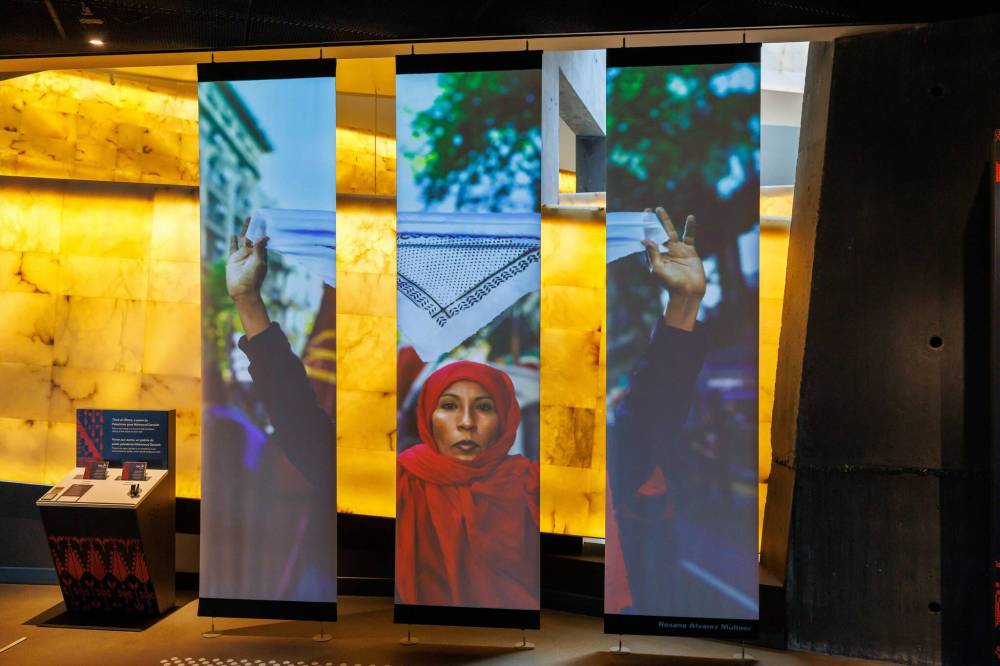
His comments followed a Globe and Mail report Wednesday revealing that several CMHR trustees raised concerns about the museum’s Palestine Uprooted: Nakba Past and Present exhibition months before it opened in June, with some unsuccessfully pushing for it to be delayed or reworked.
The fifth-floor exhibition examines the forced displacement of Palestinians beginning in 1948 and its impact on Palestinian Canadians through to the present day.
Nakba, Arabic for “catastrophe,” refers to the displacement and dispossession of roughly 750,000 Palestinians during the 1948 Arab-Israeli war that followed Israel’s declaration of independence. The exhibition uses artifacts and video testimonies to tell personal stories of Palestinian Canadians.
Zeid, who served on the exhibition’s advisory committee, said museum staff independently researched and verified the material presented.
“They didn’t just come and take my word for it,” he said. “We advised them on different things and we were with them all throughout the whole process. But at the end of the day, they did their own research. When we told them something, they went and fact-checked it.”
The exhibition has drawn criticism, including from Gail Asper, whose family spearheaded efforts to establish the CMHR in Winnipeg. Last month, Asper said her family would no longer support the museum financially, accusing it of fanning the “flames of antisemitism.”
Asper said the exhibition lacked important historical context, including the displacement of an estimated 850,000 Jews who were expelled or fled from Arab countries following Israel’s creation.
The museum has stood by the exhibition.
“I am grateful for the outpouring of support for the museum and the exhibit and for me personally in the face of sustained attacks on my leadership,” museum CEO Isha Khan said in a statement Wednesday.
“I echo my previous comments: Palestinian human rights stories belong in our collective memory and that sharing those stories is squarely within our mandate as a museum for human rights. I am deeply appreciative of those Palestinian Canadians whose stories we are being entrusted to share in the exhibit and who are too often being marginalized in the media coverage and conversations about this exhibit.”
The Globe story said internal meeting minutes from last November through May show the board was divided over the display, with some trustees particularly concerned about its connection of events from the 1940s with the present-day war between Israel and Hamas.
MIKE SUDOMA / FREE PRESS FILES
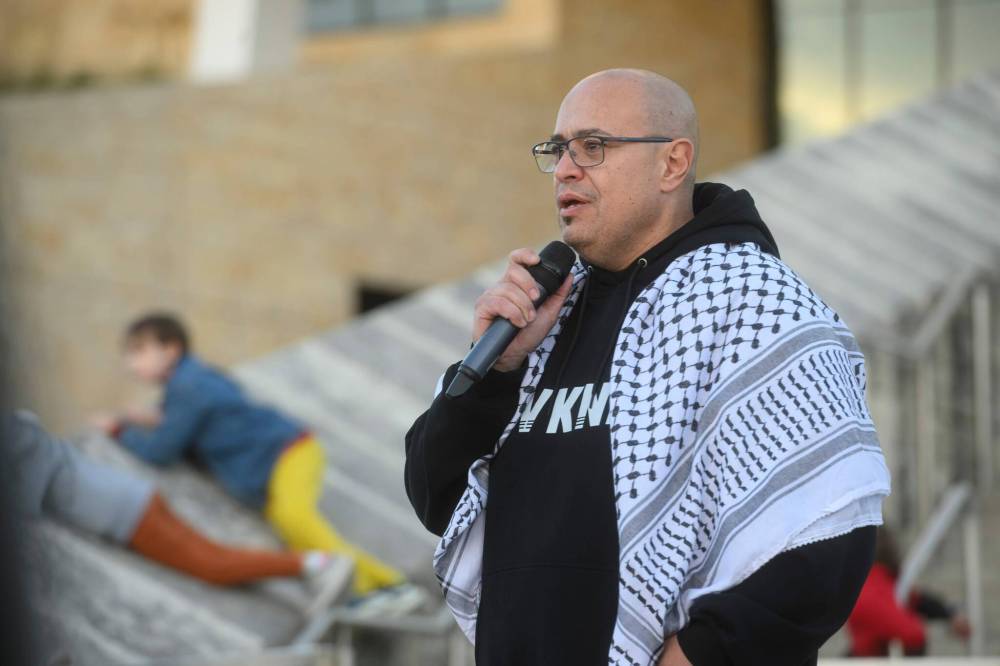
Canadian Palestinian Association of Manitoba President Ramsey Zeid
Several board members proposed delaying the exhibition’s opening to allow for public consultation and address potential “reputational risk.” At least five formal motions were brought forward at meetings last November and in February and May, ranging from postponing the exhibition to restructuring it. A majority of trustees voted against the proposals.
“The function of the board is governance,” CMHR board chair Benjie Nycum said in an emailed statement.
“It is expected that a board composed of passionate Canadians with a range of professional and lived experience with human rights will have debates and at times disagreements.
“Meeting minutes record discussions raised by trustees, but the raising of an issue and its presence in the minutes does not imply that every member of the board agreed with the concern or sentiment expressed. Ultimately, the will of the board is captured in the motions that are passed or defeated.”
The Globe also reported multiple major donors paused fundraising campaigns before the exhibition opened, which contributed to a shortfall in the museum’s financial targets.
B’nai Brith Canada CEO Simon Wolle said Wednesday the museum “is now facing the ramifications of ignoring calls for transparency and engagement with affected communities. It demonstrates the collapse of the public’s trust in this institution.”
“The CMHR’s reputation has already been significantly damaged by the failure of the museum’s leadership and is in need of immediate repair,” he said.
Last month, the museum told the Free Press attendance had risen 25 per cent since the exhibition opened June 27 compared with the same period last year — 6,152 visitors from 4,938.
Zeid said his association is also looking to begin its own fundraising effort for the museum.
The controversy has extended beyond donors.

JOHN WOODS / THE CANADIAN PRESS FILES
Isha Khan, CEO of the Canadian Museum for Human Rights
Longtime museum trustee Mark Berlin resigned in June over concerns about missing historical context and the exhibition’s potential to fuel growing antisemitism.
“You’re only telling half a story because you’re not getting the historical context,” Berlin told The Canadian Press at the time.

Federal Heritage Minister Marc Miller also criticized the exhibition in late June, saying the museum erred by not identifying Hamas as a terrorist organization.
“Not identifying Hamas as a terrorist organization is, I think, a failure,” Miller told The Canadian Press.
Noah Shack, President and CEO, Centre for Israel and Jewish Affairs, said the exhibition has “pitted communities against one another and emboldened audiences to express hatred against Jews.”
He called it a failure of governance, curation and public trust.
scott.billeck@freepress.mb.ca
Scott Billeck is a general assignment reporter for the Free Press. A Creative Communications graduate from Red River College, Scott has more than a decade’s worth of experience covering hockey, football and global pandemics. He joined the Free Press in 2024. Read more about Scott.
Every piece of reporting Scott produces is reviewed by an editing team before it is posted online or published in print — part of the Free Press‘s tradition, since 1872, of producing reliable independent journalism. Read more about Free Press’s history and mandate, and learn how our newsroom operates.
Our newsroom depends on a growing audience of readers to power our journalism. If you are not a paid reader, please consider becoming a subscriber.
Our newsroom depends on its audience of readers to power our journalism. Thank you for your support.
Scott Billeck is a general assignment reporter for the Free Press. A Creative Communications graduate from Red River College, Scott has more than a decade’s worth of experience covering hockey, football and global pandemics. He joined the Free Press in 2024. Read more about Scott.
Every piece of reporting Scott produces is reviewed by an editing team before it is posted online or published in print — part of the Free Press‘s tradition, since 1872, of producing reliable independent journalism. Read more about Free Press’s history and mandate, and learn how our newsroom operates.
Our newsroom depends on a growing audience of readers to power our journalism. If you are not a paid reader, please consider becoming a subscriber.
Our newsroom depends on its audience of readers to power our journalism. Thank you for your support.
Related Articles
Palestinian Canadian stories belong No museum can tell the whole story CMHR ‘fans flames of antisemitism,’ Asper says, ending support from family that led effort to create it

Advertisement Advertise With Us
Advertisement Advertise With Us
History
Updated on Thursday, August 27, 2026 10:45 AM CDT: Corrects quote attribution to Noah Shack