

The right plan for reliable energy
Advertisement
Read this article for free:
or
Already have an account? Log in here »
To continue reading, please subscribe:

Digital Subscription
One year of digital access for only $205*
- Enjoy unlimited reading on winnipegfreepress.com
- Read the E-Edition, our digital replica newspaper
- Access News Break, our award-winning app
- Play interactive puzzles
*First annual payment billed as $205.00 + GST for one year. This annual subscription will automatically renew at $233.00 + GST every 52 weeks (10% off the regular annual price of $259.35). Offer available to new and qualified returning subscribers only. Cancel any time.
To continue reading, please subscribe:
Add Free Press access to your Brandon Sun subscription for only an additional
$1 for the first 4 weeks*
- Enjoy unlimited reading on winnipegfreepress.com
- Read the E-Edition, our digital replica newspaper
- Access News Break, our award-winning app
- Play interactive puzzles
*Your next Brandon Sun subscription payment will increase by $1.00 and you will be charged $17.95 plus GST for four weeks. After four weeks, your payment will increase to $24.95 plus GST every four weeks.
Read unlimited articles for free today:
or
Already have an account? Log in here »
Manitoba Hydro’s long-term energy plan is before the Public Utilities Board for public hearings. Debate is healthy, but not when critics ignore the facts.
Our integrated resource plan would add more than 1,700 megawatts of new capacity to our energy system. Electricity demand in Manitoba is growing and could exceed available capacity during peak periods within a few years. We won’t let that happen.
That’s why we carefully examined all the options and came up with solutions that work in Manitoba’s climate and continue to provide safe, reliable service for customers at rates that are among the lowest in North America.
Tim Smith / Brandon Sun files
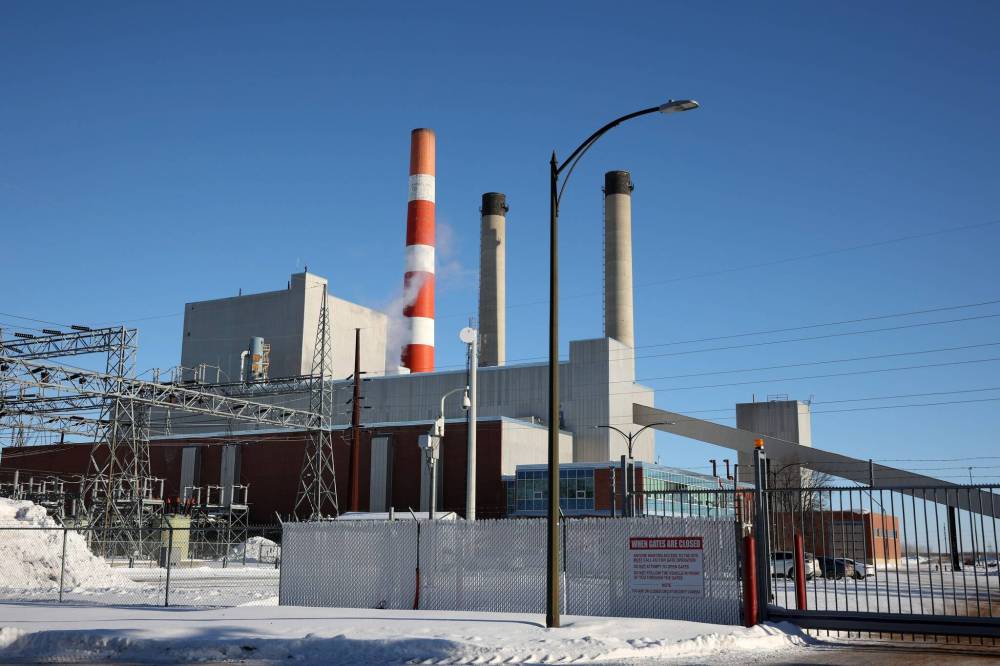
Manitoba Hydro’s Brandon generating station.
Our proposed plan includes three new combustion turbines at Brandon Generating Station that would add 750 megawatts of dispatchable capacity, available whenever required.
Critics argue we’re ignoring alternative sources of energy, such as wind, solar and battery storage.
They miss a fundamental point: these technologies do not do the same job. When demand spikes on a frigid January evening, operators can turn on a combustion turbine when it is needed. They cannot make the wind blow or the sun shine.
We studied all the options extensively, using state-of-the-art, industry standard modelling software. The results were clear. Solar performs poorly during Manitoba’s shortest and darkest winter days, while batteries cannot sustain the extended periods of extreme cold and high demand that characterize Manitoba winters.
Wind will play an important role in our future as part of a balanced, diversified energy system. We purchase power now from two wind farms. And we’re procuring up to 600 megawatts of additional energy from Indigenous-majority-owned wind projects. But backup generation is still needed when the wind is not blowing.
While some critics focus on the impact of cold weather on combustion turbines, the reality is that every generation source, including hydro, wind, solar and batteries, experiences occasional outages for maintenance, repairs or other operational reasons.
Even so, Manitoba Hydro’s existing Brandon combustion turbines achieve an average start-up reliability of 91 per cent, despite being more than two decades old. Continued investments will further strengthen performance, and the new turbines we are proposing are expected to deliver significantly higher reliability, ensuring a dependable source of power during periods of peak demand and system stress.
Others criticize the type of turbines we are proposing. The reason we selected lower-efficiency combustion turbines is simple: they are intended to run only during peak demand and drought conditions. Spending substantially more on higher-efficiency units that would operate only occasionally would increase costs without delivering meaningful additional benefits to customers.
We also hear conflicting claims that Manitoba Hydro’s plan will achieve net-zero emissions while simultaneously causing climate harm. Those arguments cannot both be true. The reality is that Manitoba’s system is already 97 per cent renewable hydroelectricity, and our long-term plan preserves one of the cleanest electricity grids in North America.
Some critics point to batteries in Ontario as proof that gas generation is obsolete.
Yet Ontario still relies heavily on natural gas as one of its largest sources of electricity. If batteries alone were the answer, they would already play a far larger role there. Manitoba Hydro’s hydroelectric system has elements that are effectively batteries.
Certain commentators cite North Dakota, Saskatchewan and Alberta as proof Manitoba is underestimating wind and solar. What they ignore is that those jurisdictions built renewable generation primarily to reduce reliance on costly fossil fuel baseload generation, particularly coal.
Manitoba starts from a very different position. We already have abundant low-cost hydroelectric baseload power.
Electricity rates in these jurisdictions are significantly higher than in Manitoba.
For example, Manitoba Hydro’s residential rate of 10.52 cents per kilowatt hour is significantly lower than the comparable rate in Regina (17.89 cents per kilowatt hour) and North Dakota (approximately 16 cents per kilowatt hour).
Here, wind helps meet growing demand, but it does not eliminate the need for dependable backup generation.
That is why Manitoba Hydro is proposing a balanced approach that includes new wind generation, efficiency measures, hydroelectric upgrades and combustion turbines for reliability.

The goal is to keep the lights on at a price Manitobans can afford.
Debates and criticisms over Manitoba Hydro’s development plans are nothing new. They have been going on for over 50 years.
But through it all, our plans, as they have been executed, have resulted in this province having one of the greenest and most affordable energy systems in North America.
The results speak for themselves.
Hal Turner is chief operating officer at Manitoba Hydro.
Related Articles
Hydro’s planned $3B gas turbines purchase misguided, bad for environment, critics say
Advertisement Advertise With Us
Advertisement Advertise With Us