

City faces limits on sewage

Advertisement
Read this article for free:
or
Already have an account? Log in here »
To continue reading, please subscribe:

Digital Subscription
One year of digital access for only $205*
- Enjoy unlimited reading on winnipegfreepress.com
- Read the E-Edition, our digital replica newspaper
- Access News Break, our award-winning app
- Play interactive puzzles
*First annual payment billed as $205.00 + GST for one year. This annual subscription will automatically renew at $233.00 + GST every 52 weeks (10% off the regular annual price of $259.35). Offer available to new and qualified returning subscribers only. Cancel any time.
To continue reading, please subscribe:
Add Free Press access to your Brandon Sun subscription for only an additional
$1 for the first 4 weeks*
- Enjoy unlimited reading on winnipegfreepress.com
- Read the E-Edition, our digital replica newspaper
- Access News Break, our award-winning app
- Play interactive puzzles
*Your next Brandon Sun subscription payment will increase by $1.00 and you will be charged $17.95 plus GST for four weeks. After four weeks, your payment will increase to $24.95 plus GST every four weeks.
Read unlimited articles for free today:
or
Already have an account? Log in here »
Hey there, time traveller!
This article was published 16/11/2020 (2148 days ago), so information in it may no longer be current.
With recent headlines dominated by the American election and Manitoba’s COVID-19 spike, it is easy to understand how a seven-page administrative report presented last week to Winnipeg’s standing policy committee on water and waste might have slipped under the radar for most people. At the best of times, that committee rarely attracts public interest, but this report will have critical repercussions on our city for the next decade.
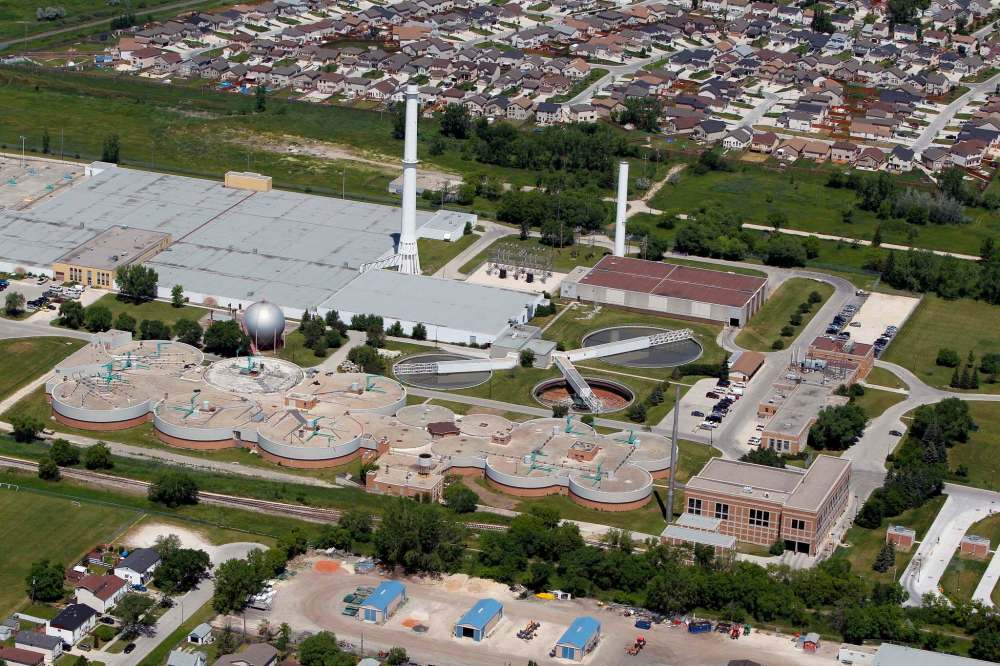
The simple explanation of the report’s findings is that Winnipeg’s ability to treat its sewage is quickly running out of capacity, and it will soon restrict the city’s ability to grow. The North End Sewage Treatment Plant is coming to the end of its service life, and replacing it requires a $1.8-billion investment, the largest infrastructure project in the city’s history. The project has been at the top of the city’s priority list for many years, but the scale of investment has led to kicking the can down the road for just as long.
The public service estimates the remaining capacity of Winnipeg’s sewage treatment is the equivalent of adding about 90,000 people to the population of the city. With Winnipeg growing by about 12,000 people per year and the sewage capacity divided between residential, commercial, and industrial uses, the projection is that the system will hit its limit in as soon as five years. A best-case scenario is a new treatment plant will be operational in eight years, creating a real possibility that development could be halted in the city.
Winnipeg’s economic and population growth has been driven largely by international immigration over the last decade and the federal government has already announced that it will increase immigration to record levels over the next three years in a bid to stimulate the post-pandemic economic recovery. Ensuring that we leverage this growth to maximize its impact will be critical to the city’s own fiscal rebuild.
This presents us with an important question — with a finite amount of growth left in the bank, how and where should we spend it?
Five percent of the remaining sewage capacity is set aside for surrounding municipalities with service sharing agreements. The report recommends that council be given regular capacity updates and large industrial developments will require council approval. It seems imperative however, that guidelines and targets also be set for where the remaining residential growth should be spent, with priority given to development that provides the most economic, social, and environmental benefit possible.
The Our Winnipeg Complete Communities Direction Strategy and Winnipeg’s Climate Change Action Plan both provide clear direction for any new policy. Each plan sets an intensification target of a minimum of 50 per cent of all new homes, single and multi-family, be accommodated as infill development within the existing built-up area of the city.
The impact of specifically targeting the majority of our remaining growth as infill would improve the city’s environmental footprint in part by reducing vehicle use, the source of 50 per cent of Winnipeg’s emissions. Higher density in more central neighbourhoods would promote shorter driving trips and make transit, cycling and walking more effective transportation alternatives. Better access to diverse and affordable housing options in mature neighbourhoods would encourage greater economic opportunity and social diversity. Increased neighbourhood density would help support existing businesses, schools and public amenities and reduce the need to expand city services and the construction of new infrastructure to support population growth.
The long-term effects of spending our remaining growth capacity on suburban greenfield development can already be seen in the crumbling streets, reduced services, and higher taxes that have come as a result of our city growing far less dense over the past several decades, constantly building more infrastructure for fewer people.

We have a choice. Within crisis there is opportunity. Facing sudden capacity limits on growth can be a turning point, a time to evaluate how we have done things in the past and an opportunity to change, by building a more sustainable and prosperous city for the future.
A corollary to this story is that to pay for the improvements to the North End Sewage Treatment Plant, the city and province will be asking the federal government to redirect $321 million from a fund earmarked for Winnipeg Transit. The investment could have made generational improvements to the service and capacity of public transit in Winnipeg.
As critical as it is, it is disappointing that the environmental and social impact of vastly improved public transit is being sacrificed to pay for a sewage treatment plant. With the two local governments spending well over half a billion dollars every year on roads, there may have been other infrastructure sources found. If we can implement a new vision for growth in the city, hopefully a renewed provincial commitment to transit will follow in its wake.
Winnipeg has unexpectedly arrived at a crossroads. The stunning realization that growth in the city suddenly has a finite capacity, means we will be forced to make hard decisions over the next decade. It is imperative that in doing this, we support the initiatives in Winnipeg’s new Residential Infill Strategy and other policy guiding documents such as Our Winnipeg and the Climate Change Action Plan. By setting hard targets for infill development that are carefully monitored, we can maximize the economic, social, and environmental benefits of the growth capacity our city has left.
Brent Bellamy is creative director at Number Ten Architectural Group.
Brent Bellamy is creative director for Number Ten Architectural Group.
Our newsroom depends on a growing audience of readers to power our journalism. If you are not a paid reader, please consider becoming a subscriber.
Our newsroom depends on its audience of readers to power our journalism. Thank you for your support.
Brent Bellamy is creative director for Number Ten Architectural Group.
Our newsroom depends on a growing audience of readers to power our journalism. If you are not a paid reader, please consider becoming a subscriber.
Our newsroom depends on its audience of readers to power our journalism. Thank you for your support.
Advertisement Advertise With Us
Advertisement Advertise With Us
History
Updated on Monday, November 16, 2020 8:20 AM CST: Adds photo
Updated on Tuesday, November 17, 2020 12:07 PM CST: Adds byline