

Parsing the past for our place in the here and now

Advertisement
Read this article for free:
or
Already have an account? Log in here »
To continue reading, please subscribe:

Digital Subscription
One year of digital access for only $205*
- Enjoy unlimited reading on winnipegfreepress.com
- Read the E-Edition, our digital replica newspaper
- Access News Break, our award-winning app
- Play interactive puzzles
*First annual payment billed as $205.00 + GST for one year. This annual subscription will automatically renew at $233.00 + GST every 52 weeks (10% off the regular annual price of $259.35). Offer available to new and qualified returning subscribers only. Cancel any time.
To continue reading, please subscribe:
Add Free Press access to your Brandon Sun subscription for only an additional
$1 for the first 4 weeks*
- Enjoy unlimited reading on winnipegfreepress.com
- Read the E-Edition, our digital replica newspaper
- Access News Break, our award-winning app
- Play interactive puzzles
*Your next Brandon Sun subscription payment will increase by $1.00 and you will be charged $17.95 plus GST for four weeks. After four weeks, your payment will increase to $24.95 plus GST every four weeks.
Read unlimited articles for free today:
or
Already have an account? Log in here »
Hey there, time traveller!
This article was published 20/10/2023 (1047 days ago), so information in it may no longer be current.
One morning last week, I went walking along the Red River just south of St. Andrews with my cousin, Claire. It’s chilly, and we’re bundled in sweaters, fingers tucked up into coat sleeves. It’s the first day this fall that I think I can smell snow, and it’s quiet enough to hear the water lapping at the shore.
We knew our ancestors’ farm would have been just a bit south of the cemetery where they lie buried, so we headed that way, with the river on our left, and the big homes of the town of St. Andrews on our right, with their tidy brickwork and well-kept lawns.
In a nation of newcomers, many of us have this same desire to know where we come from.
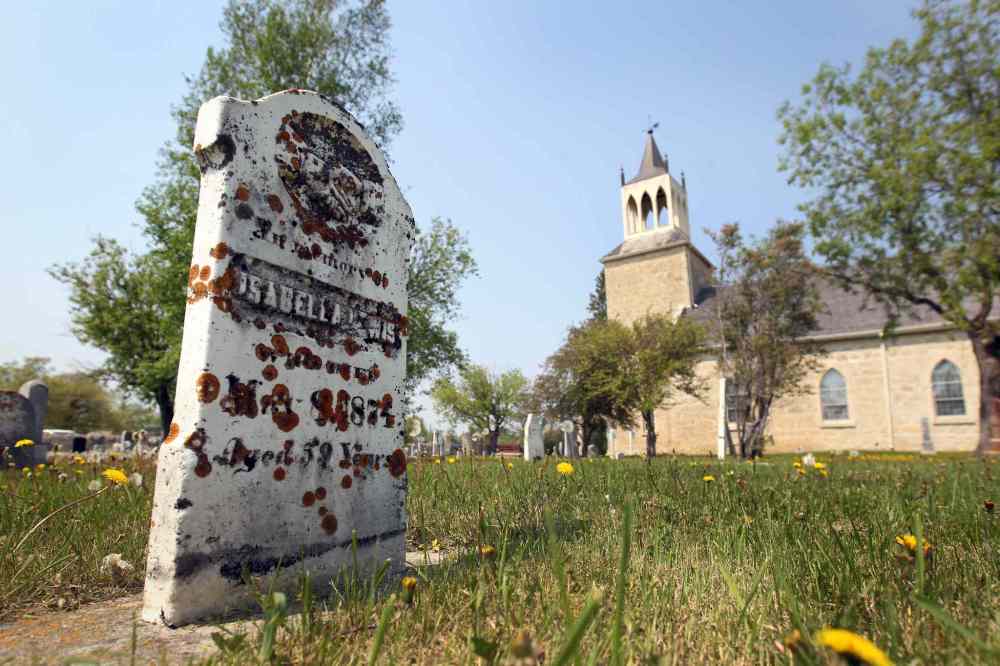
We embark on journeys both physical and archival. We trawl ancestry sites looking for hints and shreds of the places our people have been. We put pins in maps, and trace the path we took through countries and over oceans.
We find our ancestors, some running away from oppression, some running toward opportunity.
We want to be able to speak of a deeper history and a connection to a place that is not necessarily right here, but was part of the reason we came to be here after all.
We do this because land is important to identity.
We return to touch the ashes of a life we used to know or wish we did. We return with gratitude for hardship and sacrifice. We return to see if there is any trace of our time there.
We return to commune with ancestors, to bathe in the same river and gaze at the same sunset, to pray in the same place and in the same language, to attempt a crossing over an impossible, intangible bridge back in time.
There’s a story that’s been handed down in our family, of a journey to Fort Edmonton and back, by Red River cart. The Cree and Blackfoot were in open conflict at that time, and our family had to pass through their territories and risk getting caught in the crossfire or worse.
Through some explanation of relationships and demonstrating an ability to speak several languages, the matriarch of our family was able to broker passage. By way of passport, she was given a ring to wear, but years later, while threshing on the farm, the ring worked its way off her finger, and was lost forever.
We’re sadly used to watching the obliteration of land rights happen live, in scenes of screaming rockets and unspeakable anguish, in languages we don’t understand, or only spoken by our grandparents.
Standing beside Claire, looking at where the farm might have been, I supposed it could be somewhere nearby, buried under what is now someone’s driveway or backyard.
As we walked together through this translucent sunset landscape of past and present, we came upon a stone ruin, overlooking the river. The empty window frames stared wide-eyed, and the doorway gaped open. The whole structure was surrounded by a chain-link fence, 10-feet high.
This is the last farmhouse standing from the time when this land was populated by Métis families like mine.
The borders and custodianship of this area shifted slowly over time from First Nations to Métis, and now to those who have travelled any number of paths to arrive here. Maybe it is this slow shift that makes many of us feel different about where we live.
We’re sadly used to watching the obliteration of land rights happen live, in scenes of screaming rockets and unspeakable anguish, in languages we don’t understand, or only spoken by our grandparents.
We have no history of death raining down from the sky. That’s something that happens somewhere else.
Currently, it is impossible to mute the cries of suffering caused by this need to be connected to, to control, to claim, land. It’s impossible to know what to do, and even more impossible to consider that we have limited ways to help.
This need for a place to belong is so strong that rulers and individuals will inconceivably and unreservedly disregard the humanity of others to have it.
If we can walk beside one another in grief and shared humanity, then maybe we can manifest the kinship in this place that we wish for the rest of the world.

Perhaps, in these difficult times of trying to make sense of suffering and hate, we may direct our anguish toward a contemplation and a promise of tolerance and friendship here in our own home; to confront the difficult truth that contested lands, systemic oppression and enforced isolation exist here too.
We are neighbours to people directly affected by the world’s conflicts, and we are neighbours to people whose family heirlooms and ancestors are buried in backyards and school grounds nearby.
In a place like Canada, a place that is both a lost homeland and a refuge to those who have lost theirs, everything that happens in the world resonates here, too.
If we can walk beside one another in grief and shared humanity, then maybe we can manifest the kinship in this place that we wish for the rest of the world.
rebecca.chambers@freepress.mb.ca
Rebecca explores what it means to be a Winnipegger by layering experiences and reactions to current events upon our unique and sometimes contentious history and culture. Her column appears alternating Saturdays.
Our newsroom depends on a growing audience of readers to power our journalism. If you are not a paid reader, please consider becoming a subscriber.
Our newsroom depends on its audience of readers to power our journalism. Thank you for your support.
Rebecca explores what it means to be a Winnipegger by layering experiences and reactions to current events upon our unique and sometimes contentious history and culture. Her column appears alternating Saturdays.
Our newsroom depends on a growing audience of readers to power our journalism. If you are not a paid reader, please consider becoming a subscriber.
Our newsroom depends on its audience of readers to power our journalism. Thank you for your support.
Advertisement Advertise With Us
Advertisement Advertise With Us