

Indigenous identity is about more than self-declaration

Advertisement
Read this article for free:
or
Already have an account? Log in here »
To continue reading, please subscribe:
Digital Subscription
One year of digital access for only $1.44 a week*
- Enjoy unlimited reading on winnipegfreepress.com
- Read the E-Edition, our digital replica newspaper
- Access News Break, our award-winning app
- Play interactive puzzles
*Billed as $5.77 plus GST every four weeks. After 52 weeks, price increases to the regular rate of $19.95 plus GST every four weeks. Offer available to new and qualified returning subscribers only. Cancel any time.
To continue reading, please subscribe:
Add Free Press access to your Brandon Sun subscription for only an additional
$1 for the first 4 weeks*
- Enjoy unlimited reading on winnipegfreepress.com
- Read the E-Edition, our digital replica newspaper
- Access News Break, our award-winning app
- Play interactive puzzles
*Your next Brandon Sun subscription payment will increase by $1.00 and you will be charged $17.95 plus GST for four weeks. After four weeks, your payment will increase to $24.95 plus GST every four weeks.
Read unlimited articles for free today:
or
Already have an account? Log in here »
Hey there, time traveller!
This article was published 10/09/2018 (2853 days ago), so information in it may no longer be current.
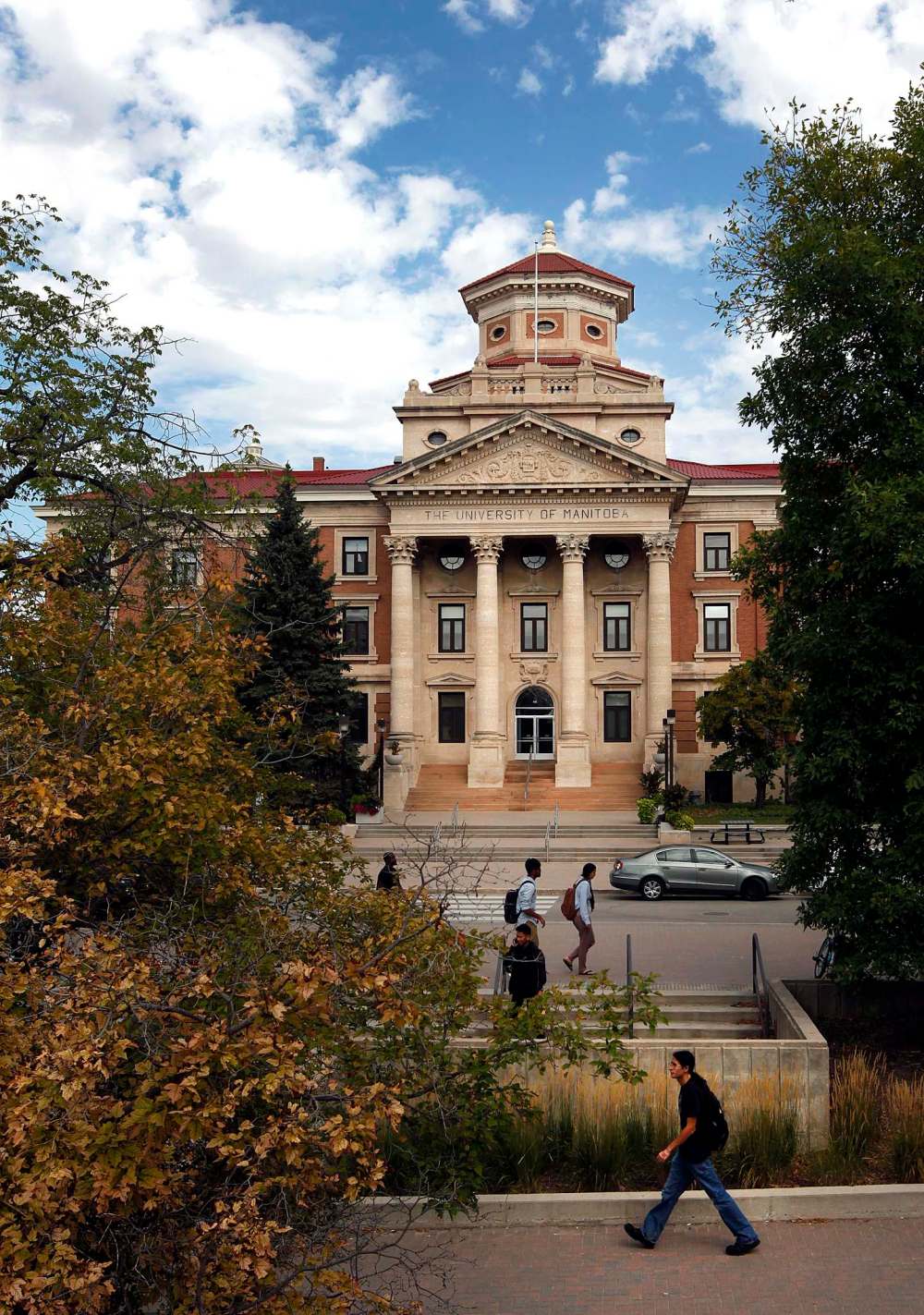
In the early 1970s, there were about a dozen Indigenous students at the University of Manitoba. One of them, my father, says he could go months without seeing anyone like him.
Last week, the university reported 2,374 self-declared Indigenous enrollees.
At the same time, the University of Saskatchewan announced 2,672 self-declared Indigenous students – the largest on-campus community in Canada.
While official numbers aren’t released until the end of September, it appears this will be a record year for Indigenous post-secondary enrolment on the prairies. At the University of Regina there are approximately 1,800 self-declared Indigenous students. The University of Winnipeg comes in around 1,200 and Brandon University at just under 500. Red River College has around 1,500 self-declared Indigenous students.
Conservatively, that’s ten thousand self-declared Indigenous post-secondary students in Saskatchewan and Manitoba.
That’s ten thousand lawyers, nurses, teachers, artists, doctors, plumbers and business owners.
Just on the prairies. This year.
Next year will be more.
In an ironic return to the 18th century – when Indigenous communities cared for all segments of society – Indigenous peoples will soon be part of every workplace and industry.
Statistics Canada shows Indigenous peoples are the fastest growing and youngest community in Manitoba. According to the 2016 census, 92,810 people identify as First Nations, Métis, or Inuit and live in Winnipeg – a 37% increase from the 2011 census.
This is a good thing. It’s a sign that Indigenous peoples – historically the most disenfranchised and under-resourced group in Canada – are overcoming obstacles in schooling. It’s also a sign Indigenous student support services are helping.
These statistics also point to something crucial – the necessity of educating non-Indigenous students about Indigenous peoples. One of the most necessary skills in the future will be the ability to live, work, and act competently with Indigenous peoples.
But what these statistics really show is a remarkable increase in pride. In 2018, saying you’re Indigenous carries more pride than it did even a decade ago.
This has led to another challenge: the issue of self-declaration.
Nowadays, many Manitobans self-declare an Indigenous background. Most do so by citing a long-ago ancestor on a branch of their family tree. Some claim a “percentage” of Indigenous blood.
Blood is in fact how the Indian Act determines a “status” Indian or not. This is based in the thinking that the introduction of non-Indigenous people to an Indigenous bloodline eventually dilutes and erases Indigenous identity.
The problem of course is that Indigenous identity doesn’t work at all like this.
Indigenous identity, to put it simply, is like being a part of a family. It’s more about who claims you then who you claim. This is called kinship. Kinship is a complex membership system determined by how people relate, show responsibility and commitment to one another, and share aspects of culture, space, and language. It takes a lifetime to build kinship (and even understand it fully) but this is how Indigenous nations legally and politically define themselves.
For many reasons, Canadian law has never recognized Indigenous kinship systems and this has led to massive confusion regarding what it means to claim an Indigenous identity.
And, perhaps, a massive increase in Indigenous enrollees.
This is particularly in the area of claiming Métis identity, which has become a catch-all for Canadians thinking they have Indigenous ancestry but do not know how or where. According to the 2016 census, the largest increase in Winnipeg has been in those people self-identifying as Métis (now counting 52,130).
Self-declaring, in fact, is one part of the Supreme Court Powley decision that defines how Métis identity is legally defined. The other two parts of the decision state that one must be a member of a present Métis community and have ties to a historic Métis community.
The issue with this decision is that many historians, scholars, and educators think Métis means “mixed” (so it can be anywhere) and not the Red River settlement – where the Métis nation was founded. There are differences between métis and Métis.
At the best, claiming Indigenous identity results in historically disenfranchised Indigenous individuals beginning a search for who they are. At the worst, exploitation.
“Today, there is a new wave of colonization and dispossession that is happening under the protective veil of reconciliation — the appropriation of Indigenous identities by non-Indigenous peoples,” says Dr. Pam Palmater, a legal scholar and Mi’kmaw member of Eel River Bar First Nation.

While a distance from Indigenous identity is a product of residential schools and Indigenous peoples should be encouraged to overcome these legacies, says Palmater, “never have we seen a wave of identity appropriation as we have in the last decade.”
As programs and initiatives are created to address the lack of opportunities Indigenous students face and competition for entry to post-secondary programs increase, students may be tempted to self-declare or check a box stating they are Indigenous. This may get them a spot in a program, funding, or some other kind of opportunity.
The problem is this has almost nothing to do with being Indigenous. Forging a relationship with an Indigenous community through time, commitment, and responsibility is. Committing to anything less then this is exploitative.
So, while the numbers of Indigenous student self-declarations this past week are encouraging, for many students the real work of being Indigenous lies ahead.
Not just in a check mark on a form.
Niigaan Sinclair is Anishinaabe from Peguis First Nation and a professor in the Department of Indigenous Studies at the University of Manitoba. He’s been a columnist for the Free Press since 2018. Read more about Niigaan.
Every piece of writing Niigaan produces is reviewed by an editing team before it is posted online or published in print — part of the Free Press‘s tradition, since 1872, of producing reliable independent journalism. Read more about Free Press’s history and mandate, and learn how our newsroom operates.
Our newsroom depends on a growing audience of readers to power our journalism. If you are not a paid reader, please consider becoming a subscriber.
Our newsroom depends on its audience of readers to power our journalism. Thank you for your support.
Niigaan Sinclair is Anishinaabe from Peguis First Nation and a professor in the Department of Indigenous Studies at the University of Manitoba. He’s been a columnist for the Free Press since 2018. Read more about Niigaan.
Every piece of writing Niigaan produces is reviewed by an editing team before it is posted online or published in print — part of the Free Press‘s tradition, since 1872, of producing reliable independent journalism. Read more about Free Press’s history and mandate, and learn how our newsroom operates.
Our newsroom depends on a growing audience of readers to power our journalism. If you are not a paid reader, please consider becoming a subscriber.
Our newsroom depends on its audience of readers to power our journalism. Thank you for your support.
Advertisement Advertise With Us
Advertisement Advertise With Us