

A first, important step for a national grid
Advertisement
Read this article for free:
or
Already have an account? Log in here »
To continue reading, please subscribe:

Digital Subscription
One year of digital access for only $205*
- Enjoy unlimited reading on winnipegfreepress.com
- Read the E-Edition, our digital replica newspaper
- Access News Break, our award-winning app
- Play interactive puzzles
*First annual payment billed as $205.00 + GST for one year. This annual subscription will automatically renew at $233.00 + GST every 52 weeks (10% off the regular annual price of $259.35). Offer available to new and qualified returning subscribers only. Cancel any time.
To continue reading, please subscribe:
Add Free Press access to your Brandon Sun subscription for only an additional
$1 for the first 4 weeks*
- Enjoy unlimited reading on winnipegfreepress.com
- Read the E-Edition, our digital replica newspaper
- Access News Break, our award-winning app
- Play interactive puzzles
*Your next Brandon Sun subscription payment will increase by $1.00 and you will be charged $17.95 plus GST for four weeks. After four weeks, your payment will increase to $24.95 plus GST every four weeks.
Read unlimited articles for free today:
or
Already have an account? Log in here »
Hey there, time traveller!
This article was published 10/03/2026 (211 days ago), so information in it may no longer be current.
There’s a long-standing complaint about the Canadian economy that we have been satisfied with being the hewers of wood and the haulers of water. In other words, that one of the major drivers of our economy has been to harvest raw materials and ship those materials to other countries for valued-added processing — products that we then often buy back, at higher prices.
The description actually comes from the Old Testament, but it was first used to describe the Canadian economy in 1930 by economist Harold Innis, who used the reference in his book The Fur Trade in Canada.
It’s not completely true now — Canada’s service industry is larger than its resource industry, but resources still play a large role, and every level of processing for resources that we can do in this country makes them more valuable to the overall economy.
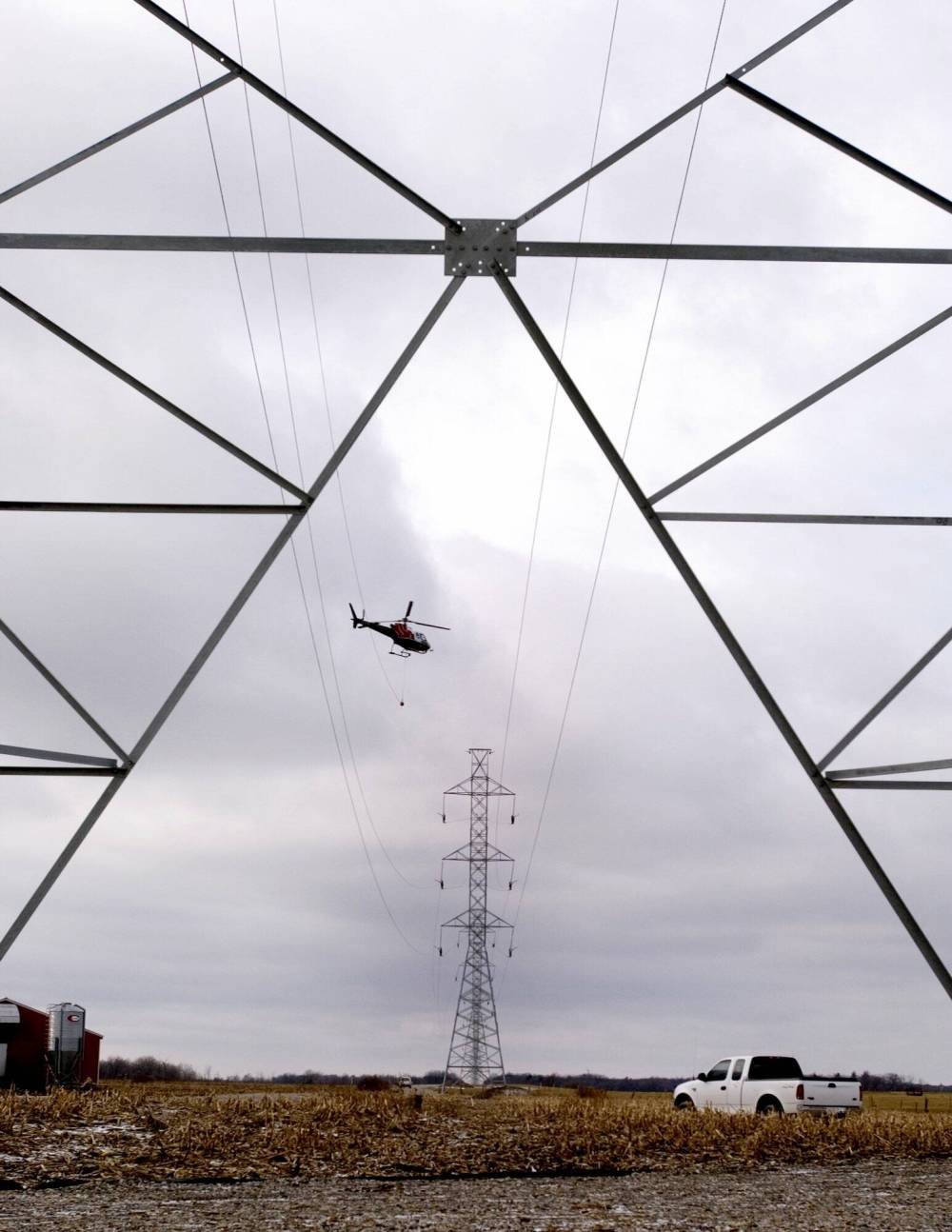
CP Photo/File
Canada needs a national electrical power grid.
Now stop for a minute and ask yourself what says haulers of water more than selling cheap electrical power to the United States to power that country’s industries and homes, and then buying finished products built by American industry.
Provinces do have interconnections — interties — with other provinces, but because provincial governments have the overall responsibility for regulating the generation and distribution of electrical power, far more connections by producers of electrical power have been made with a bigger market next door. Instead of going across Canada, major power lines have gone north-south, taking Canadian power to American markets. And yes, Manitoba Hydro, we are looking at you. (Power does move the other way, when Canadian power is short and American suppliers have available power.)
Now, eight Canadian provinces (including Manitoba) and two territories have signed a memorandum of understanding to do something that this country should have done a long time ago. Just the way Canada saw the need to have a coast-to-coast railway system and TransCanada Highway, the MOU envisions having a Canada-wide electrical distribution grid, complete with transmission corridors and distribution equipment — one that goes not only west to east, but to the north as well.
Ontario, British Columbia, Alberta, Saskatchewan, Manitoba, New Brunswick, Yukon, Prince Edward Island, Nova Scotia and the Northwest Territories are in, while Quebec, Newfoundland and Labrador and Nunavut have not, as yet, joined in.
At the MOU signing, Onatario’s energy minister, Stephen Lecce, described the current system of electrical utilities as having “13 islands” of power grids. He’s not wrong —and those separate islands make it difficult for utilities to share power, even when one province or territory needs it badly, and another province has a surplus. Having an integrated system will let provinces make better use of renewable power like solar and wind power, and will provide a consistent and dependable backstop — meaning large power users in a particular province or territory won’t have to shut down when shortages loom.
Agreeing to start the process is an important first step.

Some other factors to keep in mind further down the road?
“Wheeling” fees — the fees charged by utilities for carrying power through their systems to other provinces — should be reasonable and should reflect the actual cost of carrying the power, not used as a profit generator. Power rates and payment for cross-province purchase should also be competitive, rather than “surge” pricing based on demand.
Canadian provinces and territories should see themselves as being in this process together — putting Canadian needs and Canadian customers first, rather than trying to squeeze the largest profit possible out of every kilowatt hour.
We’re a country.
We should act like one, not like a bunch of seperate feeder plants for a neighbour that currently says Canada has nothing they need.
Related Articles
Manitoba signs on for proposed east-west power plan


Advertisement Advertise With Us
Advertisement Advertise With Us
History
Updated on Tuesday, March 10, 2026 8:36 AM CDT: Corrects typo
Updated on Tuesday, March 10, 2026 10:49 AM CDT: Corrects typo