

The men’s tennis tour is adding a heat rule like the one the women have had for more than 30 years
Advertisement
Read this article for free:
or
Already have an account? Log in here »
To continue reading, please subscribe:
Monthly Digital Subscription
$0 for the first 4 weeks*
- Enjoy unlimited reading on winnipegfreepress.com
- Read the E-Edition, our digital replica newspaper
- Access News Break, our award-winning app
- Play interactive puzzles
*No charge for 4 weeks then price increases to the regular rate of $19.00 plus GST every four weeks. Offer available to new and qualified returning subscribers only. Cancel any time.
Monthly Digital Subscription
$4.75/week*
- Enjoy unlimited reading on winnipegfreepress.com
- Read the E-Edition, our digital replica newspaper
- Access News Break, our award-winning app
- Play interactive puzzles
*Billed as $19 plus GST every four weeks. Cancel any time.
To continue reading, please subscribe:
Add Free Press access to your Brandon Sun subscription for only an additional
$1 for the first 4 weeks*
*Your next subscription payment will increase by $1.00 and you will be charged $16.99 plus GST for four weeks. After four weeks, your payment will increase to $23.99 plus GST every four weeks.
Read unlimited articles for free today:
or
Already have an account? Log in here »
The ATP Tour is adding a rule to address extreme heat during men’s professional tennis matches that will allow for 10-minute breaks during best-of-three-sets singles matches starting next season and is similar to what was put in place on the women’s circuit more than 30 years ago.
The ATP Board’s approval of the new policy, announced Monday, strengthens “protections for players competing in extreme conditions,” the tour said.
During the Shanghai Masters in October, some players called for the ATP to introduce guidance to help them in cases of extreme heat and humidity. Defending champion Jannik Sinner stopped playing a match there because of severe leg cramps; 24-time Grand Slam champion Novak Djokovic lamented the conditions after vomiting during a victory.
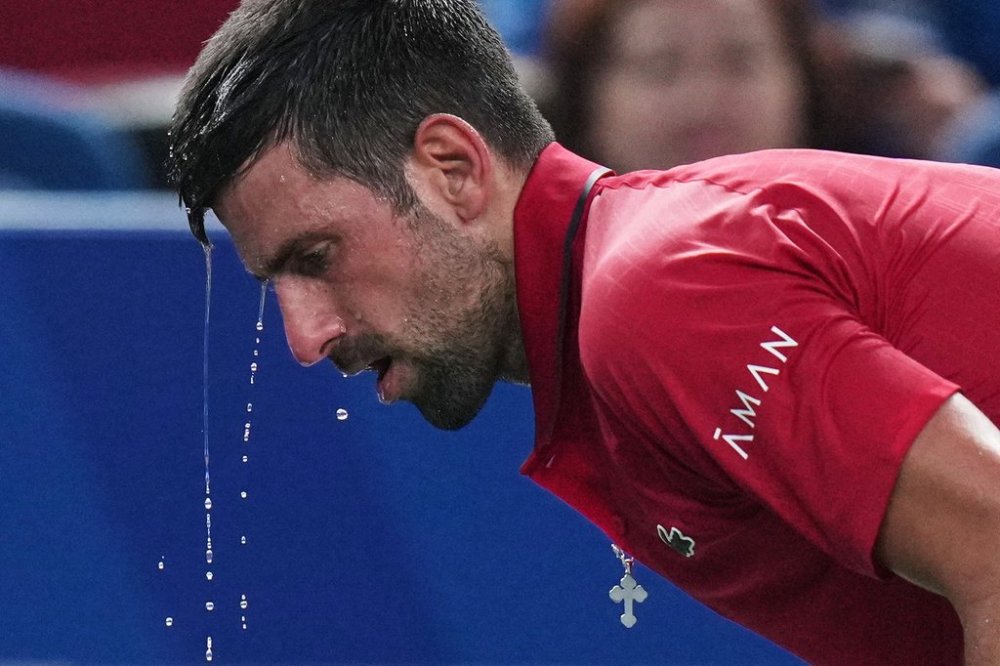
“It’s brutal when you have over 80% humidity day after day,” Djokovic said then, “particularly for the guys when they’re playing during the day with heat, with sun.”
An Associated Press analysis in 2023 showed that the average high temperatures felt during the U.S. Open and the three other major tennis tournaments steadily had gotten higher and more dangerous in recent decades, reflecting the climate change that has created record heat waves.
The WTA first established a rule to protect players in the heat in 1992. The new ATP rule is based on the Wet Bulb Globe Temperature (WBGT), which takes into account the heat, humidity and other factors. When the WBGT reaches at least 30.1 degrees Celsius (about 86.2 Fahrenheit) in one of the opening two sets of a best-of-three match, either player is allowed to request a 10-minute suspension of play.
If the WBGT exceeds 32.2 degrees Celsius (about 90 Fahrenheit), the match will be halted.

During the breaks, players can change clothing, shower, hydrate or use other ways to cool off — under the supervision of ATP medical staff — and they also can receive coaching.
That ATP said the rule is aimed at “safeguarding player health, while also improving conditions for spectators, officials, ball persons, and tournament staff.”
Grand Slam tournaments set their own heat policies. The U.S. Open, French Open and Wimbledon also have rules based on WBGT readings, as does the tennis competition at the Olympics, which is run by the International Tennis Federation. The Australian Open goes by something called the Heat Stress Scale.
___
Howard Fendrich has been the AP’s tennis writer since 2002. Find his stories here: https://apnews.com/author/howard-fendrich. More AP tennis: https://apnews.com/hub/tennis