Trump bans dealings with Chinese owners of TikTok, WeChat
Advertisement
Read this article for free:
or
Already have an account? Log in here »
To continue reading, please subscribe:

Digital Subscription
One year of digital access for only $205*
- Enjoy unlimited reading on winnipegfreepress.com
- Read the E-Edition, our digital replica newspaper
- Access News Break, our award-winning app
- Play interactive puzzles
*First annual payment billed as $205.00 + GST for one year. This annual subscription will automatically renew at $233.00 + GST every 52 weeks (10% off the regular annual price of $259.35). Offer available to new and qualified returning subscribers only. Cancel any time.
To continue reading, please subscribe:
Add Free Press access to your Brandon Sun subscription for only an additional
$1 for the first 4 weeks*
- Enjoy unlimited reading on winnipegfreepress.com
- Read the E-Edition, our digital replica newspaper
- Access News Break, our award-winning app
- Play interactive puzzles
*Your next Brandon Sun subscription payment will increase by $1.00 and you will be charged $17.95 plus GST for four weeks. After four weeks, your payment will increase to $24.95 plus GST every four weeks.
Read unlimited articles for free today:
or
Already have an account? Log in here »
Hey there, time traveller!
This article was published 06/08/2020 (2207 days ago), so information in it may no longer be current.
NEW YORK – President Donald Trump has ordered a sweeping but vague ban on dealings with the Chinese owners of popular social media apps TikTok and WeChat on security grounds, a move China’s government criticized as “political manipulation.”
The twin executive orders Thursday — one for each app — add to growing U.S.-Chinese conflict over technology and security. They take effect in 45 days and could bar the apps from the Apple and Google app stores, effectively removing them from U.S. distribution.
China’s foreign ministry said it opposed the move but gave no indication whether Beijing might retaliate.
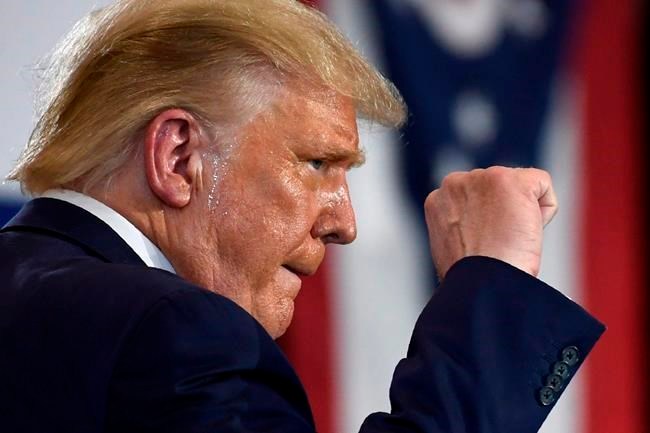
Earlier, Trump threatened a deadline of Sept. 15 to “close down” TikTok in the United States unless Microsoft Corp. or another company acquires it.
TikTok, owned by Beijing-headquartered ByteDance Ltd., is popular for its short, catchy videos. The company says it has 100 million users in the United States and hundreds of millions worldwide.
The Trump administration has expressed concern Chinese social media services could provide American users’ personal information to Chinese authorities, though it has given no evidence TikTok did that.
Instead, officials point to the Communist Party’s ability to compel co-operation from Chinese companies. U.S. regulators cited similar security concerns last year when the Chinese owner of Grindr was ordered to sell the dating app.
In a statement, TikTok expressed shock at the order and complained it violates U.S. law. The company said it doesn’t store American user data in China and never has given it to Beijing or censored content at the government’s request.
TikTok said it spent nearly a year trying to reach a “constructive solution” but the Trump administration “paid no attention to facts” and tried improperly to insert itself into business negotiations. TikTok said it would “pursue all remedies” available to ensure the company and its users are “are treated fairly.”
Tencent and Microsoft declined to comment.
On Friday, shares of WeChat’s owner, Tencent Holding Ltd., declined 5% in trading in Hong Kong. Tencent, Asia’s most valuable tech company with a market capitalization of $650 million, makes most of its money from online games and entertainment in China.
On Wednesday, Secretary of State Mike Pompeo announced an expansion of the U.S. crackdown on Chinese technology to include barring Chinese apps from U.S. app stores, citing alleged security threats and calling out TikTok and WeChat by name.
The Chinese foreign ministry accused Washington of “political manipulation” and said the moves will hurt American companies and consumers.
“The United States is using national security as an excuse, frequently abuses national power and unreasonably suppresses companies of other countries,” said a ministry spokesman, Wang Wenbin. “This is an outright hegemonic act. China is firmly opposed to it.”
Wang, who didn’t mention TikTok or any other company by name, called on the Trump administration to “correct its wrongdoing” but gave no indication how Beijing might respond.
Trump’s orders say the Chinese-owned apps “threaten the national security, foreign policy, and economy of the United States.” They cite the International Emergency Economic Powers Act and the National Emergencies Act and call on the Commerce secretary to define the banned dealings by Sept. 15.
WeChat, known in Chinese as Weixin, is a hugely popular messaging app that links to finance and other services. It has more than 1 billion users. Around the world, many people of Chinese descent use WeChat to stay in touch with friends and family and to conduct business in mainland China.
Within China, WeChat is censored and expected to adhere to content restrictions set by authorities. The Citizen Lab internet watchdog group in Toronto says WeChat monitors files and images shared abroad to aid its censorship in China.
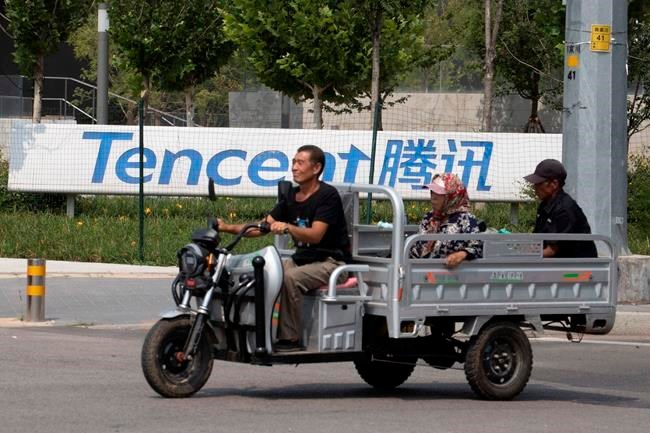
Tencent also owns stakes in major game companies such as Epic Games, publisher of Fortnite, a major video game hit, and Riot Games, which is behind League of Legends.
The Trump administration already was embroiled in a tariff war with Beijing over its technology ambitions. Washington has blocked acquisitions of some U.S. assets by Chinese buyers and has cut off most access to American components and other technology for Huawei Technologies Ltd., a maker of smartphones and network equipment that is China’s first global tech brand.
China-backed hackers have been blamed for breaches of U.S. federal databases and the credit agency Equifax.
In China, the Communist Party limits what foreign tech companies can do and blocks access to the Google search engine, Facebook, Twitter and other social media, along with thousands of websites operated by news organizations and human rights, pro-democracy and other activist groups.
The ruling party has used the entirely state-controlled press to encourage public anger at Trump’s actions.
“I don’t want to use American products any more,” said Sun Fanyu, an insurance salesperson in Beijing. “I will support domestic substitute products.”
Leading mobile security experts say TikTok is no more intrusive in its harvesting of user data and monitoring of user activity than U.S. apps owned by Facebook and Google.

“The U.S. thinking is that anything that is Chinese is suspect,” said Andy Mok, a senior research fellow at the Center for China and Globalization in Beijing. “They’re being targeted not because of what they’ve done, but who they are.”
The order doesn’t seem to ban Americans from using TikTok, which would be nearly impossible to enforce, said Kirsten Martin, a professor of technology ethics at the University of Notre Dame.
“This is a pretty broad and pretty quick expansion of the technology Cold War between the U.S. and China,” said Steven Weber, faculty director for the Berkeley Center for Long Term Cybersecurity.
___
AP reporters Barbara Ortutay in Oakland, Calif., Mae Anderson in New York, Frank Bajak in Boston, Joe McDonald in Beijing and Zen Soo in Hong Kong contributed to this article.