Information commissioner casts doubt on CBC’s claims of better access to information

Advertisement

Advertise with us

OTTAWA - The CBC is trumpeting quicker turnarounds on releasing documents to the public, but Canada's access-to-information watchdog isn't completely buying it.

Read this article for free:


or

Already have an account? Log in here »

To continue reading, please subscribe:

Subscribe and receive a limited-edition Free Press branded hat or tote.

Digital Subscription

One year of digital access for only $205*

  • Enjoy unlimited reading on winnipegfreepress.com
  • Read the E-Edition, our digital replica newspaper
  • Access News Break, our award-winning app
  • Play interactive puzzles

*First annual payment billed as $205.00 + GST for one year. This annual subscription will automatically renew at $233.00 + GST every 52 weeks (10% off the regular annual price of $259.35). Offer available to new and qualified returning subscribers only. Cancel any time.

To continue reading, please subscribe:

Add Free Press access to your Brandon Sun subscription for only an additional

$1 for the first 4 weeks*

  • Enjoy unlimited reading on winnipegfreepress.com
  • Read the E-Edition, our digital replica newspaper
  • Access News Break, our award-winning app
  • Play interactive puzzles
Start now

*Your next Brandon Sun subscription payment will increase by $1.00 and you will be charged $17.95 plus GST for four weeks. After four weeks, your payment will increase to $24.95 plus GST every four weeks.

Hey there, time traveller!
This article was published 25/10/2011 (5441 days ago), so information in it may no longer be current.

OTTAWA – The CBC is trumpeting quicker turnarounds on releasing documents to the public, but Canada’s access-to-information watchdog isn’t completely buying it.

Suzanne Legault told a Commons committee Tuesday that she believes the public broadcaster might be using new internal guidelines to quickly dismiss some access requests, thereby making it easier to claim faster response times.

“If the reason for the improvements in response rates to requests is that the CBC is not collecting and treating documents under the Act, as these guidelines would have us believe, then the reduction in the response rates perhaps doesn’t reflect an improvement in service,” Legault told MPs at the access-to-information committee.

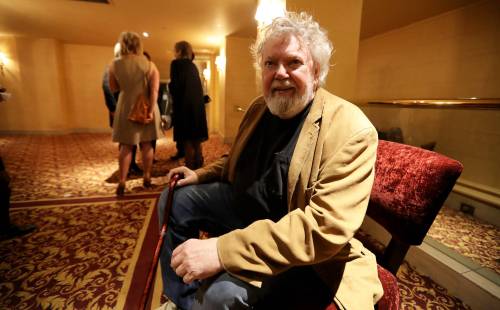
Information Commissioner is Suzanne Legault is seen during an interview in Ottawa, Wednesday January 5, 2011. The access-to-information watchdog is casting doubts on the CBC's claim that it has cleaned up its act when it comes to releasing records Legault is telling a Commons committee that she has serious concerns about new guidelines the public broadcaster uses when it reviews access requests.THE CANADIAN PRESS/Adrian Wyld

The Conservatives initiated a study last month of the CBC’s ongoing court battle with Legault over who gets to scrutinize documents it has withheld from release. The MPs are also hearing from witnesses on their frustrations over getting responses to access-to-information requests.

The CBC recently put out statistics saying that it has drastically reduced the response times to requests and to the number of complaints since 2007. At the same time, it released internal guidelines that said that CBC access co-ordinators could simply read a request for information and reject it on face value if it seemed to fall under the legally exempted categories of journalistic, creative or programming activities.

Legault acknowledges that the CBC has steadily reduced the number of complaints relative to the number of responses. But she notes that she still has 180 ongoing investigations with the CBC over access, in addition to 196 that are on hold pending the result of the Federal Court of Appeal case.

The CBC might not be equipped to deal properly with the backlog, she said.

Both Legault and the chairman of the Canadian Radio-television and Telecommunications Commission (CRTC), are calling on parliamentarians to change the Access to Information Act to make it clearer. Legault said more onus should be placed on the CBC to demonstrate that it could actually be harmed by releasing certain exempted documents, and the public interest should be weighed in each decision.

She also addressed the central issue of the current court battle — the CBC’s contention that she does not have the jurisdiction to review documents the Crown Corporation had withheld from release. She said Australia, Ireland and the United Kingdom all allow independent bodies to review documents held by their public broadcasters.

“I’m also not a former general that worked in Afghanistan, I’m also not somebody that worked in a Crown Corporation before, I’m also not somebody who was a trade lawyer or a patent lawyer, and yet my office has been trusted since 1983 to make decisions about these cases,” Legault said.

But Legault also underlined her contention that all records in ministerial offices should also be subject to the Act and to her review — something successive Liberal and Conservative governments fought against all the way to the Supreme Court and ultimately won.

NDP MP Charlie Angus pointed out during the proceedings that it was the current Conservative government that insisted against the information commissioner being able to see the records in the first place, rejecting recommendations by Legault’s predecessor on how best to word changes to the Act in 2006.

“I was somewhat surprised when I found out that the implications of the Information Commissioner’s recommendation would be that CBC journalists … would have to disclose their sources and that it would be the Information Commissioner who would then determine whether or not that source should remain confidential,” former Justice Minister Vic Toews told the same committee in June 2006. “I found that, quite frankly, shocking.”

The committee also heard from Marc-Fran�ois Bernier, a journalistic ethics specialist at the University of Ottawa, who said the MPs must take into consideration the commercial and ideological “crusade” media conglomerate Quebecor had undertaken against the CBC.

Legault said that between 2008-9, 90 per cent of all access requests launched with the CBC were made by six individuals representing business interests. Although their identities have not been revealed, the courts have heard that one law clerk working on behalf of Quebecor’s Sun Media newspaper chain submitted nearly 400 requests in late 2007.

“I believe this journalistic strategy raises a lot of questions of the ethics and integrity of journalists…,” Bernier said.

Quebecor president Pierre Karl Peladeau rejected the notion during a committee appearance last week that journalists working within his chain were being directed by the corporation to write negative stories about the CBC.

Report Error Submit a Tip

More Stories

Winnipeg, police and downtown crime

Editorial 4 minute read Preview

Winnipeg, police and downtown crime

Editorial 4 minute read Yesterday at 2:01 AM CDT

A safer downtown is not much use if people are still afraid to walk there.

That is the uncomfortable message from Winnipeg’s latest police citizen survey, and one city council should take seriously.

Downtown crime has fallen this year, according to the most recent police statistics. Violent crime is down even more. But for most Winnipeggers, the downtown still feels like a place to avoid, particularly after dark.

Only 44 per cent of survey respondents said they feel very or reasonably safe walking alone downtown during the day. At night, that number plunges to just eight per cent. Among women, it is an appalling three per cent, compared with 14 per cent of men.

Read
Yesterday at 2:01 AM CDT

Lauded Manitoba author chronicled life in the Interlake

By Sheldon Birnie 5 minute read Preview

Lauded Manitoba author chronicled life in the Interlake

By Sheldon Birnie 5 minute read Yesterday at 6:11 PM CDT

Longtime Manitoba author, editor and professor David Arnason died on Monday at age 86.

Read
Yesterday at 6:11 PM CDT

Information commissioner casts doubt on CBC’s claims of better access to information

Jennifer Ditchburn, The Canadian Press 5 minute read Preview

Information commissioner casts doubt on CBC’s claims of better access to information

Jennifer Ditchburn, The Canadian Press 5 minute read Tuesday, Oct. 25, 2011

OTTAWA - The CBC is trumpeting quicker turnarounds on releasing documents to the public, but Canada's access-to-information watchdog isn't completely buying it.

Suzanne Legault told a Commons committee Tuesday that she believes the public broadcaster might be using new internal guidelines to quickly dismiss some access requests, thereby making it easier to claim faster response times.

"If the reason for the improvements in response rates to requests is that the CBC is not collecting and treating documents under the Act, as these guidelines would have us believe, then the reduction in the response rates perhaps doesn't reflect an improvement in service," Legault told MPs at the access-to-information committee.

The Conservatives initiated a study last month of the CBC's ongoing court battle with Legault over who gets to scrutinize documents it has withheld from release. The MPs are also hearing from witnesses on their frustrations over getting responses to access-to-information requests.

Read
Tuesday, Oct. 25, 2011

‘One of a kind’: CEO, philanthropist Doug Harvey dies at 72

Morgan Modjeski 5 minute read Preview

‘One of a kind’: CEO, philanthropist Doug Harvey dies at 72

Morgan Modjeski 5 minute read Updated: 12:57 PM CDT

Doug Harvey, a Winnipeg business titan and philanthropist, has died after battling cancer for more than a decade.

Harvey gave millions of dollars to Winnipeg organizations while he was CEO of DLH Group, a nationwide network of businesses that support heavy duty truck and trailer users.

Loren Remillard, CEO and president of the Winnipeg Chamber of Commerce, said the business community is mourning the loss of the influential businessman who helped shape Winnipeg.

“We are a transportation and logistics hub in Winnipeg and it was partly the result of geography, and a big part because of leaders and visionaries like Doug Harvey,” he said.

Read
Updated: 12:57 PM CDT

Federal Court awards OCN $27M, 62 years after construction of hydro dam

Nicole Buffie 5 minute read Preview

Federal Court awards OCN $27M, 62 years after construction of hydro dam

Nicole Buffie 5 minute read Updated: Yesterday at 12:02 PM CDT

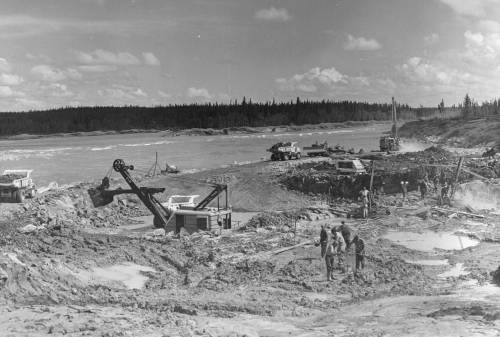
The Federal Court has ordered Ottawa pay Opaskwayak Cree Nation $27 million over damages suffered due to the construction of the Grand Rapids hydro dam in the 1960s.

In a decision dated Sept. 3, Federal Court Justice Sébastien Grammond says the federal government had a fiduciary duty to protect the community from the impacts of the dam.

“When the Crown exercises a discretionary power over an Indigenous interest, it has a fiduciary duty and it must exercise the discretion in the best interests of the Indigenous group,” the ruling said. “Canada breached its fiduciary duty to OCN because it approved the (project) without ensuring that the impacts of the Grand Rapids dam on OCN’s traditional way of life were mitigated or compensated.”

The First Nation took the federal government to court in February over impacts on the community after the dam, located about 145 kilometres southeast of Opaskwayak Cree Nation, was installed on the Saskatchewan River in 1964. The case was heard over 14 days in a judge-alone trial in Winnipeg.

Read
Updated: Yesterday at 12:02 PM CDT

Rain causing poor harvest conditions for farmers

Connor McDowell 5 minute read Preview

Rain causing poor harvest conditions for farmers

Connor McDowell 5 minute read 2:00 AM CDT

BRANDON — Farmers are dealing with poor harvest conditions owing to the high amount of rain this month.

Brandon had received 74.7 millimetres of rain by Sept. 15, a spokesperson for Environment and Climate Change Canada said Wednesday. The amount is equal to 173 per cent of average rainfall for Brandon.

The wet conditions are causing crop loss and delays in harvesting, several Westman farmers said this week.

“At this point, it (could be) six figures of loss. And that all happens in days,” Cassandra Lepp, a Rivers-area wheat and canola farmer, said. “We have good crops out there, and they are disappearing.”

Read
2:00 AM CDT