A love letter to Winnipeg

Globe-trotting correspondent 'just wanted to live a normal Canadian kid's life'

Advertisement

Advertise with us

In her seven years as a foreign correspondent in the Middle East, Nahlah Ayed was deeply committed to reporting on the experiences of ordinary people in the midst of turmoil.

Read this article for free:


or

Already have an account? Log in here »

To continue reading, please subscribe:

Subscribe and receive a limited-edition Free Press branded hat or tote.

Digital Subscription

One year of digital access for only $205*

  • Enjoy unlimited reading on winnipegfreepress.com
  • Read the E-Edition, our digital replica newspaper
  • Access News Break, our award-winning app
  • Play interactive puzzles

*First annual payment billed as $205.00 + GST for one year. This annual subscription will automatically renew at $233.00 + GST every 52 weeks (10% off the regular annual price of $259.35). Offer available to new and qualified returning subscribers only. Cancel any time.

To continue reading, please subscribe:

Add Free Press access to your Brandon Sun subscription for only an additional

$1 for the first 4 weeks*

  • Enjoy unlimited reading on winnipegfreepress.com
  • Read the E-Edition, our digital replica newspaper
  • Access News Break, our award-winning app
  • Play interactive puzzles
Start now

*Your next Brandon Sun subscription payment will increase by $1.00 and you will be charged $17.95 plus GST for four weeks. After four weeks, your payment will increase to $24.95 plus GST every four weeks.

Hey there, time traveller!
This article was published 21/04/2012 (5230 days ago), so information in it may no longer be current.

In her seven years as a foreign correspondent in the Middle East, Nahlah Ayed was deeply committed to reporting on the experiences of ordinary people in the midst of turmoil.

Her personal drive to humanize stories was instilled in her, she says, when she was displaced from her beloved hometown of Winnipeg as a young child.

“I felt it was important to talk about people,” the Arabic-speaking Ayed says about her often-dangerous assignments, from 2002-09, in hot spots such as Tehran, Beirut, Baghdad and Gaza. “That’s the kind of journalism I do.”
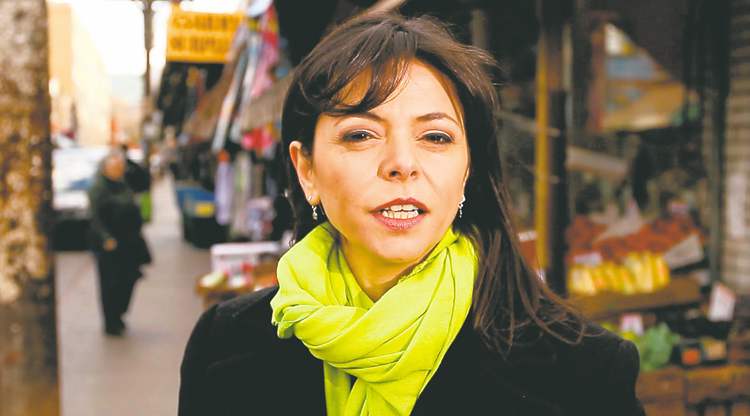
Nahlah Ayed: 'Winnipeg was family, despite the fact that we had not a single relative there'

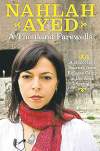
Ayed, who is 42 and single, is now a Toronto-based reporter for CBC-TV’s The National. She tells her story in the new hardcover memoir A Thousand Farewells: A Reporter’s Journey from Refugee Camp to the Arab Spring (Penguin Group Canada, $32).

She will speak and sign copies at McNally Robinson Booksellers on Monday at 7 p.m., hosted by CBC Radio’s Terry MacLeod.

The author and her three siblings were born here to Hassan and Nariman Ayed, Palestinian refugees. The family lived a comfortable life on Archibald Street while her father worked at a restaurant.

But in 1976, when Ayed was six, her parents took the family back to live in a crowded, United Nations-built refugee camp in Amman, Jordan. They felt it was the only way to connect their children to their heritage.

“My parents were not religious people,” Ayed says. “But they were quite worried about us getting to know our culture — our language and values — and our (extended) family.

“It was probably the biggest culture shock of my life. . . . We always kept asking, ‘When are we going back (to Winnipeg)?'”

After a couple of years in the refugee camp, the family moved to a stable neighbourhood and the children adjusted well. But Ayed’s father could never find enough work in Jordan. When she was 13, they re-immigrated to Winnipeg.

They settled on Ashland Avenue in Riverview. Her parents ran a convenience store, and later a Mr. Sub outlet on Pembina Highway. Ayed enrolled at Churchill High School.

Though she was academically ahead of her classmates, her English had eroded. “I couldn’t even say my name out loud,” she remembers. “I was painfully shy.”

Gradually, she came out of her shell, getting involved in band and choir. There was only one other Arab family that attended Churchill.

“I just wanted to live a normal Canadian kid’s life,” she says. “I wanted nothing to do with the Middle East. I didn’t want to hear about it.”

That perspective lasted a long time. Ayed earned a science degree in genetics and a master’s in interdisciplinary studies at the University of Manitoba. She fell in love with reporting while working on the student paper, The Manitoban, and moved to Ottawa in the 1990s to study journalism at Carleton University.

In 2008, U of M awarded her an honorary doctorate for her distinguished achievement.

Earlier this year, she returned to her high school to do a story for The National about immigrant teens. She found that, in contrast to her own parents’ urging (once they resettled here) that their kids integrate fully as Canadians, many of today’s teens feel pressured by their parents to maintain culture-of-origin identities.

“I felt as though the kids I met at Churchill were more divided than we were, about who they are.”

She’s grateful that her parents made sure she could speak and read Arabic, because it proved vital to her career in the Middle East. She stresses that her mom and dad, who now live in Fort Richmond, are proud Canadians.

After the Gulf War started, she recalls, an agent from CSIS came into her dad’s sub shop, more than once, to question him about the Arab community’s view of the war.

“Implicit in the question was that my parents somehow would be more loyal to some other country, than to Canada. My parents are very, very loyal to this country, and they were quite offended.”

A Thousand Farewells includes something of a love letter to the city that shaped the author. “Winnipeg was family, despite the fact that we had not a single relative there,” Ayed writes.

“Winnipeg is the safest home I’ve ever had,” she adds. “It’s beyond home.”


See Melissa Martin’s review in today’s Books section.

Report Error Submit a Tip

More Stories

Ratcheting up heat can lead to cold feet

Maureen Scurfield 5 minute read Yesterday at 2:00 AM CDT

DEAR MISS LONELYHEARTS: I came home early from my family’s beautiful lake cottage with my heart broken in pieces. I’d taken my new love out there and he seemed so happy to go with me. Friends of mine at the lake helped by offering me their romantic cabin while they were away on a road trip.

After two days of bliss on the beach, walking the sandy shores at twilight, plus some great lovemaking, our trip felt absolutely magical to me. It was like the honeymoon I hope to have with him someday. I happily told my guy that over breakfast in the morning. His face fell.

He went out right away for a “long run,” and then he went again for a second one right after lunch. He didn’t come back for many hours, so I finally went down to the kiosks at the beach at 5 p.m. looking for him, asking if anyone had seen my guy.

One guy said, “Yeah, he was with your other visitor today — the red-headed girl.” I’d had no other visitor. I suddenly realized he must have met another woman at the beach, and passed her off as my friend. I just lost it!

Could renewed interest in strategically critical rare earth elements finally make sub-sector profitable?

Joel Schlesinger 6 minute read Preview

Could renewed interest in strategically critical rare earth elements finally make sub-sector profitable?

Joel Schlesinger 6 minute read Yesterday at 3:00 AM CDT

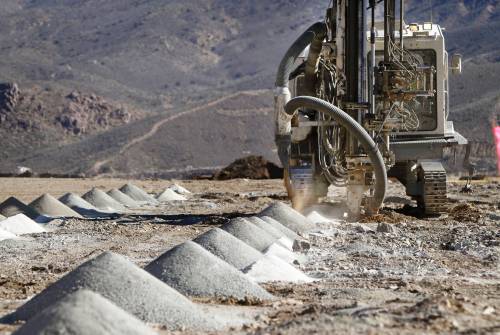
Rare earth elements are among the most critical of mined resources for modern economies.

They’re essential in manufacturing specialized magnets used in a host of technologies from wind turbines and electric vehicles to hard drives, smartphones, television screens, and fibre optics. Most notably, however, rare earth minerals are increasingly vital to the defence industry.

These 17 elements — closely related chemically and usually found all together in mineral deposits — have indeed been growing in geopolitical importance as the United States, Canada and other Western nations recognize their dependence on production from China.

It is the world’s largest producer and processor of rare earths, including the most in-demand elements neodymium and praseodymium used to manufacture very light and powerful magnets for an array of technologies, including the most advanced weapons of modern warfare.

Read
Yesterday at 3:00 AM CDT

Big Loser’s latest a winning mix of country, folk

Ben Waldman 4 minute read Preview

Big Loser’s latest a winning mix of country, folk

Ben Waldman 4 minute read Yesterday at 6:00 AM CDT

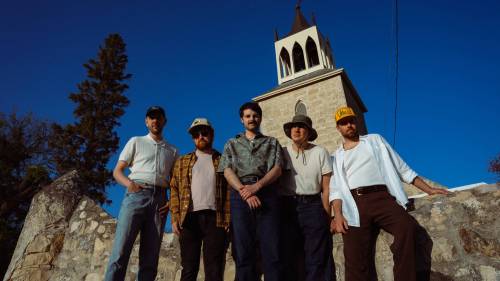
The yellow trucker hat for sale on Facebook Marketplace said “Selkirk Lumber,” so Adam Wayne Brown knew he had to hammer home a deal.

Like the other millennial members of Winnipeg folk-country band Big Loser, the bassist has an affinity for the nostalgic, taking every opportunity — through music, through lyrics and through wardrobe — to recall the unique circumstances of growing up in a changing Interlake.

“I remember the matte yellow trucks driving around — the lumber trucks — and so I’ve had this strange memory of something disappearing from my youth and then persisting,” says Brown, who, like the band’s frontman Alex Paradoski, moved to Winnipeg more than a decade ago.

“I have a photo of the Lockport Bridge in my dining room,” chimes in Paradoski, whose first job as a teenager was bunning wieners and chopping fries at Skinner’s, a drive-in mainstay since 1929 along Highway 44.

Read
Yesterday at 6:00 AM CDT

Foster mom pleads guilty to assault that left six-year-old-girl paralyzed

Dean Pritchard 4 minute read Preview

Foster mom pleads guilty to assault that left six-year-old-girl paralyzed

Dean Pritchard 4 minute read Friday, Aug. 14, 2026

A Winnipeg foster mother has admitted to violently assaulting her ill foster daughter and leaving her paralyzed after the girl resisted the woman’s efforts to provide her with medication, a court has heard.

Marilyn Keno, 26, pleaded guilty Friday to one count of aggravated assault.

Keno remains in custody and will be sentenced at a later date following the completion of a court-ordered pre-sentence report.

The maximum sentence for aggravated assault is 14 years in prison. Crown attorney Alanna Littman and defence lawyer Jeremy Kostiuk did not disclose what sentences they will be recommending.

Read
Friday, Aug. 14, 2026

HSC weapons scanners effective, needed at other hospitals: nurses union

Carol Sanders 5 minute read Preview

HSC weapons scanners effective, needed at other hospitals: nurses union

Carol Sanders 5 minute read Yesterday at 9:57 AM CDT

The AI weapons scanners at Health Sciences Centre have detected close to 2,000 items since they were installed at Manitoba’s largest hospital.

From March 6, 2025 to the beginning of this month, a total of 1,973 items had been flagged by the scanners and identified for further review, Shared Health said this week.

Knives, Swiss army knives and other multi-tools, drugs, alcohol, box cutters, syringes and other injection devices were detected, it said. The technology set up at entrances to the adult and children’s emergency rooms and the crisis response centre is designed to identify a wide range of objects that may require review under site safety protocols.

But Manitoba Nurses Union president Darlene Jackson said the technology isn’t available everywhere at HSC, and a sawed-off rifle was discovered in the adult ER earlier this month.

Read
Yesterday at 9:57 AM CDT

Corroded Arlington overpass yields way for new hope of spanning urban chasm

Melissa Martin 6 minute read Preview

Corroded Arlington overpass yields way for new hope of spanning urban chasm

Melissa Martin 6 minute read Yesterday at 2:00 AM CDT

It’s an interesting quirk of timing, perhaps, that the end of two of Winnipeg’s most unlovely features are coming into view in the same few weeks. The rail lines that split the city in half, and the bridge that was built to tie it back together. The original problem, and the solution.

And in the confluence of those two ends, we have an opportunity to dream of what a better Winnipeg can be.

At a news conference on Wednesday, former federal transport minister Lloyd Axworthy laid out a vision for a rail line bypass that would remove more than 120 railway crossings from Winnipeg, route them through Crown and Manitoba Hydro corridor land south of the city, and reclaim 250 acres in the urban core for greenspace and development.

The next step is to focus on how to make it happen. Nothing of this scope comes easy. This new bypass plan emerged from a two-year feasibility study that Premier Wab Kinew had tasked Axworthy with back in 2024. Now, Axworthy will helm a new 90-day feasibility study zooming in on that route specifically.

Read
Yesterday at 2:00 AM CDT