Marriage movie at odds with itself
Portrayal on the big screen makes it seem wonderful, troublesome

Advertisement
Read this article for free:
or
Already have an account? Log in here »
To continue reading, please subscribe:

Digital Subscription
One year of digital access for only $205*
- Enjoy unlimited reading on winnipegfreepress.com
- Read the E-Edition, our digital replica newspaper
- Access News Break, our award-winning app
- Play interactive puzzles
*First annual payment billed as $205.00 + GST for one year. This annual subscription will automatically renew at $233.00 + GST every 52 weeks (10% off the regular annual price of $259.35). Offer available to new and qualified returning subscribers only. Cancel any time.
To continue reading, please subscribe:
Add Free Press access to your Brandon Sun subscription for only an additional
$1 for the first 4 weeks*
- Enjoy unlimited reading on winnipegfreepress.com
- Read the E-Edition, our digital replica newspaper
- Access News Break, our award-winning app
- Play interactive puzzles
*Your next Brandon Sun subscription payment will increase by $1.00 and you will be charged $17.95 plus GST for four weeks. After four weeks, your payment will increase to $24.95 plus GST every four weeks.
Read unlimited articles for free today:
or
Already have an account? Log in here »
Hey there, time traveller!
This article was published 23/02/2013 (4958 days ago), so information in it may no longer be current.
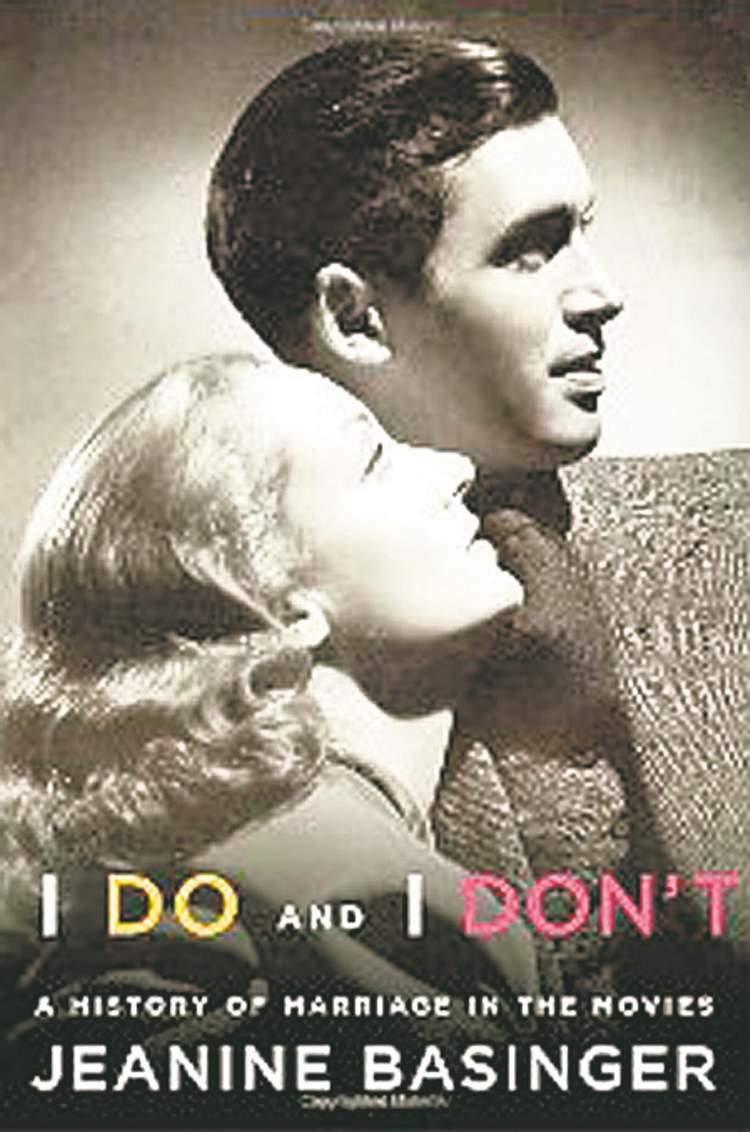
I Do and I Don’t
A History of Marriage in the Movies
By Jeanine Basinger
Knopf, 395 pages, $35
Hollywood has always had an ambivalent attitude to matrimony. As director Frank Capra said, “Embrace happy marriage in real life, but keep away from it onscreen.”
In this comprehensive and entertaining account of marriage in the movies, American film historian Jeanine Basinger explores Hollywood’s mixed messages. On the one hand, marriage is wonderful. (It must be. The country is built on it!) On the other hand, marriage is trouble. (It has to be, or there’s no plot.)
According to Basinger, the marriage movie is often at odds with itself, an intriguing mix of reassurance and warning, honesty and illusion, familiarity and escape. “Underneath every movie story runs another story, and it often contradicts or questions the one on the surface,” she writes.
Basinger, who is chair of film studies at Wesleyan University in Connecticut and curator of its film archives, reports that she had no luck when she started asking colleagues and friends to list their favourite marriage movies. There are courtship movies, in which the characters will presumably end up married, and there are films in which characters just happen to be married. But movies that take marriage as their central subject are surprisingly rare.
Even movies that centred on marriage tended not to be marketed that way. Rebecca (1940) was introduced in ads as a film about a man and woman “gloriously in love … a great dramatic romance,” a description that would surprise anyone who’s seen Hitchcock’s dark, slightly perverse psychological thriller.
Studios worried about marriage’s marquee appeal. For a Depression-era housewife, weary of scrimping and saving, a trip to the cinema was “the fur she could afford,” a brief glimpse of glamour and ease. “But what if the story was about the rabbity old thing she brought in with her?” asks Basinger.
Some movies did rely on the fact that viewers could relate to everyday marriage problems. A 1946 short called I Love My Husband, But! comes down to the hubby’s habits of botching house repairs, using the guest towels in the bathroom, and being unable to find things right under his nose. More often, though, marriage movies offered escapism, with cosmopolitan Nick and Nora Charles solving Manhattan mysteries or gorgeous Greta Garbo finding intrigue in “the exotic East.”
Other marriage movies focused on problems like addiction, infidelity or outlandish twists (one’s spouse is a secret Nazi or a serial murderer or a space alien). But even when marriage was threatened, there was a sense that it shouldn’t be threatened too much.
The restrictive production code in force from 1934 to the 1950s stipulated that “the sanctity of the institution of marriage and the home shall be upheld.” If you had to show adultery, you had to make sure it didn’t look like too much fun.
Basinger writes jargon-free prose for a broad readership. She makes it clear in her introduction that she is not offering close formalist analysis. Nor is she exploring larger sociological and psychological contexts. Basinger is interested in how average audiences experienced these movies at the time they were released, and she discusses primarily story, character and theme.
At times, Basinger spends too much time summarizing plots and listing titles. Still, it’s a thorough and democratic inventory, ranging from prestige films (Dodsworth, The Best Years of Our Lives, Days of Wine and Roses) to dozens of now-forgotten B-movies.

The book’s structure feels lopsided. After a short outline of the silent era, a very long section covers the studio era (but often jumps ahead to later films like 1967’s Two for the Road). Basinger wraps up with a brief breakdown of the modern era.
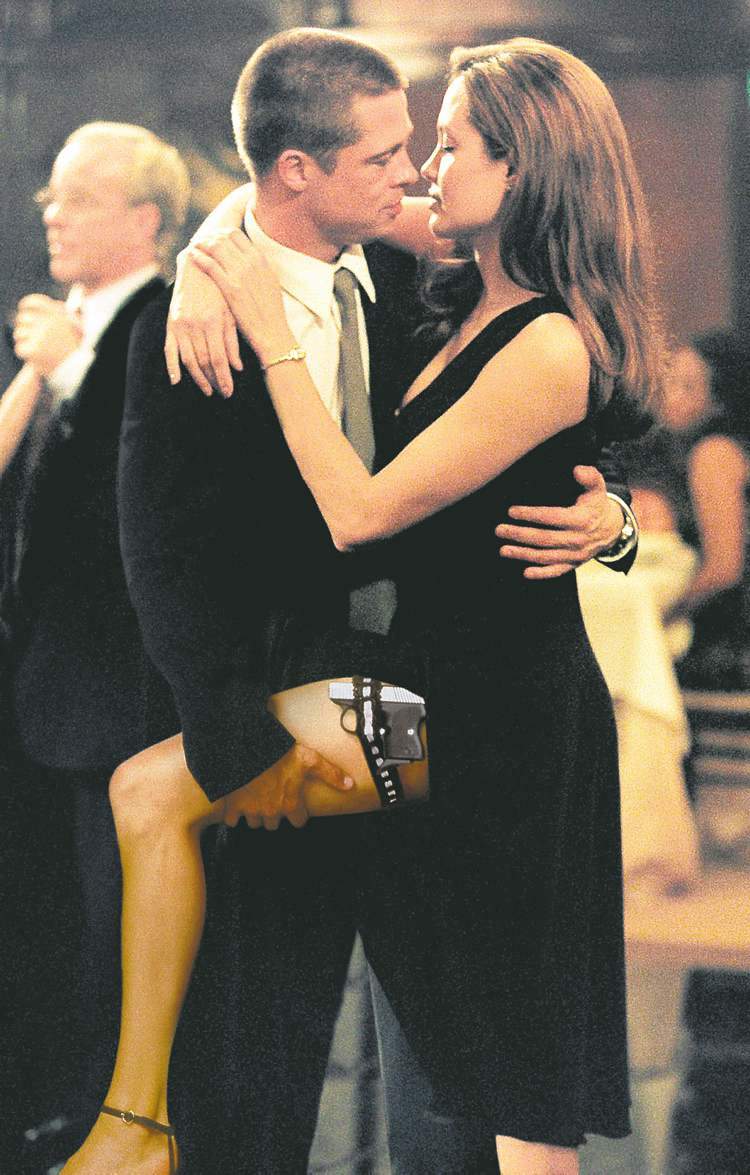
By the time Bob & Carol & Ted & Alice were exploring the sexual revolution, the marriage movie had radically shifted. Basinger suggests that many of its traditional concerns moved over to the cosy form of weekly television. One odd recent trend involves “going nuclear,” as Basinger calls it; that is, what was once verbal sniping now involves live ammo, as in Mr. and Mrs. Smith, in which married assassins Angelina Jolie and Brad Pitt try to kill each other.
Still, even with all these social and cinematic changes, Basinger believes that all serious marriage movies come back to the question that Carole Lombard asks Jimmy Stewart in Made for Each Other: “Oh, Johnny, what’s happened to us?”
After giddy romantic beginnings, time and a certain amount of trouble eventually transform a marriage. What happens then, whether love fades away or becomes stronger and fuller, is the central issue of the marriage movie — and indeed, marriage itself.
Alison Gillmor writes on pop culture for the Free Press.
Studying at the University of Winnipeg and later Toronto’s York University, Alison Gillmor planned to become an art historian. She ended up catching the journalism bug when she started as visual arts reviewer at the Winnipeg Free Press in 1992.
Our newsroom depends on a growing audience of readers to power our journalism. If you are not a paid reader, please consider becoming a subscriber.
Our newsroom depends on its audience of readers to power our journalism. Thank you for your support.
Studying at the University of Winnipeg and later Toronto’s York University, Alison Gillmor planned to become an art historian. She ended up catching the journalism bug when she started as visual arts reviewer at the Winnipeg Free Press in 1992.
Our newsroom depends on a growing audience of readers to power our journalism. If you are not a paid reader, please consider becoming a subscriber.
Our newsroom depends on its audience of readers to power our journalism. Thank you for your support.
Advertisement Advertise With Us
Advertisement Advertise With Us