Author explores lingering effects of trauma

Advertisement

Advertise with us

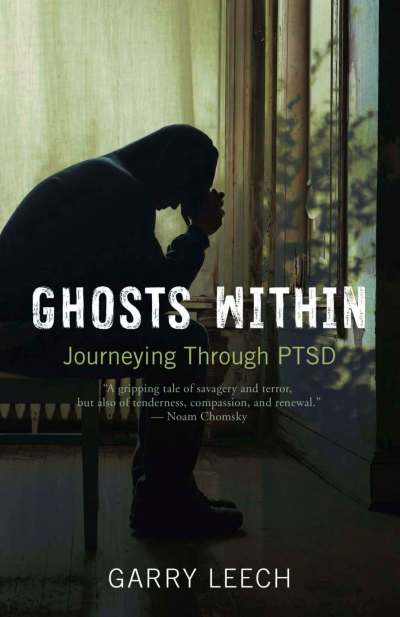
“It is estimated that eight million people in the United States and more than three million Canadians have PTSD,” writes Garry Leech, a well-travelled independent journalist and author who currently teaches international politics at Cape Breton University.

Read this article for free:


or

Already have an account? Log in here »

To continue reading, please subscribe:

Subscribe and receive a limited-edition Free Press branded hat or tote.

Digital Subscription

One year of digital access for only $205*

  • Enjoy unlimited reading on winnipegfreepress.com
  • Read the E-Edition, our digital replica newspaper
  • Access News Break, our award-winning app
  • Play interactive puzzles

*First annual payment billed as $205.00 + GST for one year. This annual subscription will automatically renew at $233.00 + GST every 52 weeks (10% off the regular annual price of $259.35). Offer available to new and qualified returning subscribers only. Cancel any time.

To continue reading, please subscribe:

Add Free Press access to your Brandon Sun subscription for only an additional

$1 for the first 4 weeks*

  • Enjoy unlimited reading on winnipegfreepress.com
  • Read the E-Edition, our digital replica newspaper
  • Access News Break, our award-winning app
  • Play interactive puzzles
Start now

*Your next Brandon Sun subscription payment will increase by $1.00 and you will be charged $17.95 plus GST for four weeks. After four weeks, your payment will increase to $24.95 plus GST every four weeks.

Hey there, time traveller!
This article was published 13/04/2019 (2683 days ago), so information in it may no longer be current.

“It is estimated that eight million people in the United States and more than three million Canadians have PTSD,” writes Garry Leech, a well-travelled independent journalist and author who currently teaches international politics at Cape Breton University.

Leech is the author of 2009’s Beyond Bogota: Diary of a Drug War Journalist in Colombia, which chronicled his experiences covering the decades-long rural war where ideological struggles intermixed with control over a lucrative drug trade, pitting left-wing guerrilla factions against right-wing paramilitary units.

Partly a sequel to his decade-old diary, Ghosts Within informs readers that paramilitary units “continue to be the country’s primary cocaine producers and traffickers,” but most pages are devoted to sensitive, albeit chronologically confusing narratives about witnessing or experiencing acts of brutality.
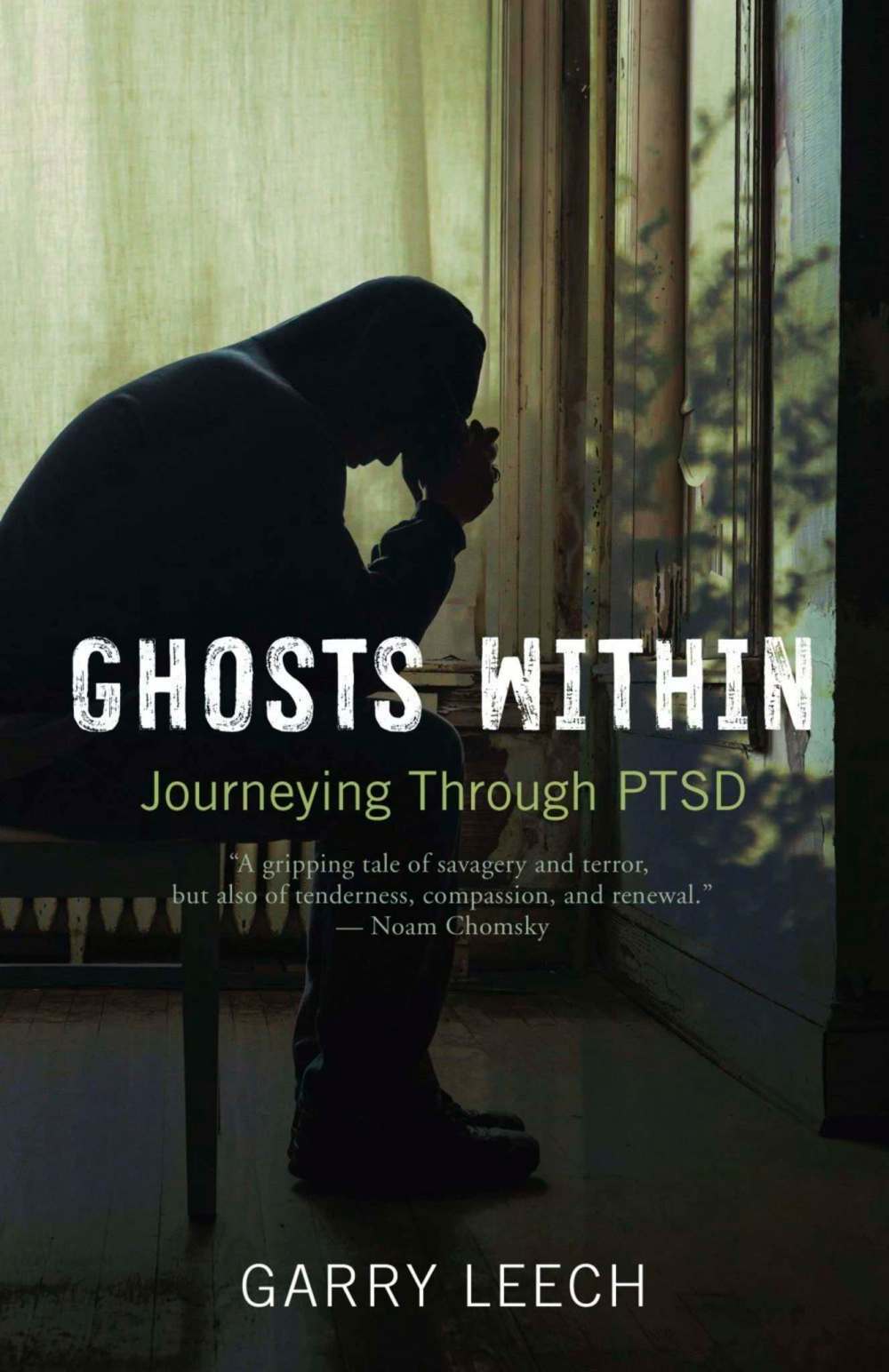
Disturbing war memories from his time in Colombia and traumatic incidents from his personal life combined to burden Leech with a mental illness previously known as “shellshock” and “battle fatigue” and long believed to afflict only war combatants.

During the two world wars, spit-and-polish officers were even inclined to view this condition as a shirker’s excuse to avoid combat. But, as Leech reminds us, trauma-related mental disorders are not imaginary, and are mentioned as far back as Homer’s The Iliad and The Odyssey, Shakespeare’s Henry IV and by noted psychiatrist Sigmund Freud, who first reported a link between sexual abuse and post-traumatic stress disorder (PTSD).

Readers who previously doubted PTSD’s existence amongst civilian populations should be moved by Leech’s graphic, soul-baring descriptions of its effects on him and on those who share his life.

During the dozen years reporting from conflict zones beginning in 2000, Leech witnessed horrible scenes of massacre victims and limbless survivors of landmines, which return as thoughts he now calls “intrusive memories.”

Leech was held captive at gunpoint, interrogated, threatened with death and is continuously burdened with one especially horrific image from a brief detention in a Salvadoran jail, where a woman was gang-raped by guards. These experiences contributed to his descent into mental illness, first characterized by angry outbursts over innocuous incidents resembling the sounds of war — like hearing his wife accidently drop some cutlery.

Leech recalls suffering from classic PTSD symptoms: anxiety in crowded places, social withdrawal, banging his head on walls in futile attempts to erase disturbing images and suicidal thoughts which, along with physical discomforts such as extreme fatigue, insomnia and diarrhea, all contributed to an emotional breakdown in 2016.

“PTSD is related to a change in the way the brain functions,” he writes, helping readers understand this disorder by deftly reducing a complex system into three parts: the rational brain that controls impulses and allows us to think rationally; the emotional brain that generates appropriate responses to potential threats; and the reptilian brain that triggers fight, flight or freeze responses to perceived threats.

His personal struggles demonstrate how traumatic experiences can disrupt normal functioning of these three parts, causing past events stored in the emotional brain to be misidentified as immediate dangers, which then cause inappropriate responses from the rational and reptilian brains.

Leech admits that prior to his diagnosis, “my behaviour had appeared to be that of an irrational, inconsiderate jerk.” Fortunately for him, forms of therapy approved by the World Health Organization and the American Psychiatric Association helped in “exorcizing the ghosts” that tormented him for years.

By referring to people most vulnerable to trauma, such as police officers, firefighters and other service providers, and then by recognizing identified sufferers — veterans of recent wars, victims of sexual assault and Indigenous people traumatized by residential schools — Leech suggests PTSD is more common than we think.

Unfortunately, his own compellingly sad story fails to shine more light upon reasons why other trauma participants remain immune to this particular mental illness.

Joseph Hnatiuk is a retired teacher.
Report Error Submit a Tip

More Stories

Author explores lingering effects of trauma

Reviewed by Joseph Hnatiuk 4 minute read Preview

Author explores lingering effects of trauma

Reviewed by Joseph Hnatiuk 4 minute read Saturday, Apr. 13, 2019

“It is estimated that eight million people in the United States and more than three million Canadians have PTSD,” writes Garry Leech, a well-travelled independent journalist and author who currently teaches international politics at Cape Breton University.

Leech is the author of 2009’s Beyond Bogota: Diary of a Drug War Journalist in Colombia, which chronicled his experiences covering the decades-long rural war where ideological struggles intermixed with control over a lucrative drug trade, pitting left-wing guerrilla factions against right-wing paramilitary units.

Partly a sequel to his decade-old diary, Ghosts Within informs readers that paramilitary units “continue to be the country’s primary cocaine producers and traffickers,” but most pages are devoted to sensitive, albeit chronologically confusing narratives about witnessing or experiencing acts of brutality.

Disturbing war memories from his time in Colombia and traumatic incidents from his personal life combined to burden Leech with a mental illness previously known as “shellshock” and “battle fatigue” and long believed to afflict only war combatants.

Read
Saturday, Apr. 13, 2019

‘You vote with your bike’: cyclists celebrate freedoms, call for increased safety

Maggie Macintosh 5 minute read Preview

‘You vote with your bike’: cyclists celebrate freedoms, call for increased safety

Maggie Macintosh 5 minute read Updated: 9:24 AM CDT

Patty Wiens got dressed up in her sparkly, hot pink cowboy boots to pedal and talk politics with more than 100 other people on Sunday.

The founder of Winnipeg’s Fancy Women Bike Ride called on attendees of the 2026 event to ask candidates in the upcoming civic election — a half-dozen of whom were in attendance — about their active transportation platforms.

“We’re here today, in an election year, to remind you that you vote with your bike,” Wiens told a crowd of nearly 120 cyclists gathered on the legislature grounds for the group ride.

“When (city council) candidates come to your door and ask what’s important to you, you’re going to say, ‘I want to ride my bike safely in the city. What are you going to do about it?’”

Read
Updated: 9:24 AM CDT

Opera group hits pub to stage shows for sophisticated palates

Conrad Sweatman 3 minute read Preview

Opera group hits pub to stage shows for sophisticated palates

Conrad Sweatman 3 minute read 2:00 AM CDT

Opera’s famous drinking songs — La Traviata’s Brindisi, Don Giovanni’s Fin ch’han dal vino, Carmen’s Votre Toast — tend to flow with references to women and wine, not beer.

But that hasn’t stopped Winnipeggers from sipping 1919s or Generics at local bar and brewery Little Brown Jug over the past few years to the strains of Verdi, Puccini and Mozart.

Currently in its eighth season, Opera by the Pint has its next LBJ event Wednesday at 7 p.m. (The artists also perform at the Public Brewhouse and Gallery in Steinbach at 7 p.m. on Thursday.)

This week’s program focuses on musical hits, while also featuring traditional Filipino ballads and Mexican art songs.

Read
2:00 AM CDT

HSC weapons scanners effective, needed at other hospitals: nurses union

Carol Sanders 5 minute read Preview

HSC weapons scanners effective, needed at other hospitals: nurses union

Carol Sanders 5 minute read Saturday, Aug. 15, 2026

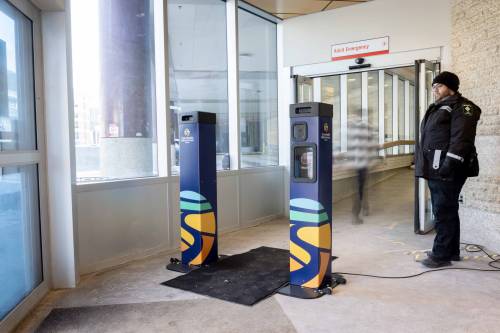
The AI weapons scanners at Health Sciences Centre have detected close to 2,000 items since they were installed at Manitoba’s largest hospital.

Read
Saturday, Aug. 15, 2026

Today’s horoscope

Georgia Nicols 4 minute read Preview

Today’s horoscope

Georgia Nicols 4 minute read Yesterday at 2:00 AM CDT

MOON ALERT: There are no restrictions to shopping or important decisions today. The moon is in Libra.

ARIES (March 21-April 19)

The day is a mixed bag. For the most part, it’s romantic, friendly, congenial and a great time to socialize with others and enjoy playful activities with kids. Nevertheless, you might meet a real sourpuss or someone who is a wet blanket. Keep things light!

TAURUS (April 20-May 20)

Read
Yesterday at 2:00 AM CDT

Indigenous peoples are deeply invested in Canada

Niigaan Sinclair 5 minute read Preview

Indigenous peoples are deeply invested in Canada

Niigaan Sinclair 5 minute read 6:00 AM CDT

Elections Canada released a report this week that stated that, in the 2025 federal election, approximately 41 per cent of eligible First Nations, Inuit and Métis voters cast a ballot and contributed significantly to the federal Liberals and Prime Minister Mark Carney making a political comeback.

For anyone curious about how Manitoba fared, the numbers in this province were slightly lower — but still very strong, with 34 per cent participation.

This is a far cry from the highest rate of Indigenous participation in a federal election — that would be the 60 per cent who cast a ballot in 2015, when Justin Trudeau’s Liberals defeated Stephen Harper’s Conservatives — but it’s still higher than the abysmal numbers seen in decades previous.

First Nations voters have only been allowed the legal right to cast a ballot in Canadian elections since 1960, but many in the past — perhaps rightly — felt a sense of complicity in the country’s colonization or, worse, that voting didn’t make a difference.

Read
6:00 AM CDT