Mental illness, art woven through dreamlike debut

Advertisement

Advertise with us

Writing about other art forms in literature (visual art, music, film) is tricky. Other media rely on completely different sensory experiences to evoke emotions in their audiences, experiences that literature can only hint at through description.

Read this article for free:


or

Already have an account? Log in here »

To continue reading, please subscribe:

Subscribe and receive a limited-edition Free Press branded hat or tote.

Digital Subscription

One year of digital access for only $205*

  • Enjoy unlimited reading on winnipegfreepress.com
  • Read the E-Edition, our digital replica newspaper
  • Access News Break, our award-winning app
  • Play interactive puzzles

*First annual payment billed as $205.00 + GST for one year. This annual subscription will automatically renew at $233.00 + GST every 52 weeks (10% off the regular annual price of $259.35). Offer available to new and qualified returning subscribers only. Cancel any time.

To continue reading, please subscribe:

Add Free Press access to your Brandon Sun subscription for only an additional

$1 for the first 4 weeks*

  • Enjoy unlimited reading on winnipegfreepress.com
  • Read the E-Edition, our digital replica newspaper
  • Access News Break, our award-winning app
  • Play interactive puzzles
Start now

*Your next Brandon Sun subscription payment will increase by $1.00 and you will be charged $17.95 plus GST for four weeks. After four weeks, your payment will increase to $24.95 plus GST every four weeks.

Hey there, time traveller!
This article was published 11/04/2020 (2352 days ago), so information in it may no longer be current.

Writing about other art forms in literature (visual art, music, film) is tricky. Other media rely on completely different sensory experiences to evoke emotions in their audiences, experiences that literature can only hint at through description.

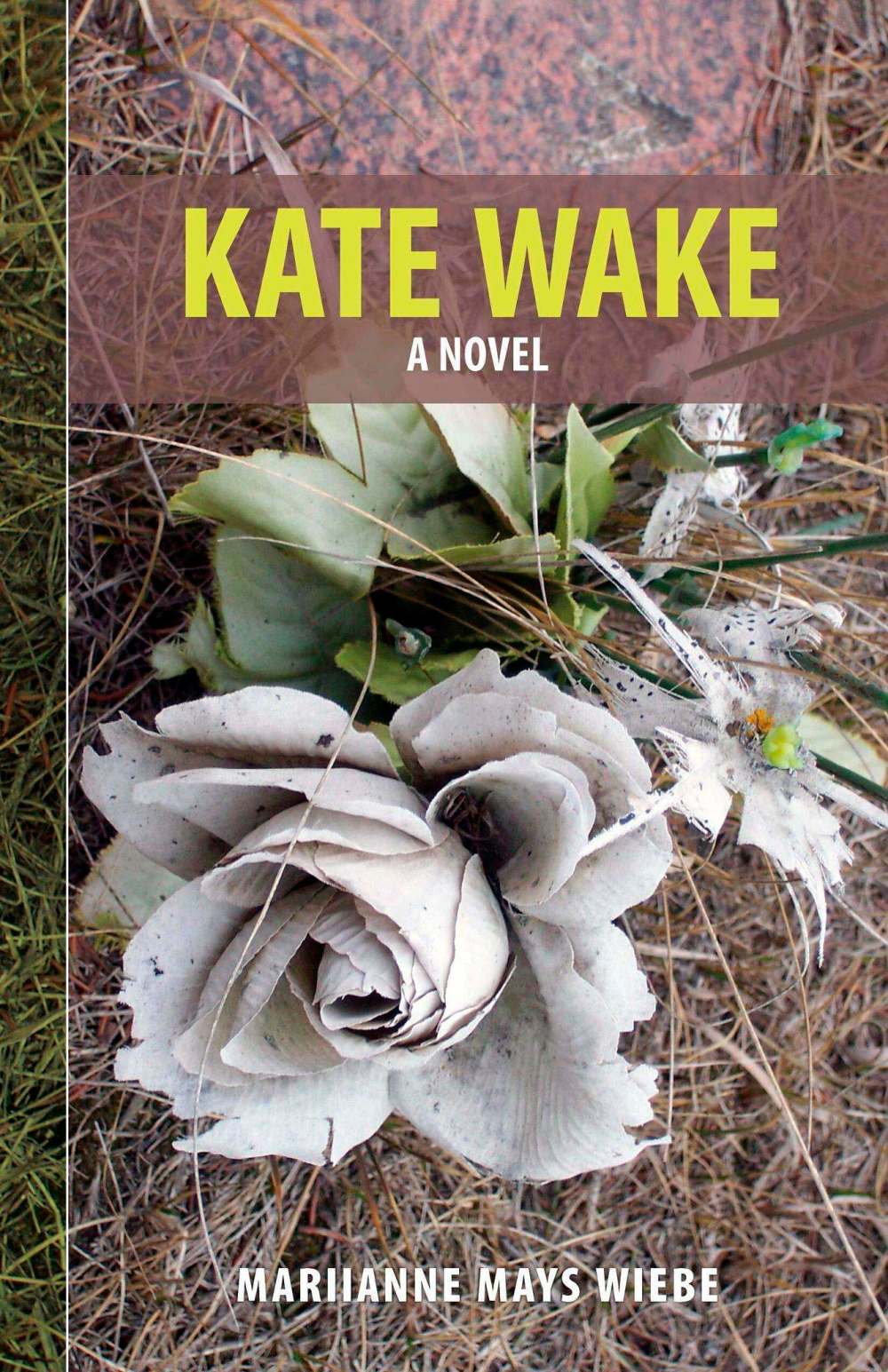
Through an impressive combination of different literary genres, Winnipeg poet and debut novelist Mariianne Mays Wiebe navigates through the experience of art as a lived experience through the multi-generational story of trauma and mental illness in her novel Kate Wake.

Using the fictional town of Blue Hills and the Blue Hills Mental Health Centre (a stand-in for the historical Brandon Mental Health Centre) as a point of focus, the novel explores the intertwining lives of Katie, a struggling artist who has recently undergone some form of mental health treatment, and her great-grandmother Kate Wake, a once-famous singer, and then painter, who died as a patient at the Blue Hills Mental Health Centre.
There is little historical evidence of her great-grandmother’s existence, despite her celebrity, and Katie becomes fascinated and deeply drawn into her story.

The narrative is intensely interior, never veering far from inner monologues and stream-of-consciousness imagery and descriptions of dreams. Switching between Kate Wake, Katie, snippets of poetry and even a film treatment, the novel pushes against a traditional narrative form, relying much more on the emotion and feeling of described experiences, rather than moving scenes forward to serve a plot.

As well as using many forms and genres of literature, the novel draws heavily on other art forms such as painting and music. There are many references to specific painters and paintings, composers and musical pieces, particularly in the sections devoted to Kate Wake’s experience as she participates in the great artistic movements of the early 20th century. This may pose a problem for some readers, especially if they are unfamiliar with the artists and pieces mentioned and even more so if they aren’t particularly fans of the period.

There are long sections devoted to name-dropping artists and particular works, exploring the characters’ absolute awe of the art. These sections can feel largely academic, which makes perfect sense as the acknowledgements for the novel reveal that it began as a creative dissertation. While the novel is still engrossing and the interior lives of the characters compelling, there are sections that suffer from an apparent need to show the research and historical work behind the inspiration.

The novel is at its best and most harrowing when discussing the history of mental health facilities in the early 20th century and Kate Wake’s experience within one. These scenes serve as brutal and terrifying emotional touchstones for Katie’s experience through mental turmoil. Katie’s experience is not the same, but the return to Kate Wake’s past evokes a powerful sense of dread and fear, crystallizing an experience of something that is still somewhat taboo in our current moment: mental illness.

The novel draws on the myth of Orpheus and Eurydice, which involves Orpheus delving into the Underworld to retrieve his lover, Eurydice, and being allowed to bring her back to the world of the living as long as he doesn’t look back to make sure that she is following him. A similarly cruel demand is placed on Lot’s wife, for those more versed in Old Testament stories.

It is this concept of looking back as a kind of doom that Kate Wake is most interested in, and that Wiebe explores deftly through Katie’s compulsion to not only look back into the life of her great-grandmother, but also to look back at her own life and traumas.

The emotional core of this novel is strong and there is a compelling exploration of mental illness and its fraught history — a history that is continually explored and revisited through art.

Keith Cadieux is a Winnipeg writer and editor.

Report Error Submit a Tip

More Stories

Desperate Poilievre wants Canadians to believe the sky is falling when it’s just cloudy outside

Tom Brodbeck 5 minute read Preview

Desperate Poilievre wants Canadians to believe the sky is falling when it’s just cloudy outside

Tom Brodbeck 5 minute read Yesterday at 12:47 PM CDT

Pierre Poilievre has a problem.

Canadians just don’t seem to be paying much attention to him anymore.

So, naturally, the Conservative Opposition leader has decided to turn up the volume.

At a recent party caucus retreat in Penticton, B.C., Poilievre delivered the familiar message: Canada is in trouble, Canadians are hurting and the Liberal government is making everything worse.

Read
Yesterday at 12:47 PM CDT

Siloam Mission, WFPS discussing on-site paramedic to reduce staggering number of emergency calls

Scott Billeck 4 minute read Preview

Siloam Mission, WFPS discussing on-site paramedic to reduce staggering number of emergency calls

Scott Billeck 4 minute read Yesterday at 2:00 AM CDT

Winnipeg’s fire-paramedic service and its largest homeless-serving organization are discussing what it would look like to station at least one paramedic at Siloam Mission, as emergency calls to the downtown facility surge.

The ongoing discussions come as Winnipeg Fire Paramedic Service crews were dispatched 1,771 times during the first eight months of the year to the two adjacent Siloam properties at 303 Stanley St. and 300 Princess St.

WFPS said most of the calls were related to overdoses or other consequences of substance use, with the total nearly double the 854 calls recorded over the same period last year. By comparison, there were 831 calls during the same span in 2024, and 591 in 2023.

“The number of emergency calls isn’t sustainable for us as a service, but it’s certainly not sustainable for them as an agency trying to provide services,” WFPS chief Ryan Sneath told the Free Press. “And they recognize that they’re impacting emergency services, not them specifically, but the site in a significant way.”

Read
Yesterday at 2:00 AM CDT

Today’s horoscope

Georgia Nicols 4 minute read Preview

Today’s horoscope

Georgia Nicols 4 minute read 2:01 AM CDT

MOON ALERT: After 12:15 a.m., there are no restrictions to shopping or important decisions today. The moon is in Capricorn.

ARIES (March 21-April 19)

This is a tricky day. Don’t be too ambitious. It’s totally OK to kick back and relax. But be aware that communications with parents and authority figures might be confused, vague or subject to misunderstandings. Nevertheless, romance is sweet and cosy!

TAURUS (April 20-May 20)

Read
2:01 AM CDT

Canada must not accept another Iranian autocracy

David Matas 5 minute read 2:01 AM CDT

Iran is a state run by a radical government victimizing its citizens and its neighbours. How do we change that? Any regime change that repeats the mistakes of the past is not a solution.

What went wrong in the past which led to the current regime? One answer is the U.K. and American aided coup which led to the ouster in 1953 of a democratically elected government headed at the time by Mohammad Mossadegh and its replacement with an American friendly autocrat, the Shah of Iran, Mohammad Reza Pahlavi.

The Shah imposed his rule through the Iranian National Intelligence and Security Organization — SAVAK, the acronym of its Persian name. SAVAK systematically inflicted torture, arbitrary killings and extra-judicial killings on perceived opponents of the regime. It was only a matter of time before repression of a regime directed to serving foreign interests would be overthrown.

What replaced the regime of the Shah, in 1979, the current regime of the mullahs, is a regime as intolerant and violent as the regime of the Shah and then some. That was not inevitable. But neither was it surprising. The vicious nature of the current regime, following the example set by the Shah, and its hatred for the United States, reacting to the U.S. aided imposition of the Shah, both echoes and reacts to the past. In 1979, the U.S. reaped what it sowed in 1953.

Give-and-take relationship of Roman leaders takes centre stage in Harris’s historical fiction

Reviewed by Kathryne Cardwell 4 minute read Preview

Give-and-take relationship of Roman leaders takes centre stage in Harris’s historical fiction

Reviewed by Kathryne Cardwell 4 minute read 2:01 AM CDT

British novelist Robert Harris’s latest work is a reflection on tyranny, corruption and betrayal among all-powerful political leaders.

You might be forgiven for thinking it’s a contemporary thriller — it’s actually historical fiction set in ancient Rome.

A former BBC journalist, Harris debuted as a novelist in 1992 with Fatherland, an alternative history where Nazi Germany won the Second World War.

Since then, the prolific author has become best-known for his works of historical fiction, especially his ancient Rome trilogy released from 2006-2015 and the novel Conclave, which was published in 2016 and was made into the film of the same name in 2024.

Read
2:01 AM CDT

Jets GM insists club’s not working under any deadline in netminder’s trade request

Mike McIntyre 7 minute read Preview

Jets GM insists club’s not working under any deadline in netminder’s trade request

Mike McIntyre 7 minute read Thursday, Sep. 17, 2026

Connor Hellebuyck and his family were subject to so much post-Olympic vitriol that both the Winnipeg Jets security team and even police had to get involved.

Read
Thursday, Sep. 17, 2026