Captivating ambiguity drives darkly thrilling debut

Advertisement

Advertise with us

It is difficult to believe Saint Maud is a first feature for director Rose Glass. She seems to be one of those filmmakers who arrives on the scene fully formed, with a deep, dark, intimate style, and a fearlessness about playing with genre.

Read this article for free:


or

Already have an account? Log in here »

To continue reading, please subscribe:

Subscribe and receive a limited-edition Free Press branded hat or tote.

Digital Subscription

One year of digital access for only $205*

  • Enjoy unlimited reading on winnipegfreepress.com
  • Read the E-Edition, our digital replica newspaper
  • Access News Break, our award-winning app
  • Play interactive puzzles

*First annual payment billed as $205.00 + GST for one year. This annual subscription will automatically renew at $233.00 + GST every 52 weeks (10% off the regular annual price of $259.35). Offer available to new and qualified returning subscribers only. Cancel any time.

To continue reading, please subscribe:

Add Free Press access to your Brandon Sun subscription for only an additional

$1 for the first 4 weeks*

  • Enjoy unlimited reading on winnipegfreepress.com
  • Read the E-Edition, our digital replica newspaper
  • Access News Break, our award-winning app
  • Play interactive puzzles
Start now

*Your next Brandon Sun subscription payment will increase by $1.00 and you will be charged $17.95 plus GST for four weeks. After four weeks, your payment will increase to $24.95 plus GST every four weeks.

Hey there, time traveller!
This article was published 13/02/2021 (2044 days ago), so information in it may no longer be current.

It is difficult to believe Saint Maud is a first feature for director Rose Glass. She seems to be one of those filmmakers who arrives on the scene fully formed, with a deep, dark, intimate style, and a fearlessness about playing with genre.

Her film is a horror movie that owes something to the madwoman subgenre in the vein of Roman Polanski’s Repulsion or Andrzej Zulawski’s Possession. But it is very much its own work, owing to its fearless religious subtext.

Maud (Welsh actress Morfydd Clark) is a nurse working in what appears to be an English holiday retreat town like Brighton. The first few moments of the film hint at a mental breakdown in her past that has resulted in a religious conversion. We hear her talk to God in the manner of a frustrated friend: “I can’t shake the feeling that you must have saved me for something greater than this.”

Maud finds the position of a palliative care nurse for dying dance diva Amanda Kohl (the reliably wonderful Jennifer Ehle).

Amanda poses a challenge for Maud. Slowly succumbing to cancer, she is determined to meet death with a hedonist’s resolve, smoking, drinking and carrying on at night with an obliging young girlfriend, Carol (Lily Frazer).

In her own solitude, Maud experiences moments of religious ecstasy that, more often than not, seem to be tied in with masochistic practices, including deliberately burning her hand on a stove. (She startlingly tells a panhandling vagrant: “May God bless you and never waste your pain.”)

Amanda plays along with her, fascinated by Maud’s eccentricity. Amanda even exacerbates it with the gift of a book of William Blake’s artwork. (As readers of the novel Red Dragon know, this is like bear-baiting when dealing with a possible psychotic.) The book is inscribed to Maud, “my saviour.”

But the relationship with her caregiver goes sour, which results in Maud backsliding into her own fall from grace at a bar, where her attempts to connect with her peers prove both sad and a little scary, suggesting that Maud’s devotion to God is at least partly due to the fact that she has exhausted chances of human connection.

It all culminates with a reckoning that seems inevitable, and is yet surprising for how it plays out.

One can’t say much about the film’s closing scene except that it brilliantly, unforgettably illustrates the schism between Maud’s mind and body.

Glass, who also wrote the script, has made a gobsmacking feature debut here. She approaches the psychological thriller with an understanding that not everything could — or should — be tidily explained.

The film uses its ambiguity — about Maud’s past, her trauma and her religious conversion — as a tool to ratchet up the tension.

The film comes at a time when religious-themed studio horror films such as The Nun or The Curse of La Llorona tend to deflect from the possibility that religion — and not the devil — may drive the ultimate sin.

randall.king@freepress.mb.ca

Twitter: @FreepKing

Randall King

Randall King
Writer

Randall King writes about film for the Winnipeg Free Press.

Our newsroom depends on a growing audience of readers to power our journalism. If you are not a paid reader, please consider becoming a subscriber.

Our newsroom depends on its audience of readers to power our journalism. Thank you for your support.

Report Error Submit a Tip

More Stories

A life’s story: activist, educator, organizer knew the true meaning of community

Janine LeGal 7 minute read Preview

A life’s story: activist, educator, organizer knew the true meaning of community

Janine LeGal 7 minute read 3:00 AM CDT

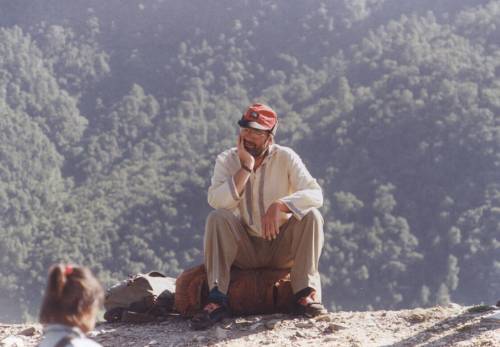
Somewhere between a love for sharing stories and a love of community connections, Michael (Mike) Maunder lived his life. Giving voice to people and neighbourhoods was a passion for the natural-born community organizer.

An author, teacher and principal, Maunder lived in a one-bedroom apartment in West Broadway and devoted himself to community development, education and neighbourhood renewal.

He maintained a connection with Augustine United Church, whose commitment to social justice he appreciated, volunteered at the Sandy-Saulteaux Spiritual Centre, and found comfort in a Buddhist prayer community.

Maunder died on July 15 at the age of 80.

Read
3:00 AM CDT

Kinew delivered what most of us wanted; now we’ll have to deal with the consequences

Dan Lett 5 minute read Preview

Kinew delivered what most of us wanted; now we’ll have to deal with the consequences

Dan Lett 5 minute read Updated: Yesterday at 8:43 AM CDT

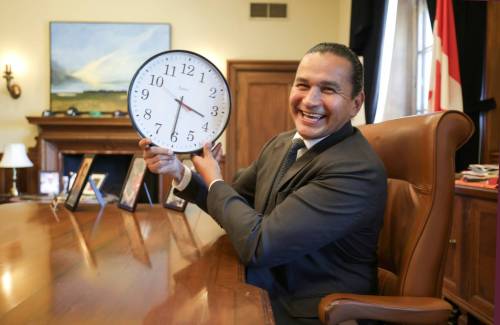
Premier Wab Kinew has decided to adopt permanent daylight savings time, which means a permanent end to the spring forward, fall back tradition of adjusting our clocks. And absolutely no one is surprised.

Read
Updated: Yesterday at 8:43 AM CDT

Hellebuyck standoff caused by… Nathan MacKinnon?

Mike McIntyre 6 minute read Preview

Hellebuyck standoff caused by… Nathan MacKinnon?

Mike McIntyre 6 minute read Yesterday at 6:34 PM CDT

Looking for someone to blame in the Connor Hellebuyck fiasco and cast as public enemy No. 1? How about long-time Winnipeg Jets nemesis Nathan MacKinnon?

Allow us to explain as we fire up the time machine and head back to February in Italy.

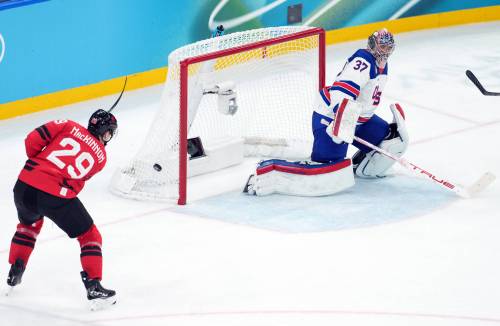
Oh, what could have been if MacKinnon had been able to score on what appeared to be an open net late in the third period of the men’s gold medal game with Hellebuyck down and seemingly out of position.

Instead, the star forward fired wide, keeping the score deadlocked at 1-1 as the clock ticked down on regulation.

Read
Yesterday at 6:34 PM CDT

Cabernet Sauvignon star of wine festival

Ben Sigurdson 5 minute read Preview

Cabernet Sauvignon star of wine festival

Ben Sigurdson 5 minute read 3:00 AM CDT

The Winnipeg Wine Festival will celebrate the king of red wine grapes next weekend — the theme of this year’s festival, which takes place Sept. 25 and 26 at the RBC Convention Centre, is Cabernet Sauvignon.

Cab Sauv, as it’s also known, is the world’s most widely planted wine grape of any colour, first coming to prominence in the 1800s in France’s Bordeaux region, where the grape is still popular. Rather than single-variety wines, Bordeaux reds tend to be blends, with those coming from the left bank of the Gironde estuary being Cabernet-dominant, while right-bank wines are Merlot-dominant, with Cabernet Sauvignon playing a supporting role. Cabernet and Merlot work well together and many other countries have followed suit in blending the two.

A team at University of California Davis put Cabernet Sauvignon through a DNA test in 1996 and discovered its parent grapes are Cabernet Franc and Sauvignon Blanc — it’s likely that at some point the two varieties, planted next to each other in some vineyard, crossed and mutated and became the grape we know today. (Someone growing grapes in the 19th century must have had an inkling of what was up, as the grape has been called Cabernet Sauvignon since long before the DNA test.)

Flavour-wise, most Cabernet Sauvignon wines are big and bold, with a core of deep dark berry flavours, some graphite and spice notes and relatively bright acidity. It’s a grape that is well-suited to barrel aging, with most examples seeing at least some time in wood.

Read
3:00 AM CDT

Klein launches mayoral campaign with pledge to make Winnipeg safest city in Canada

Joyanne Pursaga 5 minute read Preview

Klein launches mayoral campaign with pledge to make Winnipeg safest city in Canada

Joyanne Pursaga 5 minute read Updated: Yesterday at 7:48 PM CDT

Mayoral candidate Kevin Klein says he would make Winnipeg the safest city in Canada by the end of his four-year term, if elected.

“Crime is happening all over the city and we have to take steps to address it,” Klein said at his first campaign announcement Friday morning.

The candidate said crime is “getting out of control,” noting his grandchild’s car seat was recently stolen from a vehicle parked in a typically quiet neighbourhood.

He promised to hire 100 to 110 more police officers, which he believes would cost between $9 million and $11 million.

Read
Updated: Yesterday at 7:48 PM CDT

A quick look at where provinces and territories stand on time changes

The Canadian Press 2 minute read Preview

A quick look at where provinces and territories stand on time changes

The Canadian Press 2 minute read Updated: Yesterday at 6:28 AM CDT

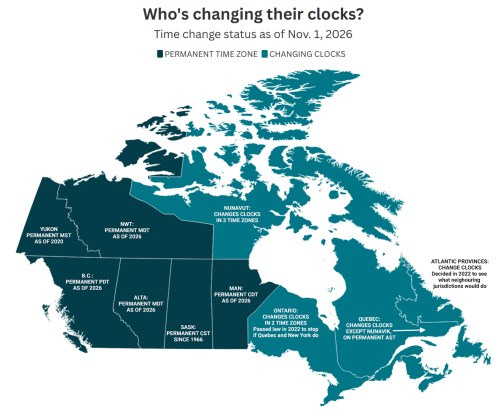
WINNIPEG - Manitoba's government said Thursday the province will be sticking with daylight time year-round, making it the latest jurisdiction to move away from twice-annual time changes. Here's a look at where things stand across Canada:

British Columbia said in March that it was moving to permanent Pacific daylight time. The change also means that parts of northeastern B.C., which have been on mountain standard time year round, are now in alignment with the rest of the province.

Alberta also switched to permanent daylight time this year in what it calls Alberta time. The change means it now has the same time as Saskatchewan year round.

Saskatchewan has been on permanent central standard time since 1966.

Read
Updated: Yesterday at 6:28 AM CDT