EPL club Arsenal’s ads for crypto tokens banned in Britain

Advertisement

Advertise with us

LONDON (AP) — Premier League club Arsenal's promotion of fan tokens broke advertising regulations and have been banned in Britain for taking advantage of consumers’ inexperience in cryptocurrencies.

Read this article for free:


or

Already have an account? Log in here »

To continue reading, please subscribe:

Subscribe and receive a limited-edition Free Press branded hat or tote.

Digital Subscription

One year of digital access for only $205*

  • Enjoy unlimited reading on winnipegfreepress.com
  • Read the E-Edition, our digital replica newspaper
  • Access News Break, our award-winning app
  • Play interactive puzzles

*First annual payment billed as $205.00 + GST for one year. This annual subscription will automatically renew at $233.00 + GST every 52 weeks (10% off the regular annual price of $259.35). Offer available to new and qualified returning subscribers only. Cancel any time.

To continue reading, please subscribe:

Add Free Press access to your Brandon Sun subscription for only an additional

$1 for the first 4 weeks*

  • Enjoy unlimited reading on winnipegfreepress.com
  • Read the E-Edition, our digital replica newspaper
  • Access News Break, our award-winning app
  • Play interactive puzzles
Start now

*Your next Brandon Sun subscription payment will increase by $1.00 and you will be charged $17.95 plus GST for four weeks. After four weeks, your payment will increase to $24.95 plus GST every four weeks.

Hey there, time traveller!
This article was published 22/12/2021 (1729 days ago), so information in it may no longer be current.

LONDON (AP) — Premier League club Arsenal’s promotion of fan tokens broke advertising regulations and have been banned in Britain for taking advantage of consumers’ inexperience in cryptocurrencies.

The London team said fan tokens were used to encourage participation and were different to cryptocurrencies, which are virtual currencies used as a means of payment.

The Facebook and website posts included a video featuring players Ben White, Calum Chambers and Kieran Tierney.

Arsenal's Charlie Patino celebrates after scoring his side's fifth goal during the English League Cup quarterfinal soccer match between Arsenal and Sunderland at Emirates stadium in London, Tuesday, Dec. 21, 2021. (AP Photo/Kirsty Wigglesworth)

The Advertising Standards Authority said in an announcement Wednesday the ads took advantage of consumers’ inexperience or credulity and trivialized investment in crypto assets, failed to illustrate the risk of the investment and did not make clear the “token” through the Socios company was a crypto asset, which could only be obtained by opening an account and exchanging with another cryptocurrency.

Token buyers can also make money in return by trading the digital assets at a price determined by the market’s supply and demand, and ultimately by the team’s performances and actions, so can fluctuate significantly.

Owners can sell and trade their tokens using Chiliz, one of the many cryptocurrencies based on blockchain technology.

Socios lists almost 50 partnerships with clubs, including Premier League champion Manchester City, Barcelona, Juventus and Paris Saint-Germain. The clubs and Socios tout the tokens as a means of giving fans a say in decision-making but that is often reduced to votes on which songs to play ahead of games rather than anything substantial.

Britain’s Financial Conduct Authority categorizes the tokens as crypto assets, a complex and sophisticated investment subject to frequent change in value and one that could potentially lead to large losses.

“We acknowledged that the ads did not promote the fan tokens as an investment or financial product,” the advertising watchdog, the ASA, said. “However, the product was a crypto asset regardless of how it was promoted and the ads did not contain any information that capital gains tax (CGT) could be payable on profits from investing in crypto assets. We therefore considered the potential tax implications were not made sufficiently clear to consumers considering investing in it.”

The club said it promoted the tokens responsibly by reminding fans they only needed one token to vote in decisions, and that they should only purchase what they could afford. It also urged buyers to seek independent financial advice if required.

“The ads trivialized investment in cryptoassets and took advantage of consumers’ inexperience or credulity by not making clear that CGT could be payable on profits from investing,” the ASA said. “We concluded the ads were irresponsible and breached the code.”

The Arsenal Supporters’ Trust has previously raised concerns about the Socios partnership.

___

More AP soccer: https://apnews.com/hub/soccer and https://twitter.com/AP_Sports

Report Error Submit a Tip

More Stories

Seven years sought for serial harasser

Dean Pritchard 5 minute read Preview

Seven years sought for serial harasser

Dean Pritchard 5 minute read 2:01 AM CDT

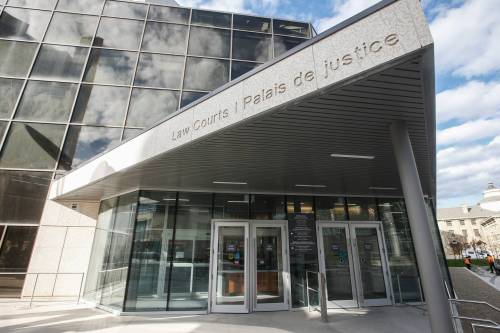
Alexander Beaton finished serving a two-year jail sentence for criminally harassing six women and didn’t last two days in the community before he was back at it, sending unwanted obscene messages and videos to a dozen women.

Now prosecutors are seeking a seven-year prison sentence for the 30-year-old Winnipeg man, whose latest string of victims includes a police officer who investigated his earlier crimes.

“He essentially continued (offending) unabated,” Crown attorney Brett Rach told provincial court Judge Malcolm McDonald at a sentencing hearing Friday. “It caused more than a nuisance to these victims — it caused them to fear for their safety.”

Beaton pleaded guilty to 14 charges of criminal harassment, sending indecent communications and breaching court orders for a campaign of harassment waged between 2015 and 2025.

Read
2:01 AM CDT

MPI looks into motorcycle safety

Morgan Modjeski 4 minute read Preview

MPI looks into motorcycle safety

Morgan Modjeski 4 minute read 7:30 PM CDT

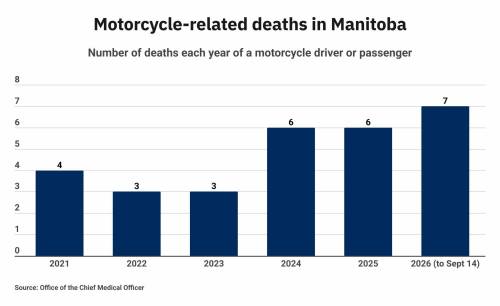
Manitoba Public Insurance is probing how to make regional roads safer for motorcyclists.

The public insurer is seeking feedback about restrictions on powerful bikes for new riders, mandatory training for older motorcyclists and limiting registrations to drivers who have a motorcycle licence (Class 6).

The Coalition of Manitoba Motorcycle Groups, which is set to gather at its regular meeting in Winnipeg Wednesday, will weigh in.

President Mary Johnson said some of the questions — such as those that relate to restricting new riders to bikes with engines under 500 cubic centimetres — are non-starters.

Read
7:30 PM CDT

Federal Court awards OCN $27M, 62 years after construction of hydro dam

Nicole Buffie 5 minute read Preview

Federal Court awards OCN $27M, 62 years after construction of hydro dam

Nicole Buffie 5 minute read 6:34 PM CDT

The Federal Court has ordered Ottawa pay Opaskwayak Cree Nation $27 million over damages suffered due to the construction of the Grand Rapids hydro dam in the 1960s.

In a decision dated Sept. 3, Federal Court Justice Sébastien Grammond says the federal government had a fiduciary duty to protect the community from the impacts of the dam.

“When the Crown exercises a discretionary power over an Indigenous interest, it has a fiduciary duty and it must exercise the discretion in the best interests of the Indigenous group,” the ruling said. “Canada breached its fiduciary duty to OCN because it approved the (project) without ensuring that the impacts of the Grand Rapids dam on OCN’s traditional way of life were mitigated or compensated.”

The First Nation took the federal government to court in February over impacts on the community after the dam, located about 145 kilometres southeast of Opaskwayak Cree Nation, was installed on the Saskatchewan River in 1964. The case was heard over 14 days in a judge-alone trial in Winnipeg.

Read
6:34 PM CDT

Health system would suffer during extended Dynacare strike, board told

Chris Kitching 5 minute read Preview

Health system would suffer during extended Dynacare strike, board told

Chris Kitching 5 minute read 6:50 PM CDT

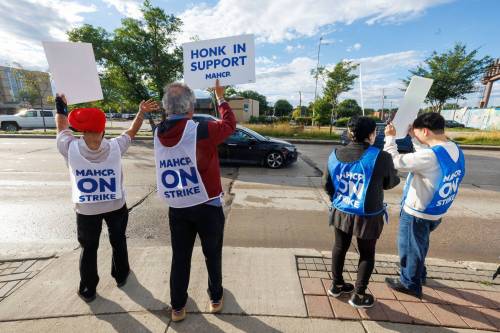
A prolonged strike at Dynacare labs would lead to unsustainable pressure on the public health-care system alongside testing and treatment delays for some patients, the Manitoba Labour Board was told Tuesday.

Dr. AbdulRazaq Sokoro, chief operating officer of diagnostic services at Shared Health, outlined the potential effect on blood, urine and other tests if the provincial authority has to implement a strike contingency plan that would give priority to patients deemed more vulnerable.

“We know from evidence and we know from medical fact that any patient that has complaints will get a worsening of their disease if they’re unattended to,” Sokoro said during a labour board hearing to determine whether unionized employees of Dynacare — a private, American-owned company — provide an essential service.

“We also know that in order for physicians to attend to complaints, they need to be able to diagnose the patient’s disease.

Read
6:50 PM CDT

Menstruation, consent move up in sex-ed lesson plan

Maggie Macintosh 5 minute read Preview

Menstruation, consent move up in sex-ed lesson plan

Maggie Macintosh 5 minute read Yesterday at 6:00 AM CDT

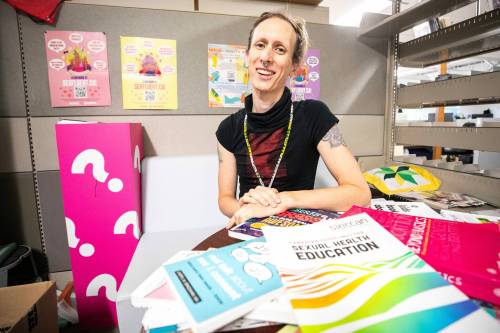
Manitoba’s newest curriculum introduces the menstrual cycle earlier and repeatedly calls for explicit lessons on how students can give, seek, and decline to provide their consent.

The education department has released its sweeping proposal to overhaul how exercise, nutrition and sexuality are taught between kindergarten and Grade 12.

Grade 5 has long served as a key turning point for “the talk,” said J Fiedler, a sexual and reproductive health educator who provided input on the new curriculum.

“There’s no ‘the talk’ anymore. Now, there’s continuations of multiple ‘talks,’ which can hopefully reduce stress for students and stigma that people experience talking about sexuality.”

Read
Yesterday at 6:00 AM CDT

Winnipeg venues saying no to AI-made advertisements

Sheldon Birnie 8 minute read Preview

Winnipeg venues saying no to AI-made advertisements

Sheldon Birnie 8 minute read Updated: Yesterday at 10:22 AM CDT

Although the days when telephone poles and notice boards across the city were thick with gig posters, either slopped up with wheat paste or wrapped tight with packing tape, are behind us, the art of making an appealing visual ad for live music events is still a vital part of the local creative scene.

However, a widespread backlash against a new kind of slop — the use of generative AI images — has been building, especially among creatives when it comes to promoting live music.

“Live music is and always has been a DIY type of scene, especially locally,” says Evan Simpson, who has been working as a graphic designer for nearly a decade.

“For years people have been making their own flyers, or if they have the budget, hiring a designer or artist to come up with some artwork for their flyers. It’s a whole ecosystem, a scene supporting itself. If you take away the visual side of it, the spark, individuality and uniqueness of each gig poster is lost. What a sad world it would be if all art were made by AI.”

Read
Updated: Yesterday at 10:22 AM CDT