Environmental group raises concern about flooding at Alberta coal mines

Advertisement

Advertise with us

EDMONTON - An environmental group is calling for stronger action from Alberta's energy regulator after it announced heavy rain had caused flooding and excessive surface run-off at energy sites, including coal mines.

Read this article for free:


or

Already have an account? Log in here »

To continue reading, please subscribe:

Subscribe and receive a limited-edition Free Press branded hat or tote.

Digital Subscription

One year of digital access for only $205*

  • Enjoy unlimited reading on winnipegfreepress.com
  • Read the E-Edition, our digital replica newspaper
  • Access News Break, our award-winning app
  • Play interactive puzzles

*First annual payment billed as $205.00 + GST for one year. This annual subscription will automatically renew at $233.00 + GST every 52 weeks (10% off the regular annual price of $259.35). Offer available to new and qualified returning subscribers only. Cancel any time.

To continue reading, please subscribe:

Add Free Press access to your Brandon Sun subscription for only an additional

$1 for the first 4 weeks*

  • Enjoy unlimited reading on winnipegfreepress.com
  • Read the E-Edition, our digital replica newspaper
  • Access News Break, our award-winning app
  • Play interactive puzzles
Start now

*Your next Brandon Sun subscription payment will increase by $1.00 and you will be charged $17.95 plus GST for four weeks. After four weeks, your payment will increase to $24.95 plus GST every four weeks.

Hey there, time traveller!
This article was published 23/06/2023 (1185 days ago), so information in it may no longer be current.

EDMONTON – An environmental group is calling for stronger action from Alberta’s energy regulator after it announced heavy rain had caused flooding and excessive surface run-off at energy sites, including coal mines.

The Alberta Energy Regulator posted on its website Tuesday that some coal mines in the Hinton and Grande Cache areas reported wastewater being discharged into the environment. It said the mixture of surface run-off and sediment was above approved water-quality limits and from unauthorized sources.

“There have been no reported impacts to public safety,” the statement said.
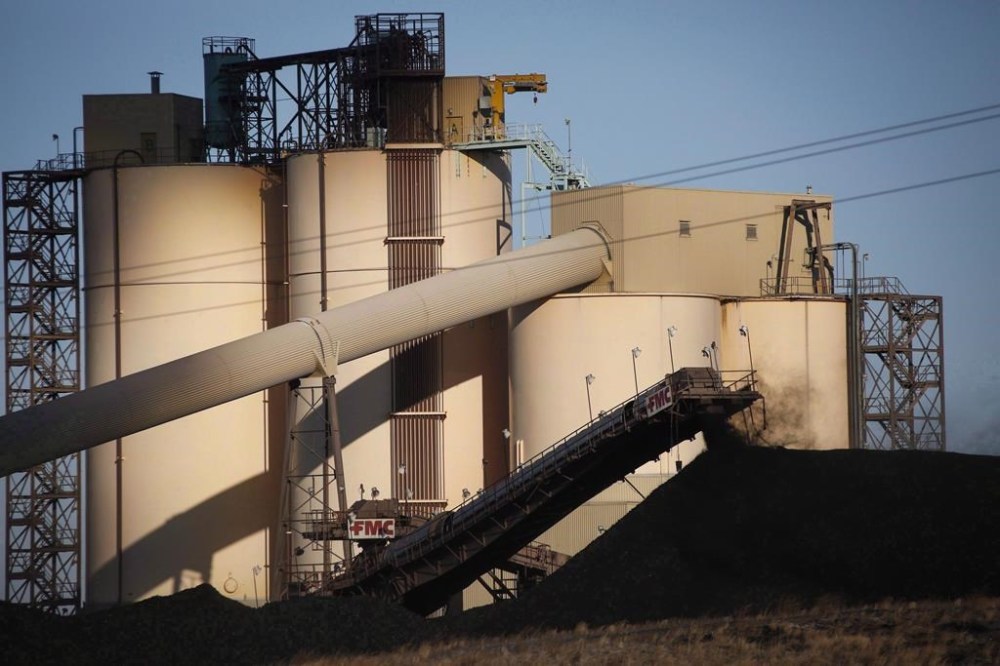
A conveyor belt transports coal at the Westmoreland Coal Company's Sheerness Mine near Hanna, Alta., Tuesday, Dec. 13, 2016. An environmental group is calling for improvements after Alberta's energy regulator announced that heavy rain had caused flooding and excessive surface runoff at energy sites, including coal mines. THE CANADIAN PRESS/Jeff McIntosh

The regulator said the rain along the eastern slopes of the Rockies was easing off, but that it would continue to monitor the situation across the province and respond to other situations at energy sites as they arise.

However, the Canadian Parks and Wilderness Society said it’s alarmed that the regulator hasn’t provided more details about the environmental effects of the spills, including what was in the wastewater, potential contaminants or even the exact locations.

The regulator’s dashboard shows one of this week’s spills occurred Monday at CST Coal. It was a release of wastewater from a settling pond into the Smoky River.

A second spill happened Tuesday at Prairie Mines and Royalty near Robb, Alta., where wastewater was released into the Lovett and Erith rivers and Chance Creek.

Both postings said the emergency phase is over, but the regulator deferred comment Friday on any effects to the companies involved.

Westmoreland Mining, which owns Prairie Mines and Royalty, said in a statement that the release of surface water at both the Coal Valley and Obed mines was due to “an unusually intense rain event that overwhelmed the entire region and exceeded the water control capacity of the mines — which were designed, and subsequently approved by AER, to handle a 100-year storm event.”

It added that the water was surface run-off and did not contain any chemicals or other substances that would adversely affect the environment.

Gillian Chow-Fraser of the Canadian Parks and Wilderness Society, said the latest spills raise concerns.

“There have been so many incidents of that happening so far this year across mines across the province at both coal mines and oilsands mines,” she said Friday in an interview. “It’s very clear that we’re putting a lot of stress on these rivers and these watersheds that so many people depend on.”

Chow-Fraser said she expected more information from the regulator, particularly since coal mines can have harmful contaminants.

“There can be selenium in there, which is poisonous to fish, which can be harmful to wildlife and the water,” she said. “The makeup of that wastewater is really important to understand what are the environmental risks.”

She said the regulator also needs to do more to prevent similar spills in the future.

“It’s obvious that infrastructure needs to improve to buffer against these extreme weather events, which we know are going to increase with climate change,” she said.

“There needs to be more regulatory oversight to understand why these discharges keep happening and how we are going to stop them.”

Chow-Fraser said she would also like to see improved environmental monitoring downstream of the spills as they continue to happen.

A months-long leak of industrial wastewater from an Imperial Oil oilsands mine site was revealed earlier this year. It was followed by another 5.3 million litres of wastewater that escaped from a containment pond, which prompted the regulator to issue an environmental protection order.

This report by The Canadian Press was first published June 23, 2023.

— By Colette Derworiz in Calgary.

Report Error Submit a Tip

More Stories

Cabernet Sauvignon star of wine festival

Ben Sigurdson 5 minute read Preview

Cabernet Sauvignon star of wine festival

Ben Sigurdson 5 minute read Yesterday at 3:00 AM CDT

The Winnipeg Wine Festival will celebrate the king of red wine grapes next weekend — the theme of this year’s festival, which takes place Sept. 25 and 26 at the RBC Convention Centre, is Cabernet Sauvignon.

Cab Sauv, as it’s also known, is the world’s most widely planted wine grape of any colour, first coming to prominence in the 1800s in France’s Bordeaux region, where the grape is still popular. Rather than single-variety wines, Bordeaux reds tend to be blends, with those coming from the left bank of the Gironde estuary being Cabernet-dominant, while right-bank wines are Merlot-dominant, with Cabernet Sauvignon playing a supporting role. Cabernet and Merlot work well together and many other countries have followed suit in blending the two.

A team at University of California Davis put Cabernet Sauvignon through a DNA test in 1996 and discovered its parent grapes are Cabernet Franc and Sauvignon Blanc — it’s likely that at some point the two varieties, planted next to each other in some vineyard, crossed and mutated and became the grape we know today. (Someone growing grapes in the 19th century must have had an inkling of what was up, as the grape has been called Cabernet Sauvignon since long before the DNA test.)

Flavour-wise, most Cabernet Sauvignon wines are big and bold, with a core of deep dark berry flavours, some graphite and spice notes and relatively bright acidity. It’s a grape that is well-suited to barrel aging, with most examples seeing at least some time in wood.

Read
Yesterday at 3:00 AM CDT

A life’s story: activist, educator, organizer knew the true meaning of community

Janine LeGal 7 minute read Preview

A life’s story: activist, educator, organizer knew the true meaning of community

Janine LeGal 7 minute read Yesterday at 3:00 AM CDT

Somewhere between a love for sharing stories and a love of community connections, Michael (Mike) Maunder lived his life. Giving voice to people and neighbourhoods was a passion for the natural-born community organizer.

An author, teacher and principal, Maunder lived in a one-bedroom apartment in West Broadway and devoted himself to community development, education and neighbourhood renewal.

He maintained a connection with Augustine United Church, whose commitment to social justice he appreciated, volunteered at the Sandy-Saulteaux Spiritual Centre, and found comfort in a Buddhist prayer community.

Maunder died on July 15 at the age of 80.

Read
Yesterday at 3:00 AM CDT

Elmwood–East Kildonan candidate promises to tackle ‘inefficiency’ in government

Gabrielle Piché 3 minute read Preview

Elmwood–East Kildonan candidate promises to tackle ‘inefficiency’ in government

Gabrielle Piché 3 minute read Yesterday at 6:17 PM CDT

The former assistant of late Elmwood–East Kildonan councillor Jason Schreyer is again running for the seat.

Chris Sweryda officially launched his campaign Saturday. He did so with the backdrop of a grocery program he runs, where food is sold near-cost out of St. Gerard School’s gym.

Rows of cereal, pasta sauce and chips filled tables ahead of the program’s afternoon opening. Sweryda created the pop-up with Schreyer months ahead of the former councillor’s April 2025 death.

The program sees roughly 500 people each day it’s open (which is every other week on Saturday), Sweryda said.

Read
Yesterday at 6:17 PM CDT

News briefs for Sunday, September 20, 2026

1 minute read Updated: 11:07 AM CDT

A collection of breaking news briefs filed on Sunday, September 20, 2026

Leila Avenue closed following serious two-vehicle crash

11:07 AM

Leila Avenue was closed Sunday morning after a serious car crash.

A quick look at where provinces and territories stand on time changes

The Canadian Press 2 minute read Preview

A quick look at where provinces and territories stand on time changes

The Canadian Press 2 minute read Friday, Sep. 18, 2026

WINNIPEG - Manitoba's government said Thursday the province will be sticking with daylight time year-round, making it the latest jurisdiction to move away from twice-annual time changes. Here's a look at where things stand across Canada:

British Columbia said in March that it was moving to permanent Pacific daylight time. The change also means that parts of northeastern B.C., which have been on mountain standard time year round, are now in alignment with the rest of the province.

Alberta also switched to permanent daylight time this year in what it calls Alberta time. The change means it now has the same time as Saskatchewan year round.

Saskatchewan has been on permanent central standard time since 1966.

Read
Friday, Sep. 18, 2026

National Black Canadians Summit celebrates culture, combats racism

Gabrielle Piché 4 minute read Preview

National Black Canadians Summit celebrates culture, combats racism

Gabrielle Piché 4 minute read Yesterday at 6:06 PM CDT

Despite the event’s name — the National Black Canadians Summit — Bruce Miller felt he should attend.

He booked a ticket. And so, this weekend, the Indigenous Manitoban joined roughly 1,500 people flocking to the RBC Convention Centre.

It’s a full schedule — addresses from a former Canadian governor general, sessions on Black mental health and anti-Black racism.

The annual event draws politicians, artists and other professionals from across the country.

Read
Yesterday at 6:06 PM CDT