After fall of Roe, emboldened religious conservatives lobby to restrict abortion in Africa

Advertisement

Advertise with us

NAIROBI, Kenya (AP) — Nowhere in the world has a higher rate of unsafe abortions or unintended pregnancies than sub-Saharan Africa, where women often face scorn for becoming pregnant before marriage.

Read this article for free:


or

Already have an account? Log in here »

To continue reading, please subscribe:

Subscribe and receive a limited-edition Free Press branded hat or tote.

Digital Subscription

One year of digital access for only $205*

  • Enjoy unlimited reading on winnipegfreepress.com
  • Read the E-Edition, our digital replica newspaper
  • Access News Break, our award-winning app
  • Play interactive puzzles

*First annual payment billed as $205.00 + GST for one year. This annual subscription will automatically renew at $233.00 + GST every 52 weeks (10% off the regular annual price of $259.35). Offer available to new and qualified returning subscribers only. Cancel any time.

To continue reading, please subscribe:

Add Free Press access to your Brandon Sun subscription for only an additional

$1 for the first 4 weeks*

  • Enjoy unlimited reading on winnipegfreepress.com
  • Read the E-Edition, our digital replica newspaper
  • Access News Break, our award-winning app
  • Play interactive puzzles
Start now

*Your next Brandon Sun subscription payment will increase by $1.00 and you will be charged $17.95 plus GST for four weeks. After four weeks, your payment will increase to $24.95 plus GST every four weeks.

Hey there, time traveller!
This article was published 01/07/2023 (1195 days ago), so information in it may no longer be current.

NAIROBI, Kenya (AP) — Nowhere in the world has a higher rate of unsafe abortions or unintended pregnancies than sub-Saharan Africa, where women often face scorn for becoming pregnant before marriage.

Efforts to legalize and make abortions safer in Africa were shaken when the U.S. Supreme Court ended the national right to an abortion a year ago. Within days, Sierra Leone President Julius Maada Bio declared that his government would decriminalize abortion “at a time when sexual and reproductive health rights for women are being either overturned or threatened.”

But some U.S.-based organizations active in Africa were emboldened, especially in largely Christian countries. One is Family Watch International, a nonprofit Christian conservative organization whose anti-LGBTQ+ stance, anti-abortion activities and “intense focus on Africa” led to its designation as a hate group by the Southern Poverty Law Center.
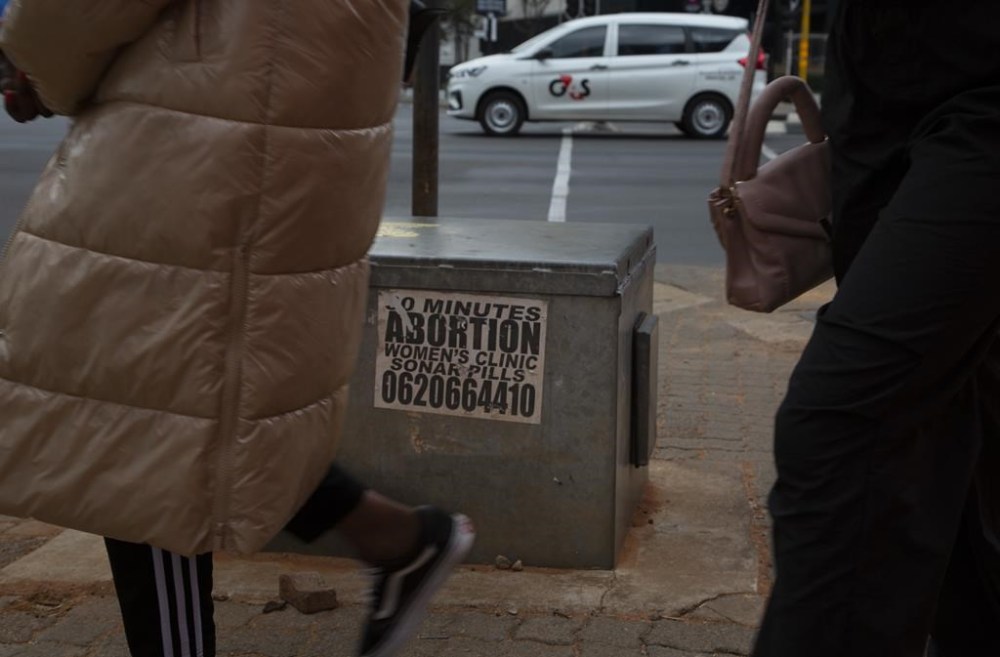
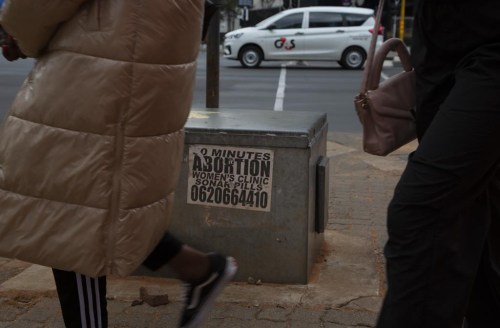
Women pass a sticker advertising abortion pills on a sidewalk in Johannesburg, Wednesday June 28, 2023. When the U.S. Supreme Court overturned the national right to an abortion a year ago, it shook efforts to legalize and make abortions safer in Africa. Sub-Saharan Africa has the world's highest rate of unintended pregnancies, and 77% of abortions are estimated to be unsafe. (AP Photo/Denis Farrell)

In April, Family Watch International helped to develop a “family values and sovereignty” meeting at Uganda’s presidential offices with lawmakers and other delegates from more than 20 African countries. The organization’s Africa director also is advocating for his country, Ethiopia, to revoke a 2005 law that expanded abortion access and dramatically reduced maternal mortality.

“It’s kind of like the gloves are off,” Sarah Shaw, head of advocacy at U.K.-based MSI Reproductive Choices, an international provider of reproductive health services, said in an interview.

In a September speech to the African Bar Association, the president of Family Watch International, Sharon Slater, alleged that donor countries were attempting a “sexual social recolonization of Africa” by smuggling in legal abortion along with sex education and LGBTQ+ rights.

“Sexual rights activists know if they can capture the hearts and minds of Africa’s children and indoctrinate and sexualize them, they will capture the future lawyers, teachers, judges, politicians, presidents, vice presidents and more, and thus they will capture the very heart of Africa,” Slater claimed.

Her speech in Malawi was attended by the country’s president, a former leader of the Pentecostal Assemblies of God movement.

After lobbying lawmakers in the southern African nation not to consider a bill that would have allowed abortion under certain circumstances, the U.S.-based Catholic group Human Life International told its supporters in March that “thanks to you, Malawi is safe from legal abortion.”

The African Union two decades ago recognized the right to abortion in cases of rape and incest or when the life of the mother or fetus is endangered or the mother’s mental or physical health is at risk.

A growing number of countries have relatively liberal abortion laws. Benin legalized abortion less than a year before the U.S. Supreme Court ruling, though Nigeria, Africa’s most populous country, allows abortion only to save the mother’s life.

African experts say events in the U.S. could reverse gains in the availability of safe abortion procedures, especially since the U.S. government is the largest global donor of international reproductive health assistance.

Such changes could deeply affect the lives of women of reproductive age in sub-Saharan Africa, where 77% of abortions, or more than 6 million a year, are estimated to be unsafe, the Guttmacher Institute, an international research and policy organization with headquarters in New York, said in 2020.

Unsafe abortions cause 16% of maternal deaths in the World Health Organization’s largely sub-Saharan Africa region, the U.N. agency said last year, “with variations across countries depending on the level of restrictions to abortion.”

Abortion opponents are especially outspoken in East Africa, where countries publicly wrestle with the issue of teen pregnancy but offer little sex education and access to legal abortions in limited circumstances.

A sexual and reproductive health bill introduced in 2021 is still under debate by the East African Community, whose member nations include Burundi, Congo, Kenya, Rwanda, South Sudan, Tanzania and Uganda. Some Catholic and other conservative organizations have criticized a section that would allow a woman to terminate a pregnancy in cases of rape, incest or endangered health.

Earlier this year, the Protestant Council of Rwanda directed all health facilities run by its member institutions to stop performing abortions, although Rwandan law permits them in certain cases.

“We are having a very strong anti-rights narrative,” Brenda Otieno, research coordinator with the Kisumu Medical and Education Trust in Kenya, said during a Tuesday webinar about the global effects of the U.S. Supreme Court decision.

Abortion providers are often harassed, Otieno said, and a year ago, Kenya passed a national reproductive health policy that paid little attention to safe abortion care.

In Uganda, one rights watchdog said the issue of abortion access is taboo, with advocates facing discrimination, even as some women resort to self-mutilation.

“We’ve seen a number of people losing their lives,” said Twaibu Wamala, executive director of the Uganda Harm Reduction Network.

Abortion is illegal in Uganda, although it can be legally carried out by a licensed medical worker who determines that a pregnancy threatens the mother’s life. But many doctors, fearing medical complications, only offer post-abortion care that may be too expensive or too late to save a woman’s life.

In Ethiopia, civil society workers have asked the government to investigate what they fear is a new trend: fewer public health facilities providing abortions and more women seeking care after unsafe abortions.

Groups that oppose abortion in Africa’s second most populous nation are mostly incited by outsiders and “consider the Supreme Court decision as fuel for them,” Abebe Sibru, the Ethiopia director for MSI Reproductive Choices, said.

___

Associated Press writer Rodney Muhumuza in Kampala, Uganda, contributed.

___

Follow AP’s coverage of Africa at https://apnews.com/hub/africa and of abortion at https://apnews.com/hub/abortion

Report Error Submit a Tip

More Stories

Kids deserve better

Jordan Laidlaw 4 minute read 2:00 AM CDT

As much as I cling to hope, I recognize the ominous circumstances and questionable future that our young people stand to inherit.

Youth are navigating a world plagued with the existential dangers of climate change, artificial intelligence, political polarization and rising military armament, among other disconcerting trends. While schools cannot entirely ameliorate these issues, I am inspired by the words of Amina Mohammed, the United Nations deputy secretary-general, who declared teachers to be the “guardians of our future.”

Our future integrally depends on the learning, healthy development and empowerment of young people. With the upcoming Manitoba school board elections, I invite readers, voters and prospective candidates to consider how to support the practices of these guardians so we may ensure a brighter tomorrow.

First, I believe we are in — or entering — a community mental-health crisis. There is a resounding body of peer-reviewed research outlining the declining trends in the mental health of youth, parents and teachers. In May 2026, Doctors Manitoba stated its concern that the technology consumption habits of youth rivalled the health detriments of drinking and smoking. Many parents are stressed, economically struggling and need assistance. How might schools mitigate these precarious developments?

Don’t let pyjama jibes sour your bedtime bond

Maureen Scurfield 5 minute read Yesterday at 2:01 AM CDT

DEAR MISS LONELYHEARTS: I got married in August and my new husband just bought himself old-man striped flannel pyjamas to wear to bed now that it’s getting colder out. He didn’t do this before we were married. What a turn-off. Should I buy him a nightcap as well?

He used to be a sexy guy who just dumped his clothes on the chair beside the bed and jumped in naked.

But last night I watched him come out of the bathroom in a ratty old robe. I thought, “He looks like my grandfather, not my husband.”

I called out sarcastically, “Hey, gramps, are you lost?” and he said, “Not anymore.” Then he walked into the spare bedroom and slept there all night without me. Help.

Sex offender who changed name sent back to prison

Dean Pritchard 7 minute read Preview

Sex offender who changed name sent back to prison

Dean Pritchard 7 minute read Updated: Yesterday at 9:53 PM CDT

The father of a boy repeatedly abused by convicted sex predator Ryan Knight said he believes his son would have been kept safe had there been a law in place preventing sex offenders from legally changing their name.

Read
Updated: Yesterday at 9:53 PM CDT

Amazon in the weeds over damage to tall grass reserve

Eva Wasney 7 minute read Preview

Amazon in the weeds over damage to tall grass reserve

Eva Wasney 7 minute read Tuesday, Oct. 6, 2026

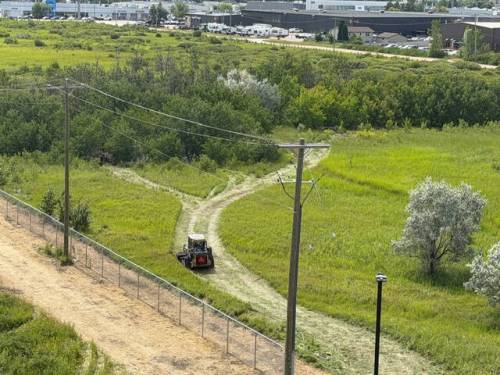
Patricia Dutchak was devastated when she first saw the wide swaths of crushed grass and upturned soil at Winnipeg’s Rotary Prairie Nature Park, a municipal heritage site.

“This is a very rare ecosystem, a remnant of tall grass prairie, there’s barely any left in the world, and to come here and see all this damage was heartbreaking,” Dutchak, chair of the Transcona Rotary Club’s parks committee, says.

The club is responsible for maintaining the protected green space, which was significantly damaged this summer when a fence between the park and the neighbouring Amazon distribution centre was relocated.

The 20-acre nature preserve is situated on a narrow tract of land on Regent Avenue West in the commercial heart of Transcona. The park received its municipal heritage designation in 1992 and is, today, surrounded by high-traffic streets, industrial warehouses and car dealerships.

Read
Tuesday, Oct. 6, 2026

After fall of Roe, emboldened religious conservatives lobby to restrict abortion in Africa

Cara Anna, The Associated Press 6 minute read Preview

After fall of Roe, emboldened religious conservatives lobby to restrict abortion in Africa

Cara Anna, The Associated Press 6 minute read Saturday, Jul. 1, 2023

NAIROBI, Kenya (AP) — Nowhere in the world has a higher rate of unsafe abortions or unintended pregnancies than sub-Saharan Africa, where women often face scorn for becoming pregnant before marriage.

Efforts to legalize and make abortions safer in Africa were shaken when the U.S. Supreme Court ended the national right to an abortion a year ago. Within days, Sierra Leone President Julius Maada Bio declared that his government would decriminalize abortion “at a time when sexual and reproductive health rights for women are being either overturned or threatened.”

But some U.S.-based organizations active in Africa were emboldened, especially in largely Christian countries. One is Family Watch International, a nonprofit Christian conservative organization whose anti-LGBTQ+ stance, anti-abortion activities and “intense focus on Africa” led to its designation as a hate group by the Southern Poverty Law Center.

In April, Family Watch International helped to develop a “family values and sovereignty” meeting at Uganda’s presidential offices with lawmakers and other delegates from more than 20 African countries. The organization's Africa director also is advocating for his country, Ethiopia, to revoke a 2005 law that expanded abortion access and dramatically reduced maternal mortality.

Read
Saturday, Jul. 1, 2023

Israeli election once again up for grabs

Allan Levine 5 minute read Preview

Israeli election once again up for grabs

Allan Levine 5 minute read 2:00 AM CDT

The next general election in Israel will be held on Oct. 27. Needless to say, like most elections in the country’s modern and fraught history since 1948, it is a critical contest between right and left, secular and orthodox, and left, moderate, right and extreme.

Also, given Israel’s complex proportional representative political system, which allocates a seat in its 120-seat Knesset (parliament) for winning only 3.25 per cent of the national vote, this election is nearly impossible to predict.

Even before 1948, Israelis’ ardent faith in democracy, their differing points of view and penchant for arguing led to the establishment of a multitude of political parties representing a smorgasbord of almost every conceivable position on the political spectrum.

Because no political party has ever won the 61 seats required to form a majority government, the major parties have frequently had to rely on fringe parties to hold power.

Read
2:00 AM CDT