Even frozen Antarctica is being walloped by climate extremes, scientists find
Advertisement
Read this article for free:
or
Already have an account? Log in here »
To continue reading, please subscribe:
Digital Subscription
One year of digital access for only $1.44 a week*
- Enjoy unlimited reading on winnipegfreepress.com
- Read the E-Edition, our digital replica newspaper
- Access News Break, our award-winning app
- Play interactive puzzles
*Billed as $5.77 plus GST every four weeks. After 52 weeks, price increases to the regular rate of $19.95 plus GST every four weeks. Offer available to new and qualified returning subscribers only. Cancel any time.
To continue reading, please subscribe:
Add Free Press access to your Brandon Sun subscription for only an additional
$1 for the first 4 weeks*
- Enjoy unlimited reading on winnipegfreepress.com
- Read the E-Edition, our digital replica newspaper
- Access News Break, our award-winning app
- Play interactive puzzles
*Your next Brandon Sun subscription payment will increase by $1.00 and you will be charged $17.95 plus GST for four weeks. After four weeks, your payment will increase to $24.95 plus GST every four weeks.
Read unlimited articles for free today:
or
Already have an account? Log in here »
Hey there, time traveller!
This article was published 07/08/2023 (1172 days ago), so information in it may no longer be current.
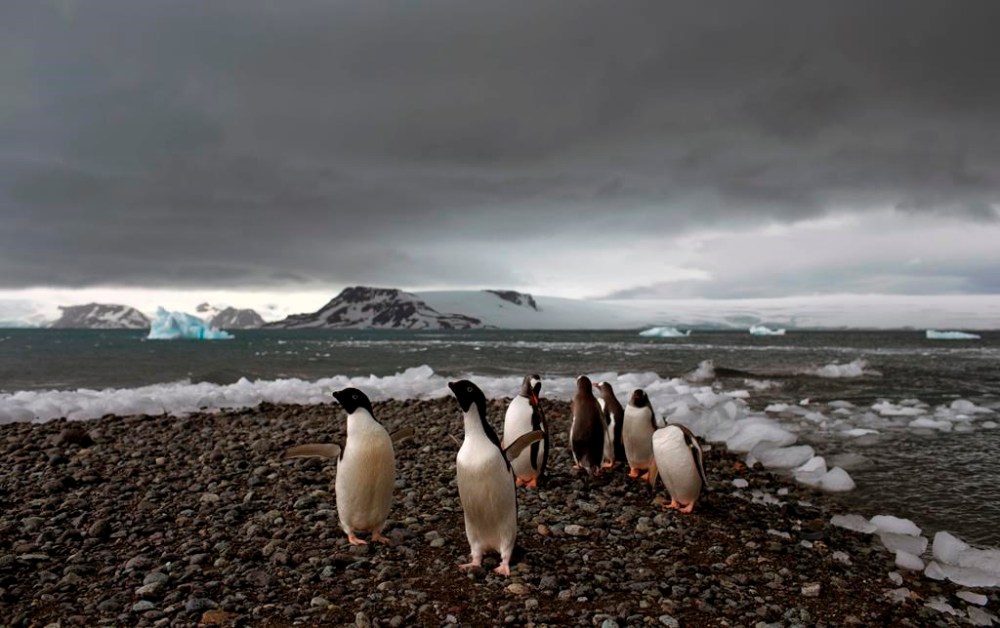
Even in Antarctica — one of the most remote and desolate places on Earth — scientists say they are finding shattered temperature records and an increase in the size and number of wacky weather events.
The southernmost continent is not isolated from the extreme weather associated with human-caused climate change, according to a new paper in Frontiers in Environmental Science that tries to make a coherent picture of a place that has been a climate change oddball. Its western end and especially its peninsula have seen dramatic ice sheet melt that threatens massive sea level rises over the next few centuries, while the eastern side has at times gained ice. One western glacier is melting so fast that scientists have nicknamed it the Doomsday Glacier and there’s an international effort trying to figure out what’s happening to it. And Antarctic sea ice veered from record high to shocking amounts far lower than ever seen.
What follows if the trend continues, a likely result if humans fail to curb emissions, will be a cascade of consequences from disappearing coastlines to increased global warming hastened by dramatic losses of a major source of sunlight-reflecting ice. That’s something scientists have long been watching and are even more concerned about now.
“A changing Antarctica is bad news for our planet,” said Martin Siegert, a glaciologist, professor of geosciences at University of Exeter and lead author on the paper.
Siegert said he and his team wanted to understand more about the causes of extreme events, and whether more of those events would happen as a result of burning fossil fuels, so the team synthesized research on a wide range of topics including atmosphere and weather patterns, sea ice, land ice and ice shelves and marine and land biology. The study found climate change extremes are getting worse in a place that once seemed slightly shielded from global warming’s wildness. The continent “is not a static giant frozen in time,” they said, but instead feels climate change’s wrath and extremes “sporadically and unpredictably.”
Anna Hogg, a co-author on the paper and professor at the University of Leeds, said that their work illustrates complex and connected changes between the ice, ocean and air. “Once you’ve made a big change, it can then be really hard to sort of turn that around,” she said.
And it’s a change with links to human activity. “This is indeed a strong signature of climate change,” Helen Fricker, a professor of geophysics with the Scripps Institution of Oceanography at the University of California, San Diego who was not involved with the study, said in an email. “It’s not good.”
Siegert and Hogg’s team looked at several factors including heat waves, loss of sea ice, collapse of ice shelves and impacts on biodiversity. Siegert described last year’s heat wave in Antarctica, which brought research station thermometers to a whopping 38 degrees Celsius (70 degrees Fahrenheit) above normal temperatures. Hogg said that sea ice is at an all time low, a major cause for concern: In the Antarctic, the July average for sea ice extent fell below previous low set in 2022. And ice shelves, which can be the size of several large buildings, are also under threat as they melt and eventually collapse.
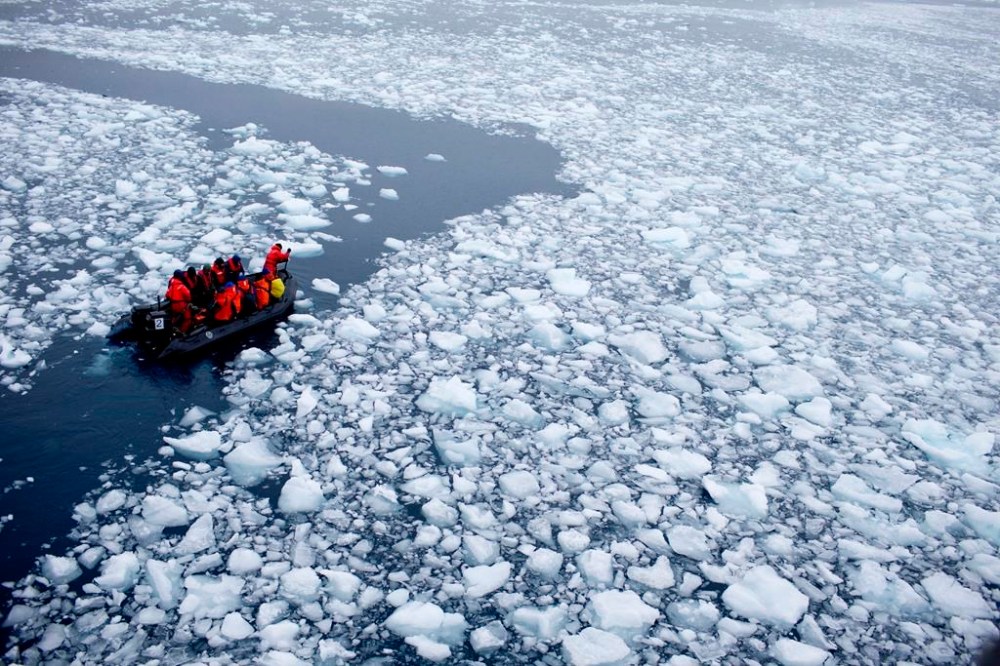
Sea ice and ice shelves work like a cork in a bottle, holding back glaciers that would otherwise rush into the ocean. When they disappear, glaciers flow many times faster. What’s more, the disappearance of large swaths of ice accelerates warming like swapping a white T-shirt for a black one on a hot summer day — replace ice with land or water, and suddenly the earth is absorbing the sun’s rays rather than reflecting them.
The topic of extremes “is with us more frequently and will be with us even more frequently in the future,” said Peter Schlosser, vice president and vice provost of the Global Futures Laboratory at Arizona State University not involved with the research. Systems like Antarctica are extreme by nature, but that doesn’t mean they’re not vulnerable, he added — they’re highly susceptible to small changes.
“I’m not an alarmist, but what we see is alarming,” said Waleed Abdalati, an environmental researcher at the University of Colorado not involved with the study. He said that extreme events are one thing, but when superimposed on a trend — a trend of global warming that heightens those extreme events — that’s a cause for concern. “We can handle events,” he added, “but we can’t handle a steady increase of those destructive events.”
That’s something climate scientists say we’ll need to prepare for, by continuing to reduce greenhouse gas emissions while introducing adaptation measures for sea level rise and extreme weather around the world.
“We’ve been saying this for 30 years,” said Ted Scambos, an ice scientist at the University of Colorado whose paper from 2000 was cited in Siegert and Hogg’s article. “I’m not surprised, I’m disappointed. I wish we were taking action faster.”
___
Seth Borenstein contributed from Washington, D.C.
___
Follow Melina Walling on Twitter @MelinaWalling.
___
Associated Press climate and environmental coverage receives support from several private foundations. See more about AP’s climate initiative here. The AP is solely responsible for all content.
Related Articles
US east cleans up after deadly storms as New England braces for flooding
Advertisement Advertise With Us
Advertisement Advertise With Us