Looking astern

McGoogan brings Franklin expedition’s cast of charactersto life in hislatest dispatch

Advertisement

Advertise with us

Two names are synonymous with exploring the Arctic: John Franklin and Ken McGoogan.

Read this article for free:


or

Already have an account? Log in here »

To continue reading, please subscribe:

Subscribe and receive a limited-edition Free Press branded hat or tote.

Digital Subscription

One year of digital access for only $205*

  • Enjoy unlimited reading on winnipegfreepress.com
  • Read the E-Edition, our digital replica newspaper
  • Access News Break, our award-winning app
  • Play interactive puzzles

*First annual payment billed as $205.00 + GST for one year. This annual subscription will automatically renew at $233.00 + GST every 52 weeks (10% off the regular annual price of $259.35). Offer available to new and qualified returning subscribers only. Cancel any time.

To continue reading, please subscribe:

Add Free Press access to your Brandon Sun subscription for only an additional

$1 for the first 4 weeks*

  • Enjoy unlimited reading on winnipegfreepress.com
  • Read the E-Edition, our digital replica newspaper
  • Access News Break, our award-winning app
  • Play interactive puzzles
Start now

*Your next Brandon Sun subscription payment will increase by $1.00 and you will be charged $17.95 plus GST for four weeks. After four weeks, your payment will increase to $24.95 plus GST every four weeks.

Hey there, time traveller!
This article was published 25/11/2023 (1030 days ago), so information in it may no longer be current.

Two names are synonymous with exploring the Arctic: John Franklin and Ken McGoogan.

English explorer Franklin lived from 1786 to 1847, making three major expeditions in search of the Northwest Passage, the third one proving to be fatal. Guelph, Ont., author McGoogan (born in 1947) has devoted much of his life to learning about Arctic exploration and passing his knowledge on through books, articles and workshops.

Searching for Franklin is McGoogan’s sixth book about the Arctic. While there are references to Franklin’s disappearance on his third expedition and the searching that was undertaken to find him, the title can best be seen as referring to McGoogan’s attempts to determine what kind of man Franklin was.
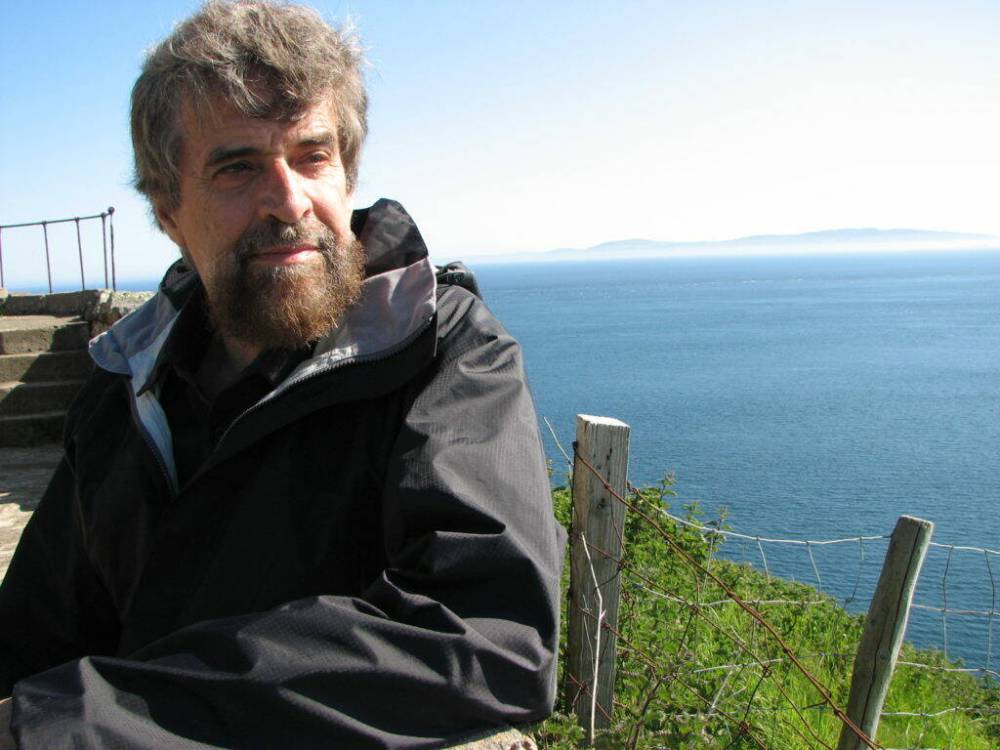
Supplied photo
                                Ken McGoogan

Supplied photo

Ken McGoogan

The book is not organized chronologically. That, and the shifts in style and point of view, may bother some readers. There are maps included, but they could be better connected with the text.

One of the many strengths of the book is the bringing to life of men who accompanied Franklin: George Back, a midshipman and artist; Robert Hood, a midshipman and writer; Dr. John Richardson; Pierre St. Germain, interpreter, hunter and canoe repairer; as well as Indigenous men such as Chipewyan Dene leader Akaitcho. The contrast of leadership styles — Franklin’s and Akaitcho’s — is a major highlight of the book.

McGoogan presents amazing details of the treks Franklin and his men made over ice, snow and rocky hills, how they attempted to stay warm, how they froze, how they carried the heavy supplies. Not being able to carry a lot of wood and equipment, they built snow huts for overnight resting. They often had to repair a canoe which had smashed into ice or rock; sometimes that meant remaking a wrecked large canoe into a small one. The men carried supplies of food meant to last months. Most welcome after an exhausting and chilling day was the tea they made, as well as beer and liquor.

It was usually necessary to kill animals for fresh and substantial meat. Often, there was not enough — or nothing at all when the weather was terrible — and the men became weaker. One morning, “the men tried to go forward, but ‘we were too feeble,’ Back writes, ‘to oppose the wind and drift, which blew us over’ and, despite their best efforts, drove them backward. They sat out the storm in a small clump of pines and ate ‘a gun cover and a pair of shoes (moccasins) for our meal.’” Adds McGoogan: “George Back could scarcely stand upright.”

McGoogan draws on the research he did for his 2001 book, Fatal Passage: The Untold Story of John Rae, the Arctic Adventurer Who Discovered the Fate of Franklin: “Rae reported the unvarnished truth that would resonate throughout the British Empire… ‘From the mutilated state of so many of the corpses and the contents of the kettles,’ Rae wrote, ‘it is evident that our wretched countrymen had been driven to the last resource — cannibalism — as a means of prolonging existence.’”
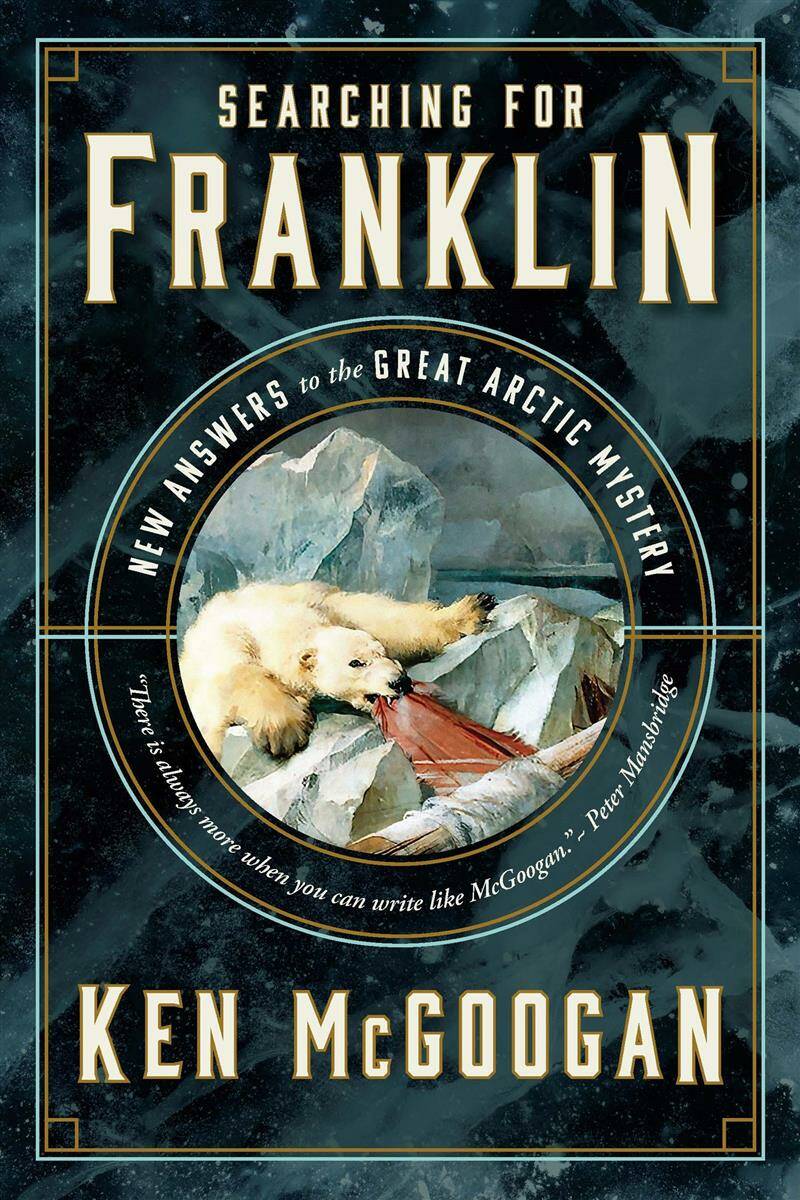
Searching for Franklin

Searching for Franklin

McGoogan ties to this what he learned about Franklin’s highly respected wife, Lady Jane, for his 2005 book, Lady Franklin’s Revenge: A True Story of Ambition, Obsession, and the Remaking of Arctic History: “John Rae’s allegations of cannibalism threatened her husband’s reputation and so her own. They could not be allowed to stand.”

She turned for help to none other than popular novelist Charles Dickens. He was happy to help her by publicly denouncing Rae for taking the word of “savages” — the Inuit people in the North. “He presented an argument that, from the vantage point of the 21st century, can only be judged profoundly racist,” McGoogan writes. “Time has proven his two-part essay to be a tour-de-force of obfuscation, self-deception, and wilful blindness” — but it did ruin Rae’s reputation.

After showing Franklin’s decisions and actions throughout, McGoogan reminds the reader of two facts that help explain Franklin: “he was a Royal Navy man from head to toe,” and “he was an evangelical Christian with a mission.”

Searching for Franklin is a book to wallow in, best read in a warm room with a hot drink by your side.

Dave Williamson is the Winnipeg author of 10 books and was once invited to read in Fort Smith, N.W.T., where, at the time of his departure, his hosts transported him to the airport by dog team.
Report Error Submit a Tip

More Stories

Kinew delivered what most of us wanted; now we’ll have to deal with the consequences

Dan Lett 5 minute read Preview

Kinew delivered what most of us wanted; now we’ll have to deal with the consequences

Dan Lett 5 minute read Updated: Yesterday at 8:43 AM CDT

Premier Wab Kinew has decided to adopt permanent daylight savings time, which means a permanent end to the spring forward, fall back tradition of adjusting our clocks. And absolutely no one is surprised.

Read
Updated: Yesterday at 8:43 AM CDT

Cabernet Sauvignon star of wine festival

Ben Sigurdson 5 minute read Preview

Cabernet Sauvignon star of wine festival

Ben Sigurdson 5 minute read 3:00 AM CDT

The Winnipeg Wine Festival will celebrate the king of red wine grapes next weekend — the theme of this year’s festival, which takes place Sept. 25 and 26 at the RBC Convention Centre, is Cabernet Sauvignon.

Cab Sauv, as it’s also known, is the world’s most widely planted wine grape of any colour, first coming to prominence in the 1800s in France’s Bordeaux region, where the grape is still popular. Rather than single-variety wines, Bordeaux reds tend to be blends, with those coming from the left bank of the Gironde estuary being Cabernet-dominant, while right-bank wines are Merlot-dominant, with Cabernet Sauvignon playing a supporting role. Cabernet and Merlot work well together and many other countries have followed suit in blending the two.

A team at University of California Davis put Cabernet Sauvignon through a DNA test in 1996 and discovered its parent grapes are Cabernet Franc and Sauvignon Blanc — it’s likely that at some point the two varieties, planted next to each other in some vineyard, crossed and mutated and became the grape we know today. (Someone growing grapes in the 19th century must have had an inkling of what was up, as the grape has been called Cabernet Sauvignon since long before the DNA test.)

Flavour-wise, most Cabernet Sauvignon wines are big and bold, with a core of deep dark berry flavours, some graphite and spice notes and relatively bright acidity. It’s a grape that is well-suited to barrel aging, with most examples seeing at least some time in wood.

Read
3:00 AM CDT

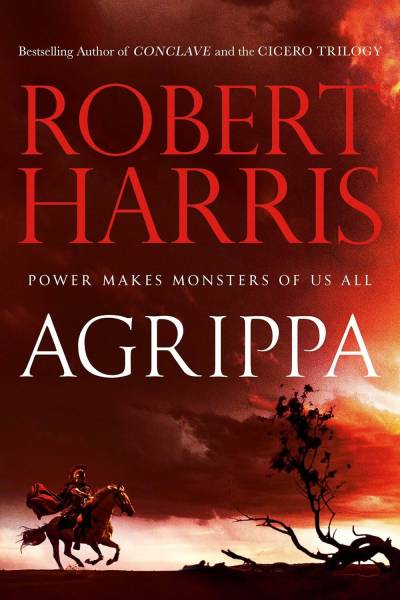
Give-and-take relationship of Roman leaders takes centre stage in Harris’s historical fiction

Reviewed by Kathryne Cardwell 4 minute read Preview

Give-and-take relationship of Roman leaders takes centre stage in Harris’s historical fiction

Reviewed by Kathryne Cardwell 4 minute read 2:01 AM CDT

British novelist Robert Harris’s latest work is a reflection on tyranny, corruption and betrayal among all-powerful political leaders.

You might be forgiven for thinking it’s a contemporary thriller — it’s actually historical fiction set in ancient Rome.

A former BBC journalist, Harris debuted as a novelist in 1992 with Fatherland, an alternative history where Nazi Germany won the Second World War.

Since then, the prolific author has become best-known for his works of historical fiction, especially his ancient Rome trilogy released from 2006-2015 and the novel Conclave, which was published in 2016 and was made into the film of the same name in 2024.

Read
2:01 AM CDT

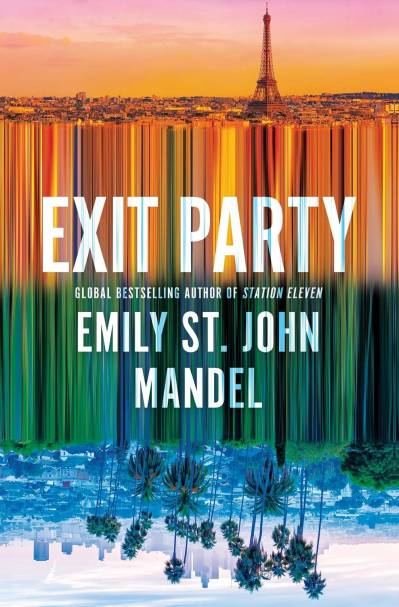
Near-future U.S. the setting for surreal dual-world storyline

Reviewed by Morley Walker 4 minute read Preview

Near-future U.S. the setting for surreal dual-world storyline

Reviewed by Morley Walker 4 minute read 2:01 AM CDT

It’s not every day you encounter a seriously intended literary novel that attempts to dramatize a mind-bending physics theory like quantum entanglement.

But then the B.C.-born-and-raised Emily St. John Mandel is not your everyday Canadian literary writer.

In her late 40s, she has lived in the U.S. for her entire writing career. She is best known for her 2014 dystopian novel Station Eleven, about a Shakespearean acting troupe navigating a pandemic-ravaged America.

Her new outing, her seventh, Exit Party, shares DNA with detective and sci-fi genres more than with conventional literary fiction.

Read
2:01 AM CDT

‘She was looking to destroy me’: convicted harasser faces new charges

Dean Pritchard 6 minute read Preview

‘She was looking to destroy me’: convicted harasser faces new charges

Dean Pritchard 6 minute read Thursday, Sep. 17, 2026

When Agnieszka Ciochon-Newton moved into the 55-plus apartment building on Stradbrook Avenue last year, she came across as “timid, soft-spoken and sensitive,” said building manager Tanya Owen.

Little did Owen know the meek-looking 58-year-old woman would soon turn her life and the lives of many of her tenants upside down and threaten her career and family.

“She was looking to destroy me for a simple tenant disagreement,” Owen said Thursday.

Court records show Ciochon-Newton was arrested earlier this month and charged with seven counts of criminal harassment, two counts of uttering threats and one count each of fraud, breaking and entering, attempting to obstruct justice, intimidation of a justice official, mischief and defamatory libel.

Read
Thursday, Sep. 17, 2026

American Hostage stars recall warmth of Winnipeggers during brutal winter

Randall King 7 minute read Preview

American Hostage stars recall warmth of Winnipeggers during brutal winter

Randall King 7 minute read Yesterday at 6:13 PM CDT

TORONTO — When you stream the eight-part series American Hostage, a sense of familiarity may strike.

That’s because the show was shot in Winnipeg — especially in the Exchange District — from November of last year to the beginning of February, with Winnipeg portraying Indianapolis circa 1977.

The whole world seemed to be watching that midwest American city that year as a hostage crisis unfolded involving one Tony Kiritsis, an angry man who goes ballistic when a mortgage brokerage was poised to foreclose on property he had dreamed of developing into a shopping centre.

Kiritsis kidnapped his mortgage broker, Richard Hall, wiring a shotgun to the back of his head, and demanded a public airing of his grievances, with the reluctant help of popular radio broadcaster Fred Heckman.

Read
Yesterday at 6:13 PM CDT