Getting back on board A two-week experiment to re-embrace transit — after a pandemic-era breakup — confirmed some assumptions and dispelled others
Read this article for free:
or
Already have an account? Log in here »
To continue reading, please subscribe:

Digital Subscription
One year of digital access for only $205*
- Enjoy unlimited reading on winnipegfreepress.com
- Read the E-Edition, our digital replica newspaper
- Access News Break, our award-winning app
- Play interactive puzzles
*First annual payment billed as $205.00 + GST for one year. This annual subscription will automatically renew at $233.00 + GST every 52 weeks (10% off the regular annual price of $259.35). Offer available to new and qualified returning subscribers only. Cancel any time.
To continue reading, please subscribe:
Add Free Press access to your Brandon Sun subscription for only an additional
$1 for the first 4 weeks*
- Enjoy unlimited reading on winnipegfreepress.com
- Read the E-Edition, our digital replica newspaper
- Access News Break, our award-winning app
- Play interactive puzzles
*Your next Brandon Sun subscription payment will increase by $1.00 and you will be charged $17.95 plus GST for four weeks. After four weeks, your payment will increase to $24.95 plus GST every four weeks.
Read unlimited articles for free today:
or
Already have an account? Log in here »
Hey there, time traveller!
This article was published 27/12/2023 (990 days ago), so information in it may no longer be current.
It was time to get back on the bus.
Prior to boarding the No. 14 last month bound for an arena full of screaming Jonas Brothers fans, I hadn’t stepped foot on a bus since 2020.
Despite using transit regularly for most of my adult life, I fell out of the habit during the pandemic.
In Transit
A special series examining the state of Winnipeg’s public transportation system
After the public health crisis waned, I stayed out of the habit under the guise of convenience. Driving everywhere seemed easier than checking schedules, finding bus fare and waiting for unreliable transfers.
Gradually, those excuses turned into a problematic personal affirmation: busing was no longer a viable mode of transportation, neither for my job nor my lifestyle. I had stories to chase, people to interview and boy band concerts to review. Public transit — and all its shortcomings — was incompatible with my unpredictable vocation.
Thing is, none of those opinions were based in fact. I was grasping at straws in the name of comfort.
MIKAELA MACKENZIE / WINNIPEG FREE PRESS During a two-week experiment, Eva Wasney boarded 37 individual buses through many neighbourhoods she had never visited via transit.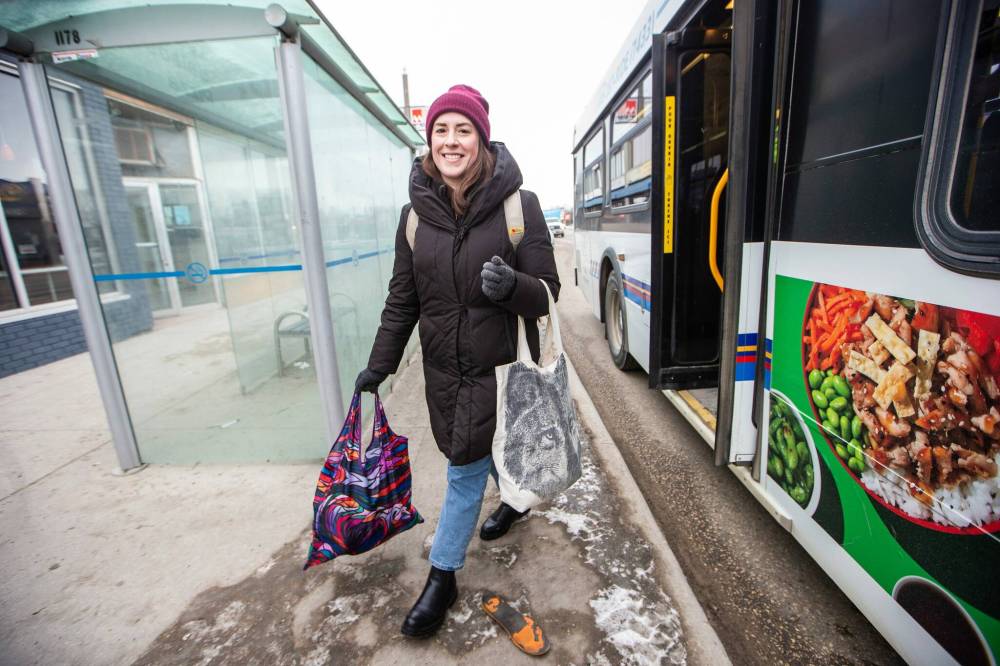
I came to that realization during a staff meeting about this Winnipeg Transit series. After trading war stories with colleagues about ridiculous routes and scheduling gaffes, I wondered if my three-year-old gripes were still valid. I’d been away so long I could only hazard a guess at the current state of affairs. It was time to get back on the bus.
For two weeks in November, I relied solely on Winnipeg Transit to get me where I needed to go for business and pleasure — assignments, media events, concerts, groceries, Christmas shopping, errands, curling games, dinner reservations.
It was an experiment that confirmed some assumptions and dispelled others. Overall, the experience was far more enjoyable than expected. Winnipeg Transit, you’re not the best, but you’re certainly not the worst.
Peggo is still terrible.
The tap-and-go fare system has been around for seven years and yet the service remains clunkier than a first-generation cellphone. Nothing seems to have changed since its launch or my last interaction.
Case in point: the Peggo website isn’t mobile friendly. Checking or updating your account balance via smartphone includes a lot of zooming and swiping to find errant pop-up windows designed for desktop users. It’s a dated, frustrating process that creates a bad first impression — if you want more people taking the bus, every leg of the journey needs to be accessible and easy to use, including the online portal.
MIKAELA MACKENZIE / WINNIPEG FREE PRESS Eva Wasney’s Peggo card.
The frustrations extend to the farebox. Once you’ve managed to load funds into your account online, it takes up to 48 hours for the money to be accessible on your card. Two days. Without $3.15 in change ($3.25 as of Jan. 1) — the going rate for a full adult fare — last-minute bus trips are virtually impossible.
Loading my Peggo card in-person was much easier and I was able to use my bus pass immediately after purchasing it. Most transit centres, Shoppers Drug Marts, 7-Elevens and some grocery stores offer the service.
Aside from the digital road blocks, my day-to-day bus rides were largely positive.
I was feeling downright romantic during the first week.
The weather was still unseasonably warm and, for seven lovely days, every bus I took was on time, relatively clean and modestly full. I even managed to snag my favourite seat (driver’s side, first row at the back) more often than not.
There were the expected benefits: Hands-free commuting gave me an opportunity to catch up on podcasts I’d been neglecting and books occupying my to-read pile. I was walking more and saving money on gas and parking. Road-raging drivers (of which there seem to be many these days) were no longer my concern. I was untethered from the responsibility of a personal vehicle. I was relaxed.
MIKAELA MACKENZIE / WINNIPEG FREE PRESS In June, Winnipeg Transit was averaging nearly 158,000 boardings every day.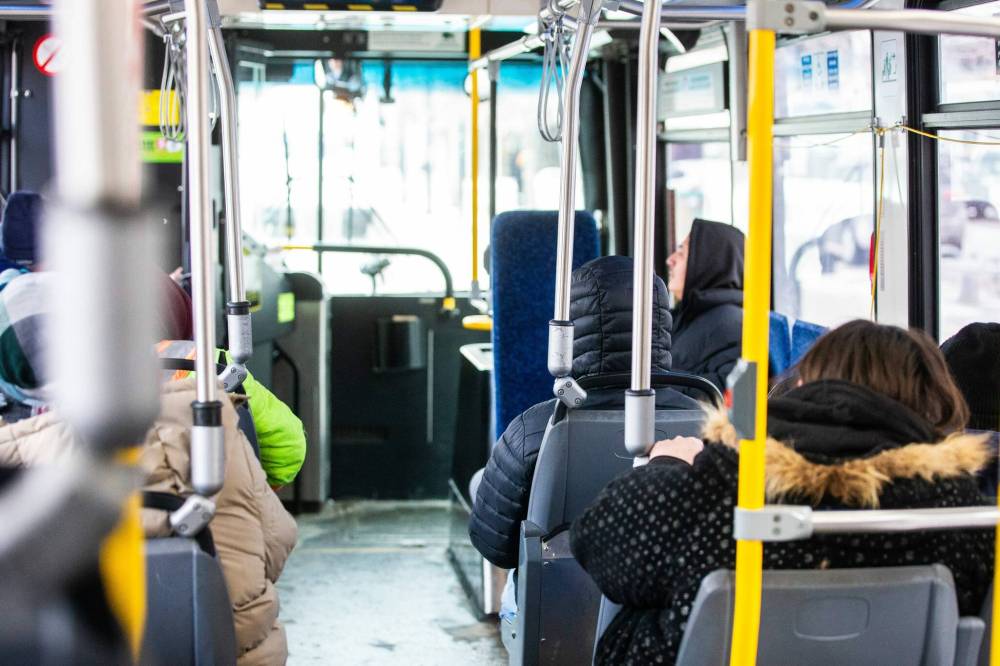
Something I was wholly unprepared for, however, was how nice it felt to share space with other people. Busing is a communal experience and while that might be a deterrent for some, it tapped into a small sense of community I didn’t realize I was missing.
Third places — a term for social-gathering sites outside of home and work — took a real hit during the pandemic. As we retreated into our own bubbles, we pulled away from the restaurants, coffee shops, libraries and community centres that serve as fertile ground for novel interactions.
In a COVID-19 coping study, scientists at the University of Michigan found the loss of third places negatively affected the social wellbeing of participants. Casual public spaces aren’t only important venues for community building, they’re foundational to the fabric of society.
Buses fill the role of a third place. Travelling on the same route at the same time day-after-day, you’re met by many of the same faces. I started recognizing neighbours and fellow commuters. While I wasn’t striking up conversations with strangers — don’t worry, I’m not one to disrupt the delicate social mores of the bus — I was playing a minor role in someone else’s daily routine. And vice versa. It felt nice. It felt important.
See? Real mushy.
The romance ended promptly on Day 8.
The weather turned and the day’s route included a lengthy transfer at an unsheltered stop. Despite living centrally, I have to take multiple buses to get pretty much anywhere beyond downtown — a real bummer in the winter, especially considering the sorry state of Winnipeg’s bus shelters.
Most were missing at least one wall — somehow always on the side of the prevailing wind — and many were strewn with garbage. It’s a problem the city is keenly aware of, along with the growing number of unhoused residents seeking shelter in bus shacks. Vandalism and homelessness are symptoms of deep-seated social issues without easy solutions. Until poverty is eradicated and everyone gets the mental health care they deserve, long johns are recommended.
On the eighth day, I also missed my first bus. Watching it trundle away into the 5 p.m. darkness brought up a familiar mix of dread and panic. When was the next bus? How long would I have to wait? Should I change course and walk to a different stop?
Related Articles
The people on the bus












Thankfully, one improvement since 2020 is the myriad trip-planning tools available. The official Winnipeg Transit app is fine, but good ol’ Google Maps became my go-to. It provides plenty of route options, accurate departure and arrival windows and expected transfer wait times. The Winnipeg Bus Live app also deserves a shout out — made by a local developer, it’s a straightforward bit of software that shows bus progress in real time and takes the edge off standing at a stop waiting for an MIA ride.
I boarded 37 individual buses during this two-week experiment through many neighbourhoods I had never visited via transit. Getting to assignments and social engagements during the week was a breeze. Service was spottier in the suburbs, and weekend schedules were hit and miss.
My worst experience was trying to get to a family dinner on a Sunday night — a journey that required two 15-minute bus rides followed by a 40-minute walk. Grocery shopping was also a pain; the available routes in my neighbourhood made for long walks with heavy bags.
All told, the inconveniences were minor. I genuinely expected it to be harder to get around Winnipeg without a car but was able to travel to and fro with general ease.
My main takeaway? Winnipeg Transit gets an undeservedly bad rap.
There is ample room for improvement (see Peggo), but the system as it currently exists offers a functional way to travel around the city. In my limited recent experience, the negative sentiments don’t match the average user experience.
The most fascinating part of this project was the conversations that surrounded it. The reactions from friends and family — curiosity and surprise, followed swiftly by concern for my safety — were telling. For many, the bus was an exotic, and potentially dangerous, form of transportation used only occasionally for entertainment and sporting events where parking was in short supply.
Sure, there were times I turned off my headphones to pay more attention to my surroundings. And yes, there were moments when the behaviour of other riders raised alarm bells. But nothing of note happened. Nothing of note happens on most bus rides.
MIKAELA MACKENZIE / WINNIPEG FREE PRESS Eva Wasney takes the bus with bags of groceries in Winnipeg. 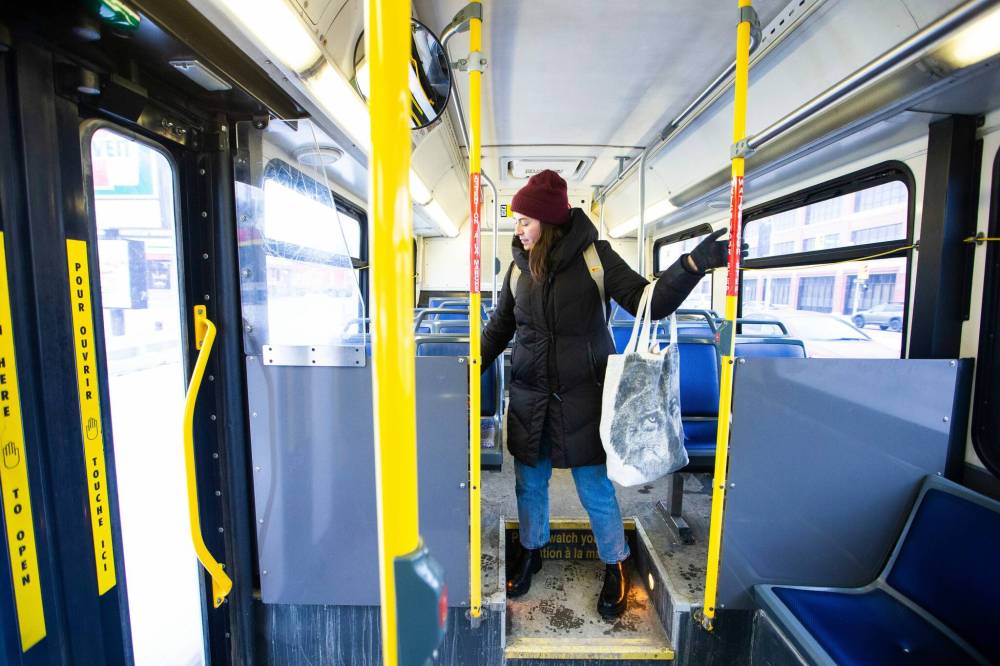
The things that stick out more prominently were the random acts of kindness I witnessed: riders helping each other with strollers, impromptu meetings between friends, the driver who, at the height of rush hour, welcomed every single passenger onto his packed to the gills bus with an enthusiastic “Hello.”
In June, Winnipeg Transit was averaging nearly 158,000 boardings every day. While there has been a troubling spike in assaults on buses in recent years, the vast majority of trips are utterly mundane. I don’t bring this up to minimize the issue, but I think it’s important to put the statistics in context.
I also think it’s important to consider how media coverage — including from the Free Press — impacts public perception of transit safety. Much ink has been spilled about violence on buses because the incidents are newsworthy and deserving of scrutiny. Boring daily commutes don’t get the same attention.
While I’ve gone back to using my car occasionally, I’ve continued busing beyond the scope of this experiment. Now that I know I can get around effectively on the bus, my weekly goal is to commute via transit more often than driving. It adds a few extra travel minutes to my day, but the benefits, I’ve found, often outweigh the convenience of driving.
In the past, I rode the bus for reasons ranging from necessity to affordability to eco-anxiety. Now, I’m riding the bus simply because I want to — and that feels like the key to a sustainable new habit.
eva.wasney@freepress.mb.ca

Eva Wasney covers environmental issues in Manitoba for The Narwhal in partnership with the Winnipeg Free Press. Read more about Eva.
Every piece of reporting Eva produces is reviewed by an editing team before it is posted online or published in print — part of the Free Press‘s tradition, since 1872, of producing reliable independent journalism. Read more about Free Press’s history and mandate, and learn how our newsroom operates.
Our newsroom depends on a growing audience of readers to power our journalism. If you are not a paid reader, please consider becoming a subscriber.
Our newsroom depends on its audience of readers to power our journalism. Thank you for your support.