Nova Scotia judge rejects constitutional arguments for Indigenous cannabis shops

Advertisement

Advertise with us

HALIFAX - A Nova Scotia judge has rejected arguments from four defendants claiming they have treaty and aboriginal rights to sell cannabis at dispensaries on Indigenous land north of Halifax.

Read this article for free:


or

Already have an account? Log in here »

To continue reading, please subscribe:

Subscribe and receive a limited-edition Free Press branded hat or tote.

Digital Subscription

One year of digital access for only $205*

  • Enjoy unlimited reading on winnipegfreepress.com
  • Read the E-Edition, our digital replica newspaper
  • Access News Break, our award-winning app
  • Play interactive puzzles

*First annual payment billed as $205.00 + GST for one year. This annual subscription will automatically renew at $233.00 + GST every 52 weeks (10% off the regular annual price of $259.35). Offer available to new and qualified returning subscribers only. Cancel any time.

To continue reading, please subscribe:

Add Free Press access to your Brandon Sun subscription for only an additional

$1 for the first 4 weeks*

  • Enjoy unlimited reading on winnipegfreepress.com
  • Read the E-Edition, our digital replica newspaper
  • Access News Break, our award-winning app
  • Play interactive puzzles
Start now

*Your next Brandon Sun subscription payment will increase by $1.00 and you will be charged $17.95 plus GST for four weeks. After four weeks, your payment will increase to $24.95 plus GST every four weeks.

Hey there, time traveller!
This article was published 14/06/2024 (800 days ago), so information in it may no longer be current.

HALIFAX – A Nova Scotia judge has rejected arguments from four defendants claiming they have treaty and aboriginal rights to sell cannabis at dispensaries on Indigenous land north of Halifax.

In a ruling released Thursday, provincial court Judge Ronda Van der Hoek said she agreed with the Crown’s argument that two expert reports provided by the defendants failed to support their claims. As a result, the defendants no longer have the option of arguing for exemptions from the law under the Constitution.

“I grant the (Crown’s) application to summarily dismiss the constitutional issues, based on the information before me at this time,” the decision says, adding that the application for constitutional arguments was “manifestly frivolous.”
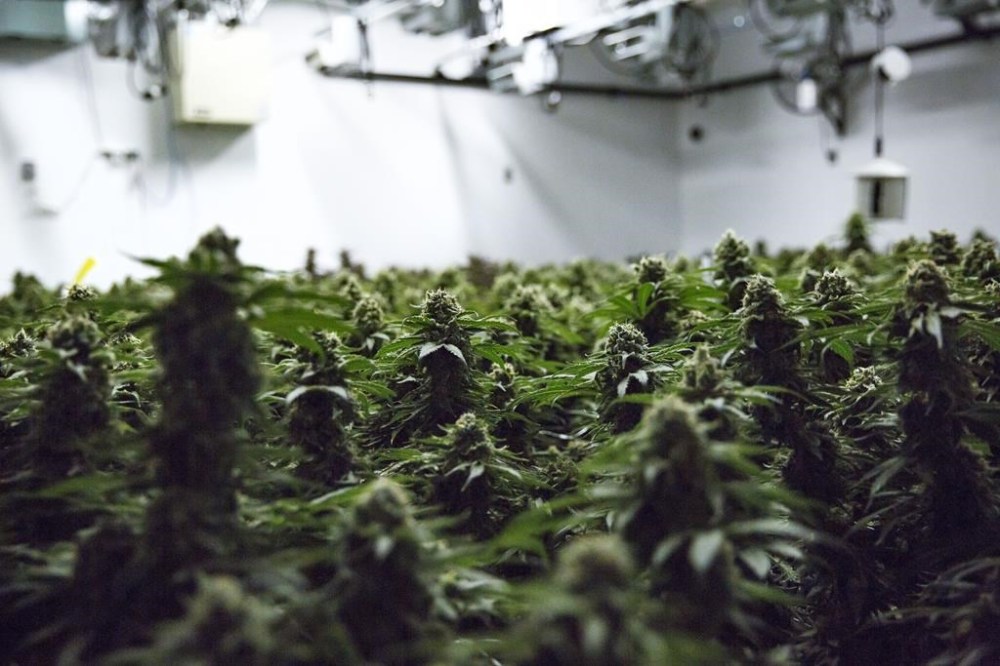
Cannabis plants grow inside a production facility in Simcoe, Ont. on Tuesday, April 13, 2021. A Nova Scotia judge a rejected arguments from four defendants claiming they have treaty and aboriginal rights to sell cannabis at dispensaries on Indigenous land north of Halifax and are not required to pay duties under the federal Excise Act. THE CANADIAN PRESS/Tara Walton

In Nova Scotia, sales of cannabis must be conducted from Nova Scotia Liquor Commission outlets, and all cannabis products are subject to provincial and federal duties.

The four were charged under the federal Cannabis Act with illegally possessing cannabis for the purpose of selling and distributing it, and distributing cannabis they knew was illicit. They were also charged with failing to pay federal duties on their products.

Two of the defendants argued that as the operators of an Indigenous business on the Millbrook Frist Nation, they are exempt from federal laws governing the sale of cannabis and are entitled to operate a parallel system based on their status as band members.

In her decision, the judge says the Supreme Court of Canada has confirmed that two Mi’kmaq treaties signed in the 1700s granted the aboriginal right to trade, but the top court said that right is limited to items traditionally harvested as part of their hunting, fishing and gathering activities.

“The relevant time period … is prior to European contact,” the judge said. “The claimant must demonstrate that a practice, custom or tradition was integral to the Indigenous community’s distinctive existence and relationship to the land in the period before European contact.”

The Crown argued there is a lack of evidence that the historic Mi’kmaq community ever used the psychoactive cannabis plant, let alone traded in it.

Van der Hoek determined the expert reports provided no evidence that cannabis was used or traded by the Mi’kmaq before European contact, and she found there was no mention of the cannabis plant being used, other than as hemp.

“The respondents have provided no argument whatsoever to support a modern interpretation of such trading evolving to include the sale of cannabis and the avoidance of duties pursuant to the (federal) Excise Act,” the decision says.

The defendants had also argued the federal government failed to consult the Mi’kmaq before passage of the Cannabis Act, but the judge said Ottawa’s “duty to consult” Indigenous Peoples does not extend to the enactment of legislation that criminalizes their conduct.

“They are unable to advance the duty to consult argument based on the exercise of legislative authority alone,” the judge said.

Van der Hoek said her decision was not taken lightly.

“It cannot be understated that decisions affirming and defining … aboriginal and treaty rights are significant for the communities who advance them and Nova Scotians,” she wrote.

“The court is aware that we are all treaty people, but how the treaties are interpreted must be based on a foundation that warrants consideration. At this time, that foundation has not been established for cannabis sales outside the lawful regime, and the existing regime applies to all Nova Scotians.”

This report by The Canadian Press was first published June 14, 2024.
Report Error Submit a Tip

More Stories

‘Strong sense of unity’

By Melissa Martin 6 minute read Preview

‘Strong sense of unity’

By Melissa Martin 6 minute read 5:14 PM CDT

Manitoba government and business leaders are rallying behind Prime Minister Mark Carney’s plan to fight back, after a sudden collapse of trade talks between the U.S. and Canada sparked a new salvo of U.S. tariffs on some Canadian goods.

On Saturday, after Carney vowed to respond with retaliatory tariffs, Manitoba premier Wab Kinew said his government stood “100 per cent” behind the prime minister’s plan to respond to what Kinew called U.S. president Donald Trump’s “unjustified and immoral” tariffs.

“History will not be kind to Donald Trump, so we should never appease him,” Kinew said. “We should fight back, which is what Canada is doing today.”

Kinew met reporters for a brief news conference at the legislature on Saturday afternoon, about an hour after finishing a call with Carney and the other premiers. There was a “really strong sense of unity” on that call, Kinew said, and emphasized that he backs the federal decision to “walk away from what would have been a bad deal.”

Read
5:14 PM CDT

Frustration mounts as drug raids sweep problems out of downtown, into West End

Scott Billeck 7 minute read Preview

Frustration mounts as drug raids sweep problems out of downtown, into West End

Scott Billeck 7 minute read Updated: Yesterday at 6:24 PM CDT

West End business owners say their neighbourhood has been under siege for months, and some believe downtown police drug sweeps have made things worse by pushing more street disorder in their direction — and pushing customers away.

Read
Updated: Yesterday at 6:24 PM CDT

Sunshine Fund guarantees a little magic in the summer

Grace Penner 3 minute read Preview

Sunshine Fund guarantees a little magic in the summer

Grace Penner 3 minute read 2:01 AM CDT

To this day, I still remember the morning polar plunges into Moose Lake — a cold shock to the system meant to wake campers up before the sun hit its peak.

Read
2:01 AM CDT

Plenty of alternatives to U.S. wines on the shelves

Ben Sigurdson 5 minute read Preview

Plenty of alternatives to U.S. wines on the shelves

Ben Sigurdson 5 minute read 6:00 AM CDT

In February 2025, Manitoba (and most other provinces) pulled American liquor from store shelves as part of the ongoing trade dispute with the United States.

Then in December, the province followed a similar course to others and put American booze that was already on hand back on shelves, selling off inventory that had been wasting away in warehouses for months, and directing proceeds from those sales to charities.

Lineups sprung up at numerous stores as consumers snapped up bestselling American products — think Maker’s Mark, Jack Daniel’s, Apothic Red and the like. After that initial rush, what was left has been languishing on shelves ever since, with many products eventually being drastically discounted for a quick sale, lest they become too long in the tooth.

I decided early on not to write about/review U.S. products in this space until things were well and truly sorted. But a few months back, I found myself in the mood for a big, oaky red wine and — in a moment of weakness, or nostalgia, or maybe just curiosity — I picked up a $30-ish California Cabernet Sauvignon.

Read
6:00 AM CDT

Executive exodus continues at Shared Health with three recent departures

Chris Kitching 5 minute read Preview

Executive exodus continues at Shared Health with three recent departures

Chris Kitching 5 minute read Updated: Yesterday at 4:18 PM CDT

Manitoba’s provincial health authority is looking for its fourth chief financial officer since 2023 and additional replacements after the recent departures of three executives.

Read
Updated: Yesterday at 4:18 PM CDT

NDP touts health-care gains, but critics question impact on ER wait times

Tom Brodbeck 5 minute read Preview

NDP touts health-care gains, but critics question impact on ER wait times

Tom Brodbeck 5 minute read Yesterday at 6:00 AM CDT

Health Minister Uzoma Asagwara doesn’t mince words when describing how bad things are in the province’s emergency departments and urgent-care centres.

“The wait times that we are seeing in Manitoba are unacceptable,” said Asagwara in an interview with the Free Press.

“I hear from families, I hear from providers, I hear from Manitobans who are concerned about the wait times that they’re seeing, that they’re experiencing, and those concerns are valid — I share those concerns.”

So what is the NDP, who promised voters nearly three years ago it had the answers to bring down wait times, doing about it?

Read
Yesterday at 6:00 AM CDT