Schools are cutting bus service for children. Parents are turning to ride-hailing apps
Advertisement
Read this article for free:
or
Already have an account? Log in here »
To continue reading, please subscribe:

Digital Subscription
One year of digital access for only $205*
- Enjoy unlimited reading on winnipegfreepress.com
- Read the E-Edition, our digital replica newspaper
- Access News Break, our award-winning app
- Play interactive puzzles
*First annual payment billed as $205.00 + GST for one year. This annual subscription will automatically renew at $233.00 + GST every 52 weeks (10% off the regular annual price of $259.35). Offer available to new and qualified returning subscribers only. Cancel any time.
To continue reading, please subscribe:
Add Free Press access to your Brandon Sun subscription for only an additional
$1 for the first 4 weeks*
- Enjoy unlimited reading on winnipegfreepress.com
- Read the E-Edition, our digital replica newspaper
- Access News Break, our award-winning app
- Play interactive puzzles
*Your next Brandon Sun subscription payment will increase by $1.00 and you will be charged $17.95 plus GST for four weeks. After four weeks, your payment will increase to $24.95 plus GST every four weeks.
Read unlimited articles for free today:
or
Already have an account? Log in here »
Hey there, time traveller!
This article was published 15/12/2024 (652 days ago), so information in it may no longer be current.
CHICAGO (AP) — Ismael El-Amin was driving his daughter to school when a chance encounter gave him an idea for a new way to carpool.
On the way across Chicago, El-Amin’s daughter spotted a classmate riding with her own dad as they drove to their selective public school on the city’s North Side. For 40 minutes, they rode along the same congested highway.
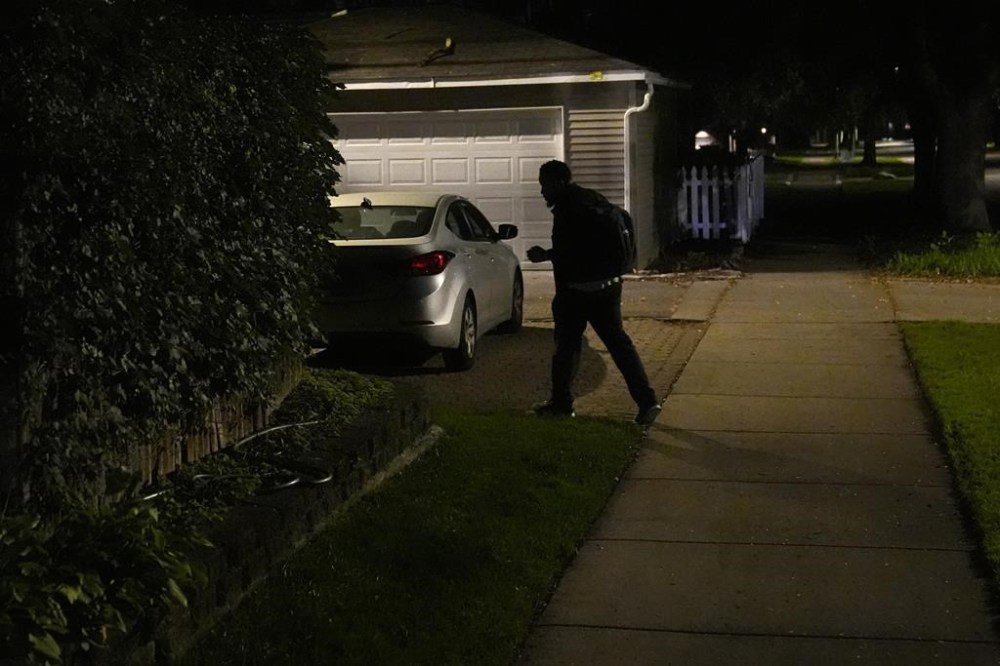
“They’re waving to each other in the back. I’m looking at the dad. The dad’s looking at me. And I was like, parents can definitely be a resource to parents,” said El-Amin, who went on to found Piggyback Network, a service parents can use to book rides for their children.
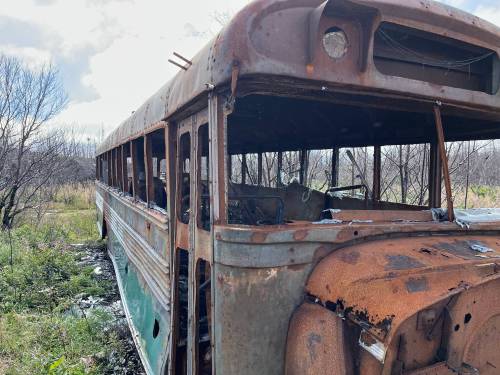
Reliance on school buses has been waning for years as districts struggle to find drivers and more students attend schools far outside their neighborhoods. As responsibility for transportation shifts to families, the question of how to replace the traditional yellow bus has become an urgent problem for some, and a spark for innovation.
State and local governments decide how widely to offer school bus service. Lately, more have been cutting back. Only about 28% of U.S. students take a school bus, according to a Federal Highway Administration survey concluded early last year. That’s down from about 36% in 2017.
Chicago Public Schools, the nation’s fourth-largest district, has significantly curbed bus service in recent years. It still offers rides for disabled and homeless students, in line with a federal mandate, but most families are on their own. Only 17,000 of the district’s 325,000 students are eligible for school bus rides.
Last week, the school system launched a pilot program allowing some students who attend out-of-neighborhood magnet or selective-enrollment schools to catch a bus at a nearby school’s “hub stop.” It aims to start with rides for about 1,000 students by the end of the school year.
It’s not enough to make up for the lost service, said Erin Rose Schubert, a volunteer for the CPS Parents for Buses advocacy group.
“The people who had the money and the privilege were able to figure out other situations like rearranging their work schedules or public transportation,” she said. “People who didn’t, some had to pull their kids out of school.”
On Piggyback Network, parents can book a ride for their student online with another parent traveling the same direction. Rides cost roughly 80 cents per mile and the drivers are compensated with credits to use for their own kids’ rides.
“It’s an opportunity for kids to not be late to school,” 15-year-old Takia Phillips said on a recent PiggyBack ride with El-Amin as the driver.
The company has arranged a few hundred rides in its first year operating in Chicago, and El-Amin has been contacting drivers for possible expansion to Virginia, North Carolina and Texas. It is one of several startups that have been filling the void.
Unlike Piggyback Network, which connects parents, HopSkipDrive contracts directly with school districts to assist students without reliable transportation. The company launched a decade ago in Los Angeles with three mothers trying to coordinate school carpools and now supports some 600 school districts in 13 states.
Regulations keep it from operating in some states, including Kentucky, where a group of Louisville students has been lobbying on its behalf to change that.
After the district halted bus service to most traditional and magnet schools, the student group known as The Real Young Prodigys wrote a hip-hop song titled “Where My Bus At?” The song’s music video went viral on YouTube with lyrics such as, “I’m a good kid. I stay in class, too. Teachers want me to succeed, but I can’t get to school.”
“Those bus driver shortages are not really going away,” HopSkipDrive CEO Joanna McFarland said. “This is a structural change in the industry we need to get serious about addressing.”
HopSkipDrive has been a welcome option for Reinya Gibson’s son, Jerren Samuel, who attends a small high school in Oakland, California. She said the school takes care to accommodate his needs as a student with autism, but the district lined up the transportation because there is no bus from their home in San Leandro.
“Growing up, people used to talk about kids in the short yellow buses. They were associated with a physical disability, and they were teased or made fun of,” Gibson said. “Nobody knows this is support for Jerren because he can’t take public transportation.”
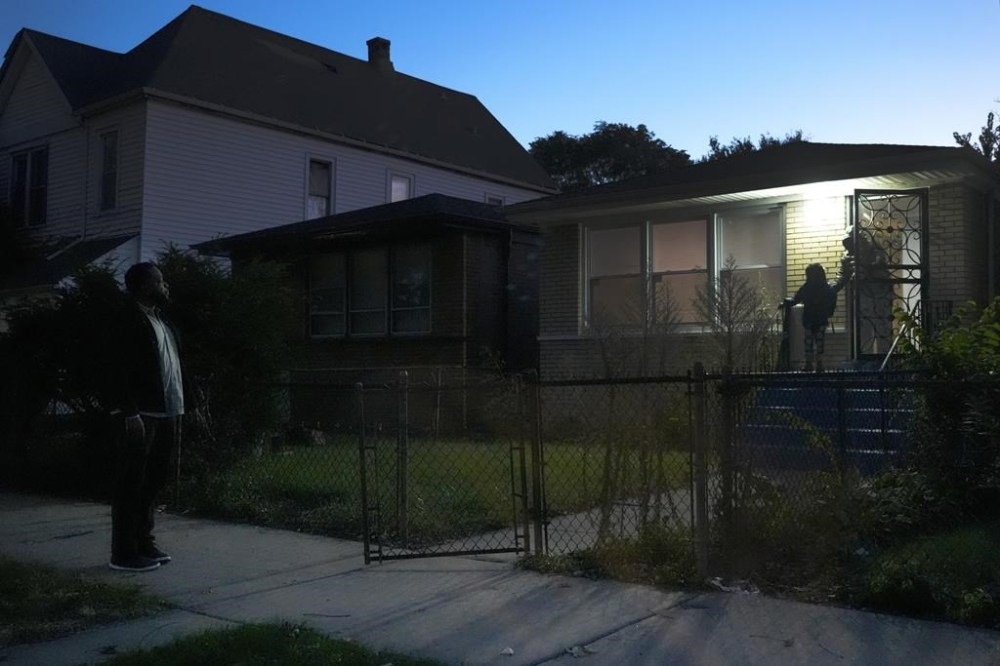
Encouragement from his mother helped Jerren overcame his fear about riding with a stranger to school.
“I felt really independent getting in that car,” he said.
Companies catering to kids claim to screen drivers more extensively, checking their fingerprints and requiring them to have childcare or parenting experience. Drivers and children are often given passwords that must match, and parents can track a child’s whereabouts in real time through the apps.
Kango, a competitor to HopSkipDrive in California and Arizona, started as a free carpooling app similar to the PiggyBack Network and now contracts with school districts. Drivers are paid more than they would typically get for Uber or Lyft, but there are often more requirements such as walking some students with disabilities into school, Kango CEO Sara Schaer said.
“This is not just a curbside-to-curbside, three-minute situation,” Schaer said. “You are responsible for getting that kid to and from school. That’s not the same as transporting an adult or DoorDashing somebody’s lunch or dinner.”
In Chicago, some families that have used Piggyback said they have seen few alternatives.
Concerned about the city’s rising crime rate, retired police officer Sabrina Beck never considered letting her son take the subway to Whitney Young High School. Since she was driving him anyway, she volunteered through PiggyBack also to drive a freshman who had qualified for the selective magnet school but had no way to get there.
“To have the opportunity to go and then to miss it because you don’t have the transportation, that is so detrimental,” Beck said. “Options like this are extremely important.”
After the bus route that took her two kids to elementary school was canceled, Jazmine Dillard and other Chicago parents thought they had convinced the school to move up the opening bell from 8:45 a.m. to 8:15 a.m., a more manageable time for her schedule. After that plan was scrapped because the buses were needed elsewhere at that time, Dillard turned to PiggyBack Network.
“We had to kind of pivot and find a way to make it to work on time as well as get them to school on time,” she said.
___
The Associated Press’ education coverage receives financial support from multiple private foundations. AP is solely responsible for all content. Find AP’s standards for working with philanthropies, a list of supporters and funded coverage areas at AP.org.