A painful truth
Seen as a ‘women’s condition,’ migraine disorder often misunderstood, disregarded

Advertisement
Read this article for free:
or
Already have an account? Log in here »
To continue reading, please subscribe:

Digital Subscription
One year of digital access for only $205*
- Enjoy unlimited reading on winnipegfreepress.com
- Read the E-Edition, our digital replica newspaper
- Access News Break, our award-winning app
- Play interactive puzzles
*First annual payment billed as $205.00 + GST for one year. This annual subscription will automatically renew at $233.00 + GST every 52 weeks (10% off the regular annual price of $259.35). Offer available to new and qualified returning subscribers only. Cancel any time.
To continue reading, please subscribe:
Add Free Press access to your Brandon Sun subscription for only an additional
$1 for the first 4 weeks*
- Enjoy unlimited reading on winnipegfreepress.com
- Read the E-Edition, our digital replica newspaper
- Access News Break, our award-winning app
- Play interactive puzzles
*Your next Brandon Sun subscription payment will increase by $1.00 and you will be charged $17.95 plus GST for four weeks. After four weeks, your payment will increase to $24.95 plus GST every four weeks.
Read unlimited articles for free today:
or
Already have an account? Log in here »
Hey there, time traveller!
This article was published 23/06/2025 (454 days ago), so information in it may no longer be current.
It’s more than a headache.
Maya Carvalho’s life has been derailed by chronic migraine attacks.
Born in Winnipeg and now living in Toronto, Carvalho, 54, was working as a busy marketing executive for an international beauty company when she experienced her first migraine episode in her mid-30s.
SUPPLIED Maya Carvalho, 54, founded the Canadian Migraine Society in 2020.
Within months, the intense head pain and light sensitivity — which worsened with even minor physical movements — became a near daily occurrence. She had to leave her dream job.
“Every facet of your life is touched when you have a chronic illness that is this debilitating,” she says.
Instead of climbing the corporate ladder, Carvalho found herself trying to navigate a medical system that was ill-equipped to deal with her diagnosis.
“There was such a high level of invalidation and doubt about my symptoms that it made my experience exponentially harder than it needed to be,” she says, adding one neurologist told her there was no hope for an effective treatment because so many medications had failed thus far.
“There was such a high level of invalidation and doubt about my symptoms that it made my experience exponentially harder than it needed to be.”– Maya Carvalho
Frustrated, Carvalho decided to start her own support group and founded the Canadian Migraine Society in 2020.
“If I was having a hard time getting any kind of compassionate support, there must be many others in Canada who were experiencing what I was experiencing,” she says.
Migraine is a disabling neurological condition that affects more women than men.
A 2011 StatsCan survey found an estimated 2.7 million Canadians (8.3 per cent of the population) had been diagnosed with migraine, and that roughly 12 per cent of women and five per cent of men were reportedly living with the disease. The study’s authors, however, conceded the findings were likely an underestimation.
FREEPIK A 2011 StatsCan survey found roughly 12 per cent of female respondents and five per cent of male reported living with migraines.
The World Health Organization ranks headache disorders among the most common and most disabling neurological diseases, with migraine affecting at least one in every seven adults in the world. The condition can negatively impact interpersonal relationships, mental health, physical well-being and financial security.
The gendered prevalence and invisible nature of migraine has led to underdiagnosis and undertreatment, says Heba Bani Hani, a registered pharmacist in Ontario with a master’s degree in headache disorders from the University of Copenhagen.
Historic assumptions and negative depictions in movies and books have coloured the way migraine is viewed within society and modern-day medicine, she adds.
“In the Middle Ages it was seen as hysteria, that women are hysterical and that’s why they fake headaches,” says Bani Hani, a medical adviser for the Canadian Migraine Society.
“Men also get discriminated against because it’s seen as a women’s condition, so both genders are affected by the way that we perceive this condition.”– Heba Bani Hani
“Men also get discriminated against because it’s seen as a women’s condition, so both genders are affected by the way that we perceive this condition.”
Hormones are believed to play a role, since the condition is seen equally in children of both genders until puberty, when the prevalence increases for females. Kids may experience abdominal migraine, characterized as recurrent bouts of unexplained stomach pain.
The likelihood of migraine increases if one or both parents also suffer from the disease.
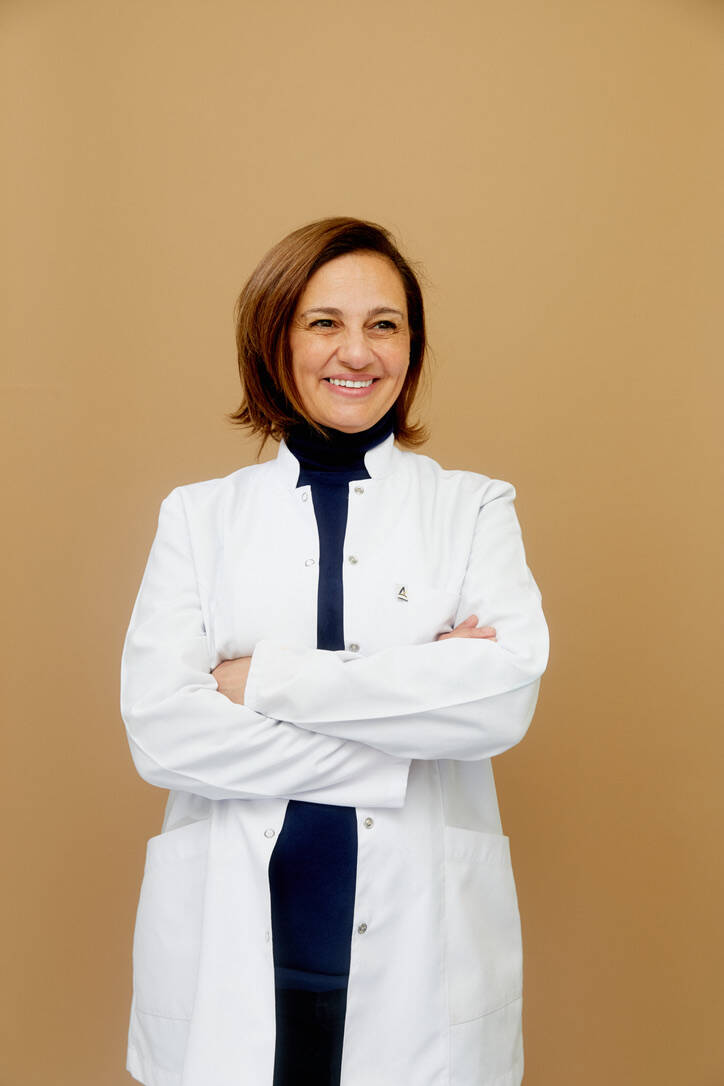
While it can manifest in different ways, Bani Hani says migraine is diagnosed if a patient has experienced two of the following symptoms within the last three months: photo- and phonophobia (sensitivity to light and sound), nausea and an inability to perform regular daily tasks.
Attacks are sometimes accompanied by auras — sensory changes that may cause visual or auditory hallucinations, difficulty speaking, tingling sensations and muscle weakness.
Migraine episodes can last hours, days or weeks and be triggered by many different things, including stress, lack of sleep, blood-sugar fluctuations, the weather and hormonal changes during the menstrual cycle. They can be episodic, occurring fewer than 15 days per month, or chronic, occurring more than 15 days.
At her worst, Carvalho was spending eight or nine days in a darkened room with uninterrupted pain running from her eyebrows to the back of her neck. She visited many different neurologists and tried “a plethora” of allopathic and naturopathic treatment options, to no avail.
In 2018, more than a decade into her migraine journey, Carvalho finally found a class of preventive drugs, new to Canada at the time, that worked to dull her symptoms. However, getting a prescription proved challenging.
“It was absolutely shocking. I’m an intelligent woman, I was going in with Excel spreadsheets that listed all the pertinent information … and I was being struck down at every opportunity,” she says. “I had to advocate (for myself) again and again and again.”
Even with medication, Carvalho experiences migraine attacks every second day and lives with daily pain.
“We need a huge paradigm shift. There’s a problem here and it needs to be taken much more seriously than it is.”– Maya Carvalho
Until recently, acute medications — which are used to abort or offer relief for a migraine-in-progress, such as triptans or over-the-counter painkillers — were the only option available for sufferers, says Bani Hani. Relying on these drugs too frequently can worsen symptoms over time and cause medication-overuse headaches.
Preventive medications, known as calcitonin gene-related peptide (CGRP) inhibitors, are relatively new and designed to help prevent attacks before they start. They can be particularly effective for chronic migraine patients.
Migraine Resources
Canadian Migraine Society
Online support groups for episodic
and chronic migraine sufferers,
educational resources, treatment guides and advocacy.
Migraine Canada
Online support groups, self-assessment tools, educational resources and
specialist directory.
Headache & Neurology Clinic
Winnipeg medical clinic specializing in headache and migraine treatment.
Both options are expensive and insurance coverage is lacking. In Canada, CGRP prescriptions can cost $600 for a monthly injectable or a daily oral tablet, while acute abortives can cost $20 per tablet.
“Not everybody can afford it, but they do change people’s lives and they are very effective and people need that relief. Otherwise, they end up in emergency rooms and you can imagine how expensive that is,” says Bani Hani, who trains other pharmacists on the nuances of headache disorders and sees the pharmacy counter as a valuable resource for patients.
In addition to offering online support groups for episodic and chronic migraine sufferers, the Canadian Migraine Society advocates for better coverage from insurers, improved government disability benefits, better access to headache specialists and more empathy writ large.
“We need a huge paradigm shift,” Carvalho says. “There’s a problem here and it needs to be taken much more seriously than it is.”
eva.wasney@winnipegfreepress.com
Eva Wasney covers environmental issues in Manitoba for The Narwhal in partnership with the Winnipeg Free Press. Read more about Eva.
Every piece of reporting Eva produces is reviewed by an editing team before it is posted online or published in print — part of the Free Press‘s tradition, since 1872, of producing reliable independent journalism. Read more about Free Press’s history and mandate, and learn how our newsroom operates.
Our newsroom depends on a growing audience of readers to power our journalism. If you are not a paid reader, please consider becoming a subscriber.
Our newsroom depends on its audience of readers to power our journalism. Thank you for your support.
Eva Wasney covers environmental issues in Manitoba for The Narwhal in partnership with the Winnipeg Free Press. Read more about Eva.
Every piece of reporting Eva produces is reviewed by an editing team before it is posted online or published in print — part of the Free Press‘s tradition, since 1872, of producing reliable independent journalism. Read more about Free Press’s history and mandate, and learn how our newsroom operates.
Our newsroom depends on a growing audience of readers to power our journalism. If you are not a paid reader, please consider becoming a subscriber.
Our newsroom depends on its audience of readers to power our journalism. Thank you for your support.
Advertisement Advertise With Us
Advertisement Advertise With Us
History
Updated on Monday, June 23, 2025 2:37 PM CDT: Adds 'disorder' to headline.