Miller says government needs to start Indigenous consultation on B.C. pipeline

Advertisement

Advertise with us

OTTAWA - Heritage Minister Marc Miller says his government needs to "sit down and start working now" on consultation with Indigenous communities and stakeholders about a possible new pipeline in B.C.

Read this article for free:


or

Already have an account? Log in here »

To continue reading, please subscribe:

Subscribe and receive a limited-edition Free Press branded hat or tote.

Digital Subscription

One year of digital access for only $205*

  • Enjoy unlimited reading on winnipegfreepress.com
  • Read the E-Edition, our digital replica newspaper
  • Access News Break, our award-winning app
  • Play interactive puzzles

*First annual payment billed as $205.00 + GST for one year. This annual subscription will automatically renew at $233.00 + GST every 52 weeks (10% off the regular annual price of $259.35). Offer available to new and qualified returning subscribers only. Cancel any time.

To continue reading, please subscribe:

Add Free Press access to your Brandon Sun subscription for only an additional

$1 for the first 4 weeks*

  • Enjoy unlimited reading on winnipegfreepress.com
  • Read the E-Edition, our digital replica newspaper
  • Access News Break, our award-winning app
  • Play interactive puzzles
Start now

*Your next Brandon Sun subscription payment will increase by $1.00 and you will be charged $17.95 plus GST for four weeks. After four weeks, your payment will increase to $24.95 plus GST every four weeks.

Hey there, time traveller!
This article was published 02/12/2025 (310 days ago), so information in it may no longer be current.

OTTAWA – Heritage Minister Marc Miller says his government needs to “sit down and start working now” on consultation with Indigenous communities and stakeholders about a possible new pipeline in B.C.

“The work starts now. It should have started yesterday. We need to engage with Indigenous communities in a respectful, thoughtful way,” Miller said Tuesday.

Miller made the comments on his way into the cabinet meeting Tuesday morning, just one day after Prime Minister Mark Carney returned him to cabinet in a shuffle on Monday.
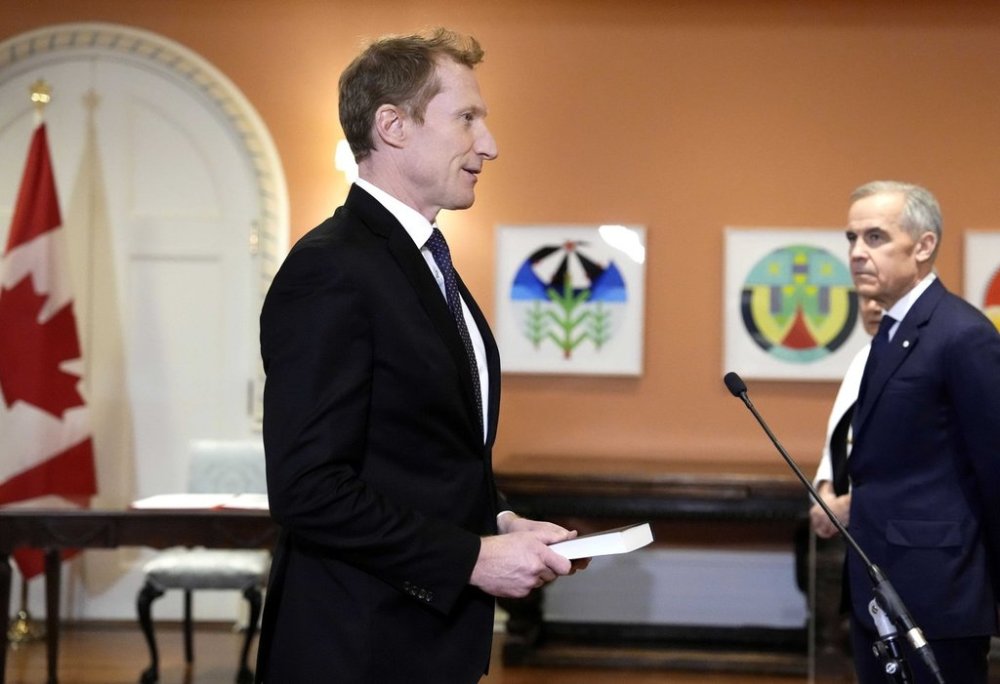
Marc Miller is sworn in as minister of Canadian identity and culture and minister responsible for Official Languages as Prime Minister Mark Carney looks on, at a cabinet swearing in ceremony at Rideau Hall in Ottawa, on Monday, Dec. 1, 2025. THE CANADIAN PRESS/Justin Tang

Miller, who held multiple cabinet roles under former prime minister Justin Trudeau include minister of Crown-Indigenous relations, told reporters he sees a difficult road ahead for any pipeline project.

“If everyone thought Thursday was difficult, that was probably the easiest day in the life of that pipeline,” Miller said.

On Thursday, the Liberal government signed a memorandum of understanding with the Alberta government that could clear a path for a pipeline to the West Coast.

The agreement opens up the possibility of an exemption from the oil tanker ban off the B.C. coast — something that the Coastal First Nations in B.C. immediately rejected.

As part of the agreement, Ottawa and the Alberta government committed to engaging with the B.C. government and with Indigenous communities in both provinces on a bitumen pipeline project.

Miller said that will require federal officials to “actually listen” to communities.

“Getting to ‘yes’ is a difficult and complex process, but it can’t be done from a desktop. It has to actually be done face to face in a respectful way with the people responsible and in charge,” he said.

His comments came shortly before the chiefs at a meeting of the Assembly of First Nations unanimously voted to press the federal government to uphold the oil tanker ban and withdraw the MOU signed with Alberta.

The MOU is the latest issue creating tension between First Nations and the federal government. It also cost Prime Minister Mark Carney a cabinet minister, with Steven Guilbeault resigning his cabinet post as heritage minister just after the MOU was signed.

Guilbeault, a longtime climate activist and former environment minister, said he couldn’t support the deal with Alberta or the direction the government is taking on climate action.

Carney told reporters Tuesday that his caucus sees the Alberta agreement as “a grand bargain” that makes room for Canada to become more independent of U.S. markets.

“It creates the possibility to have more diverse and clean energy sources in Western Canada,” Carney said in French.

Asked to respond to the AFN vote Tuesday, Energy Minister Tim Hodgson said Canadians expect the government to deal with “this hinge moment” in its trade war with the United States.

“We need to respond. Our economy is under attack. Our best cards — none of us want to be in a situation where we are told we have no cards. We have great cards in our energy and natural resources,” he said.

“We need to play them effectively. We need to work together. Now is not the time to split apart. Now is the time to come together and figure out how we can develop our energy and natural resources in partnership with affected jurisdictions and in partnership with Indigenous people.”

Pressed on whether the B.C. government needs to support a pipeline in order for it to go forward, Hodgson said Ottawa and Alberta will work with B.C. “to see what is possible.”

Last week, Hodgson, had to apologize for comments he made during an interview with CBC News.

Hodgson had tried and failed to hastily arrange a Vancouver meeting with Coastal First Nations after the Alberta deal was announced. When pressed to explain why he offered the meeting on such short notice, he told CBC on Thursday that the chiefs could have met with him over Zoom.

The next day, Hodgson said he had apologized to the group of nine First Nations for what he called a poor choice of words. He also said in a social media post that he looked forward “to an in-person meeting at their convenience.”

This report by The Canadian Press was first published Dec. 2, 2025.

— With files from Alessia Passafiume

Report Error Submit a Tip

More Stories

Amazon in the weeds over damage to tall grass reserve

Eva Wasney 7 minute read Preview

Amazon in the weeds over damage to tall grass reserve

Eva Wasney 7 minute read Tuesday, Oct. 6, 2026

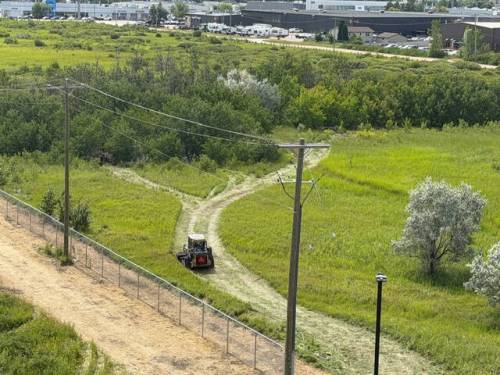
Patricia Dutchak was devastated when she first saw the wide swaths of crushed grass and upturned soil at Winnipeg’s Rotary Prairie Nature Park, a municipal heritage site.

“This is a very rare ecosystem, a remnant of tall grass prairie, there’s barely any left in the world, and to come here and see all this damage was heartbreaking,” Dutchak, chair of the Transcona Rotary Club’s parks committee, says.

The club is responsible for maintaining the protected green space, which was significantly damaged this summer when a fence between the park and the neighbouring Amazon distribution centre was relocated.

The 20-acre nature preserve is situated on a narrow tract of land on Regent Avenue West in the commercial heart of Transcona. The park received its municipal heritage designation in 1992 and is, today, surrounded by high-traffic streets, industrial warehouses and car dealerships.

Read
Tuesday, Oct. 6, 2026

Khan’s abrupt departure presents desperate Tories with a valuable opportunity

Tom Brodbeck 5 minute read Preview

Khan’s abrupt departure presents desperate Tories with a valuable opportunity

Tom Brodbeck 5 minute read Tuesday, Oct. 6, 2026

If the Manitoba Progressive Conservatives are serious about getting out of the political wilderness, they should start by electing a progressive conservative leader.

Read
Tuesday, Oct. 6, 2026

All sideshow, little substance

Editorial 4 minute read Preview

All sideshow, little substance

Editorial 4 minute read 2:00 AM CDT

Well, there’s one thing that can be said about Winnipeg’s 2026 mayoral race that sets it apart from most previous campaigns for city council’s top position:

It isn’t boring.

In most civic elections, the power of incumbency and/or familiarity gives one mayoral candidate such a profound advantage that the outcome is all but a foregone conclusion and the lead-up to voting day becomes both uninteresting and largely irrelevant.

This year’s race, to the contrary, has been noteworthy for the unusual level of friction, controversy and mud-slinging that has been injected into the early part of the campaign.

Read
2:00 AM CDT

See silver lining to your impossible crush

Maureen Scurfield 4 minute read 2:01 AM CDT

DEAR MISS LONELYHEARTS: I’m in love with my sister’s boyfriend, and neither one of them knows it. They’re both grad students and came back home from the province where they are studying to write and spend the summer in Manitoba.

Thankfully, they’ve gone back home because it was becoming too much for me to bear. My sister’s guy is perfect for me, but she already owns him and I’m too young to fight her for him.

Still, the two of them don’t realize the depth of my feelings. I don’t know how to behave when they get cosy around me and I feel so jealous I want to scream. I’m not sure what to do next.

This week I got an email from my artsy-fartsy sister with an invitation to come visit them in December and go to some fun plays and parties with them and their friends. They even promised my Christmas present from them will be my plane ticket.

Klein claims he was offered PC party position to exit 2022 mayoral race to help Gillingham win

Carol Sanders 6 minute read Preview

Klein claims he was offered PC party position to exit 2022 mayoral race to help Gillingham win

Carol Sanders 6 minute read Updated: Yesterday at 12:32 PM CDT

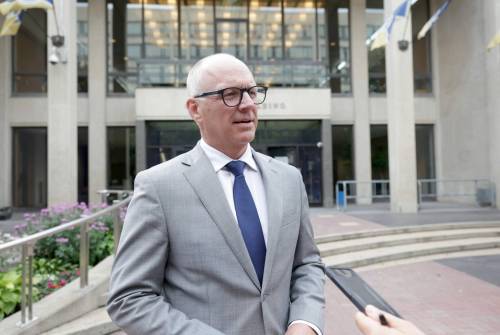
Mayoral candidate Kevin Klein said he was offered a position with the provincial Tories if he pulled out of the 2022 mayoral race that saw then-city councillor Scott Gillingham defeat former mayor Glen Murray.

Read
Updated: Yesterday at 12:32 PM CDT

Kids deserve better

Jordan Laidlaw 4 minute read 2:00 AM CDT

As much as I cling to hope, I recognize the ominous circumstances and questionable future that our young people stand to inherit.

Youth are navigating a world plagued with the existential dangers of climate change, artificial intelligence, political polarization and rising military armament, among other disconcerting trends. While schools cannot entirely ameliorate these issues, I am inspired by the words of Amina Mohammed, the United Nations deputy secretary-general, who declared teachers to be the “guardians of our future.”

Our future integrally depends on the learning, healthy development and empowerment of young people. With the upcoming Manitoba school board elections, I invite readers, voters and prospective candidates to consider how to support the practices of these guardians so we may ensure a brighter tomorrow.

First, I believe we are in — or entering — a community mental-health crisis. There is a resounding body of peer-reviewed research outlining the declining trends in the mental health of youth, parents and teachers. In May 2026, Doctors Manitoba stated its concern that the technology consumption habits of youth rivalled the health detriments of drinking and smoking. Many parents are stressed, economically struggling and need assistance. How might schools mitigate these precarious developments?