

Polar bear shore visits linked to sea ice levels, not hunger: U of M research

Advertisement
Read this article for free:
or
Already have an account? Log in here »
To continue reading, please subscribe:
Monthly Digital Subscription
$1 per week for 24 weeks*
- Enjoy unlimited reading on winnipegfreepress.com
- Read the E-Edition, our digital replica newspaper
- Access News Break, our award-winning app
- Play interactive puzzles
*Billed as $4.00 plus GST every four weeks. After 24 weeks, price increases to the regular rate of $19.95 plus GST every four weeks. Offer available to new and qualified returning subscribers only. Cancel any time.
Monthly Digital Subscription
$4.99/week*
- Enjoy unlimited reading on winnipegfreepress.com
- Read the E-Edition, our digital replica newspaper
- Access News Break, our award-winning app
- Play interactive puzzles
*Billed as $19.95 plus GST every four weeks. Cancel any time.
To continue reading, please subscribe:
Add Free Press access to your Brandon Sun subscription for only an additional
$1 for the first 4 weeks*
*Your next subscription payment will increase by $1.00 and you will be charged $16.99 plus GST for four weeks. After four weeks, your payment will increase to $23.99 plus GST every four weeks.
Read unlimited articles for free today:
or
Already have an account? Log in here »
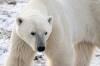
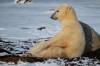
Conventional thinking is that bears wander near people when they’re hungry and searching for a bite, but a new study says it’s more likely they just happened to be in the neighbourhood.
That’s what researchers at the University of Manitoba and University of Saskatchewan have concluded after a more than decade-long study tracking polar bear visits to remote camps in Wapusk National Park located 45 kilometres south of Churchill.
The study, published in Arctic Science, coincided with International Polar Bear Day on Friday. It found proximity — and not desperation for food — appeared to be why the bears went near people.
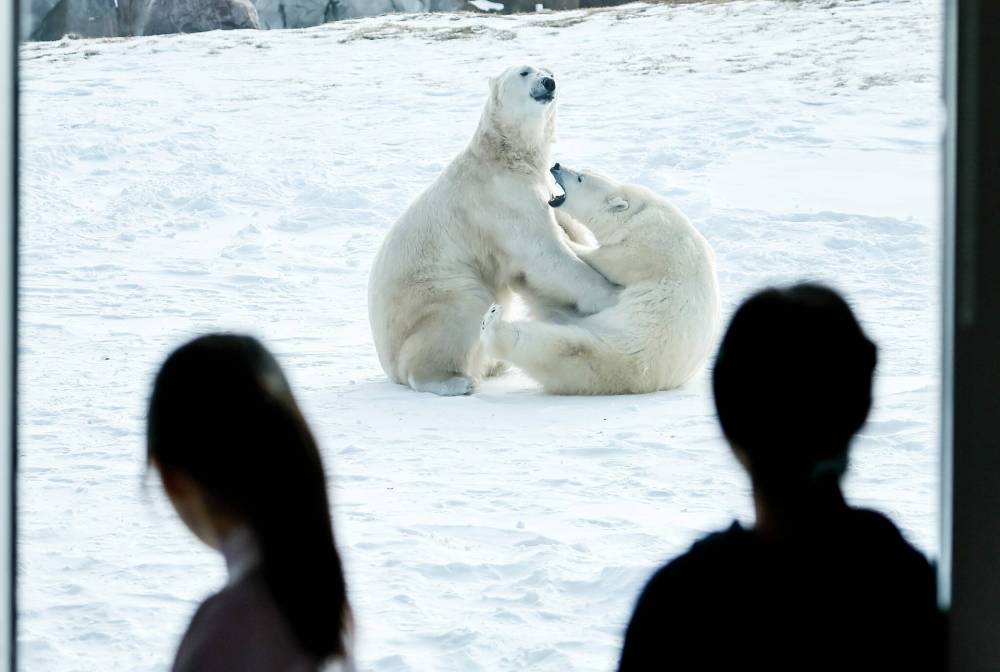
“Our data is saying they might just be in the neighbourhood,” said Alex Crawford, an assistant professor in the University of Manitoba department of environment and geography.
“The reason why it is important is, in scientific literature especially, there has been a conclusion bears are more likely to seek out humans if they are desperate and that is contrary to what a lot of Indigenous knowledge up around Hudson Bay has said.
“The only thing that makes sense, in terms of why bears are more frequent or less frequent in a given year, is just how much time they are spending on shore. If they are spending more time on land, because there is less sea ice, they are more likely to visit infrastructure that humans have built.”
Crawford said during the 2011 to 2021 study period, Hudson Bay ranged from being ice-free for 123 to 167 days, which forced the bears to remain on shore for different periods of time.
He said video footage of bears being at 589 remote camps helped researchers determine which of the bears were healthy or starving.
“If they are not coming any more likely when there are humans there with food, that suggests that it is more coincidental and it is not about them seeking out humans as a food source.

“It’s not to say there isn’t a desperate bear which seeks out the landfill for food, but we are seeing it as something universal (involving) all the polar bears.”

The research is consistent with advice given by the Town of Churchill to its residents in relation to polar bear encounters.
“It’s respect the bear, but stay calm,” he said. “Give the bear space, but don’t try to be threatening. Don’t try to scare the bear away. Don’t do any of that unless you’re in a situation where that individual bear is showing you clear signs of hunting or stalking you.”
“If you went with the previous type of conventional wisdom, from the scientific community, then we may have said the bear is likely to be more desperate if it is coming towards you in the first place.”
kevin.rollason@freepress.mb.ca
Kevin Rollason is a general assignment reporter at the Free Press. He graduated from Western University with a Masters of Journalism in 1985 and worked at the Winnipeg Sun until 1988, when he joined the Free Press. He has served as the Free Press’s city hall and law courts reporter and has won several awards, including a National Newspaper Award. Read more about Kevin.
Every piece of reporting Kevin produces is reviewed by an editing team before it is posted online or published in print — part of the Free Press‘s tradition, since 1872, of producing reliable independent journalism. Read more about Free Press’s history and mandate, and learn how our newsroom operates.
Our newsroom depends on a growing audience of readers to power our journalism. If you are not a paid reader, please consider becoming a subscriber.
Our newsroom depends on its audience of readers to power our journalism. Thank you for your support.
Kevin Rollason is a general assignment reporter at the Free Press. He graduated from Western University with a Masters of Journalism in 1985 and worked at the Winnipeg Sun until 1988, when he joined the Free Press. He has served as the Free Press’s city hall and law courts reporter and has won several awards, including a National Newspaper Award. Read more about Kevin.
Every piece of reporting Kevin produces is reviewed by an editing team before it is posted online or published in print — part of the Free Press‘s tradition, since 1872, of producing reliable independent journalism. Read more about Free Press’s history and mandate, and learn how our newsroom operates.
Our newsroom depends on a growing audience of readers to power our journalism. If you are not a paid reader, please consider becoming a subscriber.
Our newsroom depends on its audience of readers to power our journalism. Thank you for your support.
Related Articles
Unchecked climate change could render Hudson Bay polar bears extinct by 2030s, report warns
Advertisement Advertise With Us
Advertisement Advertise With Us