World Cup to spur ‘short-lived bump’ from tourism spending: BMO

Advertisement

Advertise with us

TORONTO - The 2026 FIFA World Cup is expected to spur a modest lift in gross domestic product in Canada, driven by tourism and hospitality spending, according to a new report from BMO Economics.

Read this article for free:


or

Already have an account? Log in here »

To continue reading, please subscribe:

Subscribe and receive a limited-edition Free Press branded hat or tote.

Digital Subscription

One year of digital access for only $205*

  • Enjoy unlimited reading on winnipegfreepress.com
  • Read the E-Edition, our digital replica newspaper
  • Access News Break, our award-winning app
  • Play interactive puzzles

*First annual payment billed as $205.00 + GST for one year. This annual subscription will automatically renew at $233.00 + GST every 52 weeks (10% off the regular annual price of $259.35). Offer available to new and qualified returning subscribers only. Cancel any time.

To continue reading, please subscribe:

Add Free Press access to your Brandon Sun subscription for only an additional

$1 for the first 4 weeks*

  • Enjoy unlimited reading on winnipegfreepress.com
  • Read the E-Edition, our digital replica newspaper
  • Access News Break, our award-winning app
  • Play interactive puzzles
Start now

*Your next Brandon Sun subscription payment will increase by $1.00 and you will be charged $17.95 plus GST for four weeks. After four weeks, your payment will increase to $24.95 plus GST every four weeks.

TORONTO – The 2026 FIFA World Cup is expected to spur a modest lift in gross domestic product in Canada, driven by tourism and hospitality spending, according to a new report from BMO Economics.

“The key point is there are real economic effects from a large sporting event or a large entertainment event like this,” said BMO chief economist Doug Porter in an interview.

“But I don’t think we should be under any illusion that it’s anything other than a short-lived bump from the increased spending, and it tends to be relatively modest.”     

One of four giant LCD screens located around the pitch at BMO Field is shown as part of the stadium’s upgrades ahead of hosting six FIFA World Cup 2026 matches in Toronto, Ont., March 24, 2026. THE CANADIAN PRESS/Eduardo Lima

For the Canadian economy, the report said gains from tourism were estimated to come in at between $1 billion and $5 billion, while increased spending among residents is estimated between $500 million and $1.5 billion. 

Those gains could translate into a lift to Canada’s quarterly GDP of about 0.1 percentage points annualized, the report said, split between the second and third quarters. The impact will be most pronounced in Ontario and British Columbia, where the games will be played.

Porter said any level of growth “would be welcome and would be helpful given the fact that the Canadian economy has really struggled to grow at all in the past year.”  

“Even modest growth should be viewed as a win,” he said. 

Last week, Statistics Canada said economic growth stalled in the first quarter, leading to a second consecutive decline in real GDP, which met some definitions for a technical recession.

With the tournament starting later this month, the report said the U.S. will benefit the most from tourism spending, but Canada and Mexico will also see gains. 

Spending at bars and restaurants is expected to rise, the report said.

“However … only spending by international travellers can be considered a net benefit, since residents will be largely diverting money that would otherwise have been spent on other activities or at other times,” the report said. 

Data from Moneris, released in 2023, found that bar and restaurant spending rose more than 10 per cent in Canada during the 2022 World Cup.

The BMO report said the strongest economic case for hosting the World Cup is for a short-term demand bump, but not as the foundation for longer-term growth. 

Previously, World Cup organizers have touted the potential economic benefits of the event; FIFA estimated up to $940 million in economic output for the Greater Toronto Area, while the B.C. government last year said the event would generate more than a billion dollars in tourism in the five years after the games.

Last month, the federal budget watchdog said Canada will spend just over $1 billion to host the World Cup this summer.

That sum includes money from all levels of government. The federal government’s contribution is expected to be $473 million.   

The $1.07-billion total equates to an average of $82 million spent per game for the 13 games that will be played in Toronto and Vancouver.

This report by The Canadian Press was first published June 1, 2026.  

Report Error Submit a Tip

More Stories

Sea Bears finish on top

Joshua Frey-Sam 6 minute read Preview

Sea Bears finish on top

Joshua Frey-Sam 6 minute read 8:27 PM CDT

Beauty. Bliss. Ecstasy.

That is how Aug. 15, 2026 will be remembered in Winnipeg.

What was once a pipe dream in the city’s hoops community became an epic reality on Saturday, when Simon Hildebrandt, who grew up playing on the courts of this very town, made good on a three-pointer from the wing to crown the Winnipeg Sea Bears Canadian Elite Basketball League champions.

A storybook ending to a 98-84 victory over the Brampton Honey Badgers sent a CEBL attendance record of 12,519 fans into pandemonium at Canada Life Centre and capped a Finals run for the ages — one that was fraught with injury, impromptu player exits and unprecedented circumstances.

Read
8:27 PM CDT

World Cup to spur ‘short-lived bump’ from tourism spending: BMO

Daniel Johnson, The Canadian Press 3 minute read Preview

World Cup to spur ‘short-lived bump’ from tourism spending: BMO

Daniel Johnson, The Canadian Press 3 minute read Monday, Jun. 1, 2026

TORONTO - The 2026 FIFA World Cup is expected to spur a modest lift in gross domestic product in Canada, driven by tourism and hospitality spending, according to a new report from BMO Economics.

"The key point is there are real economic effects from a large sporting event or a large entertainment event like this,” said BMO chief economist Doug Porter in an interview.

"But I don't think we should be under any illusion that it's anything other than a short-lived bump from the increased spending, and it tends to be relatively modest.”     

For the Canadian economy, the report said gains from tourism were estimated to come in at between $1 billion and $5 billion, while increased spending among residents is estimated between $500 million and $1.5 billion. 

Read
Monday, Jun. 1, 2026

Bombers manage to hand Redblacks another loss

Taylor Allen 7 minute read Preview

Bombers manage to hand Redblacks another loss

Taylor Allen 7 minute read Updated: 8:35 AM CDT

It looked bad. Real bad.

Winnipeg Blue Bombers quarterback Zach Collaros made his return to the lineup on Friday night against the Ottawa Redblacks, and he was once again the victim of a blindside hit.

The one he suffered in Hamilton on July 5 appeared relatively modest in comparison and yet, it sidelined him for a month with a neck injury.

So when Redblacks linebacker Lucas Cormier came around the edge unblocked and hammered Collaros from behind in the second quarter, you could hear a pin drop inside Princess Auto Stadium.

Read
Updated: 8:35 AM CDT

Men’s recovery home dedicated to ‘homeless hero’ Faron Hall’s memory

Scott Billeck 14 minute read Preview

Men’s recovery home dedicated to ‘homeless hero’ Faron Hall’s memory

Scott Billeck 14 minute read Yesterday at 12:30 PM CDT

Faron Hall never got the chance to begin recovery. Once heralded as Winnipeg’s “homeless hero” after twice plunging into the Red River to save strangers from drowning, Hall told St. Boniface Street Links executive director Marion Willis shortly before his death in 2014 that he wanted help for his alcoholism.

Read
Yesterday at 12:30 PM CDT

Could renewed interest in strategically critical rare earth elements finally make sub-sector profitable?

Joel Schlesinger 6 minute read Preview

Could renewed interest in strategically critical rare earth elements finally make sub-sector profitable?

Joel Schlesinger 6 minute read 3:00 AM CDT

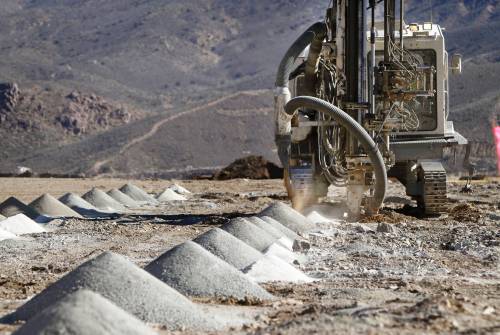
Rare earth elements are among the most critical of mined resources for modern economies.

They’re essential in manufacturing specialized magnets used in a host of technologies from wind turbines and electric vehicles to hard drives, smartphones, television screens, and fibre optics. Most notably, however, rare earth minerals are increasingly vital to the defence industry.

These 17 elements — closely related chemically and usually found all together in mineral deposits — have indeed been growing in geopolitical importance as the United States, Canada and other Western nations recognize their dependence on production from China.

It is the world’s largest producer and processor of rare earths, including the most in-demand elements neodymium and praseodymium used to manufacture very light and powerful magnets for an array of technologies, including the most advanced weapons of modern warfare.

Read
3:00 AM CDT

Trailblazing Western Scrap Metals heavy-equipment operator relishes role at massive crane’s control

David Sanderson 7 minute read Preview

Trailblazing Western Scrap Metals heavy-equipment operator relishes role at massive crane’s control

David Sanderson 7 minute read Yesterday at 10:15 AM CDT

Less than five per cent of heavy-equipment operators in the country are women but that number is trending upward, according to a study conducted by trade magazine Crane & Hoist Canada.

It was reported that in Ontario roughly eight per cent of jobs in the transport and heavy-equipment field are currently held by women. Furthermore, in 2024 almost 20 per cent of graduates at an Edmonton-based heavy-equipment operator training school were female, the article stated.

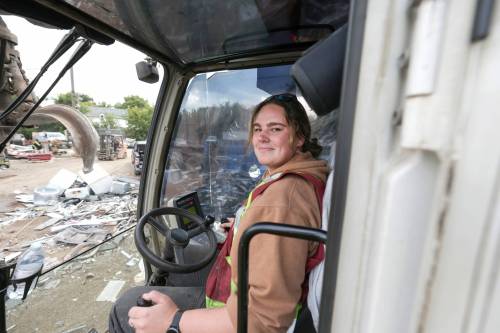
That brings us to Harmony Guspodarchuk, the first female crane operator in the 70-year history of Western Scrap Metals, a family-owned business at 18 Sutherland Ave.

Three years ago, Guspodarchuk literally stepped into the driver’s seat of a 27,500-kilogram, Liebherr C 924 Heavy Lift Litronic crane. The 29-year-old hasn’t looked back much since.

Read
Yesterday at 10:15 AM CDT