Pocket-change plan
Province’s removal of PST from some groceries doesn’t amount to much

Advertisement
Read this article for free:
or
Already have an account? Log in here »
To continue reading, please subscribe:

Digital Subscription
One year of digital access for only $205*
- Enjoy unlimited reading on winnipegfreepress.com
- Read the E-Edition, our digital replica newspaper
- Access News Break, our award-winning app
- Play interactive puzzles
*First annual payment billed as $205.00 + GST for one year. This annual subscription will automatically renew at $233.00 + GST every 52 weeks (10% off the regular annual price of $259.35). Offer available to new and qualified returning subscribers only. Cancel any time.
To continue reading, please subscribe:
Add Free Press access to your Brandon Sun subscription for only an additional
$1 for the first 4 weeks*
- Enjoy unlimited reading on winnipegfreepress.com
- Read the E-Edition, our digital replica newspaper
- Access News Break, our award-winning app
- Play interactive puzzles
*Your next Brandon Sun subscription payment will increase by $1.00 and you will be charged $17.95 plus GST for four weeks. After four weeks, your payment will increase to $24.95 plus GST every four weeks.
Read unlimited articles for free today:
or
Already have an account? Log in here »
Tofu-eaters, bigots, drunks, Pinocchios, latte-sippers — insults hurled across the aisle in recent sessions of the Manitoba legislature have turned personal, sometimes absurd.
It’s easy, perhaps, for politicians to forget their manners when voters are looking to them to solve a more legitimate crisis. Everyday costs — gas, rent, mortgage payments, groceries — are squeezing households, while significant public debt constrains the government’s flexibility for affordability measures.
It’s not surprising then that one of the most hotly contested legislative proposals of recent months is a scheduled July 1 removal of the seven per cent PST (provincial sales tax) from more grocery items.
CONRAD SWEATMAN / FREE PRESS Samia Leake and her mother shop at Save-on-Foods; the pair would not have saved very much under the upcoming PST extension.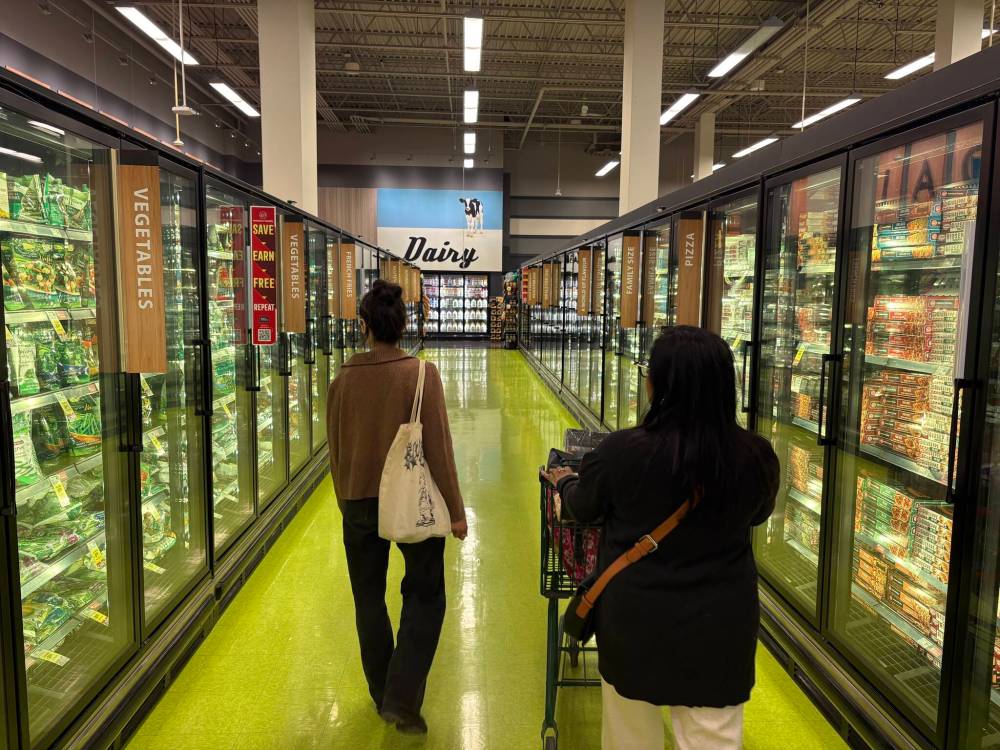
In March, NDP Premier Wab Kinew said, “Manitobans are feeling the cost of groceries every week. Budget 2026 offers real relief for Manitoba families on the items you pick up when you are in a rush to feed the family before hockey practice and swimming lessons.”
Meanwhile, Progressive Conservative Leader Obby Khan accuses the cut of merely “sprinkling pennies everywhere” while favouring “millionaires and billionaires” — owners of grocery chains.
After a lot of delays and fighting, the extension to the tax exemption, which already includes basic groceries such as milk, meat and bread (as well as tofu, for that matter) to prepared meals, snacks and soft drinks (though not booze) — is officially moving ahead after Manitoba’s 2026 Budget Implementation Act passed on May 29, right before the legislature’s summer recess.
Walk into a grocery chain or a local convenience store, and you might find shoppers and grocers are far less tribal about the cut, if they think about it all.
“It’s not the most noticeable part of the grocery receipt, when we go through it,” says Samia Leake, a 28-year-old psychology student and mental health worker.
Scanning the bill at Save-on-Foods, where she and her mom regularly shop, she finally finds it: $4.44 in PST on a $283.68 bill. Government officials predict the cut will save Manitoba families about $100 per year — a few bucks here, a few there.
CONRAD SWEATMAN / FREE PRESS Samia Leake searches her grocery bill to find the PST savings: $4.44 on this trip.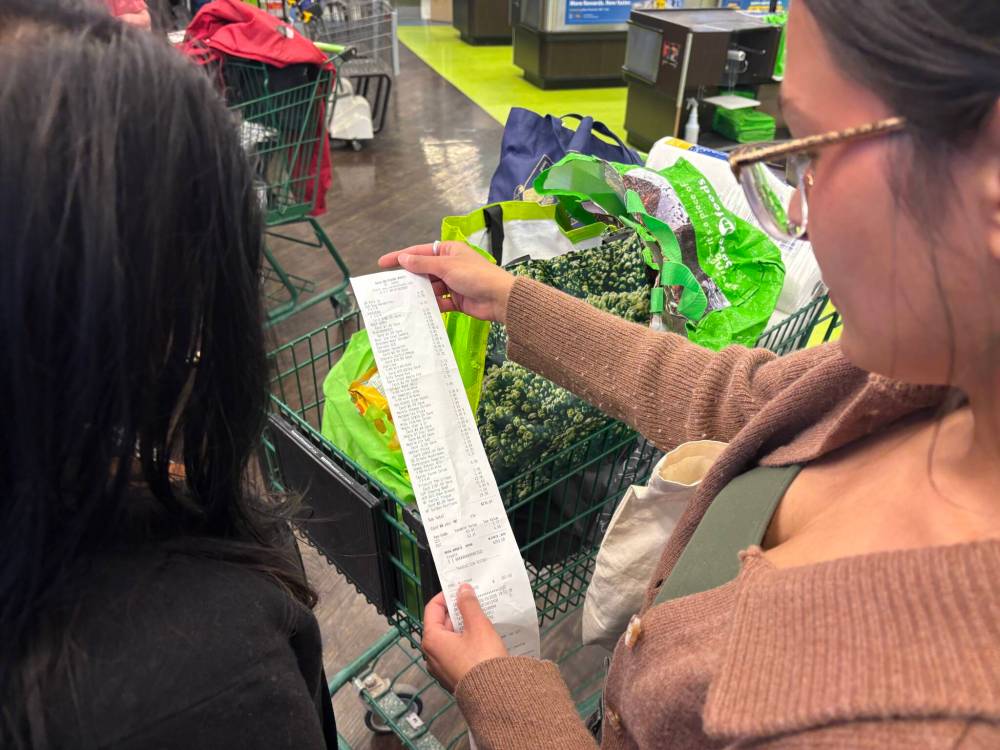
“I actually find it a little comical; I almost cackled. I wasn’t sure I was looking at the right place,” Leake says.
It’s not that they don’t buy things targeted by the consumption tax. Near the end of their shop — after stocking up on basic groceries and staples for cooking Guyanese food — Leake and her mom linger in the snack aisle.
“We do like our chips and cookies. It’s the little things,” says Leake’s mother with a laugh.
“And I don’t think people should be punished for that!” adds Leake.
The PST is applied to non-essentials such as junk food — including “chips, crisps, puffs, curls or sticks,” to quote from the list of exemptions detailed in the Government of Manitoba’s March information notice about the cut.
However, it’s not that simple: the PST applies in general to ready-made-food and drinks. That also means prepared vegetables and fruit, samosas, rotisserie chickens — unprocessed or less-processed food that you might grab on the run.
“I wonder where that cost will come from in terms of public funding, what’s going to take the hit.”
This explains why PST is sometimes considered a tax on the less economically fortunate. Processed foods are often cheapest per calorie and if you’re a single or working parent — or even a dual-income family that can’t easily afford child care — a fast and convenient meal can mean a lot.
Also, critics call the PST regressive, arguing that households of lesser means spend a larger chunk of their income on everyday taxable purchases. They have less money to put away for savings, so a flat tax takes a proportionally bigger bite.
Though she works almost full time, Leake lives with her mom so she can save up while finishing her degree and planning her next steps. She doesn’t always have time to cook and, while she’s not big on lattes, she’s happy for a little bit of extra pocket change.
“But I don’t anticipate noticing savings very much,” she adds. Leake says they would probably buy roughly the same grocery items with or without the tax.
CONRAD SWEATMAN / FREE PRESS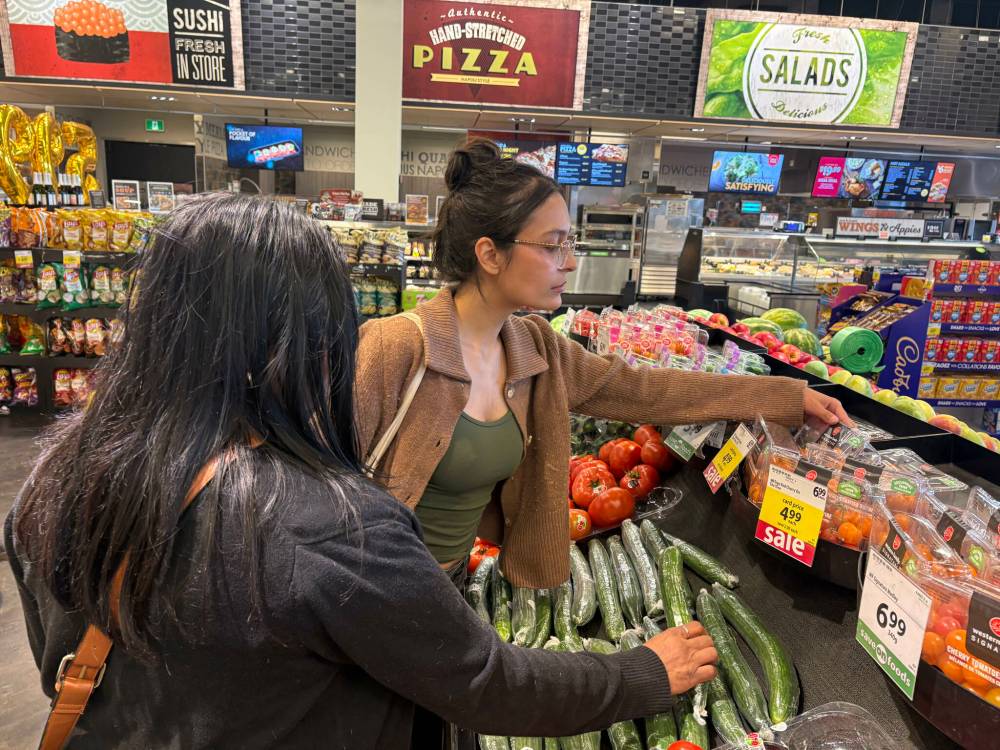
Leake, while indicating she identifies with the NDP more than other parties, also worries about how the NDP’s tax cut — predicted to reduce government revenue by $32 million — might indirectly affect people like her who work in health care and outreach fields, as well as those who regularly depend on their services.
“I wonder where that cost will come from in terms of public funding, what’s going to take the hit,” she says. “That’s my biggest trouble, as someone witnessing every day the consequences of austerity.”
Leake’s concerns echo the Canadian Centre for Policy Alternatives (CCPA), which has been critical of the PST cut.
“The risk that’s run when the cost of this is very high is that it diminishes capacity to invest in other services, which we know can have an effect on affordability in other ways,” says CCPA senior researcher Niall Harney.
Harney and his colleagues also contend that a PST cut isn’t the win for progressives some think it is. While lower-income households may spend a higher proportion of their income on PST taxes, the CCPA counters that high-income households still tend to spend more money at the grocery store, saving more money overall.
“People closer to the poverty line … these are the people who are really struggling most with affordability and the cost of food and rent, right?” Harney says. “They’re going to see significantly less of a benefit from this PST holiday than they would if (Employment and Income Assistance) rates were raised.”
Stopping nearly 20 pedestrians in the mixed-income, diverse neighbourhood of West Broadway reveals that only a couple are aware of the July 1 scheduled cut.
“Groceries are too expensive,” says one. “One hundred per cent… It’s gonna put more money back into people’s pockets who are below median income. That’s a good thing.”
Many managers and clerks at neighbourhood grocery and convenience stores are likewise unaware of the tax cuts.
CONRAD SWEATMAN / FREE PRESS Grocer Ramsey Zeid says the PST tax holiday will drive up his labour costs.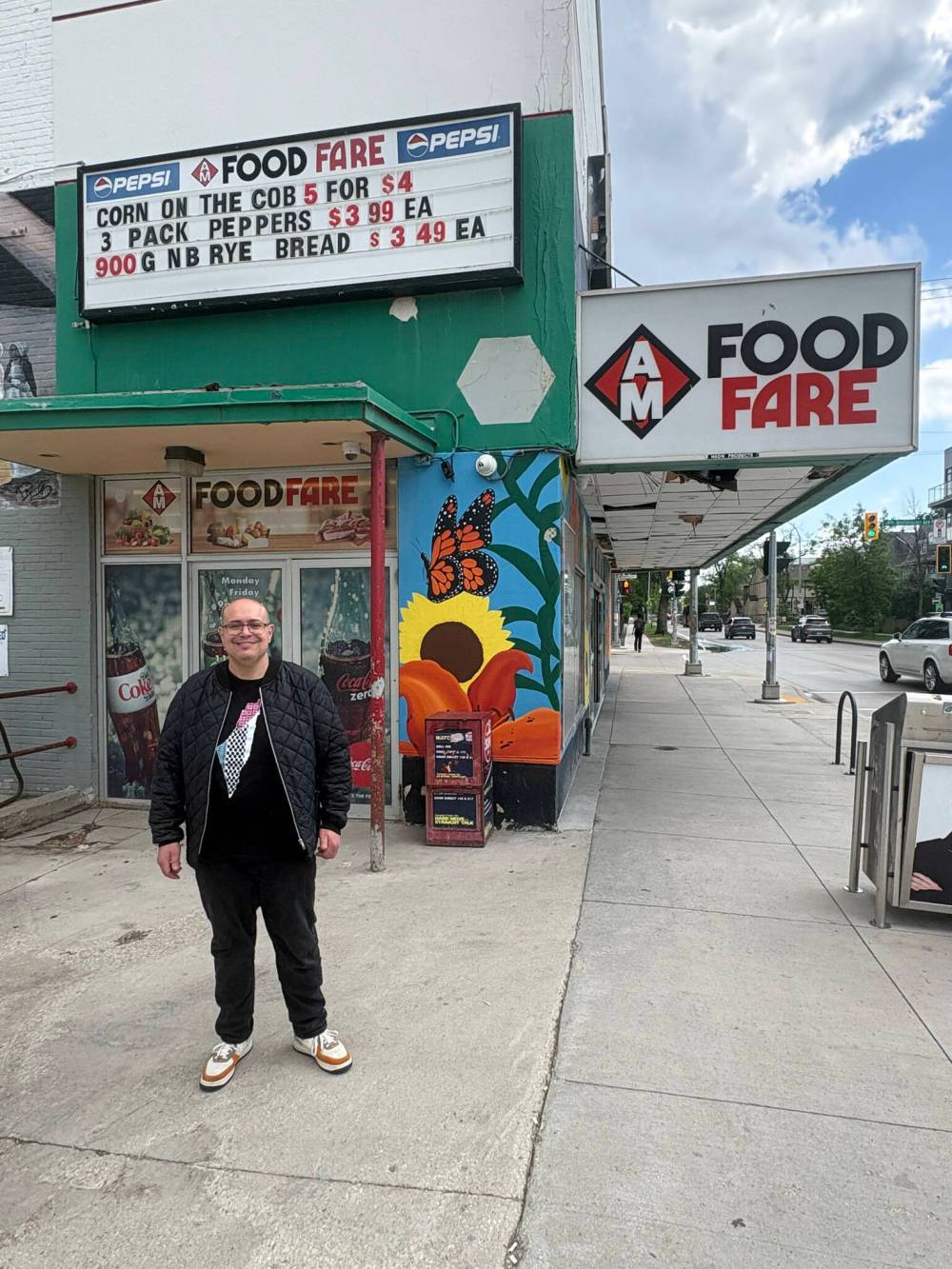
Many of them do not stand to benefit from it, as it does not apply to small retailers and restaurants. Because of this exclusion, the Canadian Federation of Independent Business and others have accused the Manitoba government of creating an unfair two-tiered system favouring large-scale grocery chains.
Food Fare, a successful chain with five Winnipeg locations that will be exempt from PST, is not just family-owned, but family-run.
Co-owner Ramsey Zeid has been thinking a lot about the upcoming tax holiday.
“It’s a great benefit to stores, it’s a great benefit to customers … but we’ve got thousands of items that we have to go through and take the PST off,” he says from Food Fare’s Maryland location.
“There’s 12-packs, six-packs, two- litre (bottles), mini-cans, the 24-packs. And then there’s Coke, Coke Zero, Diet Coke, Cherry Coke.”
Zeid suggests that adapting to the tax holiday shifts administrative burdens onto businesses.
“It’s going to cost me more labour than most families save in a year,” he adds.
Zeid has nevertheless been playful in his public dealings with the NDP government over the issue.
After Kinew posed for cameras while eating rotisserie chicken during a March news conference on the PST cut, Zeid posted a video to Instagram promising to give away five chickens each Sunday at the Maryland location until the premier visited Food Fare to try it. So far, this social media op has not materialized.
“I bumped into him, and he’s like, ‘Any time you want me to come, just tell me.’ And to his defence I haven’t set up a date,” he says, laughing.
It may surprise some to see Royden Brousseau publicly championing an NDP initiative. The 39-year-old ran as a Conservative candidate in Winnipeg South Centre in the 2025 federal election, finishing second to Liberal MP Ben Carr.
“It’s a political win; $30 million sounds like a lot to a normal person trying to pay the bills, but Manitoba has a $27-billion budget. So, you know, that’s about a tenth of a per cent of the budget,” he says. (Manitoba’s total projected expenditures for the 2026-27 fiscal year are $27.3 billion.) “It’s not going to cost Manitobans a fortune.”
JOHN WOODS / FREE PRESS Royden Brousseau shops at a local grocery store on Kenaston Boulevard.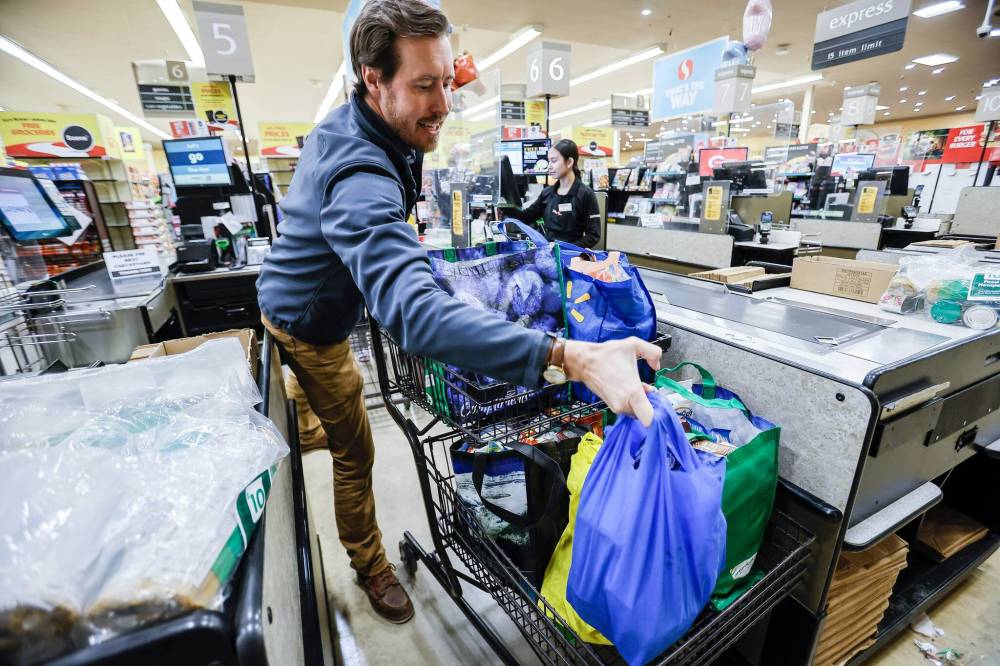
While the politico in him can’t help but think big picture about the effects and optics of the NDP’s cut, he says he’s also grateful for it as a father of three.
“I come religiously the first Tuesday of every month to the Linden Woods Safeway, to save 10 per cent, and get the odds and sods that our family still needs,” he says. “We’ve got debts, we’ve got a mortgage payments.”
Brousseau, an engineer by training who works in finance, took a professional gamble in running for federal politics last year — pausing his career outside politics for a longer period than anticipated. Potential PST savings last Tuesday would have worked out to $5.54 on a bill of $324, he says he won’t take the new savings for granted.
Nevertheless, Brousseau recognizes only so much more can be done by tinkering with PST to address affordability, with most groceries already exempt.
“I remember the opening scene of Super Troopers, where these cops play a prank by trying to pull over a car that’s already on the side of the road. And (the passengers) go, ‘We can’t pull over any further!’ The NDP can’t reduce the PST any more; groceries are already virtually tax-free.”
JOHN WOODS / FREE PRESS Royden Brousseau shops at a local grocery store on Kenaston Blvd Tuesday, June 2, 2026. PST has been cut on groceries. 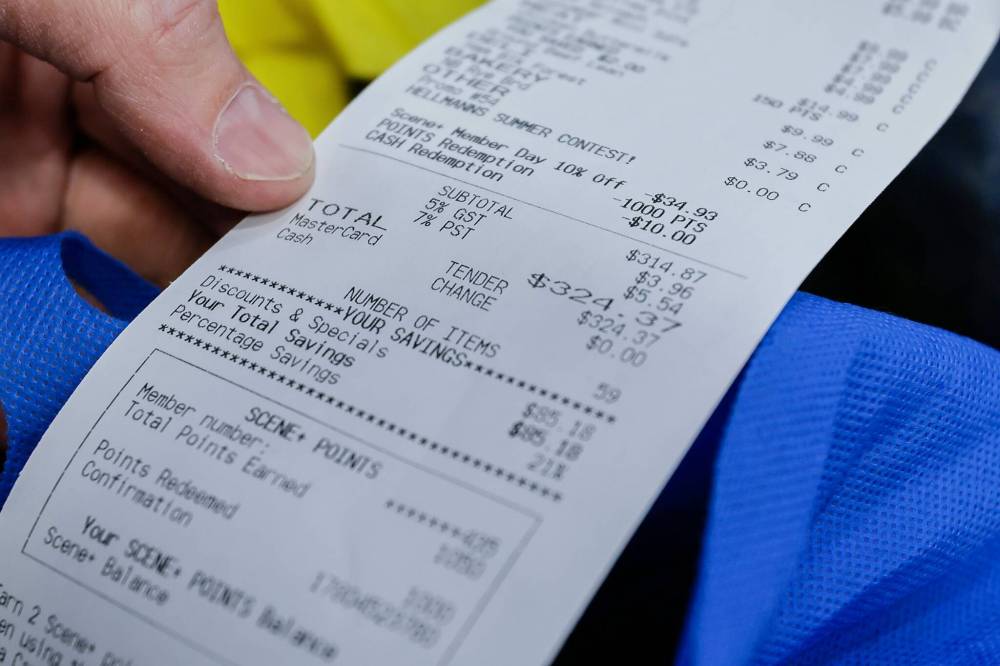
Brousseau also observes that affordability is a national as well as regional issue, and provincial governments have limited scope for remedial measures they can take. National data show that wages have tended to lag behind post-pandemic inflation, leaving many struggling to stay ahead of rising living costs.
This is felt in concrete, painful ways — the 2022 Canadian Housing Survey, for instance, showed that nearly one in four Canadians spend as much as 30 per cent of their income on shelter.
While politicians and policy wonks continue to debate fixes, for his part Brousseau believes there’s nothing like the relief of more money in hand.
“I think that in a lot of ways (my family’s) in a fortunate position. But I don’t know how some families do it with inflation… I think things are really tough for a lot of families,” Brousseau says. “And a hundred bucks is a hundred bucks.”
winnipegfreepress.com/conradsweatman
Conrad Sweatman is an arts reporter and feature writer. Before joining the Free Press full-time in 2024, he worked in the U.K. and Canadian cultural sectors, freelanced for outlets including The Walrus, VICE and Prairie Fire. Read more about Conrad.
Our newsroom depends on a growing audience of readers to power our journalism. If you are not a paid reader, please consider becoming a subscriber.
Our newsroom depends on its audience of readers to power our journalism. Thank you for your support.
Conrad Sweatman is an arts reporter and feature writer. Before joining the Free Press full-time in 2024, he worked in the U.K. and Canadian cultural sectors, freelanced for outlets including The Walrus, VICE and Prairie Fire. Read more about Conrad.
Our newsroom depends on a growing audience of readers to power our journalism. If you are not a paid reader, please consider becoming a subscriber.
Our newsroom depends on its audience of readers to power our journalism. Thank you for your support.
Related Articles
PST shift sparks confusion for retailers










Advertisement Advertise With Us
Advertisement Advertise With Us
History
Updated on Monday, June 8, 2026 12:29 PM CDT: Clarifies a couple of details in the story.