Celebrated ‘Inconvenient Indian’ author Thomas King says he’s not Indigenous
Advertisement
Read this article for free:
or
Already have an account? Log in here »
To continue reading, please subscribe:
Digital Subscription
One year of digital access for only $1.44 a week*
- Enjoy unlimited reading on winnipegfreepress.com
- Read the E-Edition, our digital replica newspaper
- Access News Break, our award-winning app
- Play interactive puzzles
*Billed as $5.77 plus GST every four weeks. After 52 weeks, price increases to the regular rate of $19.95 plus GST every four weeks. Offer available to new and qualified returning subscribers only. Cancel any time.
To continue reading, please subscribe:
Add Free Press access to your Brandon Sun subscription for only an additional
$1 for the first 4 weeks*
- Enjoy unlimited reading on winnipegfreepress.com
- Read the E-Edition, our digital replica newspaper
- Access News Break, our award-winning app
- Play interactive puzzles
*Your next Brandon Sun subscription payment will increase by $1.00 and you will be charged $17.95 plus GST for four weeks. After four weeks, your payment will increase to $24.95 plus GST every four weeks.
Read unlimited articles for free today:
or
Already have an account? Log in here »
Hey there, time traveller!
This article was published 24/11/2025 (328 days ago), so information in it may no longer be current.
Celebrated author Thomas King says that despite believing so nearly all his life, he is not Indigenous.
The writer of books including 2003’s “The Truth About Stories: A Native Narrative” and 2012’s “The Inconvenient Indian: A Curious Account of Native People in North America,” says he is reeling from recent news that he has no Cherokee ancestry.
In an essay titled “A most inconvenient Indian” for the Globe and Mail, the Guelph, Ont.-based King says he learned of rumours several years ago that questioned his heritage.
The California-born King says he made a concerted effort this year to find their origin, which brought him to a U.S. organization called Tribal Alliance Against Frauds.
That group investigated his past with help from a University of British Columbia scholar, and found no Cherokee heritage.
The 82-year-old says he did not purposefully pretend to have Indigenous roots.
He writes that he was three when his father left the family, and that his mother rarely spoke of the man but had said he was part Cherokee.
King says the revelation “a couple of weeks” ago was “so very devastating, though devastating is too pedestrian a word.”
“At 82, I feel as though I’ve been ripped in half, a one-legged man in a two-legged story. Not the Indian I had in mind. Not an Indian at all,” King writes in the essay.
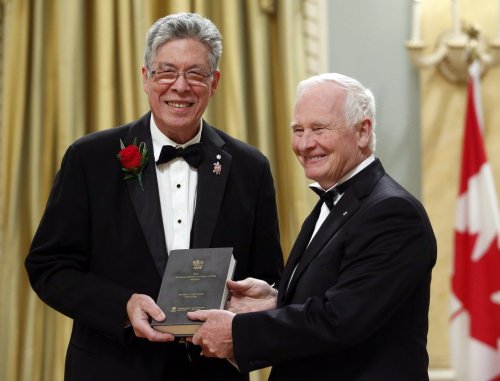
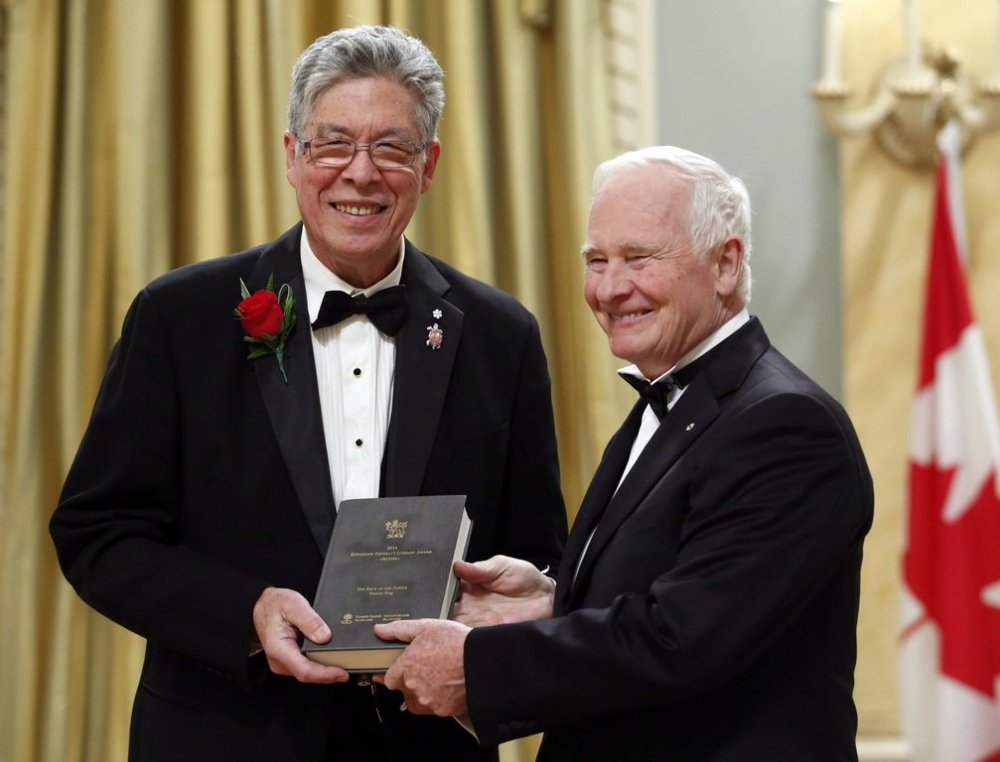
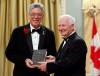
King’s many accolades include a Stephen Leacock Memorial Medal for Humour for 2020’s “Indians on Vacation,” and being made a member of the Order of Canada in 2004. He was promoted to companion of the order in 2020.
At the time, he was lauded by the Governor General’s prize for work that “exposes the hard truths of the injustices of the Indigenous Peoples of North America” and through which “this revered storyteller and activist challenges stereotypes and cultural assumptions, and furthers dialogue and reconciliation between Indigenous and non-Indigenous Peoples.”
After winning the RBC Taylor Prize for Non-Fiction for “The Inconvenient Indian” in 2014, he told The Canadian Press: “The best I can hope, I think, is for it to begin a conversation that other people will have to continue.
“Maybe it spawns a serious conversation about the state of native people in Canada. That would be the most I can hope for. And I won’t be alive to see that. That’s going to be a slow conversation and it’s going to take years for that conversation to bear any fruit. You can’t have 400 years of government policy keeping native people down and then just simply turn around on a dime one day and undo all of that.”
King’s publisher, HarperCollins Canada, told the Globe it was proud to have published his work for more than 30 years.
“At 82, I feel as though I’ve been ripped in half, a one-legged man in a two-legged story. Not the Indian I had in mind. Not an Indian at all.”
A spokeswoman told The Canadian Press the publisher had no further comment, and that a request for an interview with King had been forwarded.
King says in his essay that he had previously tried unsuccessfully to track down members of his father’s family in Oklahoma, to shed light on his father’s biological father, who his mother said was “part Cherokee.”
But he says a genealogist for Tribal Alliance Against Frauds had traced both that person’s lineage and that of his father’s “father of record,” and neither had Cherokee heritage.

The alliance has referred to King as a “pretendian” since at least 2022, and has published on its website what it says is King’s lineage going back five generations, including more than 40 ancestors, none of whom are Indigenous, the group says.
Neither the alliance nor Daniel Heath Justice, the University of B.C. scholar who King says was present during a Nov. 13 video call about his lineage, immediately responded to requests for comment.
King says in the essay that he expects a “firestorm” of anger, disbelief and feelings of betrayal, and after it is over he will “sort through rubble to see if there is anything left of my reputation, of my career.”
“I’d like to think that, at the very least, I will be able to find a way to continue to support Indigenous causes and Indigenous artists, though I’m not sure the causes and artists will want to stand too close to such a smouldering wreck,” he writes.
This report by The Canadian Press was first published Nov. 24, 2025.
Related Articles
Latimer's 'Inconvenient Indian' finds distribution NFB pulls 'Inconvenient Indian' from distribution


Advertisement Advertise With Us
Advertisement Advertise With Us