Michelle Latimer reverses the white settler lens with ‘Inconvenient Indian’
Advertisement
Read this article for free:
or
Already have an account? Log in here »
To continue reading, please subscribe:

Digital Subscription
One year of digital access for only $205*
- Enjoy unlimited reading on winnipegfreepress.com
- Read the E-Edition, our digital replica newspaper
- Access News Break, our award-winning app
- Play interactive puzzles
*First annual payment billed as $205.00 + GST for one year. This annual subscription will automatically renew at $233.00 + GST every 52 weeks (10% off the regular annual price of $259.35). Offer available to new and qualified returning subscribers only. Cancel any time.
To continue reading, please subscribe:
Add Free Press access to your Brandon Sun subscription for only an additional
$1 for the first 4 weeks*
- Enjoy unlimited reading on winnipegfreepress.com
- Read the E-Edition, our digital replica newspaper
- Access News Break, our award-winning app
- Play interactive puzzles
*Your next Brandon Sun subscription payment will increase by $1.00 and you will be charged $17.95 plus GST for four weeks. After four weeks, your payment will increase to $24.95 plus GST every four weeks.
Read unlimited articles for free today:
or
Already have an account? Log in here »
Hey there, time traveller!
This article was published 11/09/2020 (2214 days ago), so information in it may no longer be current.
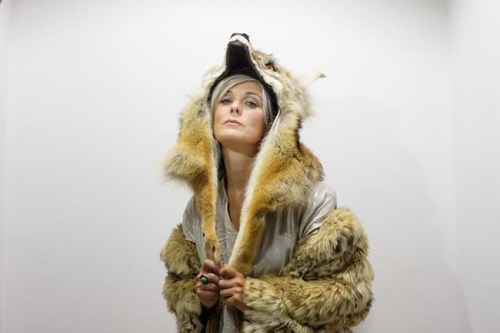
TORONTO – Director Michelle Latimer was poring over about 100 years of archival film footage for the Indigenous-focused short “Nimmikaage” a few years back when she noticed a trend.
“There were very few instances where Indigenous people looked at the camera, looked down the barrel of the camera. They were always being looked at, and the people behind the camera were non-Native people filming them,” says the Toronto-based writer-director-actor, who is of Algonquin, Metis, and French heritage.
“And so at the end of ‘Nimmikaage,’ all these young women look at the camera and they look down the barrel of the camera, and it’s this montage of one after another of women. But I had to go through hours and hours and hours of footage just to find those 10 shots.
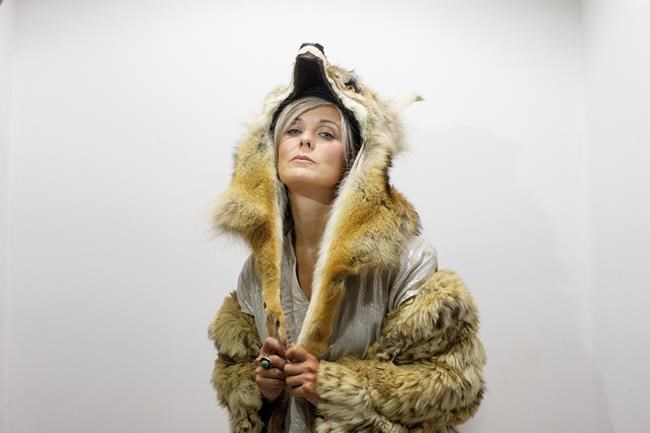
“There’s something about the idea of a person being filmed, but then looking at the person filming them and going: ‘I see you, you see me, I exist in my acknowledgment of seeing you.'”
Latimer is reversing that white settler lens once again with “Inconvenient Indian,” which debuts Saturday at the Toronto International Film Festival, where she’s also getting a major spotlight with another project — the Indigenous series “Trickster.”
Based on Thomas King’s award-winning 2012 non-fiction book, “The Inconvenient Indian: A Curious Account of Native People in North America,” the documentary looks at the cultural colonization of Indigenous peoples.
King appears throughout the film and narrates. For much of the story he’s seen sitting in a movie theatre, watching images of Indigenous people on the big screen and talking in a voiceover about how their history has been shaped by stereotypes and stories told by others.
More Indigenous movie patrons trickle in to sit in the theatre with King. At times, they’re facing the camera directly.
“I’d been thinking a lot about how Indigenous people have been represented throughout the ages; I always felt like I was passively ingesting these images,” says Latimer, who grew up in Thunder Bay, Ont.
“There’s something that feels very disempowering to be given images of your own community and you don’t see yourself in that way, but you don’t have the tools or the maybe the platform to speak out. And here I was given this platform and the tools to say something about that, and to use the same medium that’s been used to misrepresent our community for so long.”
The National Film Board of Canada, which produced 2015’s “Nimmikaage,” is also behind “Inconvenient Indian.”
Latimer says she started making the film about three years ago, immediately after directing the Indigenous resistance Viceland series “Rise,” which includes footage she shot during protests at the Standing Rock reservation in North Dakota.
Shooting “Rise” was “an insane time” and Latimer wanted to work on something more meditative after. But then her grandmother died and, while in the airport en route to the funeral, she picked up Eden Robinson’s acclaimed novel “Son of a Trickster” as “a palate cleanser, escapist kind of weekend read.”
Months later, she couldn’t get Robinson’s mythical story of an Indigenous teen out of her head, so Latimer paused “Inconvenient Indian” to option the rights to “Trickster,” which premieres Tuesday at TIFF before its CBC debut on Oct. 7.
When Latimer returned to “Inconvenient Indian,” she got to know King’s book intimately.
She wanted to distill his story into a more metaphoric and visual film, which includes traditional hunters, visual artist Kent Monkman, and filmmaker Alethea Arnaquq-Baril. Locations include Iqaluit, Treaty 9 territory in Ontario, Moose Factory, Ont., and the Crow reservation in Montana.
“It was really important to me to show Indigenous, Metis and Inuit people, because that is what comprises Canada,” Latimer says.
King was generous with his time and was hands-off with the storytelling, preferring Latimer to tell it in her own way.
“I think he was also very conscious of like, ‘I don’t want this film to be about me,’ and so that was helpful, because I also wanted the film to be about ideas,” Latimer says. “It wasn’t a hagiography. It was a film that was celebrating our community and the people that are literally being the ‘inconvenient Indians.’
“And Thomas is one of those ‘inconvenient Indians.’ But there’s many of us and I wanted to really celebrate that collective voice.”
And she wanted to encourage audiences to turn the gaze on themselves, she adds.
“That’s exactly what I was trying to do, is make us think: ‘What is our role in this? How do we look at representation? How can we be part of the change that is needed to move forward? And also, how are we going to acknowledge our history so that we don’t repeat it?'”
This article by The Canadian Press was first published Sept. 11, 2020.
Advertisement Advertise With Us
Advertisement Advertise With Us