Accepting a difficult gift in the face of overwhelming loss

Advertisement

Advertise with us

While mortality is the gift we are given at birth, its evolution within a world prescribed by illnesses, chronic and incurable, seems so unnatural, so at odds with the “natural causes” we hope might define our decline.

Read this article for free:


or

Already have an account? Log in here »

To continue reading, please subscribe:

Subscribe and receive a limited-edition Free Press branded hat or tote.

Digital Subscription

One year of digital access for only $205*

  • Enjoy unlimited reading on winnipegfreepress.com
  • Read the E-Edition, our digital replica newspaper
  • Access News Break, our award-winning app
  • Play interactive puzzles

*First annual payment billed as $205.00 + GST for one year. This annual subscription will automatically renew at $233.00 + GST every 52 weeks (10% off the regular annual price of $259.35). Offer available to new and qualified returning subscribers only. Cancel any time.

To continue reading, please subscribe:

Add Free Press access to your Brandon Sun subscription for only an additional

$1 for the first 4 weeks*

  • Enjoy unlimited reading on winnipegfreepress.com
  • Read the E-Edition, our digital replica newspaper
  • Access News Break, our award-winning app
  • Play interactive puzzles
Start now

*Your next Brandon Sun subscription payment will increase by $1.00 and you will be charged $17.95 plus GST for four weeks. After four weeks, your payment will increase to $24.95 plus GST every four weeks.

Opinion

Hey there, time traveller!
This article was published 05/01/2026 (258 days ago), so information in it may no longer be current.

While mortality is the gift we are given at birth, its evolution within a world prescribed by illnesses, chronic and incurable, seems so unnatural, so at odds with the “natural causes” we hope might define our decline.

Ambiguous grief is often given as a name for those experiencing this reality. Profound, paradoxical and open-ended, such grief is born of impossible contradictions.

The chronically ill person is loved and present, but not entirely the person one has known. Parts are missing. Losses exist in relation to identity, ability, independence and relationship.

Estrangement from the life lived prior to diagnosis advances in relation to the series of unwanted transformations chronic illness authorizes.

Those of us who witness these levels of complexity and uncertainty know the person will not recover, that the end will come, an ending dreaded, impossible to reckon with, but known to be inevitable.

I had lived the complexity of this kind of grief during my husband Mendel’s more than 20-year battle with kidney disease. I tried to figure out how I could accept fluctuating, heartbreaking changes in personality, possibility and potential.

That grief and my figuring were nowhere more poignant and unrelenting than when he was in hospital fighting to salvage a second kidney transplant.

His devoted doctors felt this second transplant was an almost perfect match, another chance at life without the dialysis, though dialysis had been a miracle following the failure of the first transplant, a testimony to the expertise, ingenuity and determination of a host of nephrologists, dialysis nurses and Mendel himself.

But at 66, he knew he was, as he put it, circling the drain. He had confronted and adapted to the crippling effects of his illness. He endured intractable pain, but defined his life both in relation to the illness and also apart from it, finding in himself the strength and courage to go on.

I sat with Mendel in a claustrophobic and curtained cubicle, worn with waiting for the second transplant miracle to take hold. I became increasingly aware that it would not. Other transplant patients recovered and departed. Our limbo state persisted as an impossible contradiction: I hoped and yet suspected our case was hopeless.

Over the years, I had grown to understand that organ donation could be a double-edged sword. On one hand, the “successful” transplant gives the patient this extraordinary chance through a gift, often given in sorrowful circumstances by a deceased donor’s family.

On the other, the recipient lives in fear that the transplant will fail and endures the debilitating side effects of anti-rejection drugs, the juggling of interventions and alternate treatments seeking to provide an enhanced quality of life — even if that quality is consistently and irrevocably diminished over time.

One afternoon, an attending nurse checked Mendel’s sleeping form. He had been deteriorating for weeks. She turned to me. Whispered: “Don’t let him die here. Take him home.”

This nurse gave voice to what I knew to be true. Perhaps Mendel knew it to be true as well, though he was determined to fight on. I supported that willingness.

The nurse’s words, however, were an extraordinary gift. They were an affirmation of an ending Mendel’s remarkable transplant team had done everything to avert, an affirmation of an ending Mendel could not bear to confront, but an affirmation of my grasp of what we were living — and dying — through.

This nurse’s understanding acknowledged our dignity in the face of an experience overwhelming and fraught. That is how I felt her words.

While I never told Mendel what the nurse said, he began to advocate for his release on his own.

At home, he continued to give the transplant every chance he could, but the ending came with test results revealing rejection, a dialysis treatment aborted because he suffered a heart attack, a mad dash to the ICU only to discover he did not qualify for that space because he was in fact dying, and finally, an intervention by palliative care that found another hospital room to take him.

He died the next morning.

So many of us have these stories we have lived with, are living with now. What courage is required to see them through and then, in the afterwards for the ones left behind, to manage the enduring struggle — reinventing identity, location, purpose and community.

I am many years into that stage now. In the midst of losing and loss, and new growth, I think of the nurse who whispered to me, the one kind enough, compassionate enough to see us as we truly were in that moment, in that cubicle — to see me and know she could gift a most unwanted and difficult truth.

Unbearable, yes, but her gift tended to Mendel’s mortality, supported our dignity in the face of loss and expanded forever my understanding of what another kind of gift might be.

arts@freepress.mb.ca

Deborah Schnitzer

Winnipeg writer Deborah Schnitzer explores life lessons from women in their Third Act.

Our newsroom depends on a growing audience of readers to power our journalism. If you are not a paid reader, please consider becoming a subscriber.

Our newsroom depends on its audience of readers to power our journalism. Thank you for your support.

Report Error Submit a Tip

More Stories

Desperate Poilievre wants Canadians to believe the sky is falling when it’s just cloudy outside

Tom Brodbeck 5 minute read Preview

Desperate Poilievre wants Canadians to believe the sky is falling when it’s just cloudy outside

Tom Brodbeck 5 minute read Friday, Sep. 18, 2026

Pierre Poilievre has a problem.

Canadians just don’t seem to be paying much attention to him anymore.

So, naturally, the Conservative Opposition leader has decided to turn up the volume.

At a recent party caucus retreat in Penticton, B.C., Poilievre delivered the familiar message: Canada is in trouble, Canadians are hurting and the Liberal government is making everything worse.

Read
Friday, Sep. 18, 2026

Canada must not accept another Iranian autocracy

David Matas 5 minute read Yesterday at 2:01 AM CDT

Iran is a state run by a radical government victimizing its citizens and its neighbours. How do we change that? Any regime change that repeats the mistakes of the past is not a solution.

What went wrong in the past which led to the current regime? One answer is the U.K. and American aided coup which led to the ouster in 1953 of a democratically elected government headed at the time by Mohammad Mossadegh and its replacement with an American friendly autocrat, the Shah of Iran, Mohammad Reza Pahlavi.

The Shah imposed his rule through the Iranian National Intelligence and Security Organization — SAVAK, the acronym of its Persian name. SAVAK systematically inflicted torture, arbitrary killings and extra-judicial killings on perceived opponents of the regime. It was only a matter of time before repression of a regime directed to serving foreign interests would be overthrown.

What replaced the regime of the Shah, in 1979, the current regime of the mullahs, is a regime as intolerant and violent as the regime of the Shah and then some. That was not inevitable. But neither was it surprising. The vicious nature of the current regime, following the example set by the Shah, and its hatred for the United States, reacting to the U.S. aided imposition of the Shah, both echoes and reacts to the past. In 1979, the U.S. reaped what it sowed in 1953.

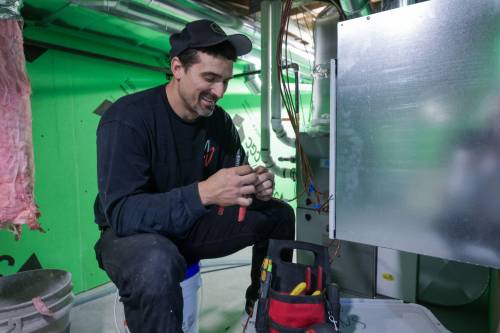
Former Bombers linebacker Gauthier enjoying career as electrician

Taylor Allen 6 minute read Preview

Former Bombers linebacker Gauthier enjoying career as electrician

Taylor Allen 6 minute read Friday, Sep. 18, 2026

Most professional football players don’t ride off into the sunset on their own terms.

Shayne Gauthier was well aware of that, but it didn’t make it sting any less when the Winnipeg Blue Bombers informed the veteran linebacker that they weren’t bringing him back for 2026.

“I was really hoping to play one more (season) because it would have been my 10th season, so, I’d say it didn’t really end the way I wanted,” Gauthier recently told the Free Press.

“It left a little sour taste in my mouth, but that’s part of pro sports. If everybody got the ending that they wanted, then it wouldn’t really work.”

Read
Friday, Sep. 18, 2026

Cabernet Sauvignon star of wine festival

Ben Sigurdson 5 minute read Preview

Cabernet Sauvignon star of wine festival

Ben Sigurdson 5 minute read Yesterday at 3:00 AM CDT

The Winnipeg Wine Festival will celebrate the king of red wine grapes next weekend — the theme of this year’s festival, which takes place Sept. 25 and 26 at the RBC Convention Centre, is Cabernet Sauvignon.

Cab Sauv, as it’s also known, is the world’s most widely planted wine grape of any colour, first coming to prominence in the 1800s in France’s Bordeaux region, where the grape is still popular. Rather than single-variety wines, Bordeaux reds tend to be blends, with those coming from the left bank of the Gironde estuary being Cabernet-dominant, while right-bank wines are Merlot-dominant, with Cabernet Sauvignon playing a supporting role. Cabernet and Merlot work well together and many other countries have followed suit in blending the two.

A team at University of California Davis put Cabernet Sauvignon through a DNA test in 1996 and discovered its parent grapes are Cabernet Franc and Sauvignon Blanc — it’s likely that at some point the two varieties, planted next to each other in some vineyard, crossed and mutated and became the grape we know today. (Someone growing grapes in the 19th century must have had an inkling of what was up, as the grape has been called Cabernet Sauvignon since long before the DNA test.)

Flavour-wise, most Cabernet Sauvignon wines are big and bold, with a core of deep dark berry flavours, some graphite and spice notes and relatively bright acidity. It’s a grape that is well-suited to barrel aging, with most examples seeing at least some time in wood.

Read
Yesterday at 3:00 AM CDT

A Winnipeg lawyer has been disbarred after admitting to six counts of professional misconduct and two counts of providing incompetent service involving eight clients.

The career-ending decision marks the sixth time Gisele Champagne has been disciplined by the Law Society of Manitoba since she was called to the bar in 1992.

“Disbarment is the appropriate remedy when a lawyer has demonstrated a repeated pattern of conduct that violates professional standards,” a law society panel said in a written decision released Wednesday.

“A lawyer who has been unable to learn from past discipline proceedings to fulfill his or her obligation to provide ethical and high-quality legal services must at some point lose the privilege of practising law.”

Steinbach Credit Union member warns others after scammer steals $10K

Scott Billeck 5 minute read Preview

Steinbach Credit Union member warns others after scammer steals $10K

Scott Billeck 5 minute read Friday, Sep. 18, 2026

A Winnipeg single mother whose bank account was drained of nearly $10,000 says Steinbach Credit Union needs to warn its members about what she believes is a broader security problem.

The woman, who is not being named to protect her identity, said a scammer gained access to her account earlier this week after calling SCU’s contact centre, claiming to be her and successfully completing the credit union’s authentication process.

She said she knows of at least six others who have experienced similar incidents in which callers impersonate SCU account holders and pass the authentication checks.

The woman discovered something was wrong when her minor son asked why money had been transferred out of an account they jointly hold.

Read
Friday, Sep. 18, 2026