Music great, but Bessie… we hardly knew ye
Advertisement
Read this article for free:
or
Already have an account? Log in here »
To continue reading, please subscribe:

Digital Subscription
One year of digital access for only $205*
- Enjoy unlimited reading on winnipegfreepress.com
- Read the E-Edition, our digital replica newspaper
- Access News Break, our award-winning app
- Play interactive puzzles
*First annual payment billed as $205.00 + GST for one year. This annual subscription will automatically renew at $233.00 + GST every 52 weeks (10% off the regular annual price of $259.35). Offer available to new and qualified returning subscribers only. Cancel any time.
To continue reading, please subscribe:
Add Free Press access to your Brandon Sun subscription for only an additional
$1 for the first 4 weeks*
- Enjoy unlimited reading on winnipegfreepress.com
- Read the E-Edition, our digital replica newspaper
- Access News Break, our award-winning app
- Play interactive puzzles
*Your next Brandon Sun subscription payment will increase by $1.00 and you will be charged $17.95 plus GST for four weeks. After four weeks, your payment will increase to $24.95 plus GST every four weeks.
Read unlimited articles for free today:
or
Already have an account? Log in here »
Hey there, time traveller!
This article was published 06/12/2014 (4326 days ago), so information in it may no longer be current.
If the blues is the devil’s music, Lucifer has mighty fine taste.
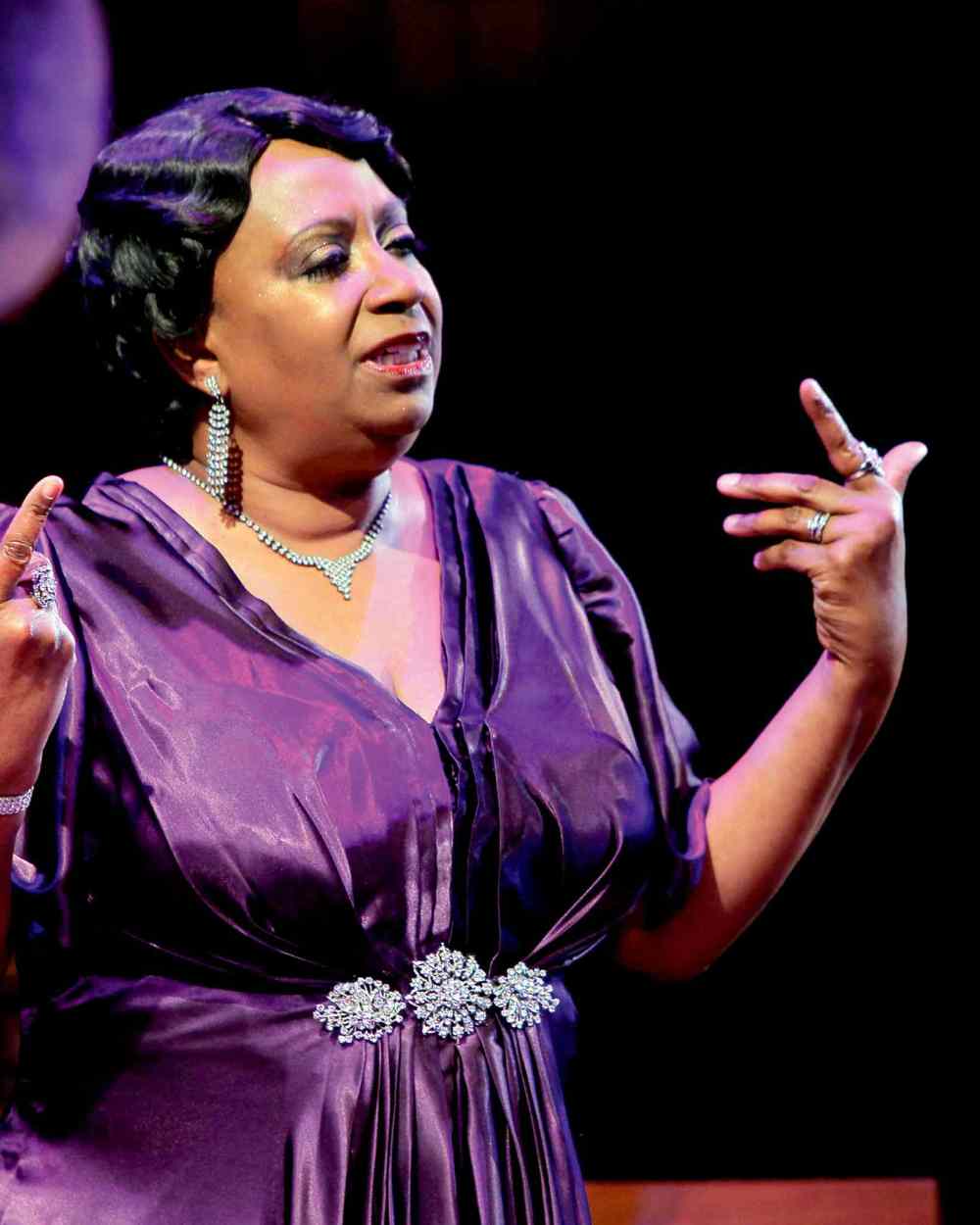
The jukebox musical The Devil’s Music: The Life and Blues of Bessie Smith reminded the opening-night audience Thursday why her songs have stretched across eight decades, from Victrolas to iPods, since her untimely death in 1937. In the demanding lead role, American singer Miche Braden drives the 90-minute tribute show, belting out Smith’s most memorable tunes with signature ferocity and deep-rooted pain.
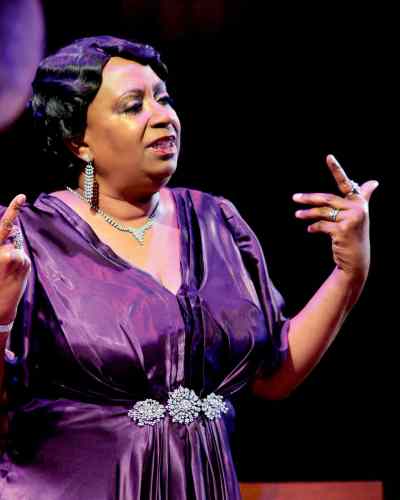
In keeping with portraying musical royalty, the bejeweled Braden makes a grand entrance down an aisle at the Royal MTC Warehouse in a regal, amethyst-coloured satin dress. She may have been celebrated as the Empress of the Blues, but “grand dame of down and dirty” might have been more accurate, given her hooch-guzzling, foul-mouthed, sexually uninhibited ways.
When Braden is singing, The Devil’s Music is a treat. But the devil is also in the details, and when the attention is turned to the biography of a remarkable life cut short, the clunkiness of Angelo Parra’s book leaves the audience blue.
Jukebox musicals are created around the idea that if the public loves certain classic songs, then it will definitely love a nostalgic stage musical built around those songs. Not much time is spent on the scripted blather, as has been evident in last summer’s A Closer Walk with Patsy Cline at Rainbow Stage or other jukebox musicals such as Forever Plaid or Buddy: The Buddy Holly Story. They all can get your toes tapping to the music, but not necessarily your heart pumping with drama.
The setup for Devil’s Music is much like Buddy, in which Holly and the Crickets perform their last concert before their fateful plane trip. Smith has just refused to perform in a Memphis venue that bars black folk from entering through the front door, so she takes refuge in a buffet flat, an after-hours spot where black Americans could gather. James J. Fenton’s tasteful parlour set sports burgundy patterned wallpaper, an open bar and a band area for the outstanding trio of pianist Aaron Graves, bassist Jim Hankins and saxophonist Anthony E. Nelson Jr.
This is where Smith spends her final night.
Smith is in a bad mood but, thanks to Parra, is unusually talkative about her tumultuous life. We hear snippets of stories, but they provide little dramatic insight. We get all the highlights — her first record — Downhearted Blues — sold 780,000 copies, and at the peak of her career, she made $2,000 a week. Less is offered about how she broke barriers, as well as all the rules, although there is a moment that reveals her feistiness when she wins a staredown with boogeymen wearing white sheets and hoods.
Parra and director Joe Brancato are a bit heavy handed in making sure the audience is aware of Smith’s prodigous appetite for white lightning (she constantly swigs from a flask) and sex with men or women (she often fans underneath her dress). At the outset of the show, we learn that Smith will die later that night, so having her shudder every time she mentions death is clumsy.
The most artless moment comes after an hour of Smith talking by herself, when she remembers the court battle with her husband over custody of her son. Suddenly, we hear the voice of a judge asking whether she kept carnal with women, and declaring her an unfit mother. Out of that awkward staging comes one of the musical highlights when Braden tears the heart out of I Ain’t Got Nobody.
Braden brings a strong stage presence and uncomplicated sincerity to her Bessie when she is not rocking the Warehouse rafters. She proves a convincing red hot momma with her steamy duet with Nelson on St. Louis Blues, which was also the name of Smith’s only movie. Her Baby Doll/Sugar In My Bowl is gloriously risque.
Braden’s musical accompanists (and occasional foils) class up the evening. Thanks, also, to whomever thought of putting up mirrors on the wall behind Graves so spectators could watch his fingers dancing over the ivories. Nelson mischieviously shows off the sexual appeal of his sax, while Hankins plays an elegant bass and the sour-faced Pickle.
The show brings Smith’s music to life, which will be enough for some, but it doesn’t do the same for Bessie herself.
kevin.prokosh@freepress.mb.ca