She’d like a few words with you
Winnipeg professor has a bone to pick with grammar nerds who fear the 'lazy' among us are 'destroying' English
Advertisement
Read this article for free:
or
Already have an account? Log in here »
To continue reading, please subscribe:

Digital Subscription
One year of digital access for only $205*
- Enjoy unlimited reading on winnipegfreepress.com
- Read the E-Edition, our digital replica newspaper
- Access News Break, our award-winning app
- Play interactive puzzles
*First annual payment billed as $205.00 + GST for one year. This annual subscription will automatically renew at $233.00 + GST every 52 weeks (10% off the regular annual price of $259.35). Offer available to new and qualified returning subscribers only. Cancel any time.
To continue reading, please subscribe:
Add Free Press access to your Brandon Sun subscription for only an additional
$1 for the first 4 weeks*
- Enjoy unlimited reading on winnipegfreepress.com
- Read the E-Edition, our digital replica newspaper
- Access News Break, our award-winning app
- Play interactive puzzles
*Your next Brandon Sun subscription payment will increase by $1.00 and you will be charged $17.95 plus GST for four weeks. After four weeks, your payment will increase to $24.95 plus GST every four weeks.
Read unlimited articles for free today:
or
Already have an account? Log in here »
Hey there, time traveller!
This article was published 13/01/2011 (5726 days ago), so information in it may no longer be current.
If you’re a grammar grump who gets huffy about misplaced apostrophes and commas, nouns used as verbs, or Canadians who pronounce lieutenant “lootenant” rather than “leftenant,” a new book by a Winnipeg linguist is aimed at you.
It just might convince you to get off your high horse and show more tolerance for all those “lazy” folks who are “destroying” your precious English.
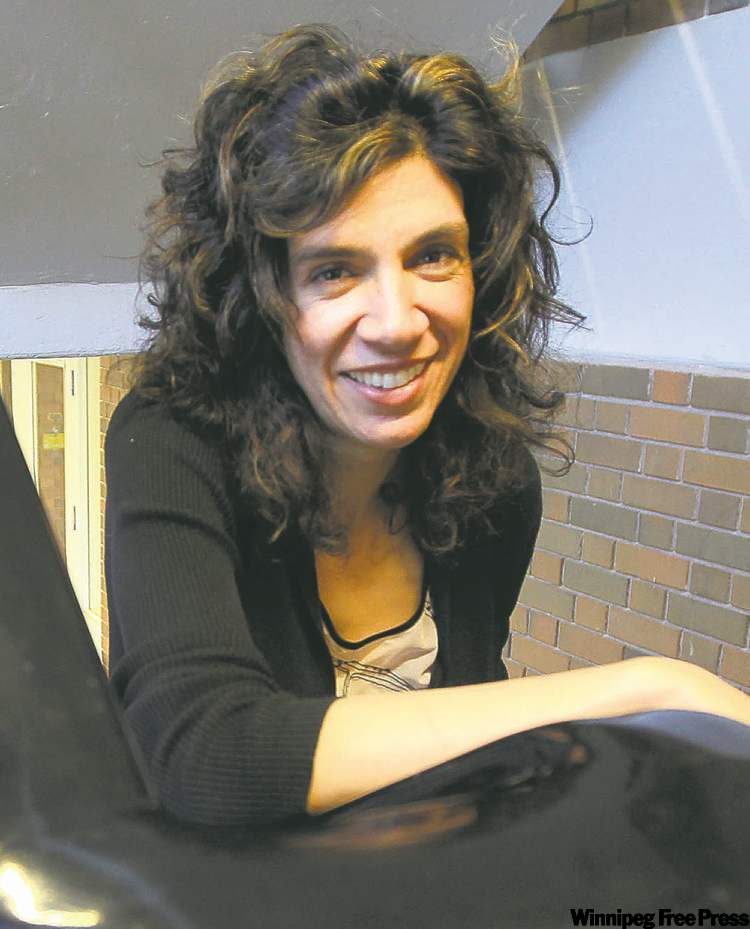
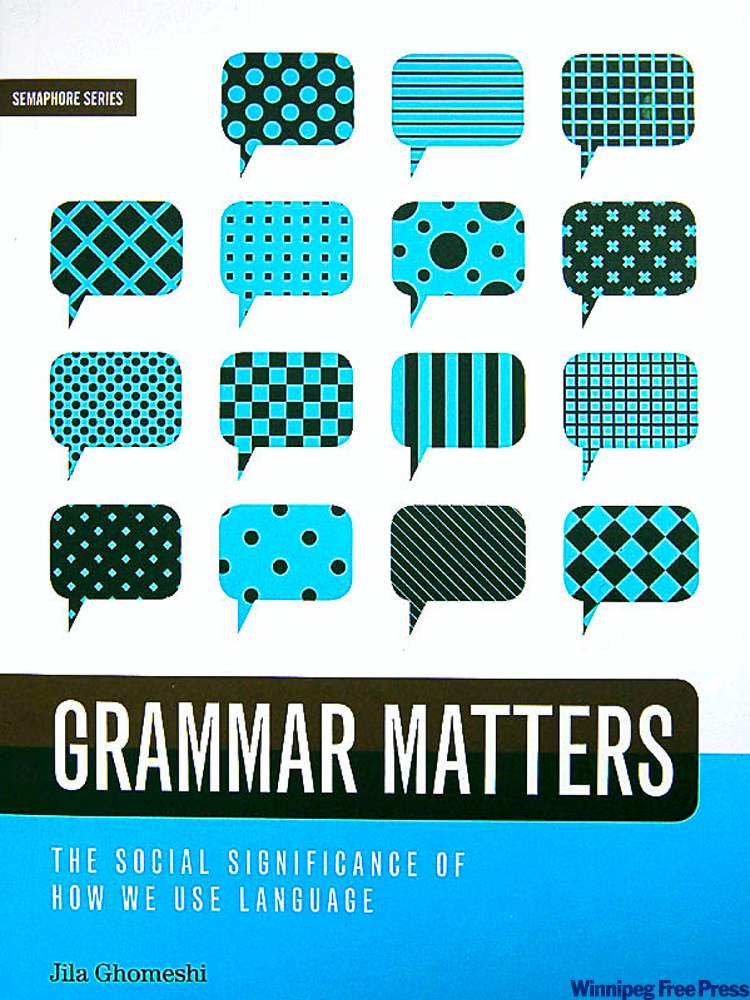
In Grammar Matters: The Social Significance of How We Use Language (Arbeiter Ring, $12.95), professor Jila Ghomeshi argues that judging people for “errors” in their spoken and written language is a form of prejudice based on dubious claims to right and wrong.
“My goal,” she writes, “is to attempt to debunk the idea of a ‘correct’ grammar by addressing grammar fans.”
The locally published book, a quick, accessible read at only 100 pages, has been out for a few weeks. It has an official launch tonight at 7:30 p.m. at McNally Robinson Booksellers.
Ghomeshi, a PhD who is in her mid-40s, has taught linguistics at the University of Manitoba since 1998. She’s a specialist in syntax who has published journal articles on esoteric-sounding topics such as “Plural marking, indefiniteness and the noun phrase.”
Slender and elegant, with a mane of dark curls, she’s the older sister (by three years) of national CBC Radio personality Jian Ghomeshi. The two were born in England to Iranian parents. The family emigrated to Toronto when Jila was 10.
Ghomeshi, the single parent of a four-year-old daughter adopted from Kazakhstan, lives in River Heights. Growing up in Toronto in the 1970s, she recalls, she was embarrassed by her surname because it was hard to pronounce and anti-Iranian sentiment was common. These days, she says, her accomplished brother has made the name a source of pride and pleasure.
Like many children of immigrants, the Ghomeshi siblings can understand their parents’ first language, Persian, but can speak it only haltingly.
What most people don’t understand about her field, Ghomeshi says, is that linguists study the nature of languages and how they work. They set out to describe language, not to prescribe how it ought to be spoken or written.
But she discovered how passionately grammar nerds wanted her to police the language and be “prescriptive” when she had a biweekly column about language on CBC’s Information Radio from 2000 to 2002.
She would go on the air in the early morning and discuss a theme such as compliments or taboo words. As soon as she reached her office, she would have messages from listeners who enjoyed her spot, but wanted her to affirm their grammar gripes.
“People wanted to tell me what their pet peeve was, and to ask me if I could weigh in on questions of judgment,” she remembers. “It happened often enough that I thought, ‘This is an incredible phenomenon. This needs to be addressed.’ That planted the seeds for the book.”
While most of us claim we don’t judge others, Ghomeshi says, grammar, slang, dialect and accent are areas in which we’ll jump to stigmatize someone as ignorant, vulgar, sloppy, lazy, uneducated or even stupid. Such judgment is often a cloak for exclusionary elitism or prejudice.
“What I really want to address with the book,” she says, “is the kind of casual cruelty that is expressed (toward grammar “criminals”) — the meanness in the tone.”
Many people feel anxious and embarrassed about their grasp of “good” English, which Ghomeshi calls standard English. That insecurity can lead them to take stabs at formal or impressive language that only make their communication muddled. An example, she says, is Sarah Palin’s much-mocked “refudiate.” First-year university students also tend to make laboured efforts at sounding smart that simply backfire.
Interestingly, Ghomeshi just finished teaching a U of M course called Rules of Grammar that had a huge enrolment. When she asked the class how many thought grammar should be reinstated as a subject in school, every hand went up.
Grammar sticklers usually insist that the “correct” conventions are more logical, clear or precise. Ghomeshi calls those arguments fallacies, demonstrating that, for one thing, standard English is riddled with illogical rules.
Throughout history, every older generation moans about the youth degrading English and causing standards to decline. Ghomeshi laughs about it.
“There’s always this sense that we’re speeding downhill,” she says. “Often, what people seem to mean by ‘decline’ is, ‘The young speak differently from the way they did when I was young.’ That’s true. But to me, that’s not decline. Every generation is going to reinvent their language.”
Ghomeshi says her brother regularly sends her grammar-grouch emails received by the CBC. Media is one of three realms — along with education and government — where she believes it is important to maintain standard English, and adopt changes only after careful consideration.
Standard English is a useful tool for everyone to know, she says. But we should ask ourselves why we’re condemning people who use non-standard English in emails, text messages, blogs, restaurant menus or everyday speech.
Are those who care passionately about defending grammar any worse than self-appointed fashion “police,” wine snobs or foodies who are appalled by “bad” or “lazy” cuisine?
Perhaps not, the linguist says. “But let’s call it what it is — being a snob. Let’s come out of the closet as snobs, but not defend it based on, ‘It (textbook English) is inherently better.'”
alison.mayes@freepress.mb.ca