Glenn Ford biography used to settle scores
Advertisement
Read this article for free:
or
Already have an account? Log in here »
To continue reading, please subscribe:

Digital Subscription
One year of digital access for only $205*
- Enjoy unlimited reading on winnipegfreepress.com
- Read the E-Edition, our digital replica newspaper
- Access News Break, our award-winning app
- Play interactive puzzles
*First annual payment billed as $205.00 + GST for one year. This annual subscription will automatically renew at $233.00 + GST every 52 weeks (10% off the regular annual price of $259.35). Offer available to new and qualified returning subscribers only. Cancel any time.
To continue reading, please subscribe:
Add Free Press access to your Brandon Sun subscription for only an additional
$1 for the first 4 weeks*
- Enjoy unlimited reading on winnipegfreepress.com
- Read the E-Edition, our digital replica newspaper
- Access News Break, our award-winning app
- Play interactive puzzles
*Your next Brandon Sun subscription payment will increase by $1.00 and you will be charged $17.95 plus GST for four weeks. After four weeks, your payment will increase to $24.95 plus GST every four weeks.
Read unlimited articles for free today:
or
Already have an account? Log in here »
Hey there, time traveller!
This article was published 09/07/2011 (5551 days ago), so information in it may no longer be current.
Glenn Ford
A Life
By Peter Ford
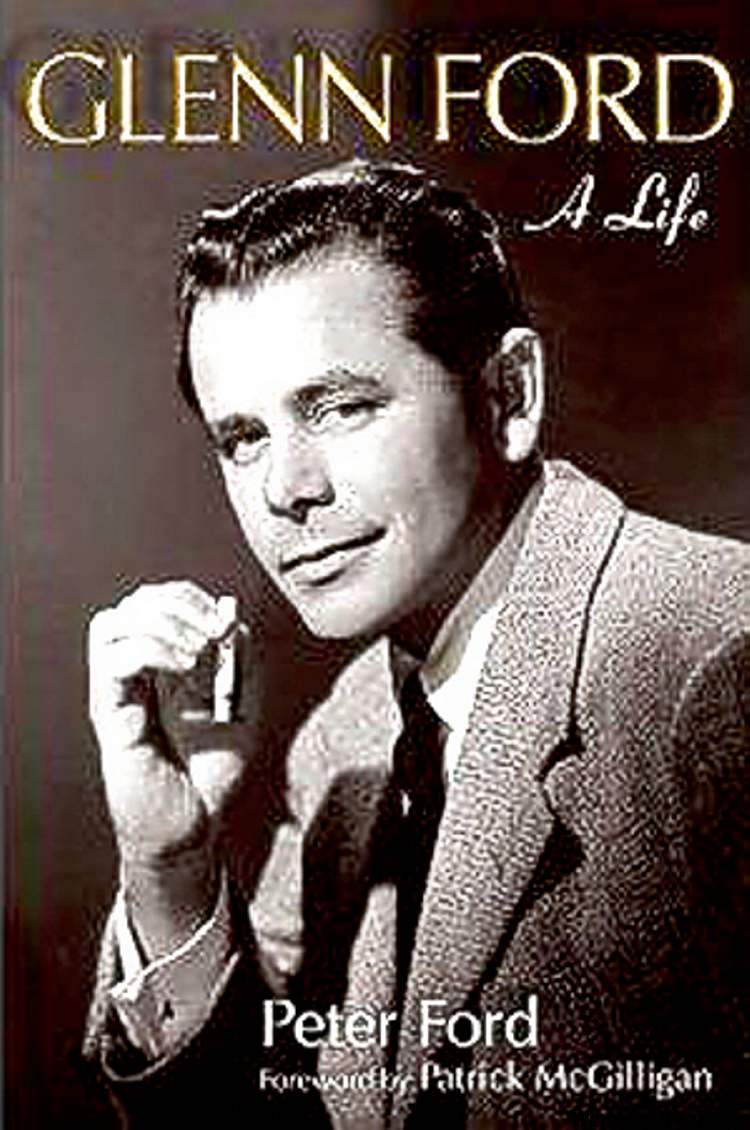
University of Wisconsin Press, 358 pages, $25
OVERALL, this is a carefully written and obsessively researched biography that will please any fan of Hollywood’s Golden Age. Too bad that author Peter Ford, the subject’s only son, uses it to settle some old grievances.
Born in Quebec City in 1916, Glenn Ford was one of the Hollywood’s greatest acting talents.
In 1958, during the best decade of his career, he was voted the No. 1 box-office star in the world at a time when he faced competition from the likes of John Wayne, Jimmy Stewart, Marilyn Monroe and Elizabeth Taylor.
Were Peter content solely to record his father’s artistic achievements, this biography would have lasting value as an earnest attempt to address the neglect Ford has suffered in the past two decades following his final film in 1991.
Ford’s body of work — from Gilda and Blackboard Jungle to 3:10 to Yuma and The Courtship of Eddie’s Father and beyond — is ripe for rediscovery. Even as late as 1978, in his cameo role as Pa Kent in the first Christopher Reeve Superman film, Ford was giving performances that were so subtle and nuanced that director Richard Donner was tempted to stop filming out of concern that Ford’s portrayal of a heart attack was actually the real thing.
Ford, who died in 2006 a few months after his 90th birthday, was not the man he appeared to be onscreen. His characters usually represented decency, respect, old-fashioned values and warmth.
Was he this in real life? Yes, in part. But Peter — now in his mid-60s and still living in his father’s house — seems intent on exorcising the pain of his childhood abandonment by persuading the world that his father was mean, petty and violent. This is ironic when the father remains the son’s main meal ticket.
The only child of Ford and his first wife, the dancer Eleanor Powell, Peter does an excellent job of detailing his father’s early struggles to succeed.
But he devotes about 15 per cent of the text to exposing his father’s infidelities, occasional cruelty towards his family, his alcoholism and other self-destructive tendencies. True though these deficiencies of character might have been, this is where Peter’s book ultimately fails.

After describing his feelings of childhood abandonment during his parents’ marital meltdown, Peter curiously flaunts his later adult relationship with his father. Centred around playing small parts in his dad’s movies, serving as his dialogue director and, most notoriously, accompanying him on studio-paid press junkets (where they indulged in Hollywood excesses, including sharing beautiful women), this relationship serves as little more than an illustration of Peter’s distorted sense of entitlement.
Any sympathy one might have felt for poor abandoned “Petey,” as he was known as a child, is soon forgotten as Peter shamelessly indulges in his father’s equally distorted idea of privileged compensation.
What saves the book from becoming a Joan Crawford-like Daddy Dearest diatribe is Peter’s ultimate respect for his father’s artistry. But in the end, his pathetic braggart’s tone undoes him.
When he writes of his apparent concern over his father’s ill-fated third and fourth marriages, as well as the array of caregivers who apparently took advantage of him when he was old and sick, Peter largely focuses on how these relationships pushed him out of his father’s life. The reader must then decide what was Peter’s primary concern — his father or his inheritance.
Jon Ted Wynne is a Winnipeg actor, writer and filmmaker with a deep interest in Glenn Ford’s film career. He is the author of Glenn Ford: A Retrospective.
Related Articles
SUSPENSE: Crime-meister Koryta delivers subtle menace

Advertisement Advertise With Us
Advertisement Advertise With Us