Early Ukrainian settlers taught establishment a lesson in perseverance

Advertisement

Advertise with us

FOLKS in the Stuartburn-Piney area of Manitoba can't be too surprised they still don't have adequate cellphone service.

Read this article for free:


or

Already have an account? Log in here »

To continue reading, please subscribe:

Subscribe and receive a limited-edition Free Press branded hat or tote.

Digital Subscription

One year of digital access for only $205*

  • Enjoy unlimited reading on winnipegfreepress.com
  • Read the E-Edition, our digital replica newspaper
  • Access News Break, our award-winning app
  • Play interactive puzzles

*First annual payment billed as $205.00 + GST for one year. This annual subscription will automatically renew at $233.00 + GST every 52 weeks (10% off the regular annual price of $259.35). Offer available to new and qualified returning subscribers only. Cancel any time.

To continue reading, please subscribe:

Add Free Press access to your Brandon Sun subscription for only an additional

$1 for the first 4 weeks*

  • Enjoy unlimited reading on winnipegfreepress.com
  • Read the E-Edition, our digital replica newspaper
  • Access News Break, our award-winning app
  • Play interactive puzzles
Start now

*Your next Brandon Sun subscription payment will increase by $1.00 and you will be charged $17.95 plus GST for four weeks. After four weeks, your payment will increase to $24.95 plus GST every four weeks.

Opinion

Hey there, time traveller!
This article was published 14/01/2012 (5362 days ago), so information in it may no longer be current.

FOLKS in the Stuartburn-Piney area of Manitoba can’t be too surprised they still don’t have adequate cellphone service.

After all, they were also the last in southern Manitoba to get highways, telephone service, postal service and electricity (not until 1954!), according to this new academic-press book.

The province’s first Ukrainian pioneers in Manitoba, who settled in the southeast, also got just about the poorest land imaginable — swamp, peat, poplar forest and stony fields that were often beyond being cultivated.
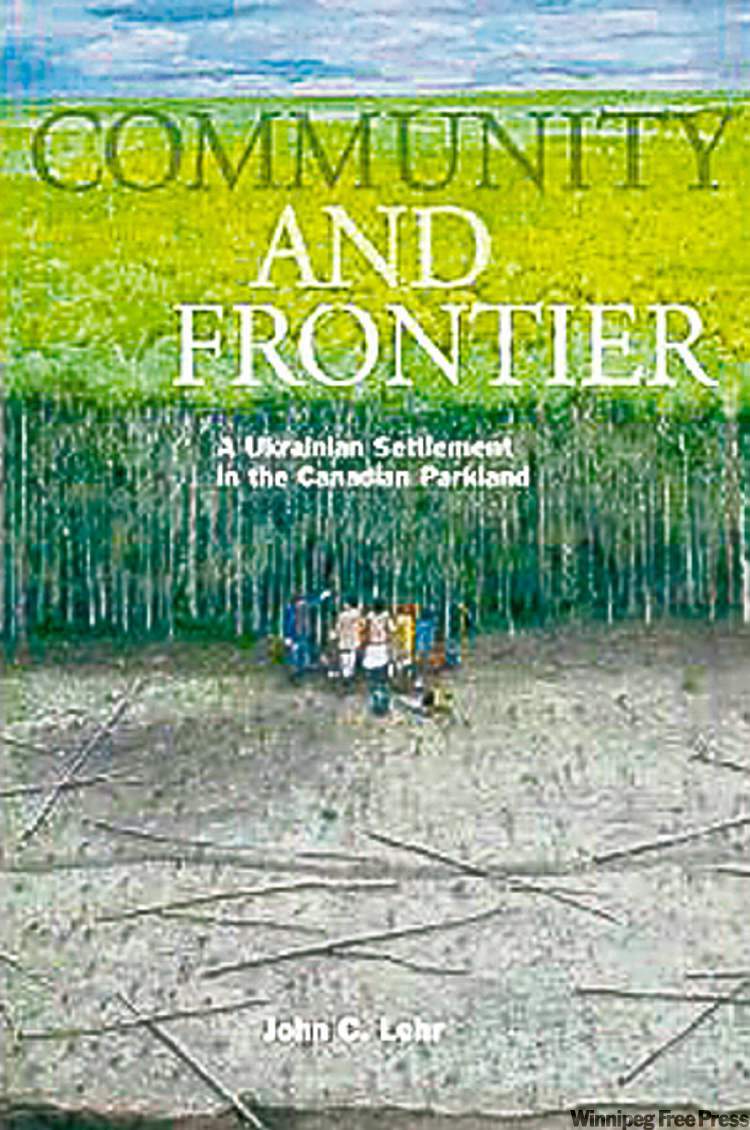
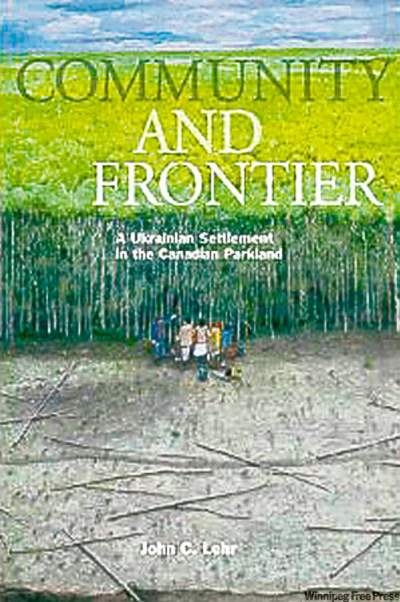
John Lehr, a University of Winnipeg geography professor, has written an excellent “historical geography” of how that Ukrainian settlement endured. While the book’s title sounds about as exciting as a government white paper, the contents make for a thoroughly entertaining but still scholarly read.

Lehr writes that the British Canadian establishment turned up its nose from the moment the Ukrainian pioneers arrived in Manitoba in 1896. The Winnipeg Telegram called the new pioneers “the scum of Europe,” “moral lepers,” and “the sweepings of European gaols.” The establishment at the time wanted to maintain racial purity by accepting only British Protestant immigrants.

The land the first Ukrainians tried to farm was “mixed woodland with some prairie openings.” The newcomers actually passed on better, open prairie because the land around Stuartburn — established in 1879 by Stuart Miller, who, in all humility, named it after himself — was land on which a person could work at subsistence farming.

It had water, a little bit of open prairie for crops and for livestock to graze, and forests for timber for homes, fences and firewood.

The Ukrainians took advantage of what the land had to offer. They dug up Seneca root (used to treat colds) and sold it to the New York market. There were plenty of frogs in that swamp land so they harvested them in the 1920s. The frogs were shipped live to Minneapolis, processed, and the canned frog legs sold to France.

The first Ukrainians in Western Canada arrived in Alberta in 1891. The U.S. closed its frontier to new pioneers in 1893, so more started to look to Canada. The Ukrainian migration to Manitoba lasted from 1896 to 1914, the start of the First World War. Ukrainians filled 1,500 homesteads in the Stuartburn area.

In many ways, Lehr saves the most entertaining for last: the Ukrainian penchant for making homebrew. “Penchant” may be too weak a noun. Train conductors reportedly could smell the homebrew from the train stations.

The settlers made whisky from potatoes or grain. And if they weren’t consuming homebrew, they were imbibing Hoffman’s Tonic, made up of alcohol and codeine. The cough syrup was initially purchased by the bottle, and later by the pail.

If there’s a criticism of this book it’s that the settling of Stuartburn is not put in the broader context of the Ukrainian settlement in Manitoba, particularly Dauphin, or in the context of Ukrainian settlement in Canada. Lehr focuses strictly on the southeast. Also, it’s an academic work, first and foremost, so the inclusion of some parts is required and may not appeal to the lay reader.

But that’s small beer. There are all kinds of books about pioneering: first-person accounts from the actual pioneers; self-published works by local people with a love of an area’s history; and professional writers blending anecdote with existing research.

Lehr provides both fresh and aggregated research, lightly mixed with anecdote. It’s a great addition to the canon of history and cultural books on Manitoba.

Bill Redekop is the Free Press’s rural reporter. His latest book, Made in Manitoba, is a collection of his Open Road stories.
Report Error Submit a Tip

More Stories

A Winnipeg lawyer has been disbarred after admitting to six counts of professional misconduct and two counts of providing incompetent service involving eight clients.

The career-ending decision marks the sixth time Gisele Champagne has been disciplined by the Law Society of Manitoba since she was called to the bar in 1992.

“Disbarment is the appropriate remedy when a lawyer has demonstrated a repeated pattern of conduct that violates professional standards,” a law society panel said in a written decision released Wednesday.

“A lawyer who has been unable to learn from past discipline proceedings to fulfill his or her obligation to provide ethical and high-quality legal services must at some point lose the privilege of practising law.”

Sex sounds in stereo a sad score for singleton

Maureen Scurfield 5 minute read Yesterday at 2:00 AM CDT

Dear Miss Lonelyhearts: I just moved into a big old house with two buddies who curl and play hockey with me. They have girlfriends, but I don’t.

I thought they’d be staying at their girlfriends’ places on nights they were “sleeping” together, but oh no!

So now I get to listen to the duelling sex noises of two couples, on weekends and some weeknights as well.

Do I have any rights here? I really don’t want to admit defeat and move back in with my parents, when feels like I just moved out. But it’s really uncomfortable to be the only guy with no sex life in this household, and then having to hear it, while it’s happening.

Pars a plenty in The Pas

Ryan Desjarlais 4 minute read Preview

Pars a plenty in The Pas

Ryan Desjarlais 4 minute read 1:02 PM CDT

North of Lake Winnipegosis, just on the Manitoba side of the Saskatchewan border, lies The Pas.

The town is one of the oldest of Manitoba’s northern communities and was once a thriving pulp and paper town. Most of the community is still in good shape, although showing its age.

Across the river is the impressive Opaskwayak Cree Nation, with its new mall and impressive hotel and casino. VIA Rail services these communities which makes for a nice mid-week or long-weekend getaway without the stress of driving.

If you do take the train, throw your sticks onto the platform. There are many activities to take in while you are there, and one of those activities is golf.

Read
1:02 PM CDT

Big time roster turnovers reflected in Rifles play

Joshua Frey-Sam 6 minute read Preview

Big time roster turnovers reflected in Rifles play

Joshua Frey-Sam 6 minute read 2:07 PM CDT

The Winnipeg Rifles needed to get out of their own way.

That was the consensus in the junior football club’s locker room after it opened the Canadian Junior Football League season with four straight losses before breaking through with a 37-23 home win over the Edmonton Huskies last weekend.

The Rifles kept their playoff hopes within reach with three games remaining in the regular season. If nothing else, it injected some much-needed confidence into a group that believes it has the talent to compete with the rest of the Prairie Conference, but needs to stop shooting itself in the foot.

“It was definitely a sense of urgency. It was definitely a must-need win, and especially a lot of our other games, we would be in the game, and then we would kind of start beating ourselves almost,” said Jarome Penner, the club’s leading receiver.

Read
2:07 PM CDT

Early Ukrainian settlers taught establishment a lesson in perseverance

Reviewed by Bill Redekop 4 minute read Preview

Early Ukrainian settlers taught establishment a lesson in perseverance

Reviewed by Bill Redekop 4 minute read Saturday, Jan. 14, 2012

FOLKS in the Stuartburn-Piney area of Manitoba can't be too surprised they still don't have adequate cellphone service.

After all, they were also the last in southern Manitoba to get highways, telephone service, postal service and electricity (not until 1954!), according to this new academic-press book.

The province's first Ukrainian pioneers in Manitoba, who settled in the southeast, also got just about the poorest land imaginable -- swamp, peat, poplar forest and stony fields that were often beyond being cultivated.

John Lehr, a University of Winnipeg geography professor, has written an excellent "historical geography" of how that Ukrainian settlement endured. While the book's title sounds about as exciting as a government white paper, the contents make for a thoroughly entertaining but still scholarly read.

Read
Saturday, Jan. 14, 2012

A quick look at where provinces and territories stand on time changes

The Canadian Press 2 minute read Preview

A quick look at where provinces and territories stand on time changes

The Canadian Press 2 minute read Updated: 6:28 AM CDT

WINNIPEG - Manitoba's government said Thursday the province will be sticking with daylight time year-round, making it the latest jurisdiction to move away from twice-annual time changes. Here's a look at where things stand across Canada:

British Columbia said in March that it was moving to permanent Pacific daylight time. The change also means that parts of northeastern B.C., which have been on mountain standard time year round, are now in alignment with the rest of the province.

Alberta also switched to permanent daylight time this year in what it calls Alberta time. The change means it now has the same time as Saskatchewan year round.

Saskatchewan has been on permanent central standard time since 1966.

Read
Updated: 6:28 AM CDT