Short and sweet: No surprise Gaston’s latest collection a success
Advertisement
Read this article for free:
or
Already have an account? Log in here »
To continue reading, please subscribe:

Digital Subscription
One year of digital access for only $205*
- Enjoy unlimited reading on winnipegfreepress.com
- Read the E-Edition, our digital replica newspaper
- Access News Break, our award-winning app
- Play interactive puzzles
*First annual payment billed as $205.00 + GST for one year. This annual subscription will automatically renew at $233.00 + GST every 52 weeks (10% off the regular annual price of $259.35). Offer available to new and qualified returning subscribers only. Cancel any time.
To continue reading, please subscribe:
Add Free Press access to your Brandon Sun subscription for only an additional
$1 for the first 4 weeks*
- Enjoy unlimited reading on winnipegfreepress.com
- Read the E-Edition, our digital replica newspaper
- Access News Break, our award-winning app
- Play interactive puzzles
*Your next Brandon Sun subscription payment will increase by $1.00 and you will be charged $17.95 plus GST for four weeks. After four weeks, your payment will increase to $24.95 plus GST every four weeks.
Read unlimited articles for free today:
or
Already have an account? Log in here »
Hey there, time traveller!
This article was published 28/06/2014 (4420 days ago), so information in it may no longer be current.
Summer and short stories are well-matched; 15 or so pages can easily be consumed amid the season’s diverse, competing offerings. Satisfying pieces will be savoured more slowly. If they are rich and well-textured, they can be digested over the long days.
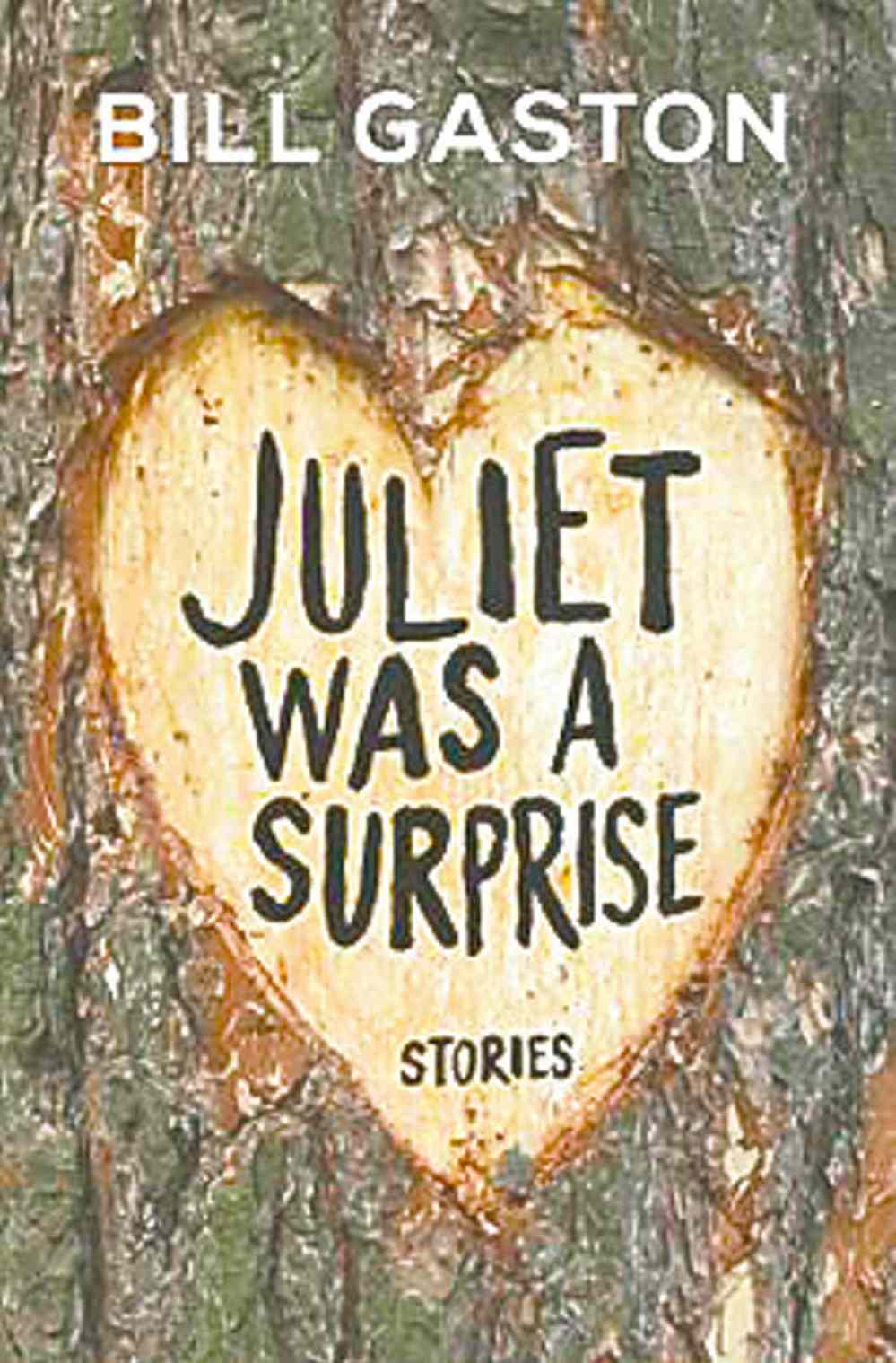
So it is with Bill Gaston’s 10 newest stories in his sixth collection, Juliet Was a Surprise.
That this is a treat will be no surprise to Canada’s insatiable short-fiction enthusiasts. The Flin Flon-born, Victoria-based Gaston’s last two short story volumes, including 2006’s Gargoyles, were nominated for the Governor General’s Literary Award, and 2002’s Mount Appetite was also nominated for the Giller Prize.

However, surprises abound for his latest protagonists who, in love and even life itself, are unable or unwilling to see the warning signs around them.
Several ignore or misread their lovers’ attitudes or intentions: a man so focused on minutiae and his girlfriend’s “signals” misses a significant detail about himself (Petterick); another maniacally questions the “choreography” of the people and nature around him, only to discover there is more than this to unravel (House Clowns); and what’s a woman to do when there’s evidence her love-making is killing her (Black Roses Bloom)?
Through the main characters’ eyes, minds and actions, the reader can discern their impediments — inexperience, imperiousness, jealousy, sadness. But Gaston also sneaks up with subtle clues and nuances of what the characters ought to know, what can only be truly appreciated by each story’s end.
These are Canadian experiences. One character manages an arena complex and drives Zambonis. Another anticipates a Leonard Cohen concert. Where place is identified, it’s British Columbia — Vancouver, Victoria, Pinaten Lake, Cowichan River.
With the narrative mostly directed to the characters’ self-indulgence and strategic gamesmanship, it’s unfortunate that physical setting isn’t more present; Gaston’s depictions of nature are gorgeous.
A deodara cedar expresses “her female essence not unlike a geisha in traditional pose: hips tilted one way, head tilted another; face down, demure; arms at dramatic angles, holding fans.” An arborist, the narrator of Any Forest Seen from Orbit, mistakenly equates this tree’s perfection with the soul of its seductive owner, his client, Juliet. Hence the title Juliet Was a Surprise.
A sunset is “a glorious wall of orange and purple, with little ruptures that looked like balconies, from which shot rays of sacred light, behind which God made vast, heart-breaking decisions.” In Cake’s Chicken, the uncharacteristically clear-minded protagonist (for this collection) recounts an inexplicable event the night he turned 21. He witnessed a feat of magic derring-do by two dull, failure-bound friends who, he concludes, “were as rare as anyone,” with a kind of bravery, “a route of wisdom I didn’t have, and still don’t. They took on sunsets.”
Lacking any self-awareness is the Zamboni man in At Work in the Fields of the Bulwer-Lytton. He’s fixated on composing 100 entries for the Bulwer-Lytton Fiction Contest, attempting the worst possible opening sentence to a novel. It’s fitting that he struggles to complete his sentence, “An unexamined life…”
Other characters fall somewhere between these two extremes.
Gaston’s exploration of contemporary relationships in West Coast settings prompts comparison to Shaena Lambert’s collection Oh, My Darling, released last fall (both volumes also feature two stories about the onset of serious illness). By contrast, Lambert’s stories are mostly from a female perspective. All but three of Gaston’s are from a male point of view.
Gaston’s warning signs are not as obvious as summer’s “No swimming” or “Keep refrigerated.” They are food for thought that offer up entertaining and often funny revelations. Anyone would enjoy them on the beach, with a cool beverage.
Gail Perry is a Winnipeg writer.
History
Updated on Saturday, June 28, 2014 7:59 AM CDT: Formatting.