Drawing on the absurd
Among plenty of awkward interactions, graphic-fiction collection brings some laughs
Advertisement
Read this article for free:
or
Already have an account? Log in here »
To continue reading, please subscribe:

Digital Subscription
One year of digital access for only $205*
- Enjoy unlimited reading on winnipegfreepress.com
- Read the E-Edition, our digital replica newspaper
- Access News Break, our award-winning app
- Play interactive puzzles
*First annual payment billed as $205.00 + GST for one year. This annual subscription will automatically renew at $233.00 + GST every 52 weeks (10% off the regular annual price of $259.35). Offer available to new and qualified returning subscribers only. Cancel any time.
To continue reading, please subscribe:
Add Free Press access to your Brandon Sun subscription for only an additional
$1 for the first 4 weeks*
- Enjoy unlimited reading on winnipegfreepress.com
- Read the E-Edition, our digital replica newspaper
- Access News Break, our award-winning app
- Play interactive puzzles
*Your next Brandon Sun subscription payment will increase by $1.00 and you will be charged $17.95 plus GST for four weeks. After four weeks, your payment will increase to $24.95 plus GST every four weeks.
Read unlimited articles for free today:
or
Already have an account? Log in here »
Hey there, time traveller!
This article was published 13/07/2019 (2573 days ago), so information in it may no longer be current.
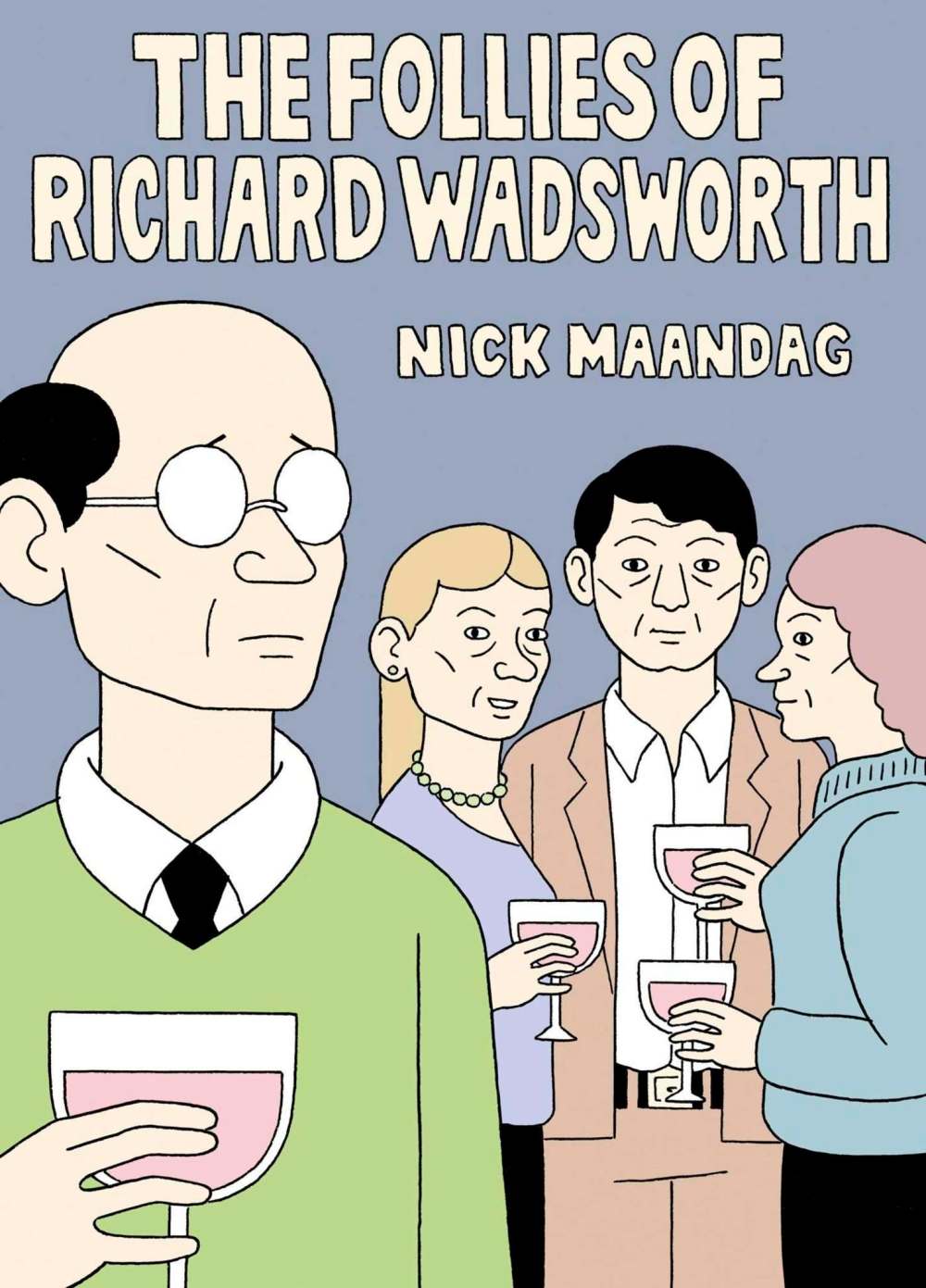
The title of Nick Maandag’s new book, The Follies of Richard Wadsworth, is actually a misnomer.
The story Wadsworth is a campus satire loaded with odious rivals, dying disciplines, bureaucracy and precarious labour (the titular Wadsworth is an adjunct philosophy instructor whose last university appointment ended badly, for reasons which become quickly apparent).
But the follies also extend to two other stories, Night School, about a fire prevention chief who ends up in charge of a business admin class, and The Disciple, in which a young, celibate monk grapples with lust at a coed monastery.

All three tales in this collection essentially chronicle folks who refuse to adhere to their given role in already-established systems, and instead hold their own rigid ideas about how things should work as Maandag takes us for an awkward, disorienting ride.
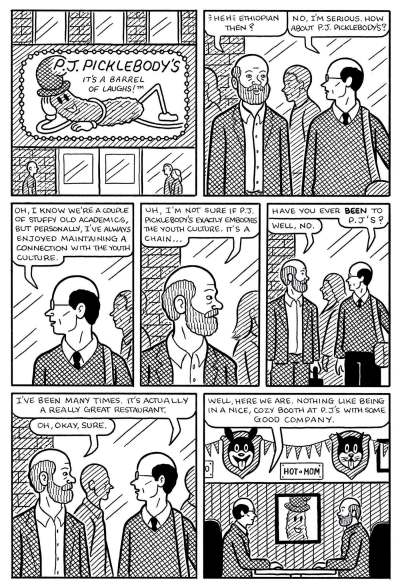
Always, absurdity ensues — after overhearing some gossip about the fate of the Classics department, the titular Wadsworth literally climbs a wall to escape being seen. The expertly paced Night School is perfectly Kafkaesque, as questions from all involved are met with increasingly ridiculous punishments (one of which also involves a wall). The Disciple’s abominable sight of monks include Brother Bananas, a monkey who is evidently not the only one succumbing to his basest instincts. Throughout the book, the intentional monotony of meticulously cross-hatched panels complements the storylines well. Many characters also share some of the same facial features, which the author exploits to its full potential.
Sometimes hilarity also ensues, as Maandag fully embraces the discordance of a lighthearted tone while depicting some truly awful situations. The kind of deadpan cringe-humour Maandag deploys in these stories is particularly reminiscent of Tim Robinson’s hit Netflix sketch comedy series I Think You Should Leave, also rife with horrible people and elaborate punchlines that result from characters doubling down on their terrible choices and actions. The difference, though, is that while Robinson’s characters are more or less equal in status, Maandag instead uses characters from different walks of life to point out the corruption in power structures.
While this sometimes works to a delightful effect — in Wadsworth, for example, the titular instructor confuses a caretaker with the dean, mentally imbuing the former with the authority of the latter — Mandaag also writes numerous gags in which those who don’t benefit from the power imbalance are the target of the jokes. Notably, female students are preyed upon quite explicitly by authority figures in Wadsworth and The Disciple, and the teacher in Night School doesn’t fare much better after relinquishing control of her class to the deranged fire chief who just happened to be investigating a faulty alarm.
Maandag is obviously an equal-opportunity satirist, but opportunities (and subject positions) are, unfortunately, not equal, something that often goes unaccounted for when interpersonal boundaries are pushed to absurd limits for a gag and the perpetrator’s actions still go mostly unacknowledged, let alone unpunished.

Although The Follies of Richard Wadsworth is clearly interested in dismantling power dynamics within established structures (and pointing out hypocrisy in systems that only benefit certain people), setting up the less privileged to take the fall for a lark doesn’t quite work. Though the book’s central characters are visibly incompetent, they still wield (and abuse) power to an uncomfortable, ruthlessly accurate degree. But we already know that this regularly happens, and some good schadenfreude when these men occasionally get their comeuppance isn’t necessarily enough to combat the malaise of realizing how pervasive Maandag’s breed of unchanging, self-absorbed rule-breakers are.
Winnipeg’s Nyala Ali writes about race and gender in contemporary narratives.