In Conversation: George Toles and Pam Perkins
Advertisement
Read this article for free:
or
Already have an account? Log in here »
To continue reading, please subscribe:

Digital Subscription
One year of digital access for only $205*
- Enjoy unlimited reading on winnipegfreepress.com
- Read the E-Edition, our digital replica newspaper
- Access News Break, our award-winning app
- Play interactive puzzles
*First annual payment billed as $205.00 + GST for one year. This annual subscription will automatically renew at $233.00 + GST every 52 weeks (10% off the regular annual price of $259.35). Offer available to new and qualified returning subscribers only. Cancel any time.
To continue reading, please subscribe:
Add Free Press access to your Brandon Sun subscription for only an additional
$1 for the first 4 weeks*
- Enjoy unlimited reading on winnipegfreepress.com
- Read the E-Edition, our digital replica newspaper
- Access News Break, our award-winning app
- Play interactive puzzles
*Your next Brandon Sun subscription payment will increase by $1.00 and you will be charged $17.95 plus GST for four weeks. After four weeks, your payment will increase to $24.95 plus GST every four weeks.
Read unlimited articles for free today:
or
Already have an account? Log in here »
Hey there, time traveller!
This article was published 15/05/2021 (1951 days ago), so information in it may no longer be current.
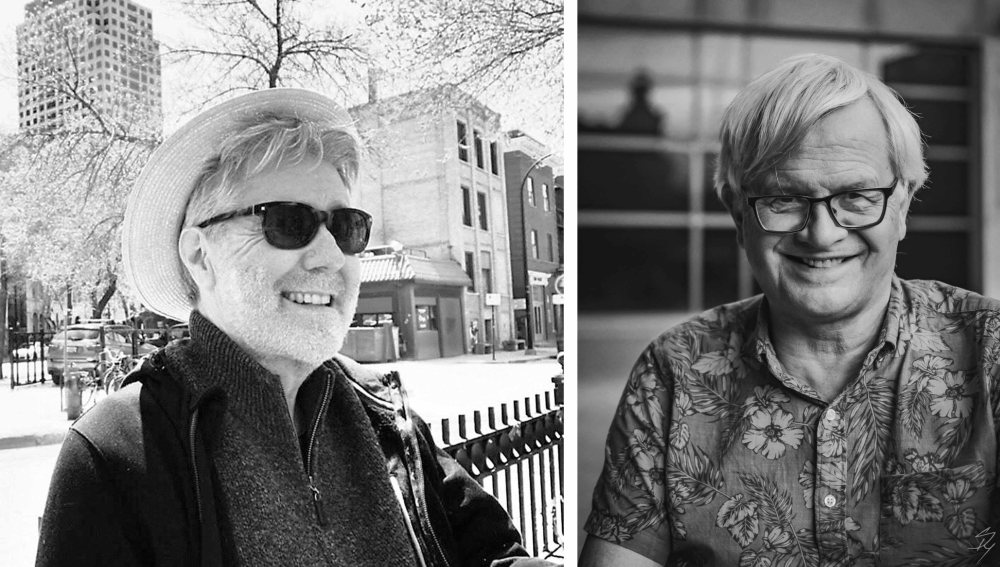
In 2009, on a whim, George Toles started posting micro-fictions to Facebook every day.
Since then, the writer and distinguished professor in the University of Manitoba’s Department of English, Theatre, Film & Media, has posted more than 4,600 stories.
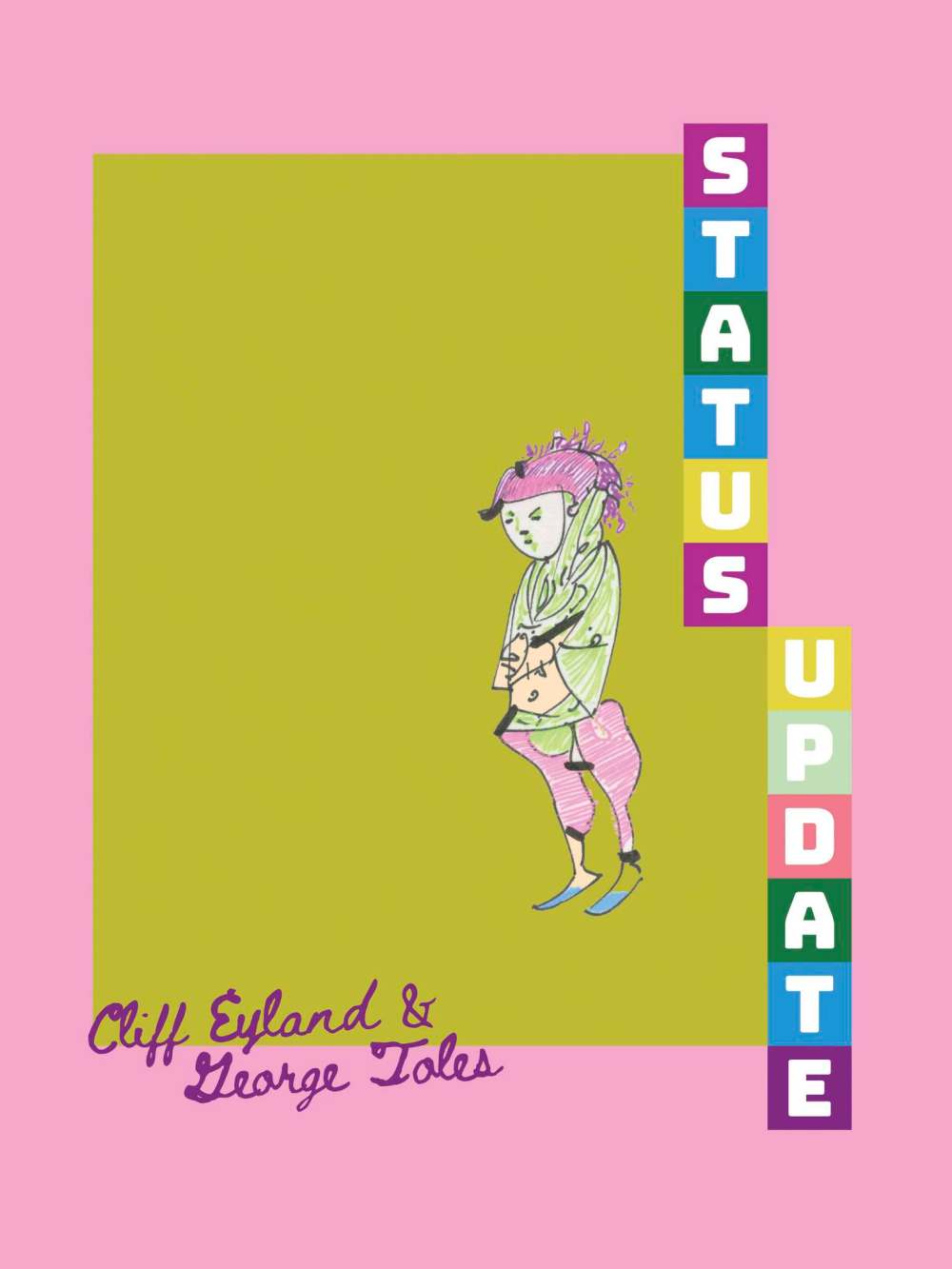
When he hit 1,700, visual artist Cliff Eyland joined in, producing artworks to go not only with the updates that Toles was producing daily but also the backlog.
Eyland is probably best known locally for his artwork at the entrance of the Millennium Library that consisted of thousands of index card-sized paintings.
At Bay Press had agreed to publish a selection of their collaboration and was working with Toles’s son Thomas, when Eyland died in May 2020. Eyland’s wife Pam Perkins, also a U of Manitoba English prof, stepped in to ensure that Eyland’s last work was completed.
The resulting book, called Status Update, will be launched virtually on May 19 at 7 p.m. via McNally Robinson’s Zoom account.
Ariel Gordon: What was the genesis of the project that would become Status Update?
George Toles: My brother Tom’s daily editorial cartoons for the Washington Post was an initial model, and a goad. Some days I compose two or three brief ones. On other days, I try to shovel enough plot for a 19th century novel into one loose baggy monster of a paragraph. Cliff enjoyed having a wealth of outrageous incident to choose from. And he never steered himself away from naughtiness and cheerful effrontery.
To date, I’ve never skipped a day. It struck me, back at the beginning, that Facebook was a non-pressure place to do creative work. One could hardly imagine a finer circle of hell in which to become a contributor.
AG: How did Cliff get involved? Had you worked together before this project?
GT: Cliff and I didn’t talk about the collaboration once it got underway. We just did our separate thing, and I was most appreciative. His decision to illustrate all the updates that I had written so far was a cause for astonished rejoicing. And everlasting gratitude. Like everyone that Cliff knew, I had hopes of being his best friend. Since surprise seems to me an essential ingredient of good art, the watchword of our collaboration was surprise. Surprising each other, surprising our readers/viewers with as much tonal variety, and convention-shredding within the mini-narrative format as possible. As much discontinuity of effect and mood from day to day as possible. Nonsense with an edge one day, a Thomas hardy tragedy in four sentences the next.
Pam Perkins: Cliff started providing visual replies to George’s status updates more or less on a whim, using his drawings as a creative way to engage with those posts. It wasn’t long until he started taking it as something of a challenge or a point of pride to find and post an appropriate image as quickly as he could after the post appeared. Initially, it was almost a kind of game, and Cliff used to joke about how hard George made him work to keep up with the posts. Cliff had used his work as visual “captions” for other art before — informally and at least once in a gallery setting. This particular collaboration seemed to work particularly well. He was always drawing, and shuffling through piles of drawings to find one that worked (or through files on the computer) became part of his daily social media routine for several years.
AG: Can you tell me a bit about Cliff’s process?
PP: I think that Cliff really enjoyed the playfulness of the project — the casual immediacy of posting a drawing in a Facebook reply box, where it would rapidly disappear into the feed, made it a sort of (literally!) everyday art that really appealed to him.
At the same time, he was interested, from fairly early in the project, in preserving and displaying these images, first as prints in a gallery and then in the book. But I think the book preserves the sort of playful spontaneity that Cliff brought to his choices of which drawings best expressed his responses to George’s words. (He made his choices quickly, but not at all randomly!)
AG: What are some of the challenges of publishing on a platform like Facebook?
GT: Facebook readers do not have sizable attention spans. The first sentence of a piece must be a grabber and the narrative development cannot afford, even within the duration of a paragraph to slacken. And the piece must have an ending that rounds things off, and, where possible, supplies a high point of emotion. I try like the dickens to avoid whimsy, by which I mean cute weightlessness. My composition time seldom runs longer than an hour. The updates get my writing wheels going in the morning — by main force, regardless of how listless I feel — and I try my best not to repeat myself.
AG: What was it like to shepherd this project to its conclusion after Cliff’s death?
GT: Facebook jotting is about as ephemeral as a literary mode can be. A book culled from Facebook curlicues aspires to something that feels more substantial, an aspiration to survive for a spell. Cliff’s artwork strengthens that aspiration, and I regard the book as a commemoration of an invaluable friendship.
PP: I wish Cliff could have seen the book. This was a project that he cared a great deal about, and it still feels wrong that I get to see the final product while Cliff does not. I’m very glad that George, Thomas, and Matt were able to see it through into print, because one of the things that distressed me a great deal last summer was the worry that some projects that Cliff had cared deeply about would now not be completed. That hasn’t happened, and I’m very grateful for that.
Ariel Gordon is a Winnipeg writer.