Show of force

Concentration of political power in U.K., U.S., France and Canada scrutinized in Savoie’s latest

Advertisement

Advertise with us

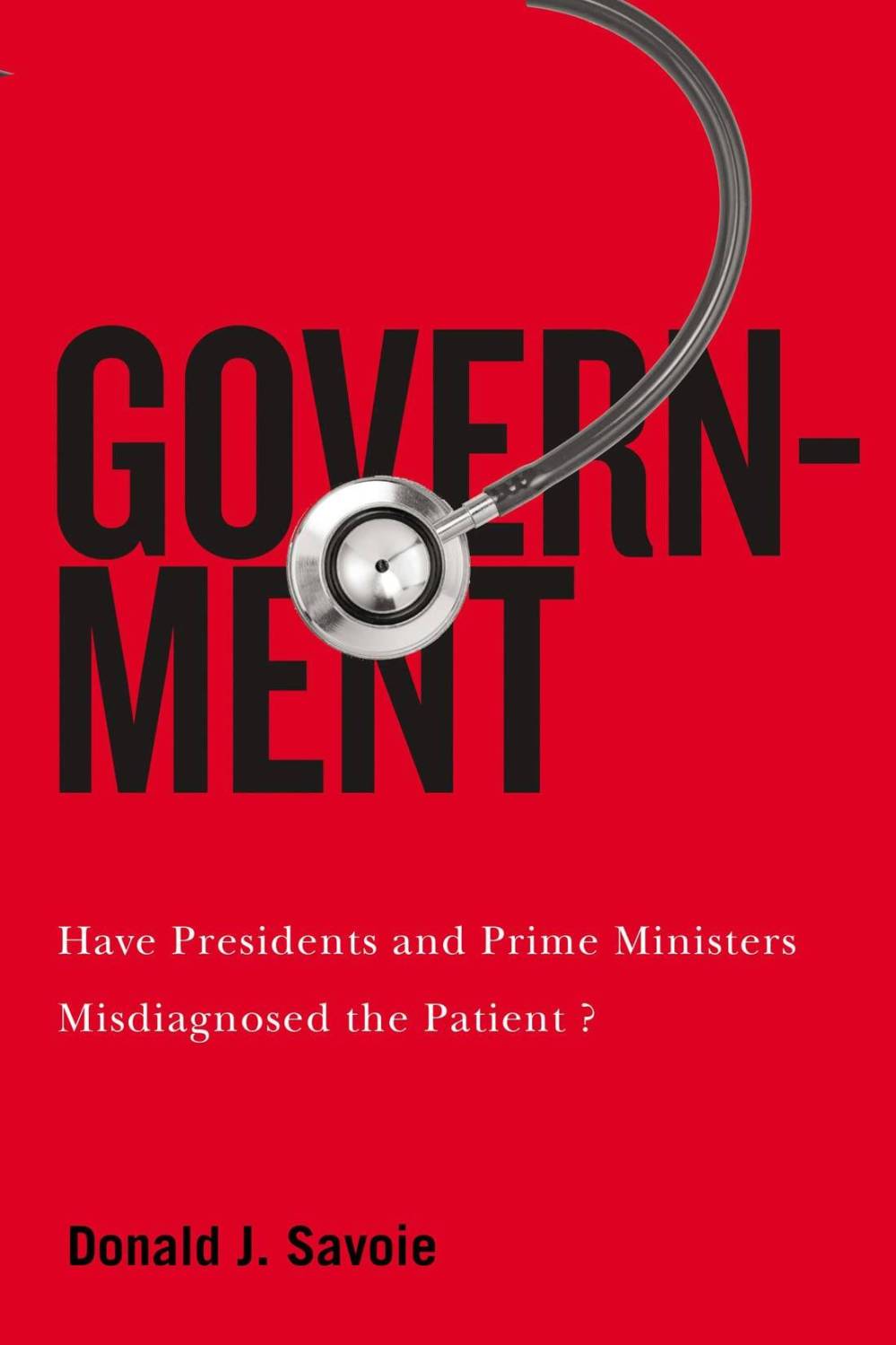
Donald Savoie, who holds the Research Chair in Public Administration at the University of Moncton, has produced another high-quality work in the form of Government: Have Presidents and Prime Ministers Misdiagnosed the Patient? Savoie studies the heads of government in four countries: the presidents of the United States and France and the prime ministers of Canada and the United Kingdom.

Read this article for free:


or

Already have an account? Log in here »

To continue reading, please subscribe:

Subscribe and receive a limited-edition Free Press branded hat or tote.

Digital Subscription

One year of digital access for only $205*

  • Enjoy unlimited reading on winnipegfreepress.com
  • Read the E-Edition, our digital replica newspaper
  • Access News Break, our award-winning app
  • Play interactive puzzles

*First annual payment billed as $205.00 + GST for one year. This annual subscription will automatically renew at $233.00 + GST every 52 weeks (10% off the regular annual price of $259.35). Offer available to new and qualified returning subscribers only. Cancel any time.

To continue reading, please subscribe:

Add Free Press access to your Brandon Sun subscription for only an additional

$1 for the first 4 weeks*

  • Enjoy unlimited reading on winnipegfreepress.com
  • Read the E-Edition, our digital replica newspaper
  • Access News Break, our award-winning app
  • Play interactive puzzles
Start now

*Your next Brandon Sun subscription payment will increase by $1.00 and you will be charged $17.95 plus GST for four weeks. After four weeks, your payment will increase to $24.95 plus GST every four weeks.

Hey there, time traveller!
This article was published 02/07/2022 (1513 days ago), so information in it may no longer be current.

Donald Savoie, who holds the Research Chair in Public Administration at the University of Moncton, has produced another high-quality work in the form of Government: Have Presidents and Prime Ministers Misdiagnosed the Patient? Savoie studies the heads of government in four countries: the presidents of the United States and France and the prime ministers of Canada and the United Kingdom.

Savoie makes a strong case that what ails all four countries is that power is now concentrated in their heads of state. Surrounding them are what Savoie calls “courtiers,” a term used for those who served in the courts of kings and queens in earlier times. These are influential and powerful advisors who are neither elected nor hired from within the civil service.

These presidents and prime ministers, with support from their courtiers, are rarely challenged due to their many powers. These include making senior appointments, deciding who sits in cabinet, choosing policy priorities, shaping national budgets and launching new programs. In the meantime, the media fixates on these leaders to the exclusion of others in the political system.
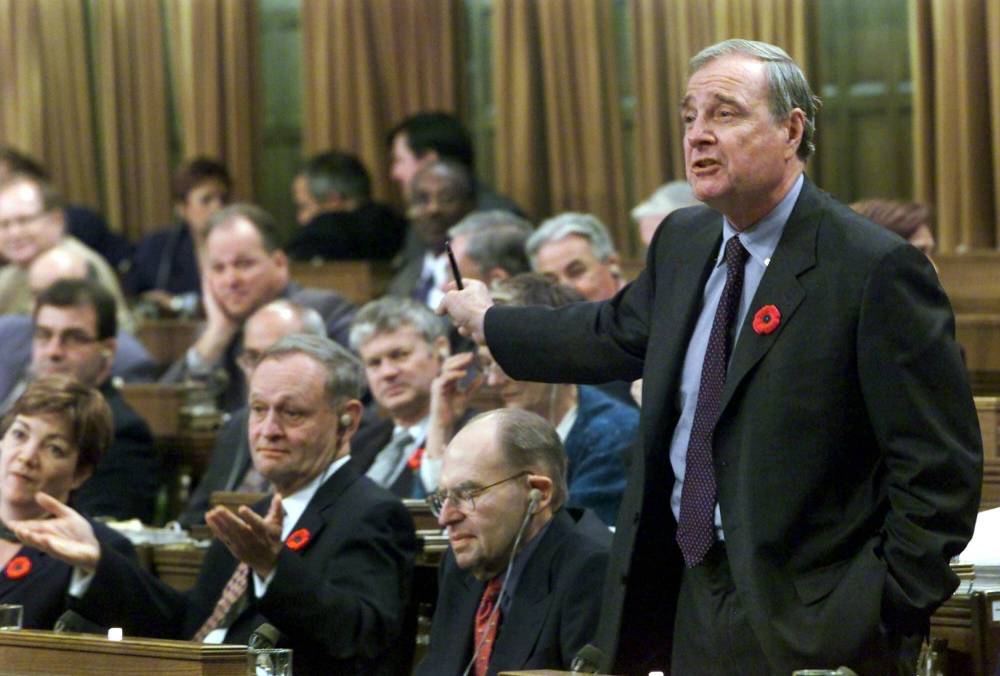
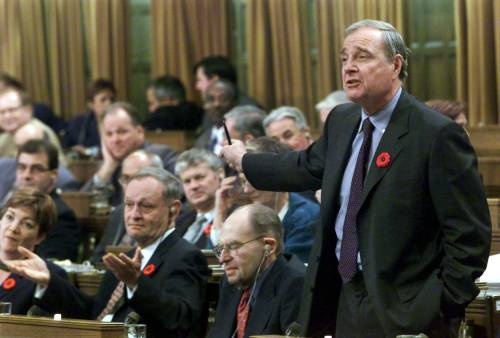
Tom Hanson / The Canadian Press files
As finance minister, Paul Martin (right) was an influential member of then-prime minister Jean Chrétien’s cabinet, in a time before power became increasingly centralized at the top.
Tom Hanson / The Canadian Press files As finance minister, Paul Martin (right) was an influential member of then-prime minister Jean Chrétien’s cabinet, in a time before power became increasingly centralized at the top.

Among Savoie’s previous works relating to this theme about “power at the centre” are his Governing from the Centre, which received much attention when it appeared in 1999, and Democracy in Canada which was published in 2019.

Together these earlier works show that commencing with Pierre Trudeau in the 1970s, followed by others — including Brian Mulroney, Jean Chretien, Stephen Harper and Justin Trudeau — the Prime Minister’s Office’s budget and personnel have continually expanded, by-passing the need for prime ministers to confer with elected members of parliament or cabinet to get things done. According to Savoie, what was once termed “cabinet government” has ministers now reduced to serving as a “focus group” to test the PM’s ideas and decisions.

Savoie’s new work Government shows that this Canadian problem is also found in the U.S., Great Britain and France. And when things don’t get done, the bureaucracy is blamed. New measures to increase efficiencies have made matters only worse. This is what the author calls the “misdiagnosis.” That is, as power shifts from cabinet ministers to prime ministers and presidents, the civil service is set adrift. Those who once oversaw civil servants in their departments now must bend to presidents and prime ministers, their courtiers and central agencies.

As the civil service becomes increasingly ineffective, an erroneous solution is civil service reform and privatization. The rush in the 1980s to use the private sector as a model for improving the public sector was espoused by then-U.S. president Ronald Reagan and U.K. prime minister Margaret Thatcher. In Canada, then-prime minister Brian Mulroney privatized Petro-Canada and other Crown holdings. Furthermore, program reviews are now increasingly used to find efficiencies and cost savings, managers are set loose to find solutions in their own departments with little oversight and powerful central agencies regulate many areas of the public service, by-passing ministerial oversight over their own departments.

Decades ago there were many prominent cabinet ministers who oversaw powerful departments. Savoie writes how Canadian prime ministers such as Louis St-Laurent relied on C.D. Howe during the 1950s, and many will remember how Jean Chrétien relied on Paul Martin as his influential finance minister in the 1990s. He claims there are no such individuals in Justin Trudeau’s circle.
Adrian Wyld / The Canadian Press files
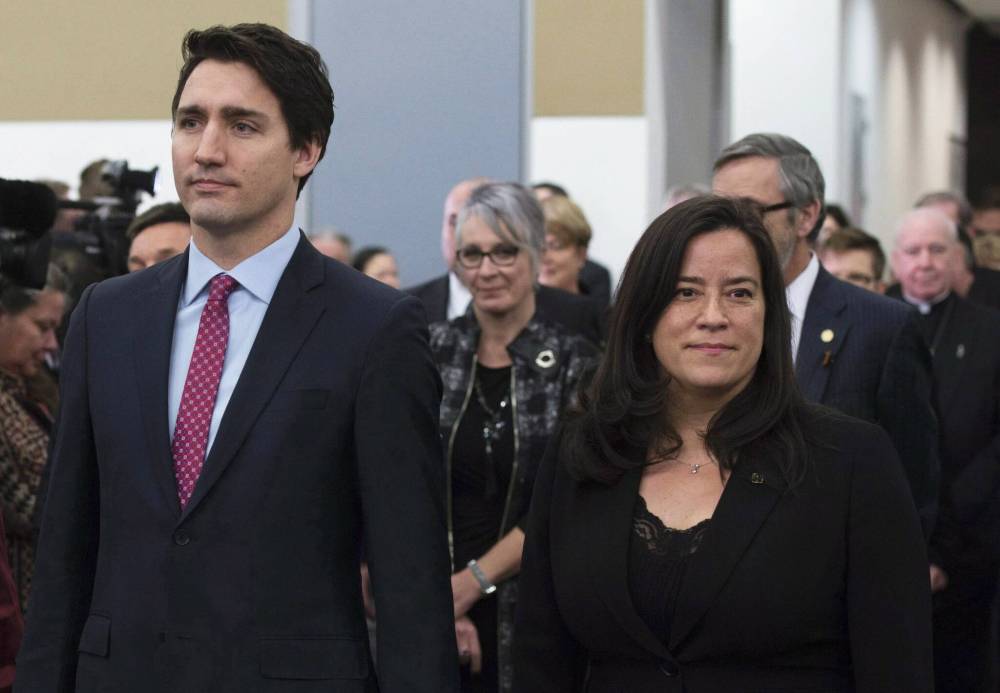
Jody Wilson-Raybould’s departure from Prime Minister Justin Trudeau’s cabinet after the SNC-Lavalin affair was felt at the polls in Wilson-Raybould’s home province of B.C. in 2019.
Adrian Wyld / The Canadian Press files Jody Wilson-Raybould’s departure from Prime Minister Justin Trudeau’s cabinet after the SNC-Lavalin affair was felt at the polls in Wilson-Raybould’s home province of B.C. in 2019.

This might be an oversimplification. While government power is now focused on Trudeau, he is not without his vulnerabilities. It is doubtful that he would be able to ignore finance minister/deputy PM Chrystia Freeland if their views differed. Another case in point is that of prominent B.C. MP, lawyer and Indigenous leader Jody Wilson-Raybould, and her departure from cabinet which was triggered by differences with Trudeau over the SNC-Lavalin case. The political fallout was apparent in the 2019 federal election, with a drop in B.C. voters for the Liberals going from 35 per cent in 2015 to 26 per cent in 2019. Trudeau’s image was also tarnished among Indigenous and women voters.

Regardless, Savoie ably shows the consequences in all four countries of what happens when power is overly centralized. Morale is low among civil servants, with many skilled and experienced individuals no longer seeking careers in the public sector.

In the meantime, according to public opinion polls, trust in government institutions has been declining. This is certainly a different scenario compared to the 1950s and 1960s, when citizens looked to their governments to develop innovative solutions to complicated national problems.

Christopher Adams is an adjunct professor in political studies at the University of Manitoba and rector of St. Paul’s College.
Government
Government
Report Error Submit a Tip

More Stories

Frustration mounts as drug raids sweep problems out of downtown, into West End

Scott Billeck 7 minute read Preview

Frustration mounts as drug raids sweep problems out of downtown, into West End

Scott Billeck 7 minute read Updated: Yesterday at 6:24 PM CDT

West End business owners say their neighbourhood has been under siege for months, and some believe downtown police drug sweeps have made things worse by pushing more street disorder in their direction — and pushing customers away.

Read
Updated: Yesterday at 6:24 PM CDT

Transit union pleads for full shields after near ‘hijacking situation’

Nicole Buffie 5 minute read Preview

Transit union pleads for full shields after near ‘hijacking situation’

Nicole Buffie 5 minute read Thursday, Aug. 20, 2026

The union representing Winnipeg Transit drivers says the need for full safety shields is critical after an operator was threatened with a hatchet early Thursday.

Read
Thursday, Aug. 20, 2026

Concentration of political power in Canada and beyond examined in Savoie’s latest

Reviewed by Christopher Adams 5 minute read Preview

Concentration of political power in Canada and beyond examined in Savoie’s latest

Reviewed by Christopher Adams 5 minute read Saturday, Jul. 2, 2022

Donald Savoie, who holds the Research Chair in Public Administration at the University of Moncton, has produced another high-quality work in the form of Government: Have Presidents and Prime Ministers Misdiagnosed the Patient? Savoie studies the heads of government in four countries: the presidents of the United States and France and the prime ministers of Canada and the United Kingdom.

Savoie makes a strong case that what ails all four countries is that power is now concentrated in their heads of state. Surrounding them are what Savoie calls “courtiers,” a term used for those who served in the courts of kings and queens in earlier times. These are influential and powerful advisors who are neither elected nor hired from within the civil service.

These presidents and prime ministers, with support from their courtiers, are rarely challenged due to their many powers. These include making senior appointments, deciding who sits in cabinet, choosing policy priorities, shaping national budgets and launching new programs. In the meantime, the media fixates on these leaders to the exclusion of others in the political system.

Among Savoie’s previous works relating to this theme about “power at the centre” are his Governing from the Centre, which received much attention when it appeared in 1999, and Democracy in Canada which was published in 2019.

Read
Saturday, Jul. 2, 2022

Canada vows dollar-for-dollar tariff retaliation, suspends trade talks with U.S.

Catherine Morrison, The Canadian Press 7 minute read Preview

Canada vows dollar-for-dollar tariff retaliation, suspends trade talks with U.S.

Catherine Morrison, The Canadian Press 7 minute read Updated: 8:27 AM CDT

OTTAWA - A last-ditch effort to reach a new trade deal before a midnight tariff deadline failed Friday, as Prime Minister Mark Carney suspended talks with the United States and summoned his negotiators back to Ottawa.

The decision meant new 50 per cent tariffs on billions of dollars in Canadian exports to the U.S. took effect at 12:01 a.m., and Carney vowed Canada would retaliate with equal measures of its own.

"In recent weeks, we made important progress toward improving Canada's position as having the best deal in the world with the U.S.," Carney said in a statement just before Trump's tariff deadline.

"However, that progress has not been enough to meet our objectives for Canadians."

Read
Updated: 8:27 AM CDT

Plenty of alternatives to U.S. wines on the shelves

Ben Sigurdson 5 minute read Preview

Plenty of alternatives to U.S. wines on the shelves

Ben Sigurdson 5 minute read 6:00 AM CDT

In February 2025, Manitoba (and most other provinces) pulled American liquor from store shelves as part of the ongoing trade dispute with the United States.

Then in December, the province followed a similar course to others and put American booze that was already on hand back on shelves, selling off inventory that had been wasting away in warehouses for months, and directing proceeds from those sales to charities.

Lineups sprung up at numerous stores as consumers snapped up bestselling American products — think Maker’s Mark, Jack Daniel’s, Apothic Red and the like. After that initial rush, what was left has been languishing on shelves ever since, with many products eventually being drastically discounted for a quick sale, lest they become too long in the tooth.

I decided early on not to write about/review U.S. products in this space until things were well and truly sorted. But a few months back, I found myself in the mood for a big, oaky red wine and — in a moment of weakness, or nostalgia, or maybe just curiosity — I picked up a $30-ish California Cabernet Sauvignon.

Read
6:00 AM CDT

ER wait times have hit all-time highs in Winnipeg and are impacting nearly all aspects of hospital operations

Tom Brodbeck 17 minute read Preview

ER wait times have hit all-time highs in Winnipeg and are impacting nearly all aspects of hospital operations

Tom Brodbeck 17 minute read Yesterday at 6:00 AM CDT

On most days at Health Sciences Centre’s adult emergency department, all 58 treatment beds are filled with sick patients. Another dozen or so brought in by ambulance line the hallways on stretchers, with only one nurse to look after them.

Out in the waiting room, about 30 or 40 people — sometimes more — are slouched in chairs in pain or discomfort, waiting hours to see a doctor. Most have been assessed by a triage nurse, but many will have to wait 10 to 20 hours to be examined by a physician because there’s no room for them in the treatment area.

Some patients leave because they can no longer tolerate the excruciating wait, only to return days later, sicker than they were before.

Welcome to the emergency department at Manitoba’s largest hospital, where some of the highest-acuity patients seek medical care but now face delays that were unimaginable a few years ago.

Read
Yesterday at 6:00 AM CDT