B.C. Senator offers some instructive insight
Advertisement
Read this article for free:
or
Already have an account? Log in here »
To continue reading, please subscribe:

Digital Subscription
One year of digital access for only $205*
- Enjoy unlimited reading on winnipegfreepress.com
- Read the E-Edition, our digital replica newspaper
- Access News Break, our award-winning app
- Play interactive puzzles
*First annual payment billed as $205.00 + GST for one year. This annual subscription will automatically renew at $233.00 + GST every 52 weeks (10% off the regular annual price of $259.35). Offer available to new and qualified returning subscribers only. Cancel any time.
To continue reading, please subscribe:
Add Free Press access to your Brandon Sun subscription for only an additional
$1 for the first 4 weeks*
- Enjoy unlimited reading on winnipegfreepress.com
- Read the E-Edition, our digital replica newspaper
- Access News Break, our award-winning app
- Play interactive puzzles
*Your next Brandon Sun subscription payment will increase by $1.00 and you will be charged $17.95 plus GST for four weeks. After four weeks, your payment will increase to $24.95 plus GST every four weeks.
Read unlimited articles for free today:
or
Already have an account? Log in here »
Hey there, time traveller!
This article was published 18/03/2023 (1235 days ago), so information in it may no longer be current.
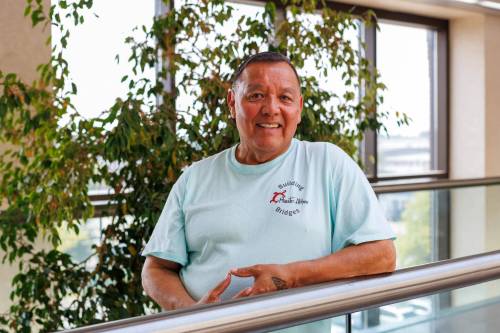
Jack Austin is a former federal Liberal policy adviser, deputy minister, chief of staff to prime minister Pierre Trudeau, cabinet minister and senator. But unless you hail from B.C., his name’s not apt to ring a bell.
Though not a household name, he was a front and centre political player in Ottawa from the early 1960s to 2007, when he retired from the Senate.
He’s crafted an engaging, but uneven, insider’s memoir of those times.

Jack Austin
His credited co-author, Edie Austin, is his daughter, an editorial-page editor with the Montreal Gazette. It’s no reach to conclude her editorial hand has a lot to do with the readability of her father’s memoir.
This is, for the most part, an intelligent, reflective and insightful look back on political events, both domestic and international. And, not surprisingly for a politico from the West Coast, it’s heavily accented on Canada’s role as a Pacific nation and our relations with Japan and China.
It’s also instructive. Time and again, in Austin’s telling, major public-policy decisions were realized at the intersection of partisan politics and personal relations, with the latter often as important as the former.
The quality of the chapters varies wildly. At his best, in his accounts of natural resource issues and disputes (mostly with the Americans, but also often between Alberta and Ottawa), Austin displays a deft touch. There’s surprising drama in his recountings of water, oil, mining and energy conflicts.
He has a knack for putting readers in his shoes, even as he’s discussing complex public-policy issues, thereby adding a bit of emotional subtext to otherwise often-esoteric matters of fiscal policy, regional rivalries and Liberal intra-party politics.
But in other chapters — his take on Canada-U.S.-Mexico trade relations, for example — his narrative devolves into a potted history and tedious, lengthy catalogue of mini-bios of the business, civil service and academic nabobs of North American trilateralism.
Manitoba scarcely gets a mention — save for Austin taking a potshot at former provincial Liberal leader, and latterly Liberal Senator, Sharon Carstairs.

On becoming leader of the Liberal government in the Senate, Carstairs, a Jean Chrétien loyalist, booted Austin from his role as chair of the Senate rules committee because, as a Paul Martin supporter, “I did not deserve to be a committee chair.” It should be noted Martin, prime minister of Canada from 2003-2006, wrote the laudatory foreword to this book.

Unlikely Insider
The book’s last chapter — Travels with Pierre — is disappointing.
Austin was tight with Pierre Trudeau, even after he left office. He and his wife took four foreign trips with Trudeau after he reverted to being a private citizen — the Silk Road (Pakistan and China), South and Central America, Africa and Indonesia. While Austin’s telling is mildly interesting, he isn’t big on descriptive or exotic colour and custom, which might have fleshed out both the travel narrative and his portraiture of Trudeau’s exploratory yearnings.
Still, there’s lots here that commends the book to having reach beyond just policy wonks. You get trenchant policy analysis. But you also get the sense it’s analysis leavened by hard-won personal experience.
Douglas J. Johnston is a Winnipeg lawyer and writer.