Miscarriage of justice

Indigenous families disproportionately impacted by separating prison-born children from mothers

Advertisement

Advertise with us

For most of us, what we know about prisons comes mainly from TV and film. Activists such as Angela Davis contend this is intentional — the less we know about the workings of prisons, the more we can believe they are sites of objective justice.

Read this article for free:


or

Already have an account? Log in here »

To continue reading, please subscribe:

Subscribe and receive a limited-edition Free Press branded hat or tote.

Digital Subscription

One year of digital access for only $205*

  • Enjoy unlimited reading on winnipegfreepress.com
  • Read the E-Edition, our digital replica newspaper
  • Access News Break, our award-winning app
  • Play interactive puzzles

*First annual payment billed as $205.00 + GST for one year. This annual subscription will automatically renew at $233.00 + GST every 52 weeks (10% off the regular annual price of $259.35). Offer available to new and qualified returning subscribers only. Cancel any time.

To continue reading, please subscribe:

Add Free Press access to your Brandon Sun subscription for only an additional

$1 for the first 4 weeks*

  • Enjoy unlimited reading on winnipegfreepress.com
  • Read the E-Edition, our digital replica newspaper
  • Access News Break, our award-winning app
  • Play interactive puzzles
Start now

*Your next Brandon Sun subscription payment will increase by $1.00 and you will be charged $17.95 plus GST for four weeks. After four weeks, your payment will increase to $24.95 plus GST every four weeks.

Hey there, time traveller!
This article was published 25/01/2025 (567 days ago), so information in it may no longer be current.

For most of us, what we know about prisons comes mainly from TV and film. Activists such as Angela Davis contend this is intentional — the less we know about the workings of prisons, the more we can believe they are sites of objective justice.

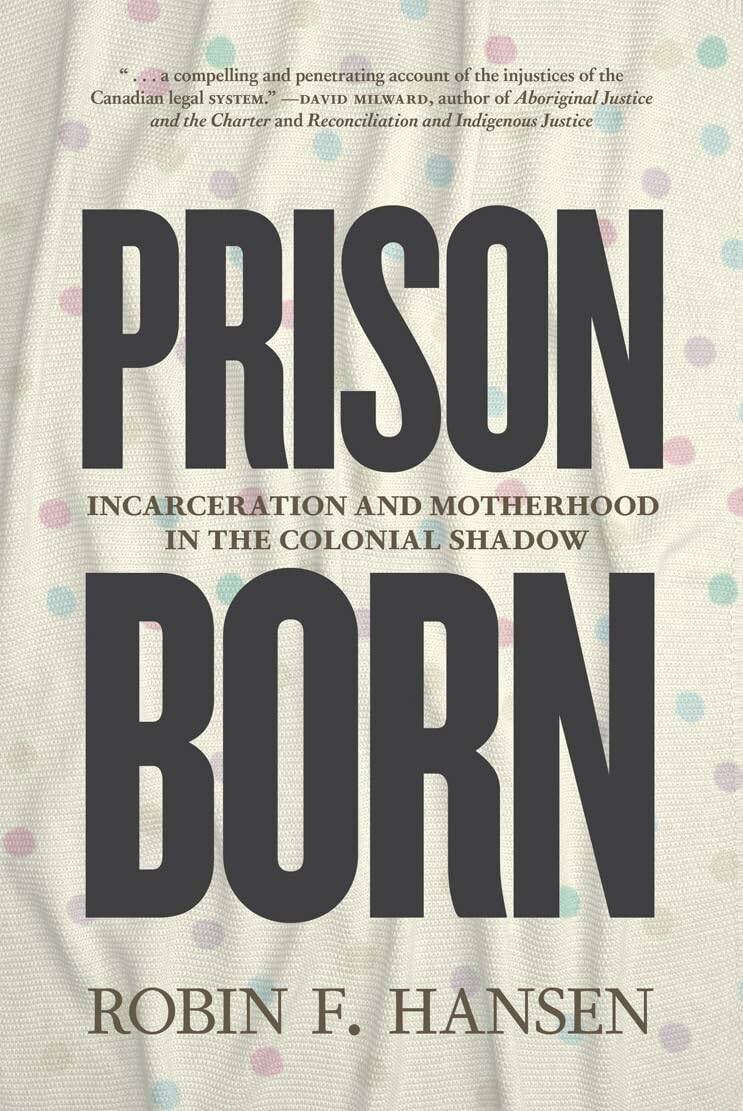
Robin Hansen’s Prison Born adds to the list of overlooked situations in prison the instance of automatic separation — the act of the state legally taking a child away from their mother when the mother gives birth in prison.

Jacquie (pseudonym), a pregnant Indigenous woman who was seeking council, contacted Hansen, a white settler and law professor at the University of Saskatchewan. With three months left in her pregnancy, Jacquie had been sentenced to 13 months in jail.
Mikaela MacKenzie / Free Press files
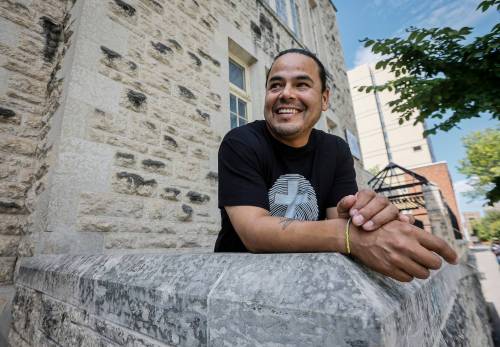
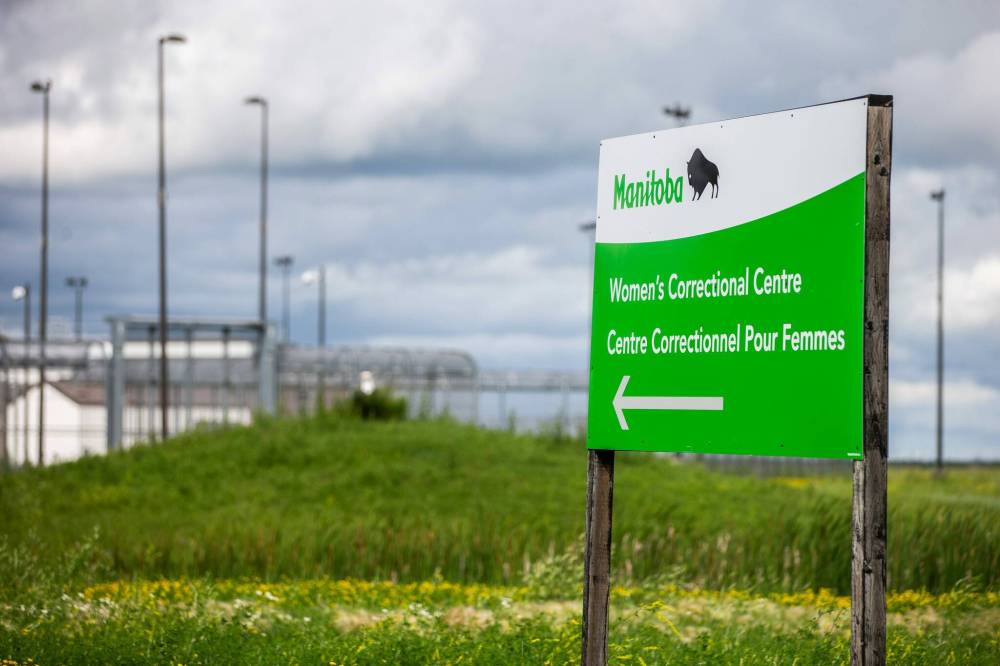
                                Hansen argues the automatic separation of children from incarcerated mothers aligns with historical colonial initiatives such as the Sixties Scoop and the residential school program.

Mikaela MacKenzie / Free Press files

Hansen argues the automatic separation of children from incarcerated mothers aligns with historical colonial initiatives such as the Sixties Scoop and the residential school program.

This guaranteed she would give birth in prison and thus lose custody of her child.

Focusing on Jacquie’s case study, Hansen carefully and patiently walks readers through numerous approaches to understanding automatic separation: Canadian legal theory and history, international law, colonialism and androcentrism (the centring of a male/masculine perspective).

Though an academic book at its core and extensively researched, the writing is accessible and will appeal to readers interested in the detailed theory and history of both Canadian law and international law. Hansen cites a sufficient amount of Indigenous theorists, but the book is written firmly from a critical settler perspective.

Automatic separation, according to Hansen, goes against the Charter rights of both the child and the mother. The child is not extended due process and his or her best interests are not taken into consideration, as in any other separation instance.

In the mother’s situation, Jacquie is denied medical care related to her pregnancy while incarcerated. Furthermore, she is shackled to her bed during labour (as is common in the case of pregnant women prisoners).

Indigenous women are egregiously disproportionately represented in Canadian prisons. Hansen thus argues that automatic separation is in alignment with the Canadian government’s other colonial initiatives aimed at separating Indigenous children from their families such as residential schools, the Sixties Scoop and the Millennium Scoop.
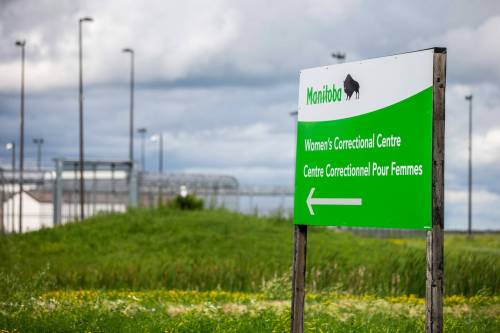
Prison Born

Prison Born

She maintains throughout her analysis that the Canadian court system is a colonial system. From its beginnings, Canada’s legal system conceptualized Canada as “perpetually innocent” and deliberately criminalized Indigenous people to gain access to land and resources.

The current over-incarceration of Indigenous people is a direct result of this colonial project. The “colonial lens” of the law, as Hansen refers to it, enabled the acquittal of Gerald Stanley in the 2016 killing of Colten Boushie of Cree Red Pheasant First Nation.

In an attempt to correct for some of these systemic inequalities, the 1999 Gladue decision requires courts to consider the background of Indigenous people when charged with a crime. Jacquie was a generational survivor of residential schools. Yet the judge refused to consider a different type of sentencing so that she could keep custody of her child.

It was only through an appeal, with Hansen’s help, that Jacquie was eventually able to stay with her child for a lengthened sentence under house arrest.

However, for the majority of pregnant women facing jail time, they will automatically lose custody of their child. Hansen contends this practice perpetuates cycles of forced generational separation, flying in the face of the government’s commitment to reconciliation efforts.

Prison Born joins a growing list of books aimed at critiques of the Canadian legal system that disproportionately and negatively impacts Indigenous people. It provides a reformist approach, demanding that the law work to protect, not only to punish.

Supplied photo
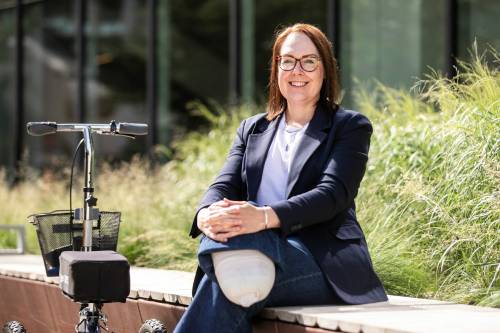
                                Robin F. Hansen

Supplied photo

Robin F. Hansen

As Hansen concludes, “the legal system exists only as we make it,” and surely we must make it so that it is fair and just for everyone.

Serenity Joo is a professor at the University of Manitoba and volunteers with the Prison Libraries Association.
Report Error Submit a Tip

More Stories

Don’t be a big loser — check out Real Love Summer Fest ReunionBig Loser takes the stage at 8:20 p.m. tonight as part of the Real Love Summer Fest Reunion, a one-day event put on by the indie promotion company, which ran the festival in the Interlake area for a decade until last summer’s final edition near Teulon.

Bookers Gil Carroll and Adam Soloway have programmed a full day of music at Blue Note Park (220 Main St.), the outdoor venue adjacent to Times Change(d) High and Lonesome Club.

First up at 4 p.m. is folk-rock songwriter tofusmell, followed at 5 p.m. with a rare performance by indie-songwriting darlings Animal Teeth, a group with several summer fest bills under its belt. Up-and-coming pop-rockers Synthetic Friend take the stage at 6, followed at 7 by the fun electronic dance pop of French Class.

After playing with his full band at last month’s Winnipeg Folk Festival, Amos the Kid will perform a solo set at 8 p.m. Sans band, the performer shows off his affable roots as a Gord Downie acolyte with catchy earworms to match.

‘Disrespectful’: residents frustrated after Wyatt arrives hour late to committee meeting

Joyanne Pursaga 3 minute read Preview

‘Disrespectful’: residents frustrated after Wyatt arrives hour late to committee meeting

Joyanne Pursaga 3 minute read Updated: Yesterday at 1:00 PM CDT

Several Winnipeggers attending a city development hearing on Thursday expressed frustration that one councillor arrived about an hour late, delaying the matter from being heard.

Coun. Russ Wyatt, who continues to attend city hall while facing criminal charges, began participating in the 9:30 a.m. East Kildonan-Transcona community committee meeting at 10:35 a.m.

A resident who hoped to speak at the meeting about a development plan in south Transcona noted the tardiness led the committee to bump the topic down on its agenda, while dozens waited to speak on it.

Christina Pyra eventually opted to leave city hall instead of waiting for her turn to make a presentation, to avoid missing a work commitment.

Read
Updated: Yesterday at 1:00 PM CDT

Puzzles Palace

1 minute read Monday, Jul. 27, 2026

To solve our puzzles, please subscribe with this special offer: |

Human cost of AI bubble outweighs tech’s potential

Reviewed by Brandi Field 4 minute read Preview

Human cost of AI bubble outweighs tech’s potential

Reviewed by Brandi Field 4 minute read 3:00 AM CDT

Despite the title of his new book, Cory Doctorow isn’t against artificial intelligence (AI). At least, not exactly — although, admittedly, the “Before It’s Too Late” of the book’s subtitle sounds ominous.

A self-described AI critic, Doctorow is against the scammy story tech companies are selling investors and bosses: that AI can replace workers, cut costs and keep tech companies growing forever.

Doctorow introduces the idea of “centaurs” and “reverse centaurs” to expose power relationships between people and AI. In automation theory, a centaur is a person who is helped by a machine. A reverse centaur is a person who is forced to help a machine. The difference, Doctorow argues, is whether the person gets to choose when, where and how to use the tool.

He wants readers to stop being dazzled by AI and start asking who uses it, from it and gets used by it.

Read
3:00 AM CDT

August in the kitchen garden

Colleen Zacharias 7 minute read Preview

August in the kitchen garden

Colleen Zacharias 7 minute read 3:00 AM CDT

Lynne Hermiston is passionate about growing her own food. Her backyard food garden in south Winnipeg is an amazing example of the abundance and diversity of food that can be grown in a relatively small space. But it’s also a prime example of how a zest for learning innovative methods can make food gardening more fun.

Hermiston’s backyard is approximately 10 metres wide and 15 metres deep. The growing area consisting of raised beds and a couple of in-ground beds between her deck and back fence is about nine metres deep. There is not a single blade of turf grass in sight. The design for this attractive and productive space was created by Classic Landscaping four years ago. A series of raised wooden beds mulched with straw are neatly arranged on a light grey, slate-like surface. An inviting centre arbor acts as a focal point and supports climbing plants. The square-shaped raised-bed area receives eight to nine hours of sun daily. It is flanked on one side by a long, linear-shaped bed, planted with flowering perennials that attract and support pollinators.

The food plants Hermiston is growing this summer include tomatoes, cucumbers, squash, beets, chickpeas, beans, onions, sweet potatoes, horseradish, garlic, peppers, carrots, pumpkin and cauliflower. She is growing Chinese Pink celery, an heirloom variety with bubblegum-pink stems, for the first time, as well as eggplant.

She also grows salad greens and herbs, which have made delicious additions to her summer recipes this year. Only a few harvests remain of the spinach she planted. But, compared to last year’s growing season, some food plants are taking their time, Hermiston says.

Read
3:00 AM CDT

Nola chef earns national award

Eva Wasney 2 minute read Preview

Nola chef earns national award

Eva Wasney 2 minute read Yesterday at 2:01 AM CDT

Celebrated Winnipeg chef Emily Butcher has another feather to add to her toque. The executive chef and owner of Nola and Bar Accanto in St. Boniface has received the Culinary Award of Excellence from Restaurants Canada, a national foodservice advocacy organization.

Read
Yesterday at 2:01 AM CDT